

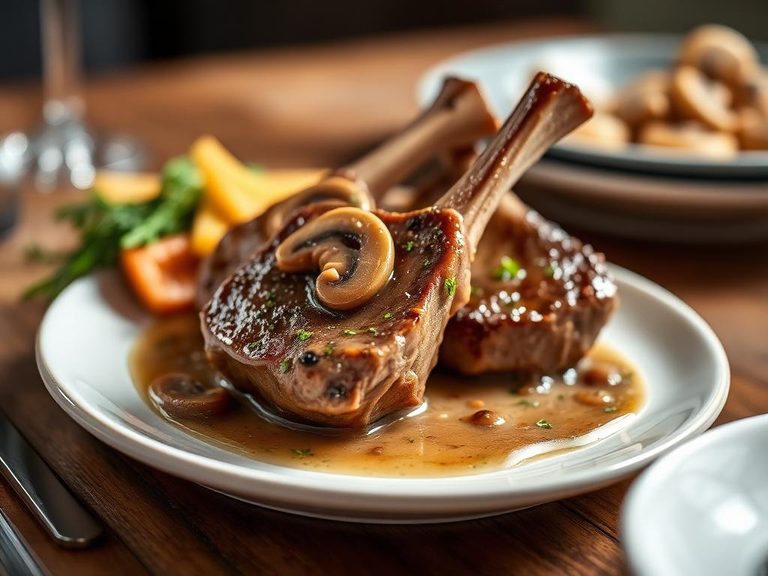
Veal, loin, chop, separable lean and fat, cooked, grilled
Whole food · Lamb, Veal, and Game Products

Photo: Wikipedia
This is a lean, elegant cut from the loin of a young calf, offering a tender, fine-grained texture with a mild, delicate flavor that's subtly sweeter than beef. Grilling caramelizes its surface, creating a delicious contrast between a lightly charred exterior and a juicy, almost buttery interior. Nutritionally, it's a powerhouse of high-quality protein with a very low carbohydrate content.
Calorie split: 57% protein · 0% carbs · 43% fat
↓ Full nutrition💚 Why it's loved
People cherish veal chops for their refined, tender texture and subtle flavor that acts as a canvas for marinades and sauces. They are a centerpiece of celebratory meals and fine dining, symbolizing a luxurious yet approachable culinary experience.
⚠️ Watch-outs & how to enjoy it better
As a red meat, it contains saturated fat, so those managing cholesterol should practice portion control. To counterbalance, pair it with a large portion of fiber-rich vegetables like roasted asparagus or a crisp salad to create a more balanced plate.
Key benefits
- Excellent source of complete, high-quality protein for muscle maintenance.
- Very low in carbohydrates, making it suitable for low-carb diets.
- Provides essential nutrients like B vitamins (especially B12) and zinc.
- Leaner than many red meat cuts, offering a good protein-to-fat ratio.
🍽️ Popular dishes
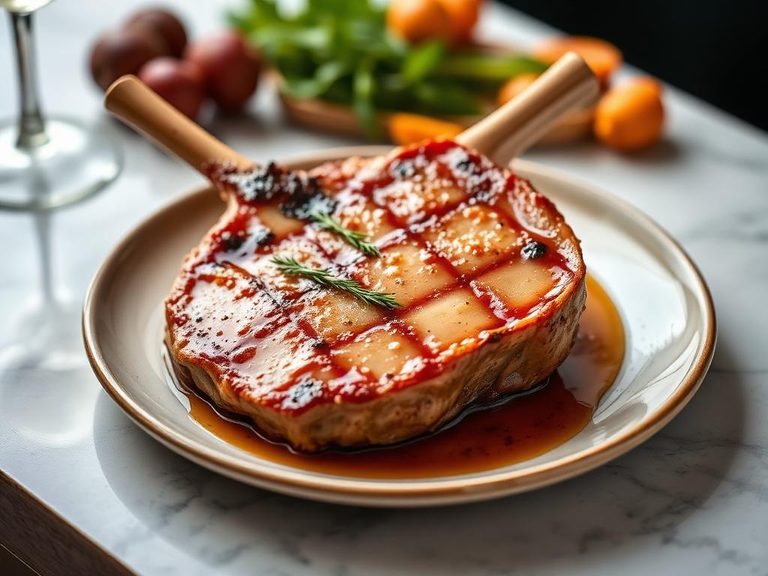
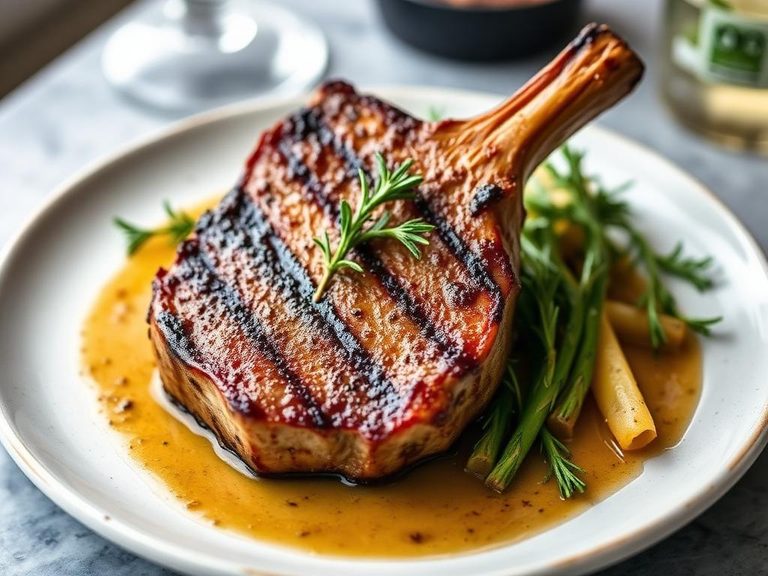
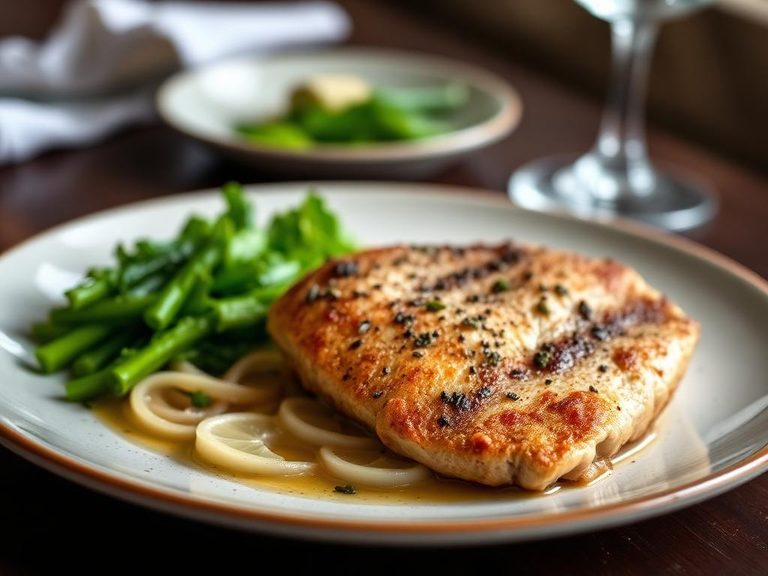
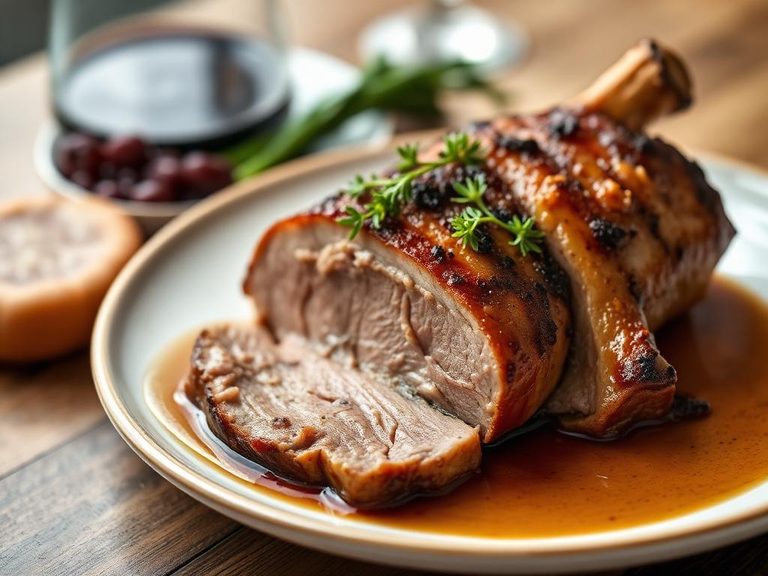
🌍 Where it's eaten
💡 Did you know?
The term 'veal' comes from the French word 'veau,' and the prized white color of some traditional veal comes from a milk-fed diet, which limits the development of myoglobin, the protein that gives meat its red color.
Full nutrition (USDA data · scales with serving)
| Water | 61.4 g |
| Energy | 198 kcal |
| Energy | 829 kj |
| Protein | 28.0 g |
| Total lipid (fat) | 9.5 g |
| Ash | 1.0 g |
| Carbohydrate, by difference | 0.16 g |
| Fiber, total dietary | 0.00 g |
| Total Sugars | 0.00 g |
| Calcium, Ca | 17.0 mg |
| Iron, Fe | 0.82 mg |
| Magnesium, Mg | 32.0 mg |
| Phosphorus, P | 208 mg |
| Potassium, K | 229 mg |
| Sodium, Na | 86.0 mg |
| Zinc, Zn | 1.8 mg |
| Copper, Cu | 0.12 mg |
| Manganese, Mn | 0.01 mg |
| Selenium, Se | 24.4 ug |
| Vitamin C, total ascorbic acid | 0.00 mg |
| Thiamin | 0.07 mg |
| Riboflavin | 0.31 mg |
| Niacin | 7.5 mg |
| Pantothenic acid | 0.54 mg |
| Vitamin B-6 | 0.64 mg |
| Folate, total | 6.0 ug |
| Folic acid | 0.00 ug |
| Folate, food | 6.0 ug |
| Folate, DFE | 6.0 ug |
| Choline, total | 139 mg |
| Betaine | 26.2 mg |
| Vitamin B-12 | 2.8 ug |
| Vitamin B-12, added | 0.00 ug |
| Vitamin A, RAE | 0.00 ug |
| Retinol | 0.00 ug |
| Carotene, beta | 0.00 ug |
| Carotene, alpha | 0.00 ug |
| Cryptoxanthin, beta | 0.00 ug |
| Vitamin A, IU | 0.00 iu |
| Lycopene | 0.00 ug |
| Lutein + zeaxanthin | 0.00 ug |
| Vitamin E (alpha-tocopherol) | 0.39 mg |
| Vitamin E, added | 0.00 mg |
| Tocopherol, beta | 0.00 mg |
| Tocopherol, gamma | 0.01 mg |
| Tocopherol, delta | 0.00 mg |
| Vitamin D (D2 + D3), International Units | 45.0 iu |
| Vitamin D (D2 + D3) | 1.1 ug |
| Vitamin D3 (cholecalciferol) | 1.1 ug |
| Vitamin K (phylloquinone) | 1.5 ug |
| Alcohol, ethyl | 0.00 g |
| Caffeine | 0.00 mg |
| Theobromine | 0.00 mg |
Fat & fatty acid profile (per 100g)
| Fatty acids, total saturated | 3.4 g |
| SFA 4:0 | 0.00 g |
| SFA 6:0 | 0.00 g |
| SFA 8:0 | 0.00 g |
| SFA 10:0 | 0.00 g |
| SFA 12:0 | 0.01 g |
| SFA 14:0 | 0.21 g |
| SFA 16:0 | 2.0 g |
| SFA 17:0 | 0.10 g |
| SFA 18:0 | 1.1 g |
| SFA 20:0 | 0.00 g |
| SFA 24:0 | 0.01 g |
| Fatty acids, total monounsaturated | 4.2 g |
| MUFA 14:1 | 0.06 g |
| MUFA 16:1 | 0.31 g |
| MUFA 17:1 | 0.08 g |
| MUFA 18:1 | 3.8 g |
| MUFA 20:1 | 0.01 g |
| MUFA 22:1 | 0.00 g |
| Fatty acids, total polyunsaturated | 0.47 g |
| PUFA 18:2 | 0.39 g |
| PUFA 18:3 | 0.01 g |
| PUFA 18:4 | 0.00 g |
| PUFA 20:2 n-6 c,c | 0.00 g |
| PUFA 20:4 | 0.06 g |
| PUFA 20:5 n-3 (EPA) | 0.00 g |
| PUFA 22:5 n-3 (DPA) | 0.00 g |
| PUFA 22:6 n-3 (DHA) | 0.00 g |
| Fatty acids, total trans | 0.37 g |
| Cholesterol | 79.0 mg |
Amino acid profile (per 100g)
| Tryptophan | 0.28 g |
| Threonine | 1.2 g |
| Isoleucine | 1.4 g |
| Leucine | 2.2 g |
| Lysine | 2.3 g |
| Methionine | 0.65 g |
| Cystine | 0.32 g |
| Phenylalanine | 1.1 g |
| Tyrosine | 0.89 g |
| Valine | 1.6 g |
| Arginine | 1.6 g |
| Histidine | 1.0 g |
| Alanine | 1.7 g |
| Aspartic acid | 2.4 g |
| Glutamic acid | 4.4 g |
| Glycine | 1.4 g |
| Proline | 1.2 g |
| Serine | 1.1 g |
| Hydroxyproline | 0.14 g |
FAQ
How is veal different from beef?
Veal comes from young calves (usually under 6 months), resulting in a lighter color, more tender texture, and milder, more delicate flavor compared to beef from older cattle.
What's the best way to cook a veal loin chop?
Grilling, broiling, or pan-searing are ideal. Because it's lean, it cooks quickly—aim for an internal temperature of 145°F (63°C) for medium-rare to prevent drying out. Let it rest before slicing.
Is veal a good choice for a high-protein diet?
Yes, it's an excellent choice. With about 28g of protein per 100g and minimal carbs, it's highly efficient for meeting protein goals while keeping carbohydrate intake very low.
Nutrient density (calculated · NRF9.3)
Nutrient Rich Foods index: beneficial nutrients (protein, fiber, vitamins, minerals) minus saturated fat, added sugar & sodium, per 100 kcal.
NRF9.3 index — Fulgoni, Keast & Drewnowski, 2009. Computed from USDA nutrients.
Weight-loss friendliness (composite index)
Energy density 1.98 kcal/g · 57% calories from protein · 0.0 g fiber · 0.0 g sugar per 100 g.
Composite of energy density (Rolls et al., 1999), protein & fiber satiety, minus sugar. A calculated heuristic — ranks satiety-per-calorie, not a clinical measure.
Dietary load (calculated from USDA values)
Potential renal acid load. Positive = acid-forming, negative = alkaline-forming.
Sodium-to-potassium ratio: 0.38 (lower is better — aim for ≤ 1)
Sodium:potassium per WHO potassium guidance. Computed from USDA nutrients.