

Salad dressing, thousand island dressing, fat-free
Whole food · Fats and Oils

Photo: Wikipedia
Fat-free Thousand Island dressing is a creamy, pink-orange condiment with a sweet-tangy flavor and a smooth, pourable texture. It delivers a significant carbohydrate load (29g per 100g) from added sugars and thickeners, with minimal protein and fat. It's a classic, lighter take on a beloved retro sauce.
Calorie split: 2% protein · 88% carbs · 10% fat
↓ Full nutrition💚 Why it's loved
People love it for its nostalgic, sweet-and-savory flavor profile that instantly transforms a simple salad or burger into a more indulgent experience. Its versatility makes it a go-to dip, dressing, and sandwich spread.
⚠️ Watch-outs & how to enjoy it better
The high sugar content (16.83g/100g) can contribute to blood sugar spikes, making it less ideal for diabetics or those monitoring glycemic load. It may also contain sodium and common allergens like eggs (if not strictly vegan). Counteract this by using it as a dip for protein-rich foods (like grilled chicken or hard-boiled eggs) or fiber-dense vegetables to slow sugar absorption, and practice strict portion control.
Key benefits
- Fat-free formulation reduces calorie density from fat.
- Provides a quick source of energy from carbohydrates.
- Offers dietary fiber (3.3g/100g) from vegetable components.
- Adds moisture and flavor to otherwise plain salads or dishes.
- A familiar, comforting taste for many palates.
🍽️ Popular dishes
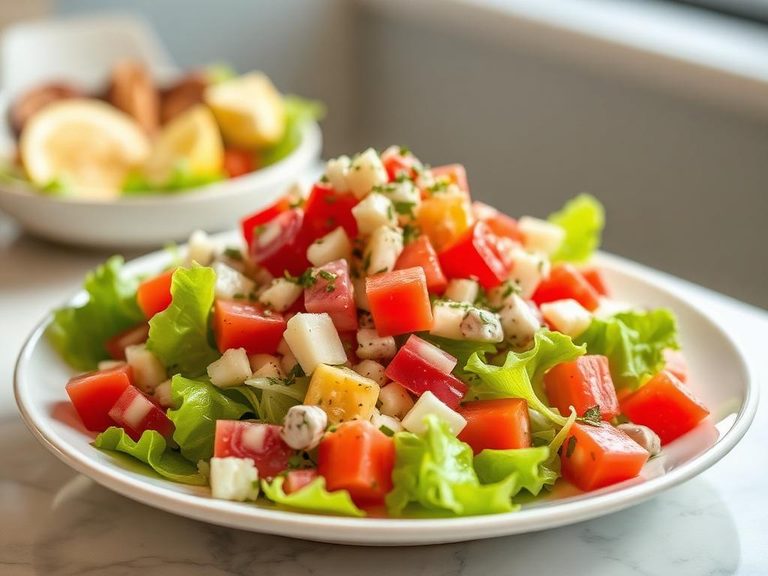
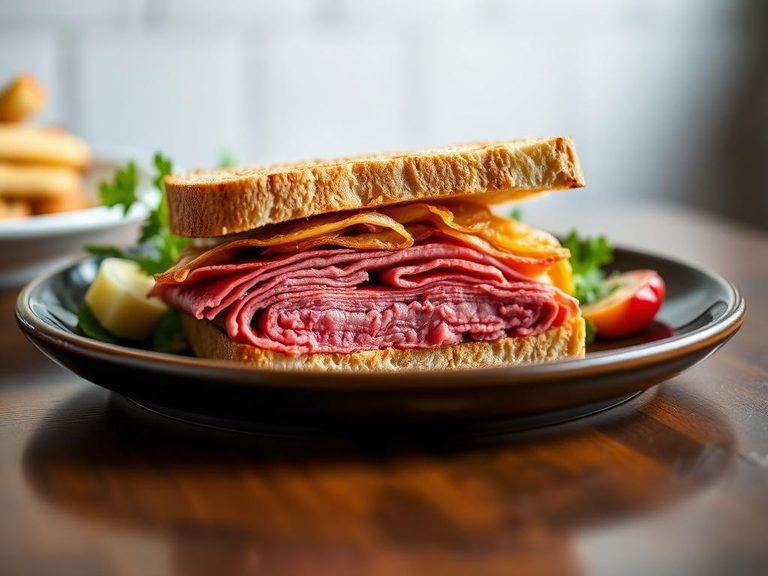
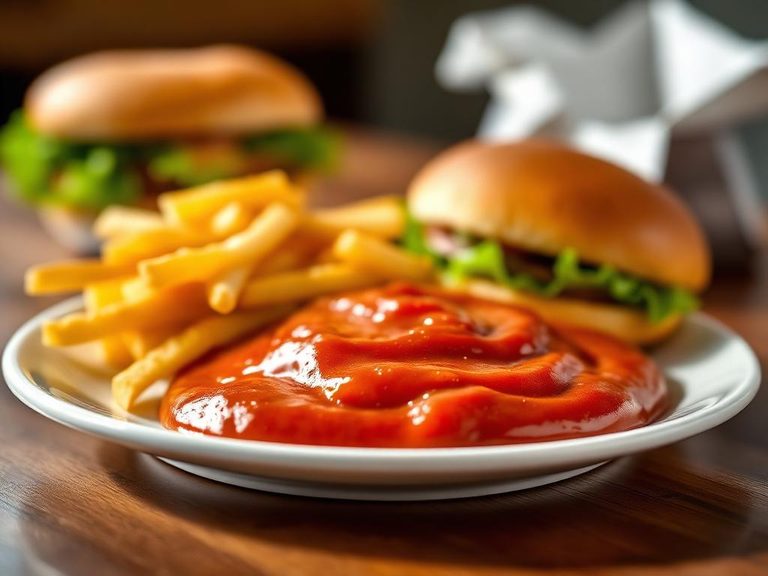
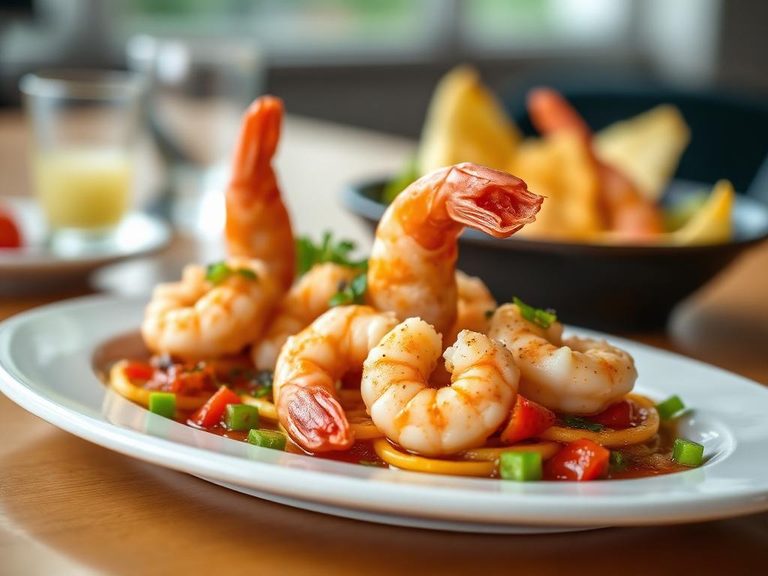
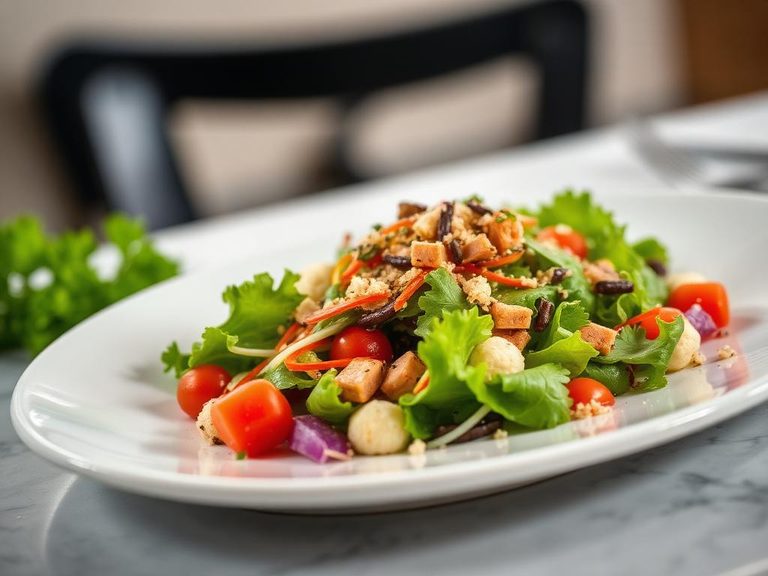
🌍 Where it's eaten
💡 Did you know?
The original Thousand Island dressing is said to have been created in the early 20th century by a fishing guide's wife in the Thousand Islands region of New York/Ontario, who improvised with what she had on hand, including ketchup and pickle relish.
Full nutrition (USDA data · scales with serving)
| Water | 66.1 g |
| Energy | 132 kcal |
| Energy | 554 kj |
| Protein | 0.55 g |
| Total lipid (fat) | 1.4 g |
| Ash | 2.6 g |
| Carbohydrate, by difference | 29.3 g |
| Fiber, total dietary | 3.3 g |
| Total Sugars | 16.8 g |
| Sucrose | 2.7 g |
| Glucose | 6.4 g |
| Fructose | 6.6 g |
| Lactose | 0.15 g |
| Maltose | 0.96 g |
| Galactose | 0.00 g |
| Starch | 11.8 g |
| Calcium, Ca | 11.0 mg |
| Iron, Fe | 0.28 mg |
| Magnesium, Mg | 4.0 mg |
| Phosphorus, P | 1.0 mg |
| Potassium, K | 122 mg |
| Sodium, Na | 788 mg |
| Zinc, Zn | 0.09 mg |
| Copper, Cu | 0.18 mg |
| Manganese, Mn | 0.02 mg |
| Selenium, Se | 2.0 ug |
| Vitamin C, total ascorbic acid | 0.00 mg |
| Thiamin | 0.24 mg |
| Riboflavin | 0.05 mg |
| Niacin | 0.26 mg |
| Pantothenic acid | 0.00 mg |
| Vitamin B-6 | 0.00 mg |
| Folate, total | 12.0 ug |
| Folic acid | 0.00 ug |
| Folate, food | 12.0 ug |
| Folate, DFE | 12.0 ug |
| Choline, total | 4.6 mg |
| Vitamin B-12 | 0.00 ug |
| Vitamin B-12, added | 0.00 ug |
| Vitamin A, RAE | 1.0 ug |
| Retinol | 0.00 ug |
| Carotene, beta | 0.00 ug |
| Carotene, alpha | 0.00 ug |
| Cryptoxanthin, beta | 13.0 ug |
| Vitamin A, IU | 11.0 iu |
| Lycopene | 1587 ug |
| Lutein + zeaxanthin | 0.00 ug |
| Vitamin E (alpha-tocopherol) | 0.75 mg |
| Vitamin E, added | 0.00 mg |
| Vitamin D (D2 + D3), International Units | 0.00 iu |
| Vitamin D (D2 + D3) | 0.00 ug |
| Vitamin K (phylloquinone) | 3.7 ug |
| Vitamin K (Dihydrophylloquinone) | 0.00 ug |
| Alcohol, ethyl | 0.00 g |
| Caffeine | 0.00 mg |
| Theobromine | 0.00 mg |
Fat & fatty acid profile (per 100g)
| Fatty acids, total saturated | 0.20 g |
| SFA 4:0 | 0.00 g |
| SFA 6:0 | 0.00 g |
| SFA 8:0 | 0.00 g |
| SFA 10:0 | 0.00 g |
| SFA 12:0 | 0.00 g |
| SFA 14:0 | 0.00 g |
| SFA 16:0 | 0.13 g |
| SFA 17:0 | 0.00 g |
| SFA 18:0 | 0.05 g |
| SFA 20:0 | 0.01 g |
| SFA 22:0 | 0.00 g |
| SFA 24:0 | 0.00 g |
| Fatty acids, total monounsaturated | 0.34 g |
| MUFA 16:1 | 0.01 g |
| MUFA 17:1 | 0.01 g |
| MUFA 18:1 | 0.28 g |
| MUFA 20:1 | 0.02 g |
| MUFA 22:1 | 0.02 g |
| Fatty acids, total polyunsaturated | 0.63 g |
| PUFA 18:2 | 0.54 g |
| PUFA 18:3 | 0.09 g |
| PUFA 18:4 | 0.00 g |
| PUFA 20:2 n-6 c,c | 0.00 g |
| PUFA 20:4 | 0.00 g |
| PUFA 20:5 n-3 (EPA) | 0.00 g |
| PUFA 22:5 n-3 (DPA) | 0.00 g |
| PUFA 22:6 n-3 (DHA) | 0.00 g |
| Cholesterol | 5.0 mg |
Amino acid profile (per 100g)
Estimated from Salad dressing, sesame seed dressing, regular — USDA does not publish this profile for Salad dressing.
| Tryptophan | 0.05 g |
| Threonine | 0.05 g |
| Isoleucine | 0.05 g |
| Leucine | 0.08 g |
| Lysine | 0.14 g |
| Methionine | 0.03 g |
| Cystine | 0.00 g |
| Phenylalanine | 0.09 g |
| Tyrosine | 0.10 g |
| Valine | 0.07 g |
| Arginine | 0.40 g |
| Histidine | 0.03 g |
| Alanine | 0.00 g |
| Aspartic acid | 0.00 g |
| Glutamic acid | 0.46 g |
| Glycine | 0.00 g |
| Proline | 0.00 g |
| Serine | 0.00 g |
FAQ
How does fat-free Thousand Island differ from regular?
Fat-free versions replace oil with thickeners like modified food starch and sweeteners like high-fructose corn syrup to mimic creaminess, resulting in a much higher carbohydrate and sugar content.
Is it suitable for a keto diet?
No. With nearly 30g of carbohydrates per 100g, it is incompatible with a ketogenic diet, which typically limits carbs to under 50g per day.
Can I use it in cooking?
It's best used as a cold condiment or dip. Heating can cause the starches to break down, resulting in a thin, watery texture and a less pleasant flavor.
Nutrient density (calculated · NRF9.3)
Nutrient Rich Foods index: beneficial nutrients (protein, fiber, vitamins, minerals) minus saturated fat, added sugar & sodium, per 100 kcal.
NRF9.3 index — Fulgoni, Keast & Drewnowski, 2009. Computed from USDA nutrients.
Weight-loss friendliness (composite index)
Energy density 1.32 kcal/g · 2% calories from protein · 3.3 g fiber · 16.8 g sugar per 100 g.
Composite of energy density (Rolls et al., 1999), protein & fiber satiety, minus sugar. A calculated heuristic — ranks satiety-per-calorie, not a clinical measure.
Dietary load (calculated from USDA values)
Potential renal acid load. Positive = acid-forming, negative = alkaline-forming.
Sodium-to-potassium ratio: 6.46 (lower is better — aim for ≤ 1)
Sodium:potassium per WHO potassium guidance. Computed from USDA nutrients.