

Potatoes, white, flesh and skin, raw
Whole food · Vegetables and Vegetable Products
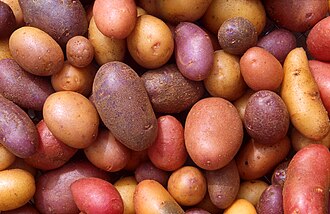
Photo: Wikipedia
The humble white potato, eaten raw, is a crisp, starchy tuber with a subtly earthy, slightly nutty flavor and a firm, watery crunch. Nutritionally, it's a low-calorie, high-fiber carbohydrate source, providing a solid base of energy with minimal fat.
Calorie split: 10% protein · 89% carbs · 1% fat
↓ Full nutrition💚 Why it's loved
People adore the potato for its incredible versatility—it can be boiled, baked, fried, or mashed and absorbs flavors beautifully. It's a global comfort food, central to countless cultural dishes from Irish colcannon to Japanese potato salad.
⚠️ Watch-outs & how to enjoy it better
Raw potatoes contain solanine, a natural glycoalkaloid that can be toxic in large quantities, and they are difficult to digest. For those monitoring blood sugar, the high carbohydrate content can cause spikes; pairing with protein or healthy fats and choosing boiled or cooled preparations can help moderate this effect.
Key benefits
- Excellent source of dietary fiber for digestive health
- Low in fat and calories, supporting weight management
- Provides essential potassium and vitamin C
- Naturally gluten-free carbohydrate source
- Contains resistant starch when cooked and cooled
🍽️ Popular dishes
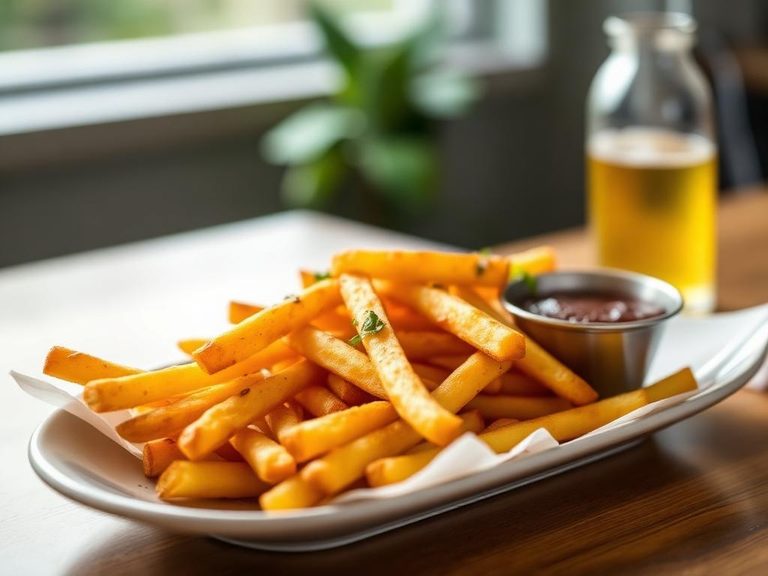
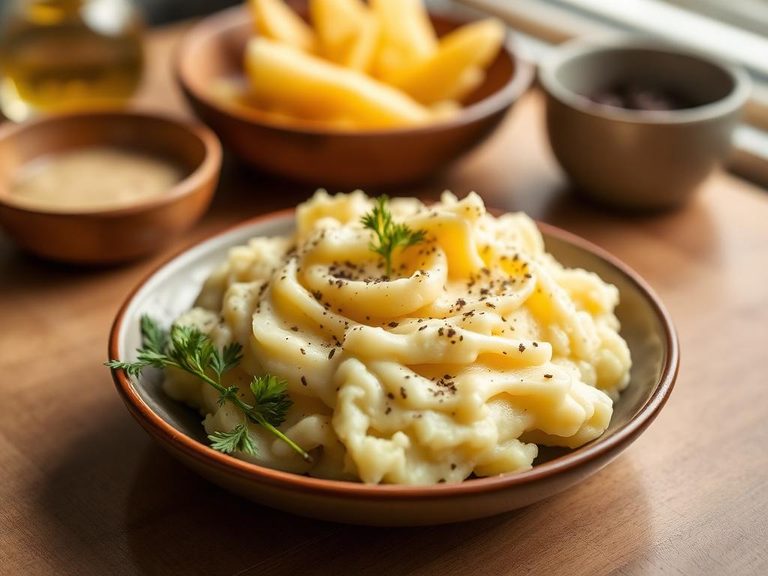
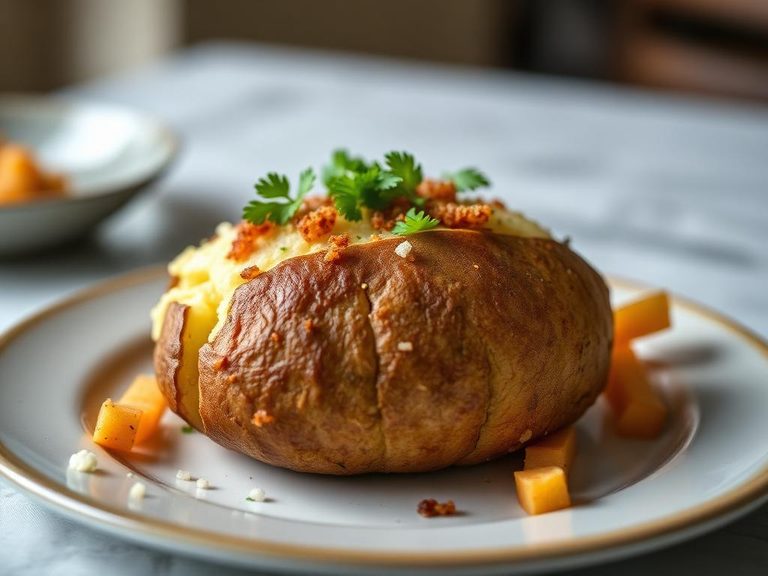
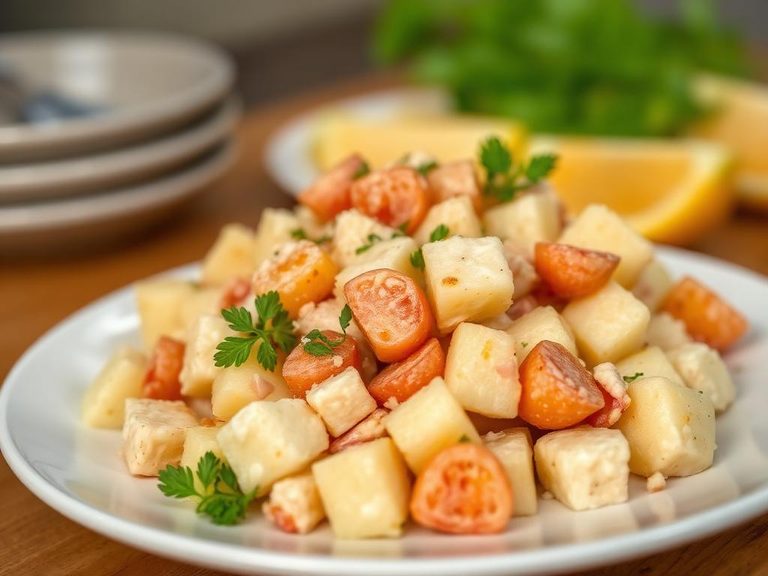
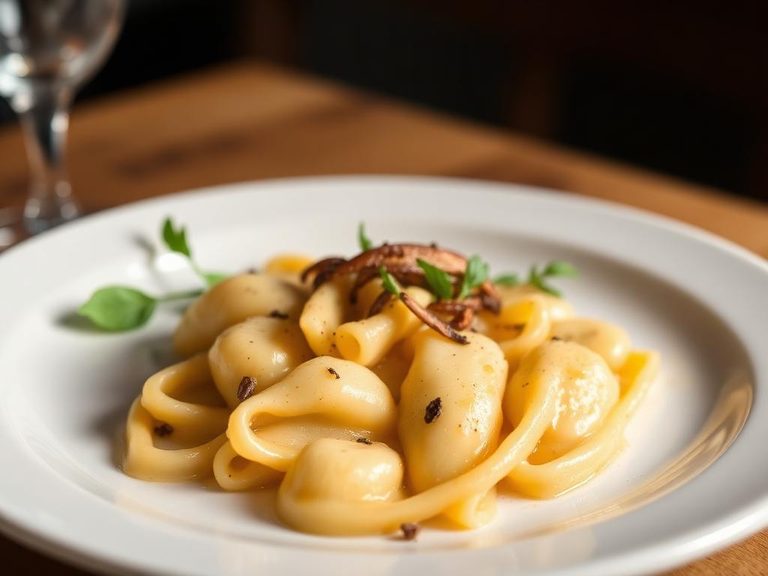
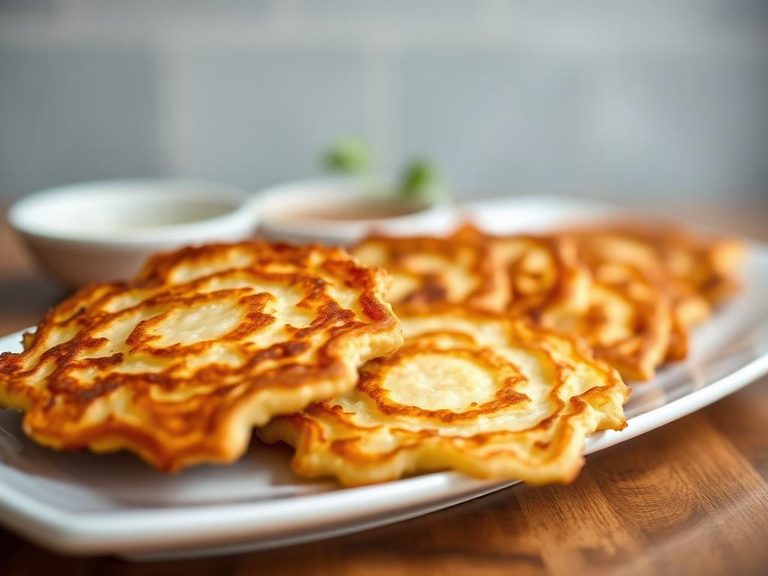
🌍 Where it's eaten
💡 Did you know?
Potatoes were the first food grown in space, aboard the NASA Space Shuttle Columbia in 1995.
Full nutrition (USDA data · scales with serving)
| Water | 81.6 g |
| Energy | 69.0 kcal |
| Energy | 288 kj |
| Protein | 1.7 g |
| Total lipid (fat) | 0.10 g |
| Ash | 0.94 g |
| Carbohydrate, by difference | 15.7 g |
| Fiber, total dietary | 2.4 g |
| Total Sugars | 1.1 g |
| Sucrose | 0.28 g |
| Glucose | 0.53 g |
| Fructose | 0.34 g |
| Lactose | 0.00 g |
| Maltose | 0.00 g |
| Galactose | 0.00 g |
| Starch | 13.5 g |
| Calcium, Ca | 9.0 mg |
| Iron, Fe | 0.52 mg |
| Magnesium, Mg | 21.0 mg |
| Phosphorus, P | 62.0 mg |
| Potassium, K | 407 mg |
| Sodium, Na | 16.0 mg |
| Zinc, Zn | 0.29 mg |
| Copper, Cu | 0.12 mg |
| Manganese, Mn | 0.14 mg |
| Selenium, Se | 0.30 ug |
| Vitamin C, total ascorbic acid | 9.1 mg |
| Thiamin | 0.07 mg |
| Riboflavin | 0.03 mg |
| Niacin | 1.1 mg |
| Pantothenic acid | 0.28 mg |
| Vitamin B-6 | 0.20 mg |
| Folate, total | 18.0 ug |
| Folic acid | 0.00 ug |
| Folate, food | 18.0 ug |
| Folate, DFE | 18.0 ug |
| Choline, total | 11.0 mg |
| Betaine | 0.20 mg |
| Vitamin B-12 | 0.00 ug |
| Vitamin A, RAE | 0.00 ug |
| Retinol | 0.00 ug |
| Carotene, beta | 5.0 ug |
| Carotene, alpha | 0.00 ug |
| Cryptoxanthin, beta | 0.00 ug |
| Vitamin A, IU | 8.0 iu |
| Lycopene | 0.00 ug |
| Lutein + zeaxanthin | 13.0 ug |
| Vitamin E (alpha-tocopherol) | 0.01 mg |
| Tocopherol, beta | 0.00 mg |
| Tocopherol, gamma | 0.00 mg |
| Tocopherol, delta | 0.00 mg |
| Vitamin D (D2 + D3), International Units | 0.00 iu |
| Vitamin D (D2 + D3) | 0.00 ug |
| Vitamin K (phylloquinone) | 1.6 ug |
| Vitamin K (Dihydrophylloquinone) | 0.00 ug |
| Alcohol, ethyl | 0.00 g |
| Caffeine | 0.00 mg |
| Theobromine | 0.00 mg |
Fat & fatty acid profile (per 100g)
| Fatty acids, total saturated | 0.03 g |
| SFA 4:0 | 0.00 g |
| SFA 6:0 | 0.00 g |
| SFA 8:0 | 0.00 g |
| SFA 10:0 | 0.00 g |
| SFA 12:0 | 0.00 g |
| SFA 14:0 | 0.00 g |
| SFA 16:0 | 0.02 g |
| SFA 18:0 | 0.00 g |
| Fatty acids, total monounsaturated | 0.00 g |
| MUFA 16:1 | 0.00 g |
| MUFA 18:1 | 0.00 g |
| MUFA 20:1 | 0.00 g |
| MUFA 22:1 | 0.00 g |
| Fatty acids, total polyunsaturated | 0.04 g |
| PUFA 18:2 | 0.03 g |
| PUFA 18:3 | 0.01 g |
| PUFA 18:4 | 0.00 g |
| PUFA 20:4 | 0.00 g |
| PUFA 20:5 n-3 (EPA) | 0.00 g |
| PUFA 22:5 n-3 (DPA) | 0.00 g |
| PUFA 22:6 n-3 (DHA) | 0.00 g |
| Fatty acids, total trans | 0.00 g |
| Cholesterol | 0.00 mg |
Amino acid profile (per 100g)
| Tryptophan | 0.02 g |
| Threonine | 0.06 g |
| Isoleucine | 0.05 g |
| Leucine | 0.08 g |
| Lysine | 0.09 g |
| Methionine | 0.03 g |
| Cystine | 0.02 g |
| Phenylalanine | 0.07 g |
| Tyrosine | 0.04 g |
| Valine | 0.08 g |
| Arginine | 0.08 g |
| Histidine | 0.03 g |
| Alanine | 0.05 g |
| Aspartic acid | 0.39 g |
| Glutamic acid | 0.29 g |
| Glycine | 0.05 g |
| Proline | 0.05 g |
| Serine | 0.06 g |
FAQ
Are raw potatoes safe to eat?
Raw potatoes are not typically eaten due to their hard texture, bitter taste, and the presence of solanine, which can cause digestive upset in large amounts. Cooking breaks down solanine and makes the starches digestible.
Why do potatoes have a high glycemic index?
The starch in potatoes is rapidly digested into glucose. However, the GI can be lowered by cooking and cooling them (forming resistant starch), eating them with fat/protein, or choosing waxy varieties over starchy ones.
What's the difference between white, red, and russet potatoes?
Russets are high-starch and fluffy, ideal for baking and frying. White and red potatoes are waxier with lower starch, holding their shape better for boiling, salads, and roasting. Nutritionally, they are very similar.
Nutrient density (calculated · NRF9.3)
Nutrient Rich Foods index: beneficial nutrients (protein, fiber, vitamins, minerals) minus saturated fat, added sugar & sodium, per 100 kcal.
NRF9.3 index — Fulgoni, Keast & Drewnowski, 2009. Computed from USDA nutrients.
Weight-loss friendliness (composite index)
Energy density 0.69 kcal/g · 10% calories from protein · 2.4 g fiber · 1.1 g sugar per 100 g.
Composite of energy density (Rolls et al., 1999), protein & fiber satiety, minus sugar. A calculated heuristic — ranks satiety-per-calorie, not a clinical measure.
Dietary load (calculated from USDA values)
Potential renal acid load. Positive = acid-forming, negative = alkaline-forming.
Sodium-to-potassium ratio: 0.04 (lower is better — aim for ≤ 1)
Sodium:potassium per WHO potassium guidance. Computed from USDA nutrients.