

Potatoes, boiled, cooked in skin, flesh, without salt
Whole food · Vegetables and Vegetable Products
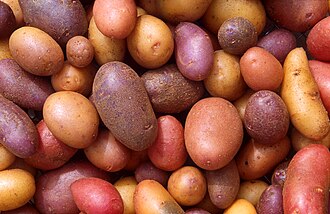
Photo: Wikipedia
A simple, earthy staple, the boiled potato in its skin offers a fluffy, creamy interior with a subtly sweet, starchy flavor. Its minimal processing preserves a clean, comforting taste and a satisfyingly soft texture. Nutritionally, it's a low-fat, calorie-conscious source of energy and dietary fiber, especially when the skin is eaten.
Calorie split: 8% protein · 91% carbs · 1% fat
↓ Full nutrition💚 Why it's loved
People cherish it for its incredible versatility—it's a blank canvas that absorbs flavors like butter, herbs, or sauces beautifully. It's also a deeply comforting, nostalgic food, often associated with home cooking and hearty meals across countless cultures.
⚠️ Watch-outs & how to enjoy it better
As a high-glycemic food, it can cause a rapid rise in blood sugar, which is a consideration for diabetics. To mitigate this, pair it with a source of protein (like beans or fish) or healthy fat (like olive oil or avocado) to slow digestion. The skin can also concentrate certain compounds like oxalates; those prone to kidney issues may opt to peel them.
Key benefits
- Good source of potassium, an essential mineral for fluid balance.
- Provides vitamin C, an antioxidant that supports immune function.
- The skin adds significant dietary fiber for digestive health.
- Naturally low in fat and contains no cholesterol.
- A gluten-free, whole-food carbohydrate source.
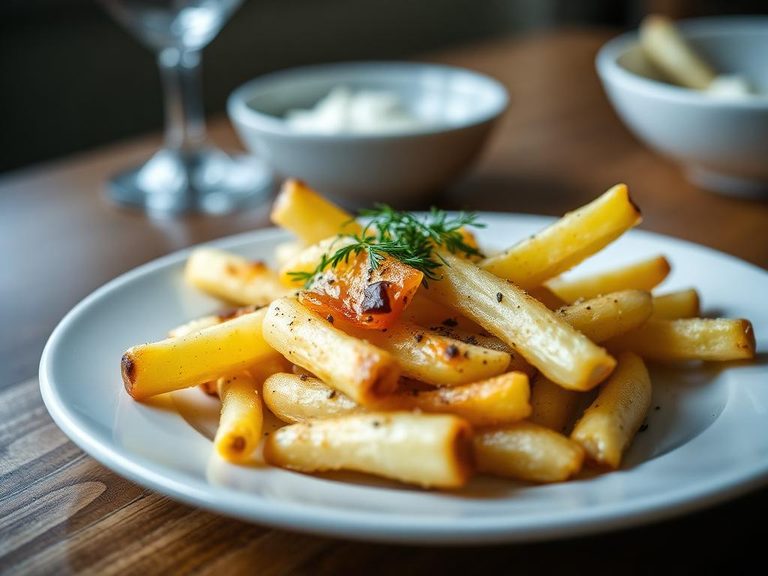
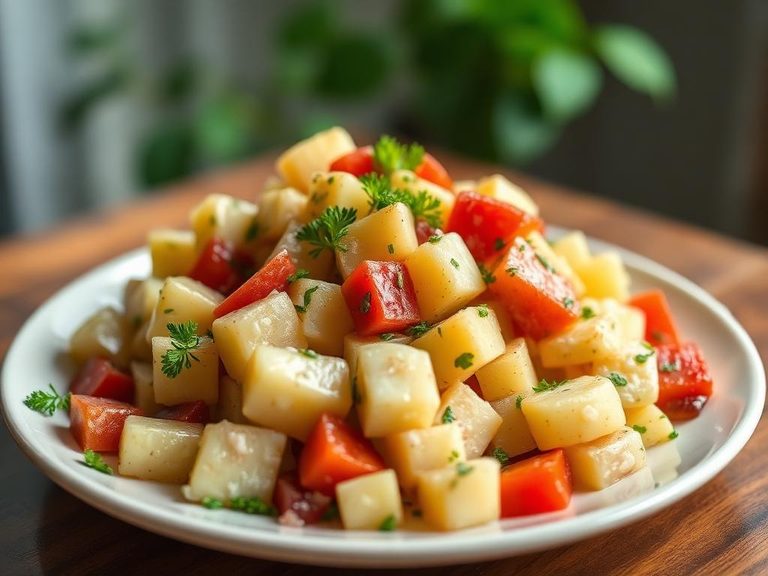
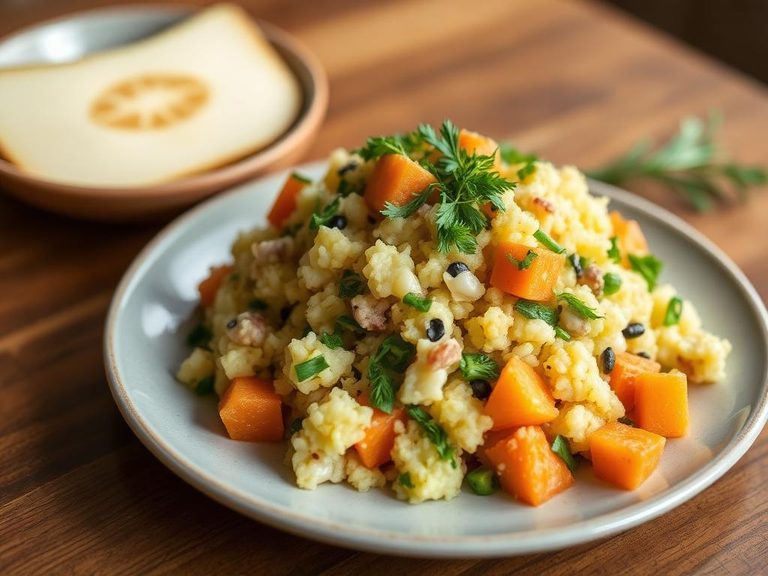
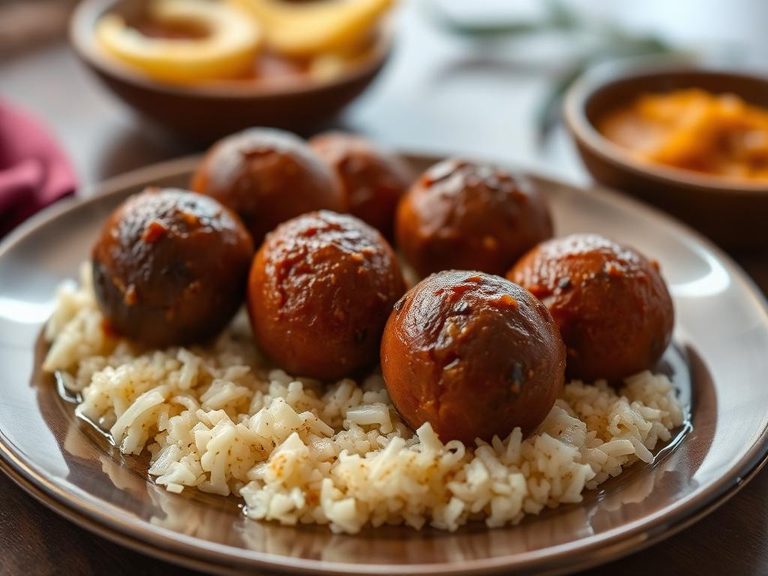
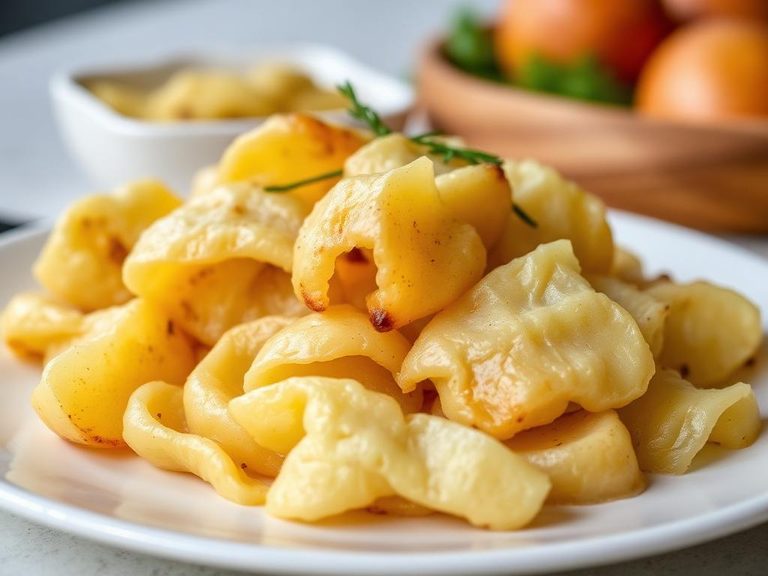
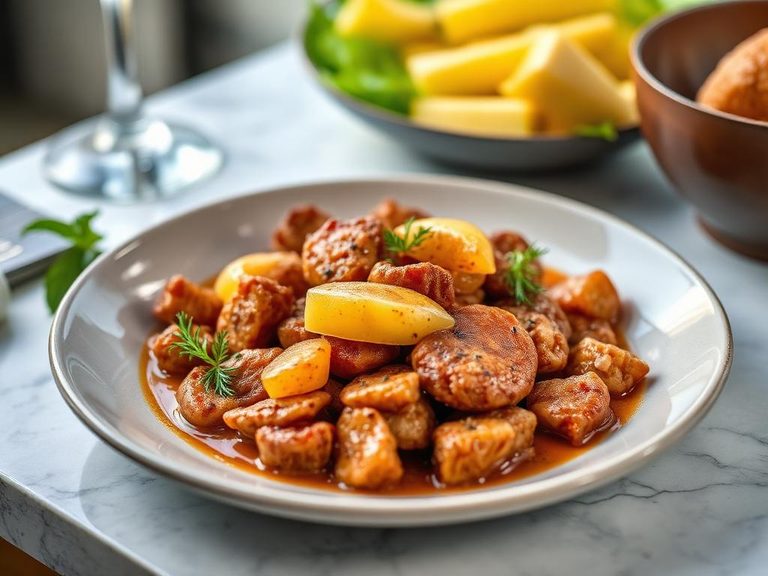
🍽️ Popular dishes
🌍 Where it's eaten
💡 Did you know?
The world record for the largest potato ever grown is 10.9 kg (24 lb 4 oz), grown in England in 2011.
Full nutrition (USDA data · scales with serving)
| Water | 77.0 g |
| Energy | 87.0 kcal |
| Energy | 364 kj |
| Protein | 1.9 g |
| Total lipid (fat) | 0.10 g |
| Ash | 0.92 g |
| Carbohydrate, by difference | 20.1 g |
| Fiber, total dietary | 1.8 g |
| Total Sugars | 0.91 g |
| Sucrose | 0.19 g |
| Glucose | 0.34 g |
| Fructose | 0.29 g |
| Lactose | 0.00 g |
| Maltose | 0.00 g |
| Galactose | 0.00 g |
| Calcium, Ca | 5.0 mg |
| Iron, Fe | 0.31 mg |
| Magnesium, Mg | 22.0 mg |
| Phosphorus, P | 44.0 mg |
| Potassium, K | 379 mg |
| Sodium, Na | 4.0 mg |
| Zinc, Zn | 0.30 mg |
| Copper, Cu | 0.19 mg |
| Manganese, Mn | 0.14 mg |
| Selenium, Se | 0.30 ug |
| Fluoride, F | 49.4 ug |
| Vitamin C, total ascorbic acid | 13.0 mg |
| Thiamin | 0.11 mg |
| Riboflavin | 0.02 mg |
| Niacin | 1.4 mg |
| Pantothenic acid | 0.52 mg |
| Vitamin B-6 | 0.30 mg |
| Folate, total | 10.0 ug |
| Folic acid | 0.00 ug |
| Folate, food | 10.0 ug |
| Folate, DFE | 10.0 ug |
| Choline, total | 13.5 mg |
| Betaine | 0.20 mg |
| Vitamin B-12 | 0.00 ug |
| Vitamin B-12, added | 0.00 ug |
| Vitamin A, RAE | 0.00 ug |
| Retinol | 0.00 ug |
| Carotene, beta | 2.0 ug |
| Carotene, alpha | 0.00 ug |
| Cryptoxanthin, beta | 0.00 ug |
| Vitamin A, IU | 3.0 iu |
| Lycopene | 0.00 ug |
| Lutein + zeaxanthin | 10.0 ug |
| Vitamin E (alpha-tocopherol) | 0.01 mg |
| Vitamin E, added | 0.00 mg |
| Vitamin D (D2 + D3), International Units | 0.00 iu |
| Vitamin D (D2 + D3) | 0.00 ug |
| Vitamin K (phylloquinone) | 2.2 ug |
| Alcohol, ethyl | 0.00 g |
| Caffeine | 0.00 mg |
| Theobromine | 0.00 mg |
Fat & fatty acid profile (per 100g)
| Fatty acids, total saturated | 0.03 g |
| SFA 4:0 | 0.00 g |
| SFA 6:0 | 0.00 g |
| SFA 8:0 | 0.00 g |
| SFA 10:0 | 0.00 g |
| SFA 12:0 | 0.00 g |
| SFA 14:0 | 0.00 g |
| SFA 16:0 | 0.02 g |
| SFA 18:0 | 0.00 g |
| Fatty acids, total monounsaturated | 0.00 g |
| MUFA 16:1 | 0.00 g |
| MUFA 18:1 | 0.00 g |
| MUFA 20:1 | 0.00 g |
| MUFA 22:1 | 0.00 g |
| Fatty acids, total polyunsaturated | 0.04 g |
| PUFA 18:2 | 0.03 g |
| PUFA 18:3 | 0.01 g |
| PUFA 18:4 | 0.00 g |
| PUFA 20:4 | 0.00 g |
| PUFA 20:5 n-3 (EPA) | 0.00 g |
| PUFA 22:5 n-3 (DPA) | 0.00 g |
| PUFA 22:6 n-3 (DHA) | 0.00 g |
| Fatty acids, total trans | 0.00 g |
| Cholesterol | 0.00 mg |
Amino acid profile (per 100g)
| Tryptophan | 0.03 g |
| Threonine | 0.07 g |
| Isoleucine | 0.08 g |
| Leucine | 0.11 g |
| Lysine | 0.11 g |
| Methionine | 0.03 g |
| Cystine | 0.02 g |
| Phenylalanine | 0.08 g |
| Tyrosine | 0.07 g |
| Valine | 0.10 g |
| Arginine | 0.09 g |
| Histidine | 0.04 g |
| Alanine | 0.06 g |
| Aspartic acid | 0.46 g |
| Glutamic acid | 0.31 g |
| Glycine | 0.06 g |
| Proline | 0.07 g |
| Serine | 0.08 g |
FAQ
Does boiling with the skin on affect nutrition?
Yes, it helps. Cooking with the skin on acts as a protective barrier, minimizing the loss of water-soluble vitamins like vitamin C and B vitamins into the cooking water.
Is the skin edible and nutritious?
Absolutely. The skin contains a significant portion of the potato's total fiber, as well as minerals like potassium and iron. Simply scrub it well before boiling.
How does it compare nutritionally to a baked potato?
Very similarly, as both are whole, unprocessed preparations. Boiling may result in slightly less mineral concentration than baking, but the difference is minor. The key is avoiding added fats and salts after cooking.
Nutrient density (calculated · NRF9.3)
Nutrient Rich Foods index: beneficial nutrients (protein, fiber, vitamins, minerals) minus saturated fat, added sugar & sodium, per 100 kcal.
NRF9.3 index — Fulgoni, Keast & Drewnowski, 2009. Computed from USDA nutrients.
Weight-loss friendliness (composite index)
Energy density 0.87 kcal/g · 9% calories from protein · 1.8 g fiber · 0.9 g sugar per 100 g.
Composite of energy density (Rolls et al., 1999), protein & fiber satiety, minus sugar. A calculated heuristic — ranks satiety-per-calorie, not a clinical measure.
Dietary load (calculated from USDA values)
Potential renal acid load. Positive = acid-forming, negative = alkaline-forming.
Sodium-to-potassium ratio: 0.01 (lower is better — aim for ≤ 1)
Sodium:potassium per WHO potassium guidance. Computed from USDA nutrients.