

Plantains, ripe, raw
Whole food · Fruits and Fruit Juices
Ripe raw plantains are the sweet, starchy cousin of the banana, boasting a deep yellow peel speckled with black. Their texture is firm yet creamy, with a flavor that balances caramel-like sweetness and earthy undertones. Nutritionally, they are a powerhouse of complex carbohydrates and dietary fiber, providing sustained energy without the refined sugar crash.
Calorie split: 3% protein · 91% carbs · 6% fat
↓ Full nutrition💚 Why it's loved
People love ripe plantains for their unique, sweet flavor that deepens with cooking, transforming into a caramelized treat. Their versatility allows them to be fried, baked, or boiled, making them a beloved staple in countless cultural dishes.
⚠️ Watch-outs & how to enjoy it better
Ripe plantains are high in carbohydrates and can cause blood sugar spikes if consumed in large quantities without balancing with protein or fat. To counteract this, pair them with a protein source like beans or eggs, and practice portion control by sticking to a medium-sized serving.
Key benefits
- Rich in resistant starch, which supports gut health and improves insulin sensitivity
- Excellent source of potassium, essential for heart health and blood pressure regulation
- High in dietary fiber, promoting satiety and healthy digestion
- Provides a steady release of energy due to its complex carbohydrate profile
- Naturally gluten-free and suitable for various dietary restrictions
🍽️ Popular dishes
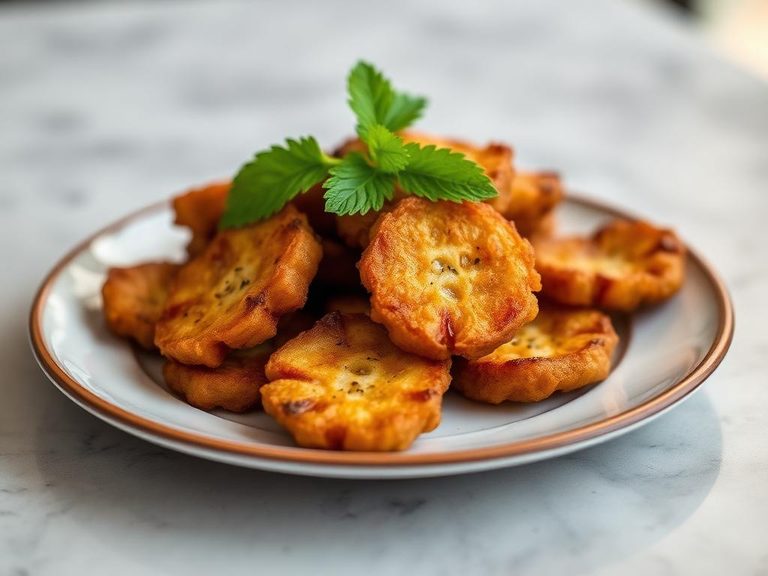
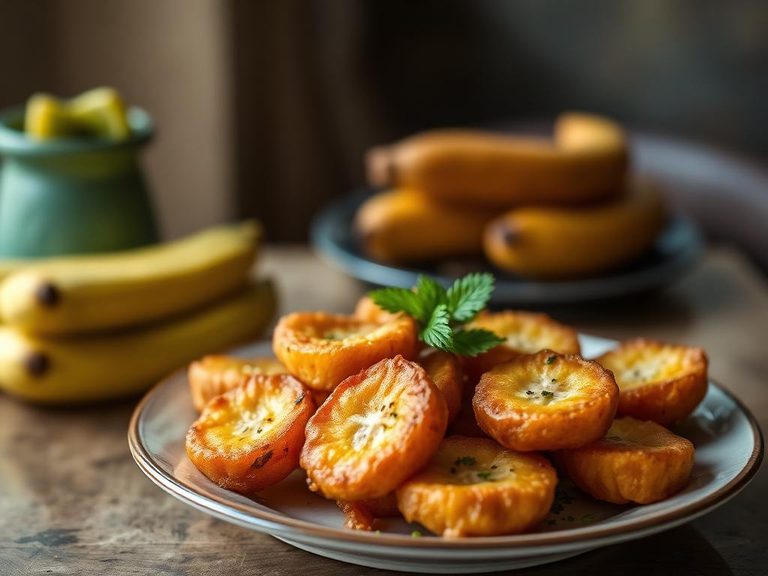
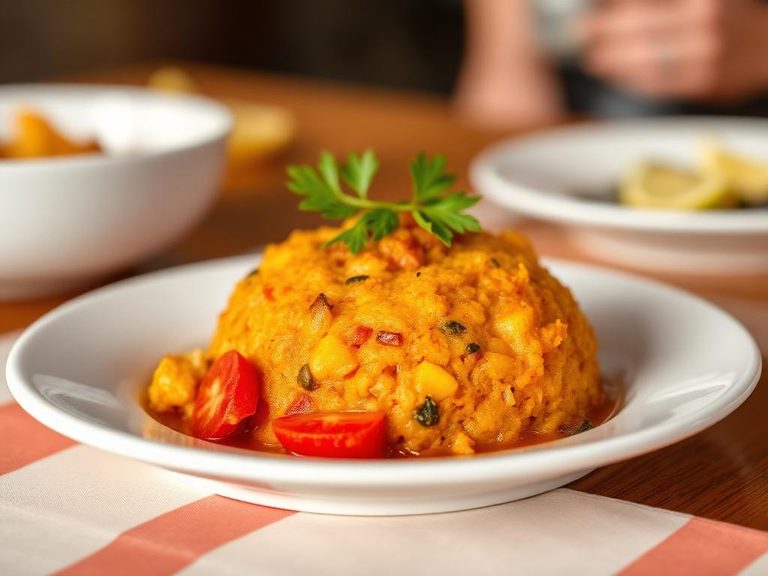
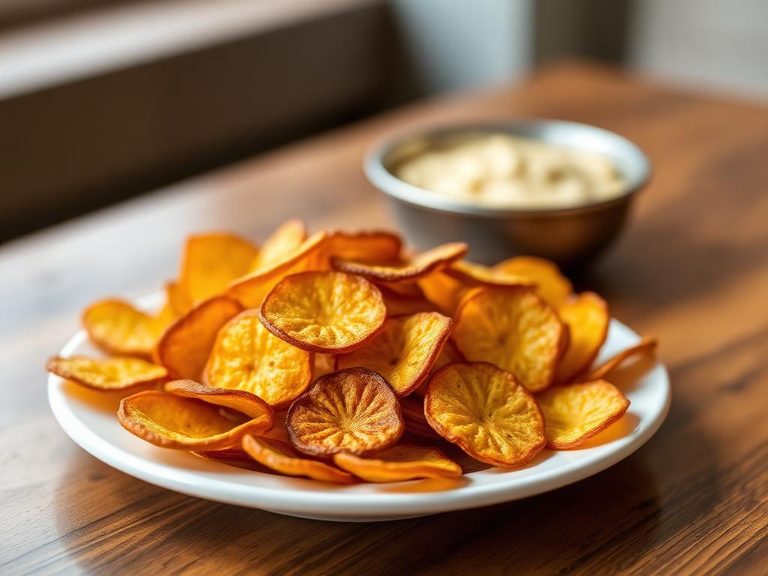
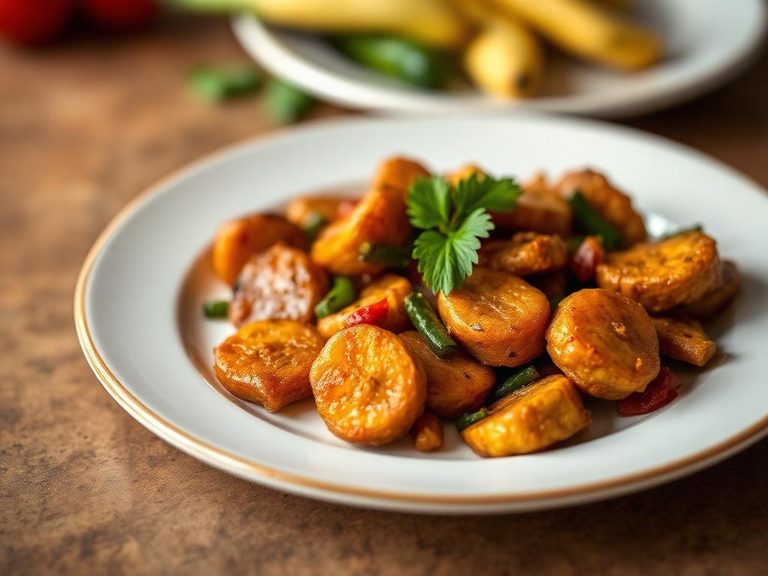
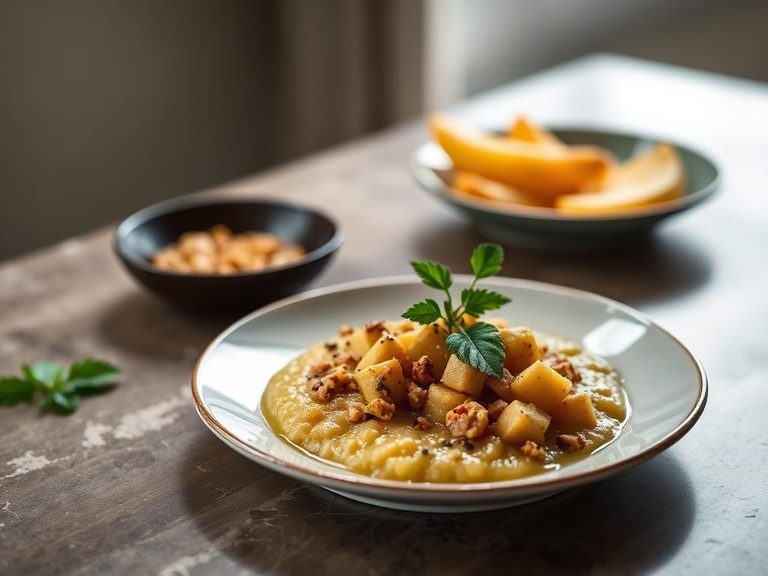
🌍 Where it's eaten
💡 Did you know?
Despite their sweet taste, ripe plantains have a lower glycemic index than many common fruits like watermelon or pineapple, making them a surprisingly better option for blood sugar management.
Full nutrition (USDA data · scales with serving)
| Water | 66.1 g |
| Energy (Atwater General Factors) | 136 kcal |
| Energy (Atwater Specific Factors) | 123 kcal |
| Nitrogen | 0.18 g |
| Protein | 1.2 g |
| Total lipid (fat) | 0.89 g |
| Ash | 0.94 g |
| Carbohydrate, by difference | 31.0 g |
| Fiber, total dietary | 2.1 g |
| Sugars, Total | 14.2 g |
| Sucrose | 0.00 g |
| Glucose | 7.1 g |
| Fructose | 7.2 g |
| Lactose | 0.00 g |
| Maltose | 0.00 g |
| Starch | 13.6 g |
| Resistant starch | 12.0 g |
| Calcium, Ca | 3.8 mg |
| Iron, Fe | 0.32 mg |
| Magnesium, Mg | 33.9 mg |
| Phosphorus, P | 30.1 mg |
| Potassium, K | 396 mg |
| Sodium, Na | 0.00 mg |
| Zinc, Zn | 0.15 mg |
| Copper, Cu | 0.10 mg |
| Manganese, Mn | 0.20 mg |
| Vitamin C, total ascorbic acid | 20.1 mg |
| Riboflavin | 0.10 mg |
| Vitamin B-6 | 0.19 mg |
Fat & fatty acid profile (per 100g)
Estimated from Plantains, green, boiled — USDA does not publish this profile for Plantains.
| Fatty acids, total saturated | 0.07 g |
| SFA 4:0 | 0.01 g |
| SFA 6:0 | 0.00 g |
| SFA 8:0 | 0.00 g |
| SFA 10:0 | 0.00 g |
| SFA 12:0 | 0.00 g |
| SFA 14:0 | 0.00 g |
| SFA 15:0 | 0.00 g |
| SFA 16:0 | 0.04 g |
| SFA 17:0 | 0.00 g |
| SFA 18:0 | 0.01 g |
| SFA 20:0 | 0.00 g |
| SFA 22:0 | 0.00 g |
| SFA 24:0 | 0.00 g |
| Fatty acids, total monounsaturated | 0.01 g |
| MUFA 14:1 | 0.00 g |
| MUFA 15:1 | 0.00 g |
| MUFA 16:1 | 0.00 g |
| MUFA 16:1 c | 0.00 g |
| MUFA 17:1 | 0.00 g |
| MUFA 18:1 | 0.01 g |
| MUFA 18:1 c | 0.01 g |
| MUFA 20:1 | 0.00 g |
| MUFA 22:1 | 0.00 g |
| MUFA 22:1 c | 0.00 g |
| MUFA 24:1 c | 0.00 g |
| Fatty acids, total polyunsaturated | 0.08 g |
| PUFA 18:2 | 0.05 g |
| PUFA 18:2 n-6 c,c | 0.05 g |
| PUFA 18:2 CLAs | 0.00 g |
| PUFA 18:3 | 0.03 g |
| PUFA 18:3 n-3 c,c,c (ALA) | 0.03 g |
| PUFA 18:3 n-6 c,c,c | 0.00 g |
| PUFA 18:3i | 0.00 g |
| PUFA 18:4 | 0.00 g |
| PUFA 20:2 n-6 c,c | 0.00 g |
| PUFA 20:3 | 0.00 g |
| PUFA 20:3 n-3 | 0.00 g |
| PUFA 20:3 n-6 | 0.00 g |
| PUFA 20:4 | 0.00 g |
| PUFA 20:5 n-3 (EPA) | 0.00 g |
| PUFA 22:4 | 0.00 g |
| PUFA 22:5 n-3 (DPA) | 0.00 g |
| PUFA 22:6 n-3 (DHA) | 0.00 g |
| Fatty acids, total trans | 0.00 g |
| Fatty acids, total trans-monoenoic | 0.00 g |
| TFA 16:1 t | 0.00 g |
| TFA 18:1 t | 0.00 g |
| TFA 22:1 t | 0.00 g |
| TFA 18:2 t not further defined | 0.00 g |
| Fatty acids, total trans-polyenoic | 0.00 g |
Amino acid profile (per 100g)
Estimated from Plantains, green, boiled — USDA does not publish this profile for Plantains.
| Tryptophan | 0.01 g |
| Threonine | 0.02 g |
| Isoleucine | 0.02 g |
| Leucine | 0.04 g |
| Lysine | 0.05 g |
| Methionine | 0.01 g |
| Cystine | 0.02 g |
| Phenylalanine | 0.03 g |
| Tyrosine | 0.02 g |
| Valine | 0.02 g |
| Arginine | 0.06 g |
| Histidine | 0.06 g |
| Alanine | 0.03 g |
| Aspartic acid | 0.09 g |
| Glutamic acid | 0.08 g |
| Glycine | 0.03 g |
| Proline | 0.03 g |
| Serine | 0.03 g |
| Hydroxyproline | 0.00 g |
FAQ
Are ripe plantains the same as bananas?
No, while they are related, plantains are larger, starchier, and typically require cooking to be palatable, whereas bananas are sweeter and often eaten raw.
Can I eat ripe plantains raw?
Yes, ripe plantains can be eaten raw, but they are firmer and less sweet than bananas, and their texture is more starchy.
How do I know when a plantain is ripe?
A ripe plantain will have a deep yellow peel with black spots or be mostly black, indicating it is sweet and ready for cooking or eating.
Are plantains gluten-free?
Yes, plantains are naturally gluten-free and are a safe option for those with celiac disease or gluten sensitivity.
Nutrient density (calculated · NRF9.3)
Nutrient Rich Foods index: beneficial nutrients (protein, fiber, vitamins, minerals) minus saturated fat, added sugar & sodium, per 100 kcal.
NRF9.3 index — Fulgoni, Keast & Drewnowski, 2009. Computed from USDA nutrients.
Weight-loss friendliness (composite index)
Energy density 1.36 kcal/g · 3% calories from protein · 2.1 g fiber · 0.0 g sugar per 100 g.
Composite of energy density (Rolls et al., 1999), protein & fiber satiety, minus sugar. A calculated heuristic — ranks satiety-per-calorie, not a clinical measure.
Dietary load (calculated from USDA values)
Potential renal acid load. Positive = acid-forming, negative = alkaline-forming.
Sodium-to-potassium ratio: 0.00 (lower is better — aim for ≤ 1)
Sodium:potassium per WHO potassium guidance. Computed from USDA nutrients.