

PIZZA HUT 14" Sausage Pizza, Pan Crust
Whole food · Fast Foods

Photo: Wikipedia
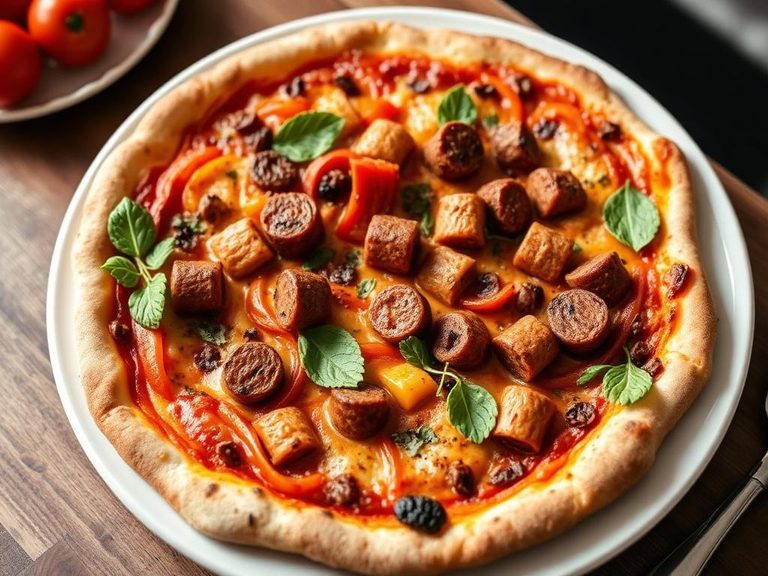
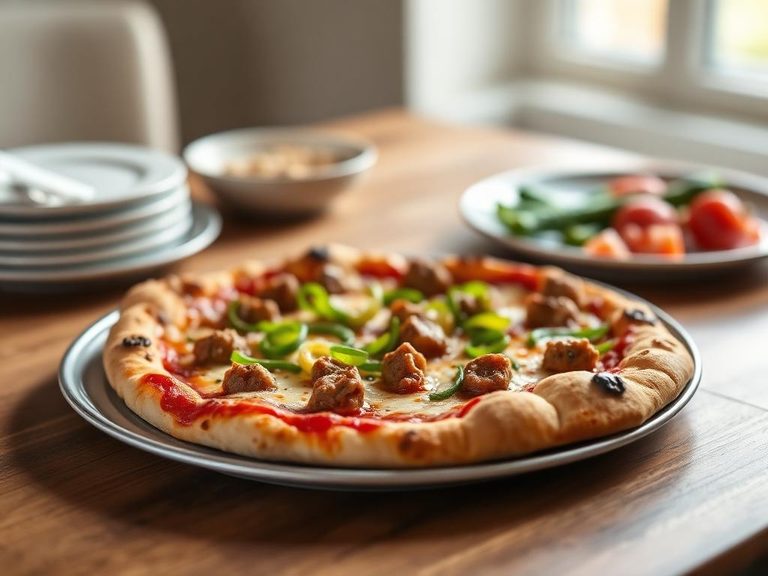
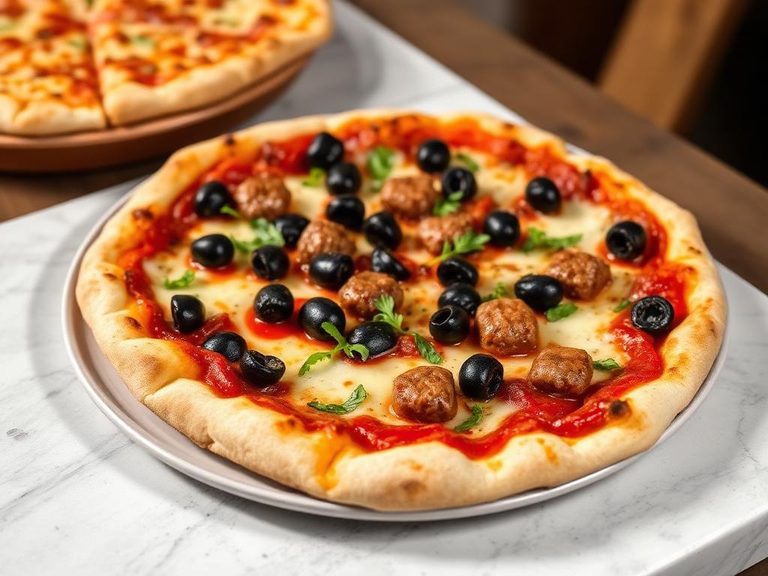
A classic, hearty slice of American comfort food, the Pizza Hut 14" Sausage Pan Crust pizza features a thick, golden, and chewy dough base topped with a savory blend of tomato sauce, melted mozzarella cheese, and seasoned sausage crumbles. The pan crust provides a satisfying, slightly crispy exterior with a soft, pillowy interior, while the sausage delivers a rich, salty, and spiced flavor profile. Nutritionally, it is a calorie-dense option, with a single 100g serving providing a balanced mix of protein, carbohydrates, and fats, though it is relatively low in fiber and sugar.
Calorie split: 15% protein · 41% carbs · 43% fat
↓ Full nutrition💚 Why it's loved
People love it for its nostalgic, indulgent flavor—the combination of savory sausage, gooey cheese, and the signature buttery, crispy-yet-soft pan crust is a quintessential comfort food experience. It's a versatile crowd-pleaser, perfect for sharing at gatherings, movie nights, or as a convenient, satisfying meal.
⚠️ Watch-outs & how to enjoy it better
The high sodium and saturated fat content from the sausage and cheese can be a concern for those monitoring blood pressure or heart health, and the refined carbohydrates in the pan crust can lead to blood-sugar spikes. To counteract this, consider pairing a single slice with a large side salad dressed with olive oil and vinegar to add fiber and healthy fats, or opt for a smaller portion and supplement with lean protein like grilled chicken on the side.
Key benefits
- Provides a good source of protein (11g per 100g) for muscle maintenance.
- Offers a quick and convenient source of energy from its carbohydrate content.
- Contains calcium and phosphorus from the cheese, supporting bone health.
- The pan crust's texture provides a satisfying and filling eating experience.
🍽️ Popular dishes
🌍 Where it's eaten
💡 Did you know?
The Pizza Hut pan crust was famously developed in the 1960s by a franchisee who used a specific pan with oil to create a unique, buttery, and crispy texture that became a signature of the chain's pizzas.
Full nutrition (USDA data · scales with serving)
| Water | 43.3 g |
| Energy | 287 kcal |
| Energy | 1202 kj |
| Protein | 11.1 g |
| Total lipid (fat) | 13.8 g |
| Ash | 2.2 g |
| Carbohydrate, by difference | 29.6 g |
| Fiber, total dietary | 2.0 g |
| Total Sugars | 1.8 g |
| Sucrose | 0.00 g |
| Glucose | 0.33 g |
| Fructose | 0.37 g |
| Lactose | 0.33 g |
| Maltose | 0.70 g |
| Galactose | 0.08 g |
| Starch | 23.5 g |
| Calcium, Ca | 132 mg |
| Iron, Fe | 2.4 mg |
| Magnesium, Mg | 21.0 mg |
| Phosphorus, P | 179 mg |
| Potassium, K | 192 mg |
| Sodium, Na | 596 mg |
| Zinc, Zn | 1.3 mg |
| Copper, Cu | 0.10 mg |
| Manganese, Mn | 0.38 mg |
| Selenium, Se | 15.8 ug |
| Vitamin C, total ascorbic acid | 1.6 mg |
| Thiamin | 0.40 mg |
| Riboflavin | 0.20 mg |
| Niacin | 3.8 mg |
| Vitamin B-6 | 0.09 mg |
| Vitamin B-12 | 0.48 ug |
Fat & fatty acid profile (per 100g)
| Fatty acids, total saturated | 4.9 g |
| SFA 4:0 | 0.07 g |
| SFA 6:0 | 0.06 g |
| SFA 8:0 | 0.04 g |
| SFA 10:0 | 0.10 g |
| SFA 12:0 | 0.12 g |
| SFA 14:0 | 0.45 g |
| SFA 15:0 | 0.04 g |
| SFA 16:0 | 2.7 g |
| SFA 17:0 | 0.05 g |
| SFA 18:0 | 1.2 g |
| SFA 20:0 | 0.03 g |
| SFA 22:0 | 0.02 g |
| SFA 24:0 | 0.01 g |
| Fatty acids, total monounsaturated | 4.3 g |
| MUFA 14:1 | 0.03 g |
| MUFA 15:1 | 0.00 g |
| MUFA 16:1 | 0.20 g |
| MUFA 16:1 c | 0.18 g |
| MUFA 17:1 | 0.02 g |
| MUFA 18:1 | 3.9 g |
| MUFA 18:1 c | 3.8 g |
| MUFA 20:1 | 0.08 g |
| MUFA 22:1 | 0.00 g |
| MUFA 22:1 c | 0.00 g |
| MUFA 24:1 c | 0.00 g |
| Fatty acids, total polyunsaturated | 3.7 g |
| PUFA 18:2 | 3.3 g |
| PUFA 18:2 n-6 c,c | 3.2 g |
| PUFA 18:2 CLAs | 0.04 g |
| PUFA 18:3 | 0.35 g |
| PUFA 18:3 n-3 c,c,c (ALA) | 0.35 g |
| PUFA 18:3 n-6 c,c,c | 0.00 g |
| PUFA 18:4 | 0.00 g |
| PUFA 20:2 n-6 c,c | 0.04 g |
| PUFA 20:3 | 0.02 g |
| PUFA 20:3 n-3 | 0.01 g |
| PUFA 20:3 n-6 | 0.01 g |
| PUFA 20:4 | 0.03 g |
| PUFA 20:5 n-3 (EPA) | 0.00 g |
| PUFA 22:4 | 0.01 g |
| PUFA 22:5 n-3 (DPA) | 0.01 g |
| PUFA 22:6 n-3 (DHA) | 0.00 g |
| Fatty acids, total trans | 0.20 g |
| Fatty acids, total trans-monoenoic | 0.14 g |
| TFA 16:1 t | 0.02 g |
| TFA 18:1 t | 0.13 g |
| TFA 22:1 t | 0.00 g |
| TFA 18:2 t not further defined | 0.06 g |
| Fatty acids, total trans-polyenoic | 0.06 g |
| Cholesterol | 23.0 mg |
Amino acid profile (per 100g)
Estimated from PIZZA HUT 12" Super Supreme Pizza, Hand-Tossed Crust — USDA does not publish this profile for PIZZA HUT 14" Sausage Pizza.
| Tryptophan | 0.10 g |
| Threonine | 0.38 g |
| Isoleucine | 0.48 g |
| Leucine | 0.93 g |
| Lysine | 0.71 g |
| Methionine | 0.21 g |
| Cystine | 0.15 g |
| Phenylalanine | 0.55 g |
| Tyrosine | 0.42 g |
| Valine | 0.60 g |
| Arginine | 0.53 g |
| Histidine | 0.32 g |
| Alanine | 0.48 g |
| Aspartic acid | 0.83 g |
| Glutamic acid | 2.8 g |
| Glycine | 0.44 g |
| Proline | 1.0 g |
| Serine | 0.58 g |
FAQ
How does the pan crust differ from other pizza crusts?
The pan crust is thicker and softer, with a buttery, crispy exterior achieved by baking the dough in an oiled pan, unlike the thinner, crispier thin crust or the chewier hand-tossed crust.
Is this pizza suitable for a low-carb diet?
No, the pan crust is high in carbohydrates, making it unsuitable for low-carb or ketogenic diets. A thin-crust or cauliflower-crust option would be a better alternative.
What are the main allergens in this pizza?
The primary allergens are wheat (from the crust), dairy (from the cheese), and potentially soy (from the sausage or sauce). Always check the specific ingredient list for any additional allergens.
Nutrient density (calculated · NRF9.3)
Nutrient Rich Foods index: beneficial nutrients (protein, fiber, vitamins, minerals) minus saturated fat, added sugar & sodium, per 100 kcal.
NRF9.3 index — Fulgoni, Keast & Drewnowski, 2009. Computed from USDA nutrients.
Weight-loss friendliness (composite index)
Energy density 2.87 kcal/g · 15% calories from protein · 2.0 g fiber · 1.8 g sugar per 100 g.
Composite of energy density (Rolls et al., 1999), protein & fiber satiety, minus sugar. A calculated heuristic — ranks satiety-per-calorie, not a clinical measure.
Dietary load (calculated from USDA values)
Potential renal acid load. Positive = acid-forming, negative = alkaline-forming.
Sodium-to-potassium ratio: 3.10 (lower is better — aim for ≤ 1)
Sodium:potassium per WHO potassium guidance. Computed from USDA nutrients.