

Oil, flaxseed, contains added sliced flaxseed
Whole food · Fats and Oils

Photo: Wikipedia
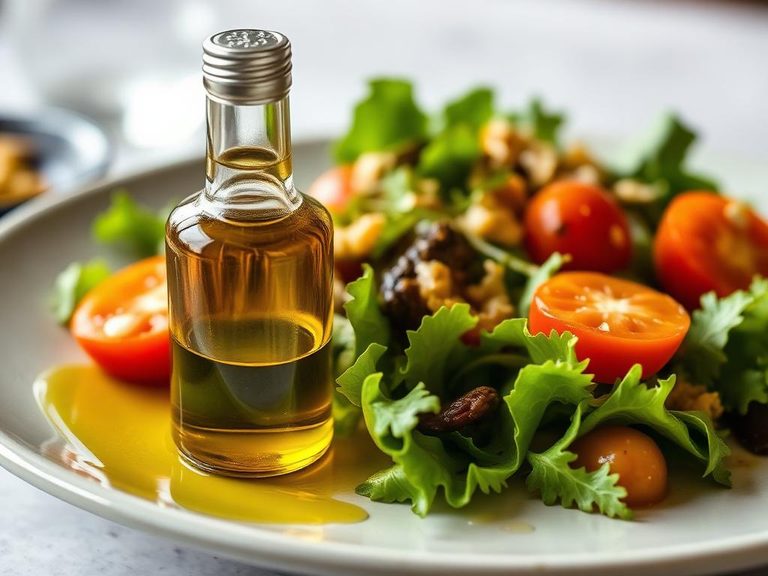
This is a rich, golden flaxseed oil, distinguished by the inclusion of whole, sliced flaxseeds that settle at the bottom of the bottle. It has a distinctly nutty, earthy, and slightly peppery flavor profile, with a smooth, viscous texture that coats the palate. Nutritionally, it is a powerhouse of plant-based omega-3 fatty acids (ALA), containing virtually no protein or carbohydrates.
Calorie split: 0% protein · 0% carbs · 100% fat
↓ Full nutrition💚 Why it's loved
People love it for its robust, earthy flavor that elevates salads, smoothies, and dips with a sophisticated nuttiness. It's cherished in health-conscious and plant-based cooking as a simple way to boost omega-3 intake without cooking.
⚠️ Watch-outs & how to enjoy it better
It has a very low smoke point and can become bitter if heated, making it unsuitable for frying or sautéing. Those on blood-thinning medications should consult a doctor, as high ALA intake may have mild anticoagulant effects. To counteract, always use it raw—drizzle over finished dishes, blend into dressings, or stir into yogurt or oatmeal after cooking.
Key benefits
- Excellent source of plant-based alpha-linolenic acid (ALA), an essential omega-3 fatty acid.
- Contains lignans, which are antioxidant compounds found in flaxseeds.
- Supports a healthy omega-6 to omega-3 ratio in the diet.
- Adds a distinctive nutty flavor to cold dishes and dressings.
🍽️ Popular dishes
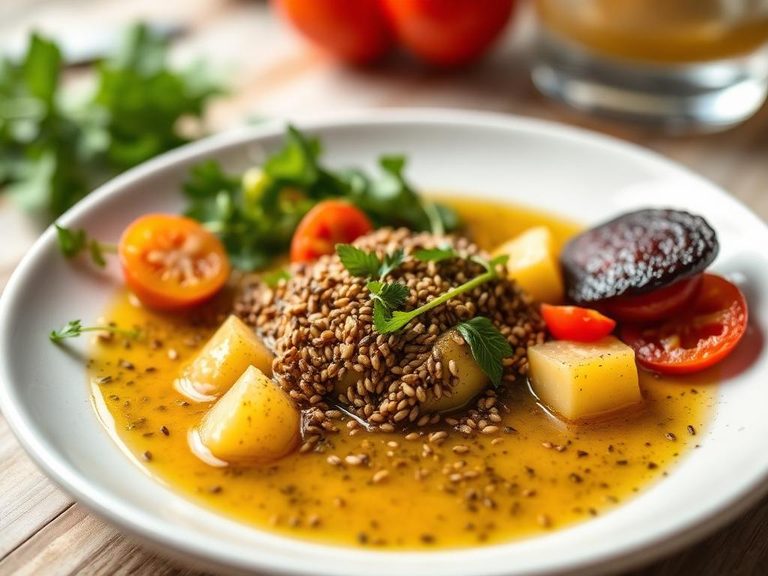
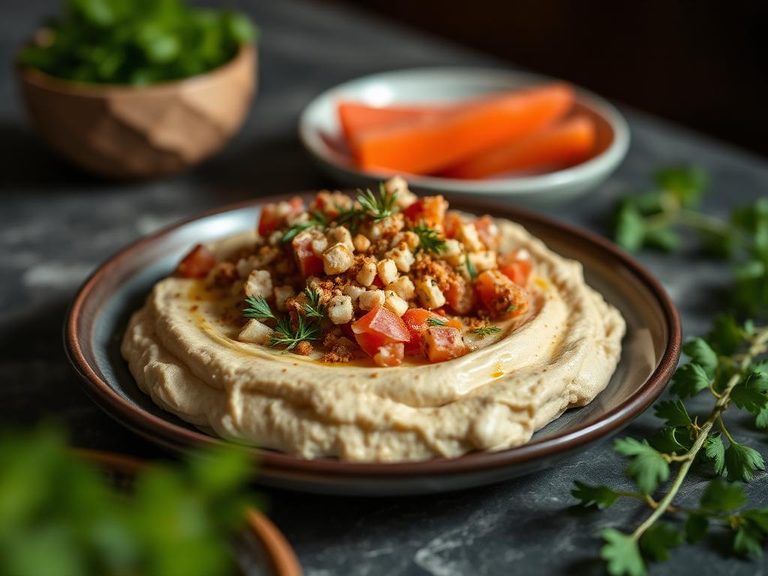
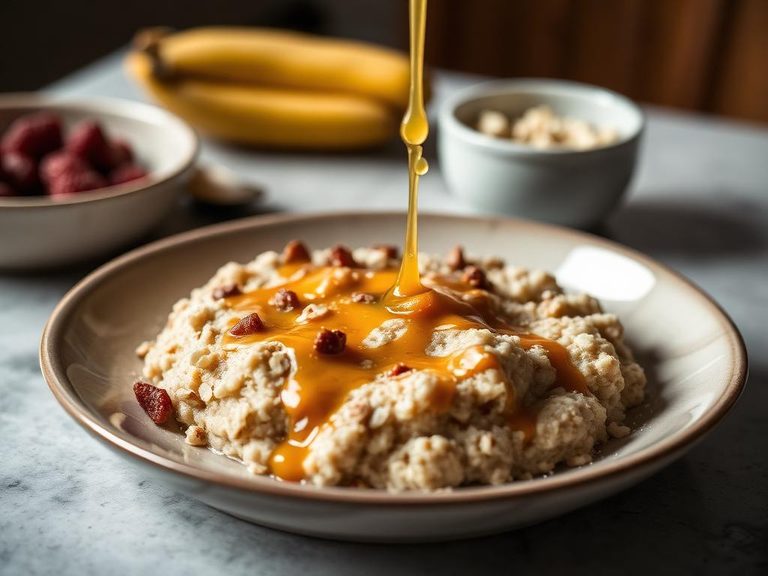
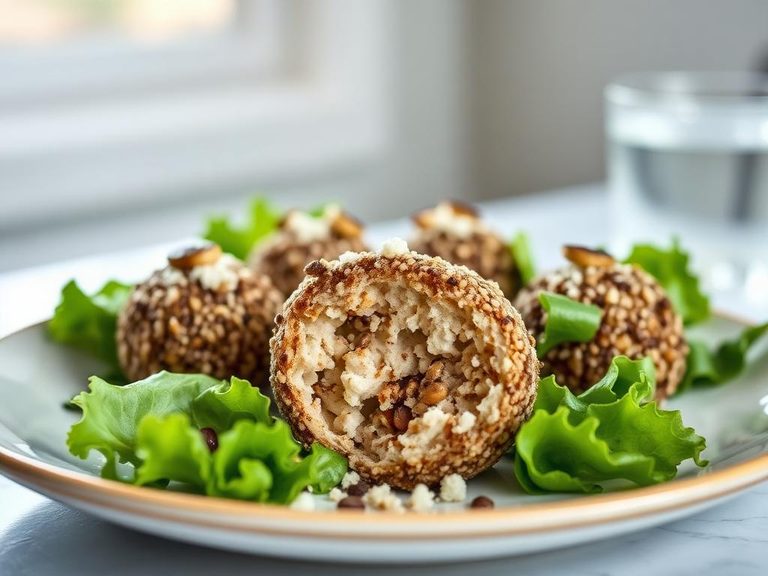
🌍 Where it's eaten
💡 Did you know?
Flax is one of the oldest cultivated crops, with evidence of its use dating back over 30,000 years to the caves of modern-day Georgia.
Full nutrition (USDA data · scales with serving)
| Water | 0.16 g |
| Energy | 878 kcal |
| Energy | 3675 kj |
| Protein | 0.37 g |
| Total lipid (fat) | 99.0 g |
| Ash | 0.07 g |
| Carbohydrate, by difference | 0.39 g |
| Calcium, Ca | 9.0 mg |
| Iron, Fe | 0.34 mg |
| Magnesium, Mg | 15.0 mg |
| Phosphorus, P | 27.0 mg |
| Potassium, K | 31.0 mg |
| Sodium, Na | 6.0 mg |
| Zinc, Zn | 0.31 mg |
| Copper, Cu | 0.07 mg |
| Manganese, Mn | 0.14 mg |
| Vitamin E (alpha-tocopherol) | 0.71 mg |
| Tocopherol, beta | 0.57 mg |
| Tocopherol, gamma | 33.4 mg |
| Tocopherol, delta | 0.81 mg |
| Tocotrienol, alpha | 0.68 mg |
| Tocotrienol, beta | 0.00 mg |
| Tocotrienol, gamma | 0.71 mg |
| Tocotrienol, delta | 0.00 mg |
| Vitamin K (phylloquinone) | 3.3 ug |
| Vitamin K (Dihydrophylloquinone) | 0.00 ug |
| Vitamin K (Menaquinone-4) | 2.0 ug |
Fat & fatty acid profile (per 100g)
| Fatty acids, total saturated | 9.0 g |
| SFA 4:0 | 0.00 g |
| SFA 6:0 | 0.00 g |
| SFA 8:0 | 0.00 g |
| SFA 10:0 | 0.01 g |
| SFA 12:0 | 0.01 g |
| SFA 14:0 | 0.06 g |
| SFA 15:0 | 0.02 g |
| SFA 16:0 | 5.1 g |
| SFA 17:0 | 0.06 g |
| SFA 18:0 | 3.4 g |
| SFA 20:0 | 0.14 g |
| SFA 22:0 | 0.15 g |
| SFA 24:0 | 0.10 g |
| Fatty acids, total monounsaturated | 20.6 g |
| MUFA 14:1 | 0.00 g |
| MUFA 15:1 | 0.00 g |
| MUFA 16:1 | 0.06 g |
| MUFA 16:1 c | 0.06 g |
| MUFA 17:1 | 0.04 g |
| MUFA 18:1 | 20.5 g |
| MUFA 18:1 c | 20.4 g |
| MUFA 22:1 | 0.03 g |
| MUFA 22:1 c | 0.02 g |
| MUFA 24:1 c | 0.05 g |
| Fatty acids, total polyunsaturated | 64.9 g |
| PUFA 18:2 | 15.8 g |
| PUFA 18:2 n-6 c,c | 15.7 g |
| PUFA 18:2 CLAs | 0.02 g |
| PUFA 18:3 | 48.9 g |
| PUFA 18:3 n-3 c,c,c (ALA) | 48.9 g |
| PUFA 18:3 n-6 c,c,c | 0.00 g |
| PUFA 18:4 | 0.00 g |
| PUFA 20:2 n-6 c,c | 0.03 g |
| PUFA 20:3 | 0.10 g |
| PUFA 20:3 n-3 | 0.08 g |
| PUFA 20:3 n-6 | 0.03 g |
| PUFA 20:4 | 0.00 g |
| PUFA 20:5 n-3 (EPA) | 0.00 g |
| PUFA 22:4 | 0.01 g |
| PUFA 22:5 n-3 (DPA) | 0.00 g |
| PUFA 22:6 n-3 (DHA) | 0.00 g |
| Fatty acids, total trans | 0.18 g |
| Fatty acids, total trans-monoenoic | 0.10 g |
| TFA 16:1 t | 0.00 g |
| TFA 18:1 t | 0.09 g |
| TFA 22:1 t | 0.01 g |
| TFA 18:2 t not further defined | 0.09 g |
| Fatty acids, total trans-polyenoic | 0.09 g |
| Cholesterol | 0.00 mg |
| Stigmasterol | 31.0 mg |
| Campesterol | 112 mg |
| Beta-sitosterol | 235 mg |
Amino acid profile (per 100g)
Estimated from Oil, safflower, salad or cooking, high oleic (primary safflower oil of commerce) — USDA does not publish this profile for Oil.
| Tryptophan | 0.00 g |
| Threonine | 0.00 g |
| Isoleucine | 0.00 g |
| Leucine | 0.00 g |
| Lysine | 0.00 g |
| Methionine | 0.00 g |
| Cystine | 0.00 g |
| Phenylalanine | 0.00 g |
| Tyrosine | 0.00 g |
| Valine | 0.00 g |
| Arginine | 0.00 g |
| Histidine | 0.00 g |
| Alanine | 0.00 g |
| Aspartic acid | 0.00 g |
| Glutamic acid | 0.00 g |
| Glycine | 0.00 g |
| Proline | 0.00 g |
| Serine | 0.00 g |
FAQ
What's the difference between this and regular flaxseed oil?
The key difference is the addition of sliced flaxseeds, which provide extra texture, fiber, and lignans, and serve as a visual indicator of the oil's source. The base oil's nutritional profile is very similar.
Can I cook with it?
No. Flaxseed oil has a very low smoke point (around 225°F/107°C) and is highly prone to oxidation. Heating it destroys its beneficial omega-3s and creates harmful compounds. Use it exclusively for cold applications.
How should I store it?
Store it in a dark, cool place or, ideally, in the refrigerator to slow oxidation. Always check the expiration date and smell it before use; rancid oil has a sharp, paint-like odor and should be discarded.
Nutrient density (calculated · NRF9.3)
Nutrient Rich Foods index: beneficial nutrients (protein, fiber, vitamins, minerals) minus saturated fat, added sugar & sodium, per 100 kcal.
NRF9.3 index — Fulgoni, Keast & Drewnowski, 2009. Computed from USDA nutrients.
Weight-loss friendliness (composite index)
Energy density 8.78 kcal/g · 0% calories from protein · 0.0 g fiber · 0.0 g sugar per 100 g.
Composite of energy density (Rolls et al., 1999), protein & fiber satiety, minus sugar. A calculated heuristic — ranks satiety-per-calorie, not a clinical measure.
Dietary load (calculated from USDA values)
Potential renal acid load. Positive = acid-forming, negative = alkaline-forming.
Sodium-to-potassium ratio: 0.19 (lower is better — aim for ≤ 1)
Sodium:potassium per WHO potassium guidance. Computed from USDA nutrients.