

Nuts, almond butter, plain, without salt added
Whole food · Nut and Seed Products

Photo: Wikipedia
Plain, unsalted almond butter is a rich, velvety paste made from finely ground roasted almonds, offering a deep, nutty flavor with a smooth, slightly oily texture. Nutritionally, it's a powerhouse of plant-based protein and healthy monounsaturated fats, with a notable fiber content that supports satiety.
Calorie split: 13% protein · 11% carbs · 76% fat
↓ Full nutrition💚 Why it's loved
People adore its pure, intense almond flavor and creamy versatility, using it as a dip, spread, or sauce base. It's a staple in health-conscious and plant-based kitchens for its satisfying richness and clean ingredient list.
⚠️ Watch-outs & how to enjoy it better
Its high calorie density can lead to overconsumption, and as a tree nut, it's a common allergen. To manage portions, measure a tablespoon serving and pair it with fiber-rich foods like apple slices or celery to enhance satiety.
Key benefits
- Excellent source of heart-healthy monounsaturated fats.
- Provides substantial plant-based protein per serving.
- High in dietary fiber for digestive health and fullness.
- Naturally free of added sodium and sugars.
🍽️ Popular dishes
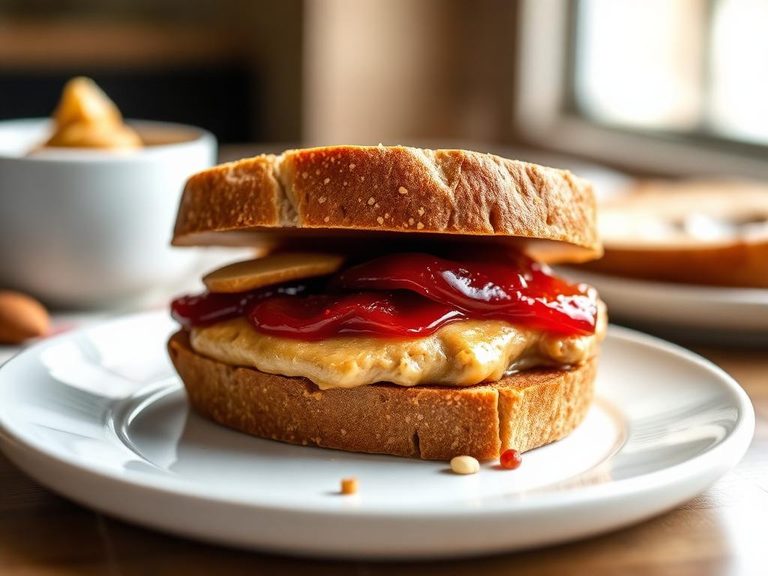
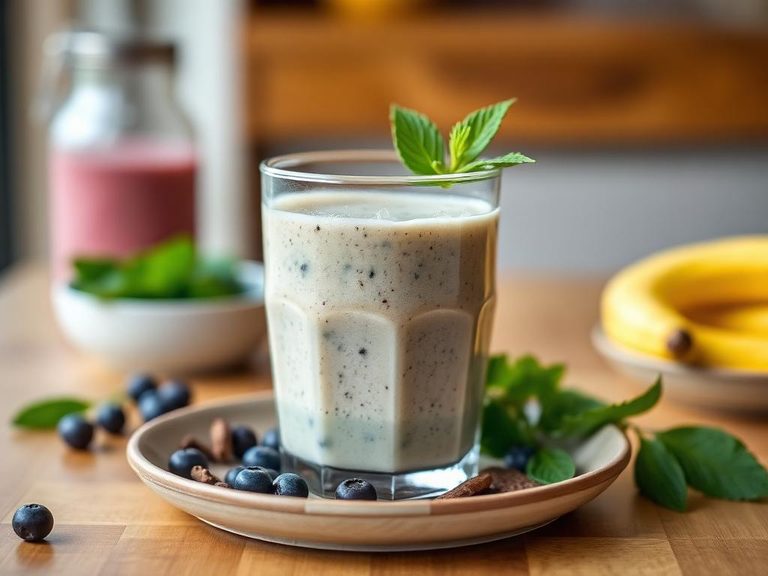
🌍 Where it's eaten
💡 Did you know?
Almond butter has a higher smoke point than many other nut butters, making it a surprisingly good choice for light sautéing or stir-frying.
Full nutrition (USDA data · scales with serving)
| Water | 1.6 g |
| Energy | 614 kcal |
| Energy | 2568 kj |
| Protein | 21.0 g |
| Total lipid (fat) | 55.5 g |
| Ash | 3.1 g |
| Carbohydrate, by difference | 18.8 g |
| Fiber, total dietary | 10.3 g |
| Total Sugars | 4.4 g |
| Sucrose | 4.3 g |
| Glucose | 0.02 g |
| Fructose | 0.00 g |
| Lactose | 0.00 g |
| Maltose | 0.07 g |
| Starch | 0.08 g |
| Calcium, Ca | 347 mg |
| Iron, Fe | 3.5 mg |
| Magnesium, Mg | 279 mg |
| Phosphorus, P | 508 mg |
| Potassium, K | 748 mg |
| Sodium, Na | 7.0 mg |
| Zinc, Zn | 3.3 mg |
| Copper, Cu | 0.93 mg |
| Manganese, Mn | 2.1 mg |
| Selenium, Se | 2.4 ug |
| Vitamin C, total ascorbic acid | 0.00 mg |
| Thiamin | 0.04 mg |
| Riboflavin | 0.94 mg |
| Niacin | 3.2 mg |
| Pantothenic acid | 0.32 mg |
| Vitamin B-6 | 0.10 mg |
| Folate, total | 53.0 ug |
| Folic acid | 0.00 ug |
| Folate, food | 53.0 ug |
| Folate, DFE | 53.0 ug |
| Choline, total | 52.1 mg |
| Vitamin B-12 | 0.00 ug |
| Vitamin A, RAE | 0.00 ug |
| Retinol | 0.00 ug |
| Carotene, beta | 1.0 ug |
| Carotene, alpha | 0.00 ug |
| Cryptoxanthin, beta | 0.00 ug |
| Vitamin A, IU | 1.0 iu |
| Lycopene | 0.00 ug |
| Lutein + zeaxanthin | 1.0 ug |
| Vitamin E (alpha-tocopherol) | 24.2 mg |
| Tocopherol, beta | 0.53 mg |
| Tocopherol, gamma | 1.0 mg |
| Tocopherol, delta | 0.00 mg |
| Vitamin D (D2 + D3), International Units | 0.00 iu |
| Vitamin D (D2 + D3) | 0.00 ug |
| Vitamin K (phylloquinone) | 0.00 ug |
| Alcohol, ethyl | 0.00 g |
Fat & fatty acid profile (per 100g)
| Fatty acids, total saturated | 4.2 g |
| SFA 8:0 | 0.00 g |
| SFA 10:0 | 0.00 g |
| SFA 12:0 | 0.00 g |
| SFA 14:0 | 0.01 g |
| SFA 15:0 | 0.00 g |
| SFA 16:0 | 3.2 g |
| SFA 17:0 | 0.01 g |
| SFA 18:0 | 0.94 g |
| SFA 20:0 | 0.01 g |
| SFA 22:0 | 0.00 g |
| Fatty acids, total monounsaturated | 32.4 g |
| MUFA 14:1 | 0.00 g |
| MUFA 15:1 | 0.00 g |
| MUFA 16:1 | 0.25 g |
| MUFA 17:1 | 0.04 g |
| MUFA 18:1 | 32.1 g |
| MUFA 20:1 | 0.02 g |
| Fatty acids, total polyunsaturated | 13.6 g |
| PUFA 18:2 | 13.6 g |
| PUFA 18:3 | 0.01 g |
| PUFA 20:2 n-6 c,c | 0.00 g |
| PUFA 20:3 | 0.00 g |
| PUFA 20:4 | 0.00 g |
| Cholesterol | 0.00 mg |
| Phytosterols | 139 mg |
| Stigmasterol | 3.0 mg |
| Campesterol | 6.0 mg |
| Beta-sitosterol | 131 mg |
Amino acid profile (per 100g)
| Tryptophan | 0.16 g |
| Threonine | 0.56 g |
| Isoleucine | 0.81 g |
| Leucine | 1.5 g |
| Lysine | 0.61 g |
| Methionine | 0.12 g |
| Cystine | 0.24 g |
| Phenylalanine | 1.1 g |
| Tyrosine | 0.59 g |
| Valine | 0.94 g |
| Arginine | 2.4 g |
| Histidine | 0.55 g |
| Alanine | 0.99 g |
| Aspartic acid | 2.4 g |
| Glutamic acid | 5.9 g |
| Glycine | 1.5 g |
| Proline | 0.92 g |
| Serine | 0.93 g |
FAQ
Why does the oil separate in natural almond butter?
Without stabilizers, the natural oils from the almonds rise to the top. Simply stir it back in before use; it's a sign of a minimally processed product.
Is almond butter healthier than peanut butter?
Both are nutritious. Almond butter is slightly higher in fiber, calcium, and iron, while peanut butter has more protein. The best choice depends on your nutritional goals and taste preference.
How should I store opened almond butter?
For short-term use, store it in a cool, dark pantry. For longer freshness (up to 6 months), refrigerate it, which also slows oil separation.
Nutrient density (calculated · NRF9.3)
Nutrient Rich Foods index: beneficial nutrients (protein, fiber, vitamins, minerals) minus saturated fat, added sugar & sodium, per 100 kcal.
NRF9.3 index — Fulgoni, Keast & Drewnowski, 2009. Computed from USDA nutrients.
Weight-loss friendliness (composite index)
Energy density 6.14 kcal/g · 14% calories from protein · 10.3 g fiber · 4.4 g sugar per 100 g.
Composite of energy density (Rolls et al., 1999), protein & fiber satiety, minus sugar. A calculated heuristic — ranks satiety-per-calorie, not a clinical measure.
Dietary load (calculated from USDA values)
Potential renal acid load. Positive = acid-forming, negative = alkaline-forming.
Sodium-to-potassium ratio: 0.01 (lower is better — aim for ≤ 1)
Sodium:potassium per WHO potassium guidance. Computed from USDA nutrients.