

Grape juice, canned or bottled, unsweetened, with added ascorbic acid
Whole food · Fruits and Fruit Juices

Photo: Wikipedia
This is a clear, ruby-hued juice made from the pressing of grapes, typically Concord or Niagara varieties, then canned or bottled without added sugars. Its taste is a bright, clean burst of grape sweetness with a slightly tart finish, and its texture is a smooth, thin liquid. Nutritionally, it's a concentrated source of quick energy from its natural sugars, with minimal protein or fat.
Calorie split: 2% protein · 96% carbs · 2% fat
↓ Full nutrition💚 Why it's loved
People love it for its pure, nostalgic grape flavor that tastes like summer in a glass. It's incredibly versatile, serving as a standalone drink, a base for smoothies, or a sweet-tart ingredient in sauces and marinades.
⚠️ Watch-outs & how to enjoy it better
Its high natural sugar content can cause rapid blood-sugar spikes, making it a cautionary choice for those managing diabetes or insulin resistance. To counteract this, pair it with a source of protein or healthy fat (like a handful of nuts or a cheese stick) to slow sugar absorption, and stick to a small, controlled portion.
Key benefits
- Provides quick, natural energy from fruit sugars
- Contains added Vitamin C (ascorbic acid) for immune support
- Offers hydration and a source of antioxidants like polyphenols
- A convenient, portable fruit serving without prep work
🍽️ Popular dishes
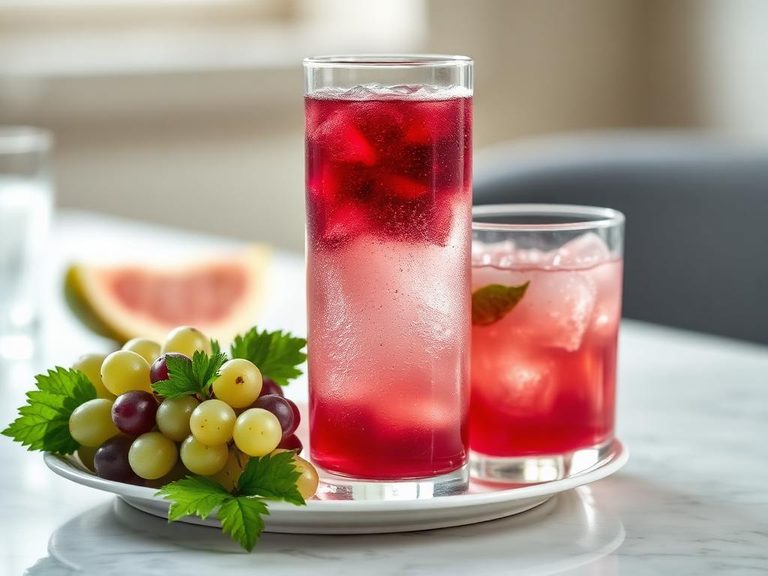
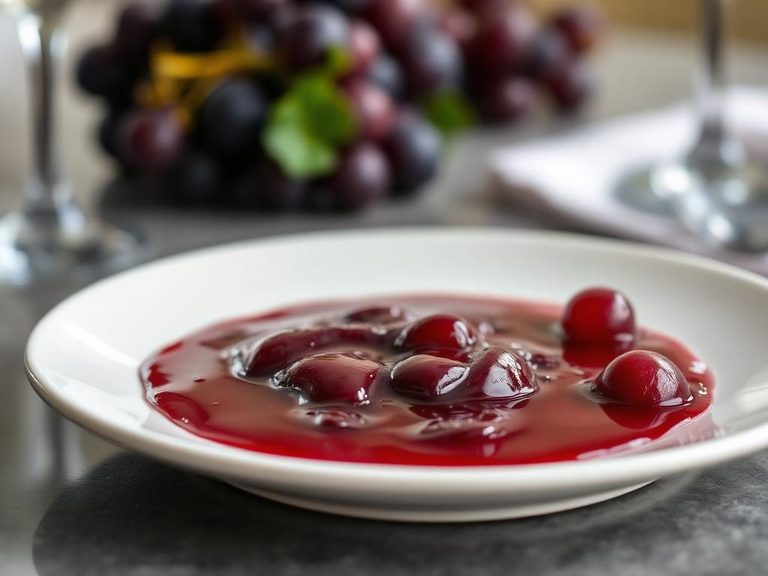
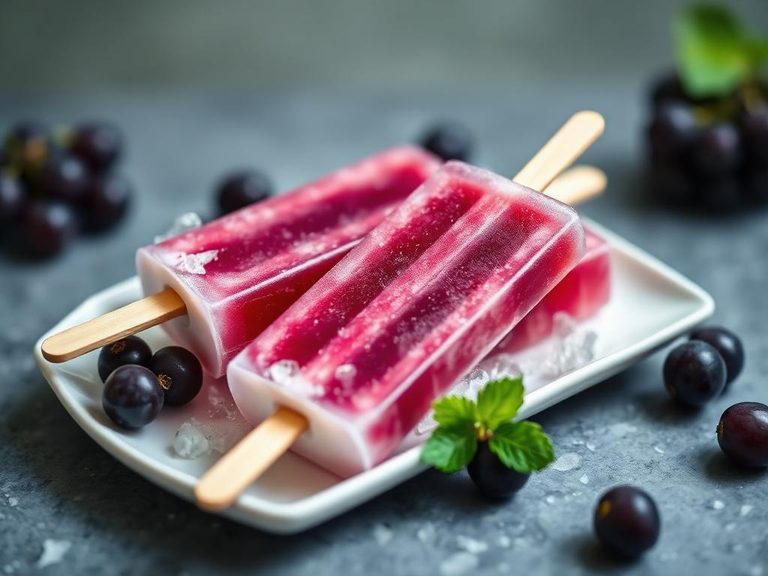
🌍 Where it's eaten
💡 Did you know?
The deep purple color of many grape juices comes from anthocyanins, powerful antioxidants that are more concentrated in the skins of dark grapes than in the flesh.
Full nutrition (USDA data · scales with serving)
| Water | 84.5 g |
| Energy | 60.0 kcal |
| Energy | 252 kj |
| Protein | 0.37 g |
| Total lipid (fat) | 0.13 g |
| Ash | 0.22 g |
| Carbohydrate, by difference | 14.8 g |
| Fiber, total dietary | 0.20 g |
| Total Sugars | 14.2 g |
| Sucrose | 0.04 g |
| Glucose | 6.8 g |
| Fructose | 7.4 g |
| Lactose | 0.00 g |
| Maltose | 0.00 g |
| Galactose | 0.00 g |
| Calcium, Ca | 11.0 mg |
| Iron, Fe | 0.25 mg |
| Magnesium, Mg | 10.0 mg |
| Phosphorus, P | 14.0 mg |
| Potassium, K | 104 mg |
| Sodium, Na | 5.0 mg |
| Zinc, Zn | 0.07 mg |
| Copper, Cu | 0.02 mg |
| Manganese, Mn | 0.24 mg |
| Selenium, Se | 0.00 ug |
| Fluoride, F | 138 ug |
| Vitamin C, total ascorbic acid | 25.0 mg |
| Thiamin | 0.02 mg |
| Riboflavin | 0.01 mg |
| Niacin | 0.13 mg |
| Pantothenic acid | 0.05 mg |
| Vitamin B-6 | 0.03 mg |
| Folate, total | 0.00 ug |
| Folic acid | 0.00 ug |
| Folate, food | 0.00 ug |
| Folate, DFE | 0.00 ug |
| Choline, total | 3.2 mg |
| Betaine | 0.20 mg |
| Vitamin B-12 | 0.00 ug |
| Vitamin B-12, added | 0.00 ug |
| Vitamin A, RAE | 0.00 ug |
| Retinol | 0.00 ug |
| Carotene, beta | 5.0 ug |
| Carotene, alpha | 0.00 ug |
| Cryptoxanthin, beta | 0.00 ug |
| Vitamin A, IU | 8.0 iu |
| Lycopene | 0.00 ug |
| Lutein + zeaxanthin | 57.0 ug |
| Vitamin E (alpha-tocopherol) | 0.00 mg |
| Vitamin E, added | 0.00 mg |
| Tocopherol, beta | 0.00 mg |
| Tocopherol, gamma | 0.00 mg |
| Tocopherol, delta | 0.00 mg |
| Tocotrienol, alpha | 0.00 mg |
| Tocotrienol, beta | 0.00 mg |
| Tocotrienol, gamma | 0.00 mg |
| Vitamin D (D2 + D3), International Units | 0.00 iu |
| Vitamin D (D2 + D3) | 0.00 ug |
| Vitamin K (phylloquinone) | 0.40 ug |
| Alcohol, ethyl | 0.00 g |
| Caffeine | 0.00 mg |
| Theobromine | 0.00 mg |
Fat & fatty acid profile (per 100g)
| Fatty acids, total saturated | 0.03 g |
| SFA 4:0 | 0.00 g |
| SFA 6:0 | 0.00 g |
| SFA 8:0 | 0.00 g |
| SFA 10:0 | 0.00 g |
| SFA 12:0 | 0.00 g |
| SFA 14:0 | 0.00 g |
| SFA 16:0 | 0.02 g |
| SFA 18:0 | 0.00 g |
| Fatty acids, total monounsaturated | 0.00 g |
| MUFA 16:1 | 0.00 g |
| MUFA 18:1 | 0.00 g |
| MUFA 20:1 | 0.00 g |
| MUFA 22:1 | 0.00 g |
| Fatty acids, total polyunsaturated | 0.02 g |
| PUFA 18:2 | 0.02 g |
| PUFA 18:3 | 0.01 g |
| PUFA 18:4 | 0.00 g |
| PUFA 20:4 | 0.00 g |
| PUFA 20:5 n-3 (EPA) | 0.00 g |
| PUFA 22:5 n-3 (DPA) | 0.00 g |
| PUFA 22:6 n-3 (DHA) | 0.00 g |
| Fatty acids, total trans | 0.00 g |
| Cholesterol | 0.00 mg |
Amino acid profile (per 100g)
Estimated from Grape juice, canned or bottled, unsweetened, without added ascorbic acid — USDA does not publish this profile for Grape juice.
| Threonine | 0.02 g |
| Isoleucine | 0.01 g |
| Leucine | 0.01 g |
| Lysine | 0.01 g |
| Methionine | 0.00 g |
| Phenylalanine | 0.01 g |
| Tyrosine | 0.00 g |
| Valine | 0.01 g |
| Arginine | 0.05 g |
| Histidine | 0.01 g |
| Alanine | 0.09 g |
| Aspartic acid | 0.02 g |
| Glutamic acid | 0.11 g |
| Glycine | 0.01 g |
| Proline | 0.02 g |
| Serine | 0.01 g |
FAQ
Is unsweetened grape juice actually sugar-free?
No. 'Unsweetened' means no *added* sugars like high-fructose corn syrup. The sugar listed (14.2g per 100g) is naturally occurring fructose and glucose from the grapes themselves.
Why is ascorbic acid added?
Ascorbic acid is Vitamin C. It's added primarily as a preservative to prevent oxidation and browning, which helps maintain the juice's fresh color and flavor over time. It also provides a nutritional boost.
How does it differ from grape 'drink' or 'cocktail'?
Juice must contain 100% juice. 'Drink' or 'cocktail' products often have lower juice content (sometimes 10% or less) and are bulked up with water, added sugars, and artificial flavors.
Nutrient density (calculated · NRF9.3)
Nutrient Rich Foods index: beneficial nutrients (protein, fiber, vitamins, minerals) minus saturated fat, added sugar & sodium, per 100 kcal.
NRF9.3 index — Fulgoni, Keast & Drewnowski, 2009. Computed from USDA nutrients.
Weight-loss friendliness (composite index)
Energy density 0.60 kcal/g · 2% calories from protein · 0.2 g fiber · 14.2 g sugar per 100 g.
Composite of energy density (Rolls et al., 1999), protein & fiber satiety, minus sugar. A calculated heuristic — ranks satiety-per-calorie, not a clinical measure.
Dietary load (calculated from USDA values)
Potential renal acid load. Positive = acid-forming, negative = alkaline-forming.
Sodium-to-potassium ratio: 0.05 (lower is better — aim for ≤ 1)
Sodium:potassium per WHO potassium guidance. Computed from USDA nutrients.