

Flour, rice, white, unenriched
Whole food · Cereal Grains and Pasta
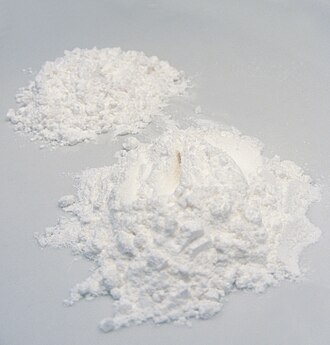
Photo: Wikipedia
White rice flour is a finely milled, snow-white powder with a soft, silky texture and a very mild, subtly sweet, starchy flavor. It is a foundational gluten-free ingredient, prized for its ability to create tender, delicate baked goods and smooth batters. Nutritionally, it is a dense source of quick-release carbohydrates, providing energy with minimal fat or fiber.
Calorie split: 8% protein · 89% carbs · 3% fat
↓ Full nutrition💚 Why it's loved
People love it for its incredible versatility and its role as the backbone of countless Asian and gluten-free cuisines, from delicate mochi to crispy tempura. Its mild, neutral flavor makes it a perfect canvas, allowing it to absorb spices and other ingredients without overpowering them.
⚠️ Watch-outs & how to enjoy it better
Its high glycemic index can cause rapid blood-sugar spikes, making it less ideal for those managing diabetes or seeking sustained energy. To counteract this, pair it with protein (like eggs or beans) and healthy fats (like nuts or avocado) to slow digestion, or choose a portion-controlled serving. It is also a common allergen for those with rice allergies.
Key benefits
- Gluten-free staple for celiac or gluten-sensitive diets
- Highly digestible and gentle on the stomach
- Provides quick, accessible energy from complex carbohydrates
- Acts as a neutral base, allowing other flavors to shine
- Essential for creating light, crispy textures in frying batters
🍽️ Popular dishes
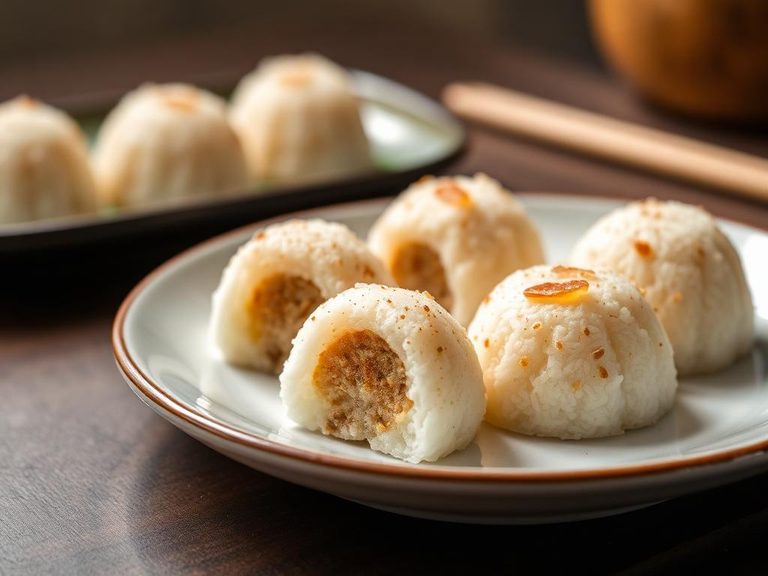
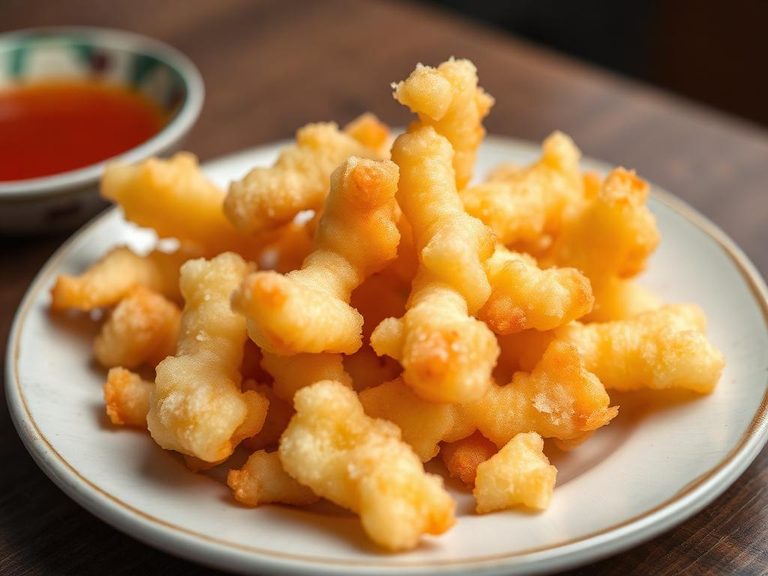
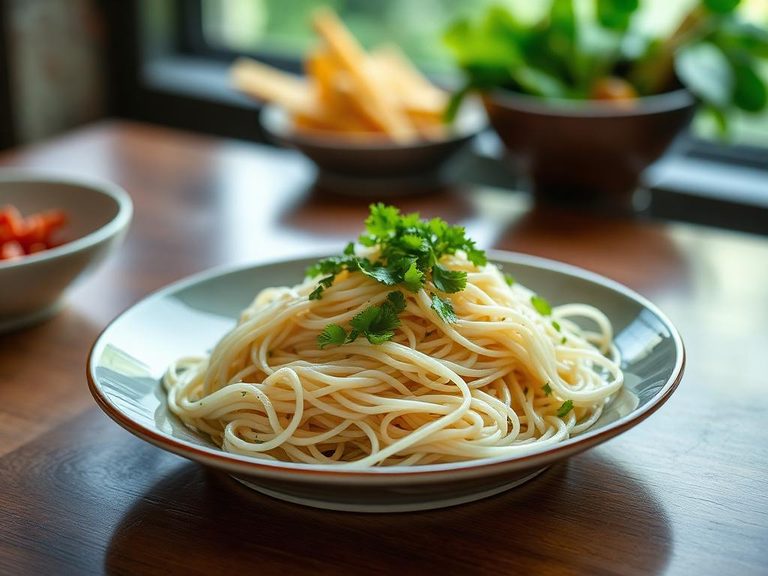

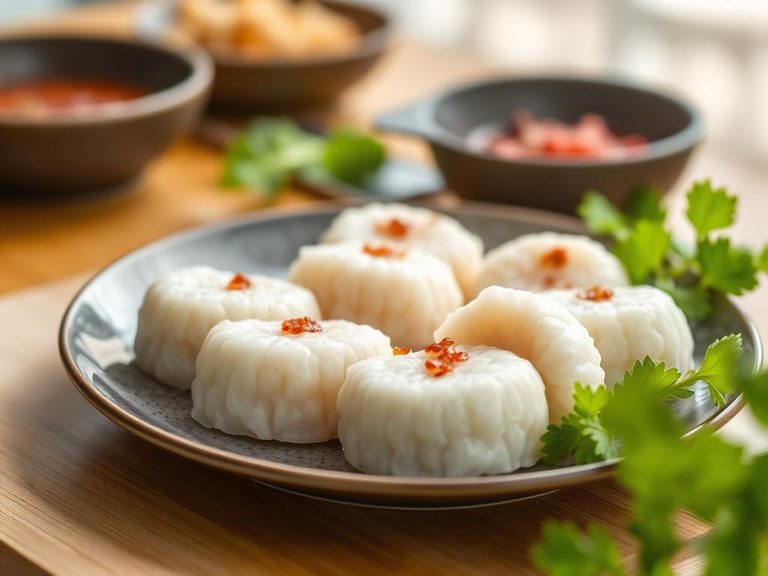
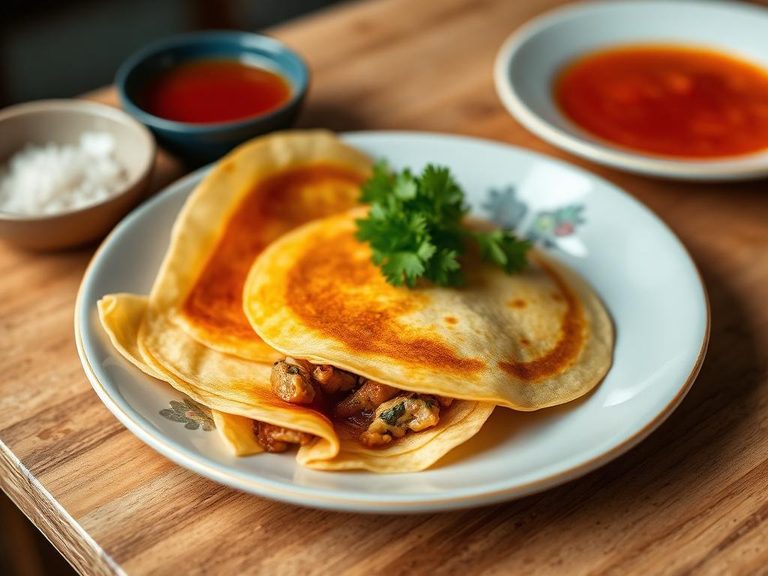
🌍 Where it's eaten
💡 Did you know?
The ultra-fine texture of rice flour is so prized in traditional Japanese cuisine that it was historically used as a key ingredient in 'bintsuke'—a traditional hair pomade used by samurai to keep their topknots perfectly in place.
Full nutrition (USDA data · scales with serving)
| Water | 11.6 g |
| Energy (Atwater General Factors) | 359 kcal |
| Energy (Atwater Specific Factors) | 369 kcal |
| Energy | 359 kcal |
| Energy | 1500 kj |
| Nitrogen | 1.1 g |
| Protein | 6.9 g |
| Total lipid (fat) | 1.3 g |
| Ash | 0.35 g |
| Carbohydrate, by difference | 79.8 g |
| Fiber, total dietary | 0.50 g |
| Calcium, Ca | 6.0 mg |
| Iron, Fe | 0.22 mg |
| Magnesium, Mg | 22.9 mg |
| Phosphorus, P | 94.0 mg |
| Potassium, K | 75.0 mg |
| Sodium, Na | 5.0 mg |
| Zinc, Zn | 1.2 mg |
| Copper, Cu | 0.21 mg |
| Manganese, Mn | 0.89 mg |
| Selenium, Se | 5.3 ug |
| Molybdenum, Mo | 45.5 ug |
| Thiamin | 0.09 mg |
| Riboflavin | 0.00 mg |
| Niacin | 1.3 mg |
| Vitamin B-6 | 0.05 mg |
| Folate, total | 16.0 ug |
Fat & fatty acid profile (per 100g)
Estimated from Pasta, gluten-free, corn flour and quinoa flour, cooked, ANCIENT HARVEST — USDA does not publish this profile for Flour.
| Fatty acids, total saturated | 0.15 g |
| SFA 4:0 | 0.00 g |
| SFA 6:0 | 0.00 g |
| SFA 8:0 | 0.00 g |
| SFA 10:0 | 0.00 g |
| SFA 12:0 | 0.00 g |
| SFA 14:0 | 0.01 g |
| SFA 15:0 | 0.00 g |
| SFA 16:0 | 0.09 g |
| SFA 17:0 | 0.00 g |
| SFA 18:0 | 0.04 g |
| SFA 20:0 | 0.01 g |
| SFA 22:0 | 0.00 g |
| SFA 24:0 | 0.00 g |
| Fatty acids, total monounsaturated | 0.66 g |
| MUFA 14:1 | 0.00 g |
| MUFA 15:1 | 0.17 g |
| MUFA 16:1 | 0.00 g |
| MUFA 16:1 c | 0.00 g |
| MUFA 17:1 | 0.00 g |
| MUFA 18:1 | 0.48 g |
| MUFA 18:1 c | 0.47 g |
| MUFA 20:1 | 0.01 g |
| MUFA 22:1 | 0.00 g |
| MUFA 22:1 c | 0.00 g |
| MUFA 24:1 c | 0.00 g |
| Fatty acids, total polyunsaturated | 0.95 g |
| PUFA 18:2 | 0.91 g |
| PUFA 18:2 n-6 c,c | 0.91 g |
| PUFA 18:2 CLAs | 0.00 g |
| PUFA 18:3 | 0.03 g |
| PUFA 18:3 n-3 c,c,c (ALA) | 0.03 g |
| PUFA 18:3 n-6 c,c,c | 0.00 g |
| PUFA 18:3i | 0.00 g |
| PUFA 18:4 | 0.00 g |
| PUFA 20:2 n-6 c,c | 0.00 g |
| PUFA 20:3 | 0.00 g |
| PUFA 20:3 n-3 | 0.00 g |
| PUFA 20:3 n-6 | 0.00 g |
| PUFA 20:4 | 0.00 g |
| PUFA 20:5 n-3 (EPA) | 0.00 g |
| PUFA 22:4 | 0.00 g |
| PUFA 22:5 n-3 (DPA) | 0.00 g |
| PUFA 22:6 n-3 (DHA) | 0.00 g |
| Fatty acids, total trans | 0.01 g |
| Fatty acids, total trans-monoenoic | 0.00 g |
| TFA 16:1 t | 0.00 g |
| TFA 18:1 t | 0.00 g |
| TFA 22:1 t | 0.00 g |
| TFA 18:2 t not further defined | 0.00 g |
| Fatty acids, total trans-polyenoic | 0.00 g |
| Cholesterol | 0.00 mg |
Amino acid profile (per 100g)
Estimated from Pasta, gluten-free, corn flour and quinoa flour, cooked, ANCIENT HARVEST — USDA does not publish this profile for Flour.
| Tryptophan | 0.02 g |
| Threonine | 0.10 g |
| Isoleucine | 0.09 g |
| Leucine | 0.35 g |
| Lysine | 0.16 g |
| Methionine | 0.06 g |
| Cystine | 0.07 g |
| Phenylalanine | 0.15 g |
| Tyrosine | 0.12 g |
| Valine | 0.11 g |
| Arginine | 0.18 g |
| Histidine | 0.09 g |
| Alanine | 0.21 g |
| Aspartic acid | 0.19 g |
| Glutamic acid | 0.46 g |
| Glycine | 0.12 g |
| Proline | 0.29 g |
| Serine | 0.15 g |
| Hydroxyproline | 0.00 g |
FAQ
Is rice flour the same as rice starch?
No. Rice flour is made by milling the whole rice grain (or polished white rice) into a fine powder, retaining some protein and fiber. Rice starch is a more refined product where the protein and fiber are removed, leaving only the starch granules, which makes it even finer and more absorbent.
Can I substitute it 1:1 for all-purpose wheat flour?
Not directly. Rice flour lacks gluten, so it won't provide the same structure or chewiness. For baking, it's best used in gluten-free flour blends or recipes specifically designed for it. For frying or thickening sauces, it can often be used as a direct substitute.
What's the difference between white and brown rice flour?
White rice flour is made from polished white rice, has a milder flavor, and a finer, smoother texture. Brown rice flour is made from whole brown rice, giving it a nuttier flavor, slightly coarser texture, and more fiber and nutrients.
Nutrient density (calculated · NRF9.3)
Nutrient Rich Foods index: beneficial nutrients (protein, fiber, vitamins, minerals) minus saturated fat, added sugar & sodium, per 100 kcal.
NRF9.3 index — Fulgoni, Keast & Drewnowski, 2009. Computed from USDA nutrients.
Weight-loss friendliness (composite index)
Energy density 3.59 kcal/g · 8% calories from protein · 0.5 g fiber · 0.0 g sugar per 100 g.
Composite of energy density (Rolls et al., 1999), protein & fiber satiety, minus sugar. A calculated heuristic — ranks satiety-per-calorie, not a clinical measure.
Dietary load (calculated from USDA values)
Potential renal acid load. Positive = acid-forming, negative = alkaline-forming.
Sodium-to-potassium ratio: 0.07 (lower is better — aim for ≤ 1)
Sodium:potassium per WHO potassium guidance. Computed from USDA nutrients.