

Egg, white, raw, fresh
Whole food · Dairy and Egg Products
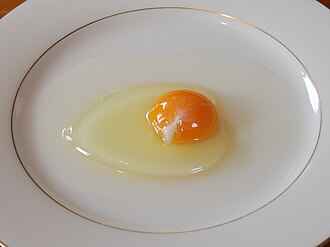
Photo: Wikipedia
Raw egg white is a clear, viscous liquid with a mild, slightly sulfurous taste and a uniquely smooth, gelatinous texture when raw. It's a powerhouse of pure, lean protein, containing over 10 grams of protein per 100 grams with virtually no fat, carbs, or cholesterol. This makes it a foundational ingredient for both culinary structure and nutritional supplementation.
Calorie split: 91% protein · 6% carbs · 3% fat
↓ Full nutrition💚 Why it's loved
People love it for its incredible versatility—it can be whipped into stiff peaks for meringues, used as a binding agent, or simply added to smoothies for a protein boost without altering flavor. It's a staple in fitness and baking cultures alike for its pure, functional protein.
⚠️ Watch-outs & how to enjoy it better
Raw egg whites contain avidin, a protein that can bind to biotin (a B-vitamin) and reduce its absorption if consumed in very large quantities over time. Cooking deactivates avidin, so this is primarily a concern for those consuming many raw whites daily. To counteract this, always cook egg whites when possible, or if consuming raw, ensure a varied diet with good biotin sources like nuts and seeds.
Key benefits
- Exceptionally high in complete protein (10.9g per 100g)
- Virtually fat-free and cholesterol-free
- Very low in calories (52 kcal per 100g)
- Contains key nutrients like selenium and riboflavin
- Provides albumin, a protein used in blood volume expansion
🍽️ Popular dishes
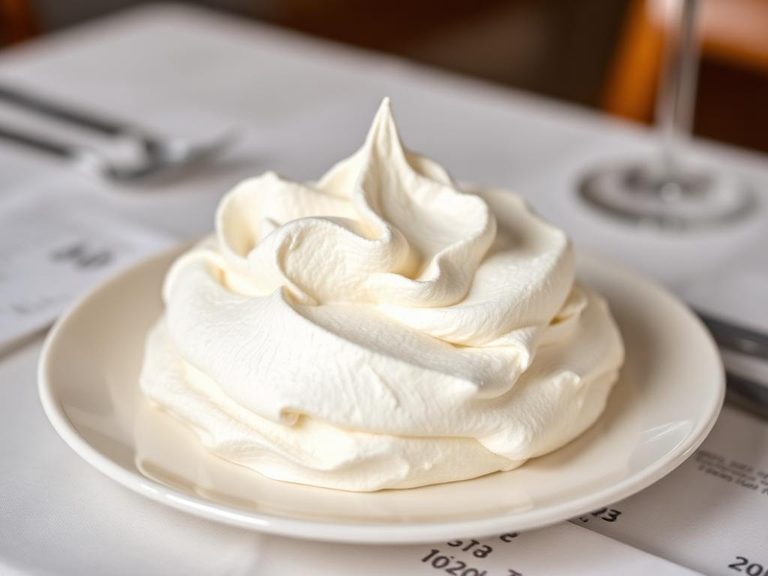
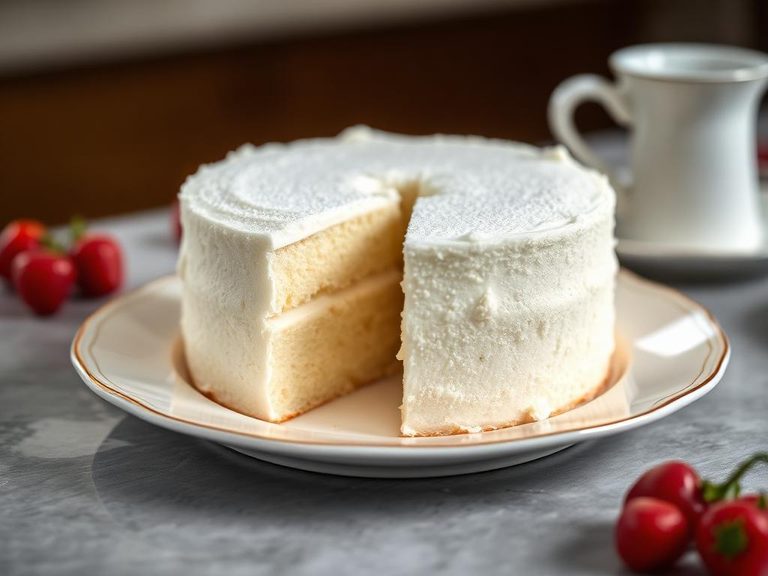

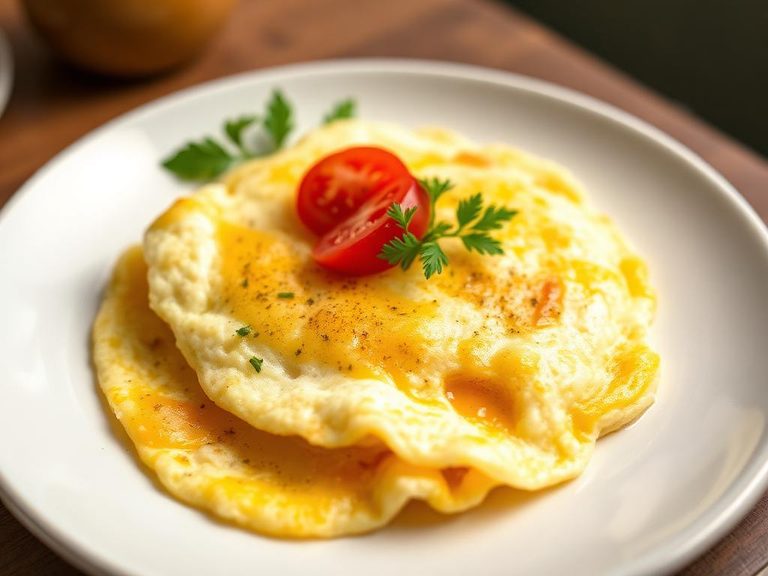

🌍 Where it's eaten
💡 Did you know?
The foam created by whipping egg whites is a stable network of air bubbles trapped in protein strands; adding a pinch of cream of tartar (an acid) helps stabilize this foam by strengthening the protein bonds.
Full nutrition (USDA data · scales with serving)
| Water | 87.6 g |
| Energy | 52.0 kcal |
| Energy | 216 kj |
| Protein | 10.9 g |
| Total lipid (fat) | 0.17 g |
| Ash | 0.63 g |
| Carbohydrate, by difference | 0.73 g |
| Fiber, total dietary | 0.00 g |
| Total Sugars | 0.71 g |
| Sucrose | 0.07 g |
| Glucose | 0.34 g |
| Fructose | 0.07 g |
| Lactose | 0.07 g |
| Maltose | 0.07 g |
| Galactose | 0.07 g |
| Calcium, Ca | 7.0 mg |
| Iron, Fe | 0.08 mg |
| Magnesium, Mg | 11.0 mg |
| Phosphorus, P | 15.0 mg |
| Potassium, K | 163 mg |
| Sodium, Na | 166 mg |
| Zinc, Zn | 0.03 mg |
| Copper, Cu | 0.02 mg |
| Manganese, Mn | 0.01 mg |
| Selenium, Se | 20.0 ug |
| Vitamin C, total ascorbic acid | 0.00 mg |
| Thiamin | 0.00 mg |
| Riboflavin | 0.44 mg |
| Niacin | 0.10 mg |
| Pantothenic acid | 0.19 mg |
| Vitamin B-6 | 0.01 mg |
| Folate, total | 4.0 ug |
| Folic acid | 0.00 ug |
| Folate, food | 4.0 ug |
| Folate, DFE | 4.0 ug |
| Choline, total | 1.1 mg |
| Betaine | 0.30 mg |
| Vitamin B-12 | 0.09 ug |
| Vitamin B-12, added | 0.00 ug |
| Vitamin A, RAE | 0.00 ug |
| Retinol | 0.00 ug |
| Carotene, beta | 0.00 ug |
| Carotene, alpha | 0.00 ug |
| Cryptoxanthin, beta | 0.00 ug |
| Vitamin A, IU | 0.00 iu |
| Lycopene | 0.00 ug |
| Lutein + zeaxanthin | 0.00 ug |
| Vitamin E (alpha-tocopherol) | 0.00 mg |
| Vitamin E, added | 0.00 mg |
| Vitamin D (D2 + D3), International Units | 0.00 iu |
| Vitamin D (D2 + D3) | 0.00 ug |
| Vitamin K (phylloquinone) | 0.00 ug |
| Vitamin K (Dihydrophylloquinone) | 0.00 ug |
| Alcohol, ethyl | 0.00 g |
| Caffeine | 0.00 mg |
| Theobromine | 0.00 mg |
Fat & fatty acid profile (per 100g)
| Fatty acids, total saturated | 0.00 g |
| SFA 4:0 | 0.00 g |
| SFA 6:0 | 0.00 g |
| SFA 8:0 | 0.00 g |
| SFA 10:0 | 0.00 g |
| SFA 12:0 | 0.00 g |
| SFA 14:0 | 0.00 g |
| SFA 16:0 | 0.00 g |
| SFA 18:0 | 0.00 g |
| Fatty acids, total monounsaturated | 0.00 g |
| MUFA 16:1 | 0.00 g |
| MUFA 18:1 | 0.00 g |
| MUFA 20:1 | 0.00 g |
| MUFA 22:1 | 0.00 g |
| Fatty acids, total polyunsaturated | 0.00 g |
| PUFA 18:2 | 0.00 g |
| PUFA 18:3 | 0.00 g |
| PUFA 18:4 | 0.00 g |
| PUFA 20:4 | 0.00 g |
| PUFA 20:5 n-3 (EPA) | 0.00 g |
| PUFA 22:5 n-3 (DPA) | 0.00 g |
| PUFA 22:6 n-3 (DHA) | 0.00 g |
| Cholesterol | 0.00 mg |
Amino acid profile (per 100g)
| Tryptophan | 0.13 g |
| Threonine | 0.45 g |
| Isoleucine | 0.66 g |
| Leucine | 1.0 g |
| Lysine | 0.81 g |
| Methionine | 0.40 g |
| Cystine | 0.29 g |
| Phenylalanine | 0.69 g |
| Tyrosine | 0.46 g |
| Valine | 0.81 g |
| Arginine | 0.65 g |
| Histidine | 0.29 g |
| Alanine | 0.70 g |
| Aspartic acid | 1.2 g |
| Glutamic acid | 1.6 g |
| Glycine | 0.41 g |
| Proline | 0.43 g |
| Serine | 0.80 g |
FAQ
Can you eat raw egg whites safely?
While the risk is low for pasteurized eggs, raw egg whites may carry a risk of Salmonella. Cooking to 160°F (71°C) eliminates this risk and also deactivates avidin.
Why do recipes separate eggs?
Egg whites and yolks have different functions. Whites provide structure, leavening (when whipped), and binding. Yolks add fat, flavor, color, and emulsification.
Is the protein in egg whites complete?
Yes, egg white protein is a complete protein, meaning it contains all nine essential amino acids your body cannot make on its own.
Nutrient density (calculated · NRF9.3)
Nutrient Rich Foods index: beneficial nutrients (protein, fiber, vitamins, minerals) minus saturated fat, added sugar & sodium, per 100 kcal.
NRF9.3 index — Fulgoni, Keast & Drewnowski, 2009. Computed from USDA nutrients.
Weight-loss friendliness (composite index)
Energy density 0.52 kcal/g · 84% calories from protein · 0.0 g fiber · 0.7 g sugar per 100 g.
Composite of energy density (Rolls et al., 1999), protein & fiber satiety, minus sugar. A calculated heuristic — ranks satiety-per-calorie, not a clinical measure.
Dietary load (calculated from USDA values)
Potential renal acid load. Positive = acid-forming, negative = alkaline-forming.
Sodium-to-potassium ratio: 1.02 (lower is better — aim for ≤ 1)
Sodium:potassium per WHO potassium guidance. Computed from USDA nutrients.