

Crackers, gluten-free, multigrain and vegetable, made with corn starch and white rice flour
Whole food · Baked Products

Photo: Wikipedia
These are crisp, light crackers with a satisfying snap, crafted from a blend of corn starch and white rice flour for a delicate, gluten-free base. They feature a subtle, earthy flavor from added multigrains and vegetable powders, offering a savory, slightly toasty taste. Nutritionally, they are a high-carbohydrate, energy-dense snack with minimal protein and fiber.
Calorie split: 2% protein · 67% carbs · 30% fat
↓ Full nutrition💚 Why it's loved
People love them for their satisfying crunch and neutral, savory flavor that pairs perfectly with dips, cheeses, or charcuterie. They are a go-to for gluten-free entertaining, offering a familiar, crowd-pleasing texture without the gluten.
⚠️ Watch-outs & how to enjoy it better
Their high carbohydrate and low fiber/protein content can lead to rapid blood-sugar spikes if eaten alone. To counteract this, pair them with protein-rich hummus, cheese, or nut butter, and practice portion control by sticking to a single serving.
Key benefits
- Certified gluten-free, safe for celiac or gluten-sensitive diets
- Provides quick energy from high carbohydrate content
- Often fortified with vegetable powders for added micronutrients
- Light and crispy texture aids in easy digestion
- Versatile base for various toppings and spreads
🍽️ Popular dishes
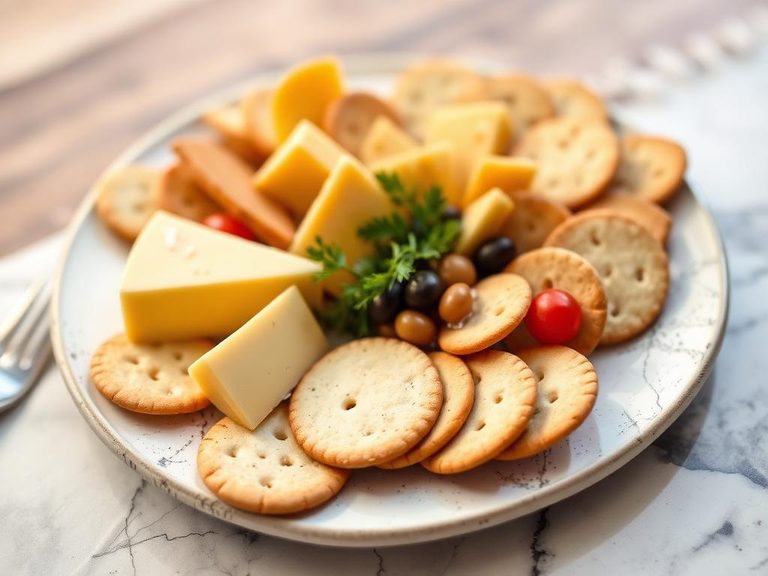
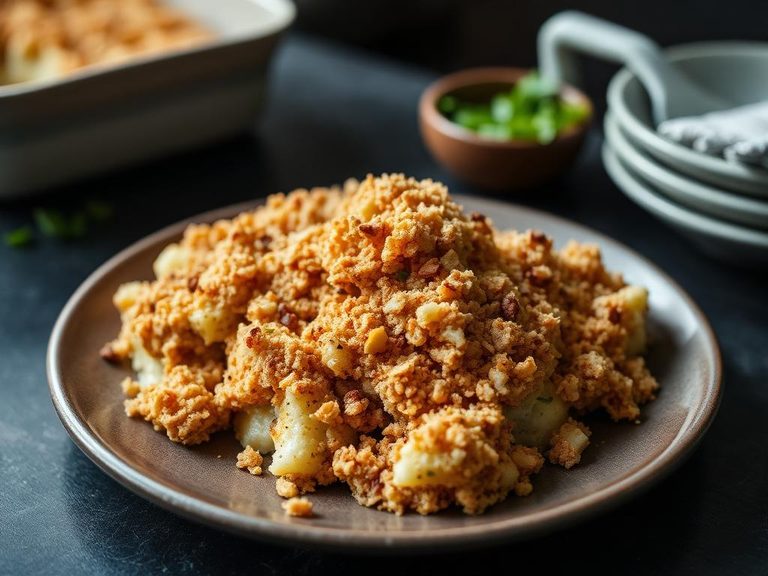

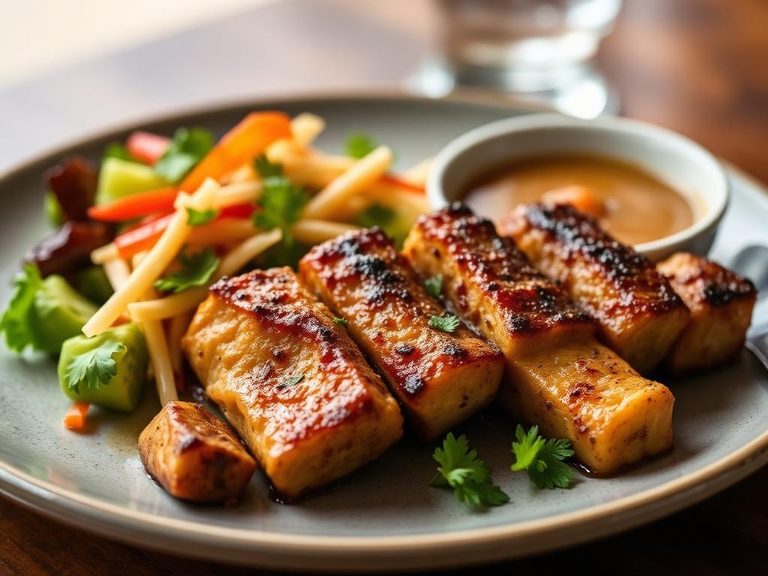
🌍 Where it's eaten
💡 Did you know?
Corn starch, a primary ingredient, is often used in gluten-free baking not just as a flour substitute but to create a lighter, more tender crumb by inhibiting gluten formation in other flours.
Full nutrition (USDA data · scales with serving)
| Water | 2.5 g |
| Energy | 456 kcal |
| Energy | 1910 kj |
| Protein | 2.5 g |
| Total lipid (fat) | 15.4 g |
| Ash | 2.7 g |
| Carbohydrate, by difference | 76.9 g |
| Fiber, total dietary | 3.0 g |
| Total Sugars | 3.9 g |
| Sucrose | 3.2 g |
| Glucose | 0.40 g |
| Fructose | 0.30 g |
| Lactose | 0.00 g |
| Maltose | 0.00 g |
| Galactose | 0.00 g |
| Starch | 71.9 g |
| Calcium, Ca | 28.0 mg |
| Iron, Fe | 0.56 mg |
| Magnesium, Mg | 15.0 mg |
| Phosphorus, P | 57.0 mg |
| Potassium, K | 86.0 mg |
| Sodium, Na | 890 mg |
| Zinc, Zn | 0.44 mg |
| Copper, Cu | 0.09 mg |
| Manganese, Mn | 0.30 mg |
| Thiamin | 0.06 mg |
| Riboflavin | 0.10 mg |
| Niacin | 0.63 mg |
| Vitamin B-6 | 0.07 mg |
| Folate, total | 7.0 ug |
| Folate, food | 7.0 ug |
Fat & fatty acid profile (per 100g)
| Fatty acids, total saturated | 5.7 g |
| SFA 4:0 | 0.00 g |
| SFA 6:0 | 0.00 g |
| SFA 8:0 | 0.00 g |
| SFA 10:0 | 0.00 g |
| SFA 12:0 | 0.03 g |
| SFA 14:0 | 0.11 g |
| SFA 15:0 | 0.01 g |
| SFA 16:0 | 4.9 g |
| SFA 17:0 | 0.01 g |
| SFA 18:0 | 0.55 g |
| SFA 20:0 | 0.04 g |
| SFA 22:0 | 0.01 g |
| SFA 24:0 | 0.01 g |
| Fatty acids, total monounsaturated | 4.9 g |
| MUFA 14:1 | 0.00 g |
| MUFA 15:1 | 0.00 g |
| MUFA 16:1 | 0.03 g |
| MUFA 16:1 c | 0.02 g |
| MUFA 17:1 | 0.00 g |
| MUFA 18:1 | 4.8 g |
| MUFA 18:1 c | 4.8 g |
| MUFA 20:1 | 0.03 g |
| MUFA 22:1 | 0.00 g |
| MUFA 22:1 c | 0.00 g |
| MUFA 24:1 c | 0.00 g |
| Fatty acids, total polyunsaturated | 1.4 g |
| PUFA 18:2 | 1.3 g |
| PUFA 18:2 n-6 c,c | 1.3 g |
| PUFA 18:2 CLAs | 0.01 g |
| PUFA 18:3 | 0.03 g |
| PUFA 18:3 n-3 c,c,c (ALA) | 0.03 g |
| PUFA 18:3 n-6 c,c,c | 0.01 g |
| PUFA 18:3i | 0.00 g |
| PUFA 18:4 | 0.00 g |
| PUFA 20:2 n-6 c,c | 0.00 g |
| PUFA 20:3 | 0.00 g |
| PUFA 20:3 n-3 | 0.00 g |
| PUFA 20:3 n-6 | 0.00 g |
| PUFA 20:4 | 0.01 g |
| PUFA 20:5 n-3 (EPA) | 0.00 g |
| PUFA 22:4 | 0.00 g |
| PUFA 22:5 n-3 (DPA) | 0.00 g |
| PUFA 22:6 n-3 (DHA) | 0.00 g |
| Fatty acids, total trans | 0.05 g |
| Fatty acids, total trans-monoenoic | 0.02 g |
| TFA 16:1 t | 0.00 g |
| TFA 18:1 t | 0.02 g |
| TFA 22:1 t | 0.00 g |
| TFA 18:2 t not further defined | 0.03 g |
| Fatty acids, total trans-polyenoic | 0.03 g |
Amino acid profile (per 100g)
Estimated from Crackers, cheese, sandwich-type with cheese filling — USDA does not publish this profile for Crackers.
| Tryptophan | 0.11 g |
| Threonine | 0.33 g |
| Isoleucine | 0.36 g |
| Leucine | 0.64 g |
| Lysine | 0.39 g |
| Methionine | 0.15 g |
| Cystine | 0.15 g |
| Phenylalanine | 0.35 g |
| Tyrosine | 0.25 g |
| Valine | 0.38 g |
| Arginine | 0.29 g |
| Histidine | 0.17 g |
| Alanine | 0.30 g |
| Aspartic acid | 0.52 g |
| Glutamic acid | 2.2 g |
| Glycine | 0.24 g |
| Proline | 0.77 g |
| Serine | 0.40 g |
FAQ
Are these crackers suitable for a low-carb diet?
No, with nearly 77g of carbohydrates per 100g, they are a high-carb food and would not be appropriate for a standard low-carb or ketogenic diet.
Why are they so high in calories despite being gluten-free?
The calorie density comes primarily from the concentrated carbohydrate sources (corn starch, rice flour) and added fats, which are common in processed gluten-free products to improve texture and palatability.
Can I use these as a bread substitute for sandwiches?
While you can use them as a base for open-faced sandwiches or canapés, their brittle texture means they won't hold together like sliced bread for traditional sandwiches.
Nutrient density (calculated · NRF9.3)
Nutrient Rich Foods index: beneficial nutrients (protein, fiber, vitamins, minerals) minus saturated fat, added sugar & sodium, per 100 kcal.
NRF9.3 index — Fulgoni, Keast & Drewnowski, 2009. Computed from USDA nutrients.
Weight-loss friendliness (composite index)
Energy density 4.56 kcal/g · 2% calories from protein · 3.0 g fiber · 3.9 g sugar per 100 g.
Composite of energy density (Rolls et al., 1999), protein & fiber satiety, minus sugar. A calculated heuristic — ranks satiety-per-calorie, not a clinical measure.
Dietary load (calculated from USDA values)
Potential renal acid load. Positive = acid-forming, negative = alkaline-forming.
Sodium-to-potassium ratio: 10.35 (lower is better — aim for ≤ 1)
Sodium:potassium per WHO potassium guidance. Computed from USDA nutrients.