

Candies, semisweet chocolate
Whole food · Sweets
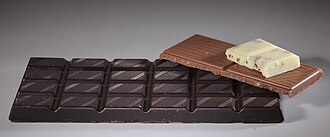
Photo: Wikipedia
Semisweet chocolate is a rich, dark chocolate with a balanced bittersweet profile, offering a firm snap and smooth melt. It contains a higher proportion of cocoa solids and less sugar than milk chocolate, delivering a deep, complex cocoa flavor. Nutritionally, it provides a significant energy boost with 480 kcal per 100g, primarily from carbohydrates and fats.
Calorie split: 3% protein · 47% carbs · 50% fat
↓ Full nutrition💚 Why it's loved
People love its versatile, deep chocolate taste that isn't overly sweet, making it ideal for both snacking and baking. Its smooth texture and ability to pair with fruits, nuts, and coffee make it a beloved ingredient in desserts worldwide.
⚠️ Watch-outs & how to enjoy it better
The high sugar content (54.5g per 100g) can cause blood-sugar spikes, and the calorie density may be a concern for some. To counteract this, pair it with protein-rich foods like nuts or Greek yogurt, or practice strict portion control (e.g., a single square).
Key benefits
- Good source of dietary fiber (5.9g per 100g)
- Contains antioxidants from cocoa solids
- Provides quick energy from natural sugars
- Can be a source of minerals like iron and magnesium
- Offers a satisfying, intense chocolate flavor
🍽️ Popular dishes
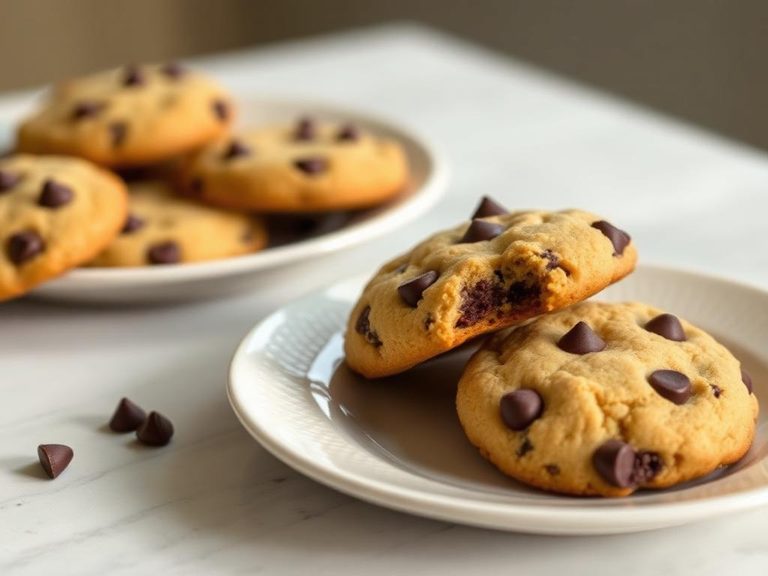

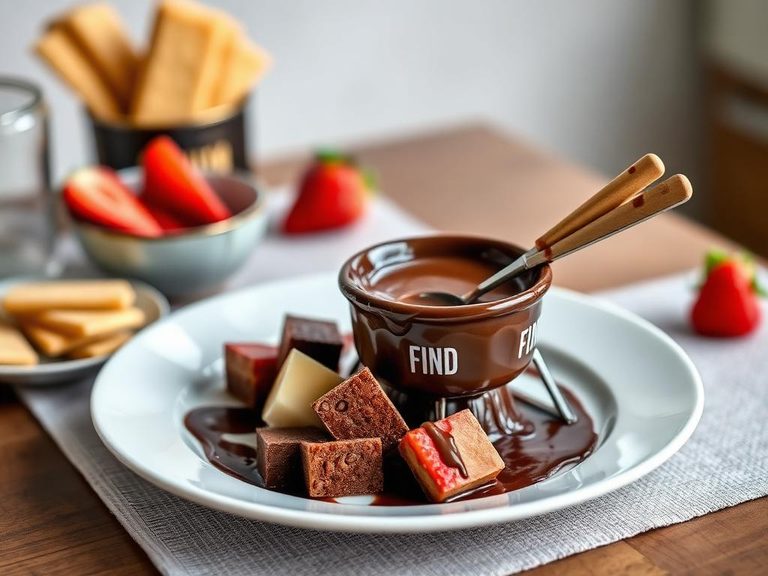


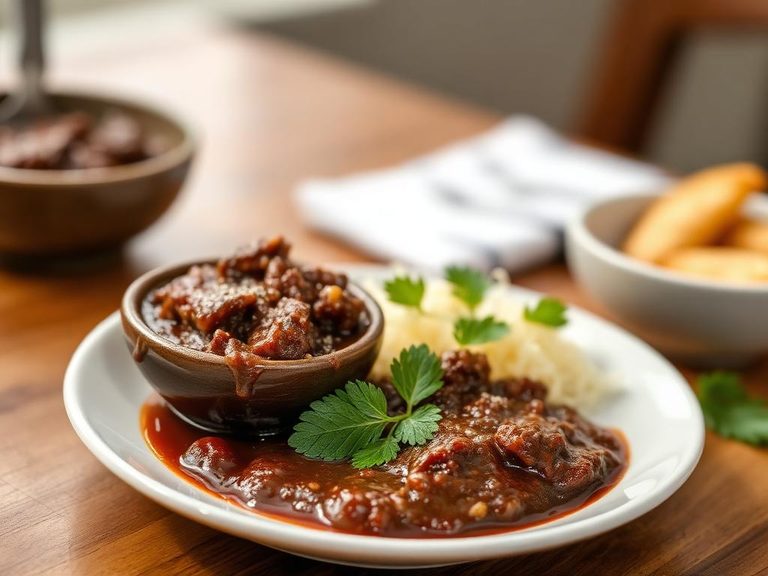
🌍 Where it's eaten
💡 Did you know?
The 'snap' sound when breaking a good piece of semisweet chocolate is a quality indicator, caused by the cocoa butter's crystalline structure.
Full nutrition (USDA data · scales with serving)
| Water | 0.70 g |
| Energy | 480 kcal |
| Energy | 2008 kj |
| Protein | 4.2 g |
| Total lipid (fat) | 30.0 g |
| Ash | 1.2 g |
| Carbohydrate, by difference | 63.9 g |
| Fiber, total dietary | 5.9 g |
| Total Sugars | 54.5 g |
| Calcium, Ca | 32.0 mg |
| Iron, Fe | 3.1 mg |
| Magnesium, Mg | 115 mg |
| Phosphorus, P | 132 mg |
| Potassium, K | 365 mg |
| Sodium, Na | 11.0 mg |
| Zinc, Zn | 1.6 mg |
| Copper, Cu | 0.70 mg |
| Manganese, Mn | 0.80 mg |
| Selenium, Se | 4.2 ug |
| Vitamin C, total ascorbic acid | 0.00 mg |
| Thiamin | 0.06 mg |
| Riboflavin | 0.09 mg |
| Niacin | 0.43 mg |
| Pantothenic acid | 0.10 mg |
| Vitamin B-6 | 0.04 mg |
| Folate, total | 13.0 ug |
| Folic acid | 0.00 ug |
| Folate, food | 13.0 ug |
| Folate, DFE | 13.0 ug |
| Choline, total | 22.0 mg |
| Vitamin B-12 | 0.00 ug |
| Vitamin B-12, added | 0.00 ug |
| Vitamin A, RAE | 0.00 ug |
| Retinol | 0.00 ug |
| Carotene, beta | 0.00 ug |
| Carotene, alpha | 0.00 ug |
| Cryptoxanthin, beta | 0.00 ug |
| Vitamin A, IU | 0.00 iu |
| Lycopene | 0.00 ug |
| Lutein + zeaxanthin | 18.0 ug |
| Vitamin E (alpha-tocopherol) | 0.26 mg |
| Vitamin E, added | 0.00 mg |
| Vitamin D (D2 + D3), International Units | 0.00 iu |
| Vitamin D (D2 + D3) | 0.00 ug |
| Vitamin K (phylloquinone) | 5.6 ug |
| Alcohol, ethyl | 0.00 g |
| Caffeine | 62.0 mg |
| Theobromine | 486 mg |
Fat & fatty acid profile (per 100g)
| Fatty acids, total saturated | 17.8 g |
| SFA 4:0 | 0.00 g |
| SFA 6:0 | 0.00 g |
| SFA 8:0 | 0.00 g |
| SFA 10:0 | 0.00 g |
| SFA 12:0 | 0.00 g |
| SFA 13:0 | 0.00 g |
| SFA 14:0 | 0.02 g |
| SFA 15:0 | 0.00 g |
| SFA 16:0 | 7.3 g |
| SFA 17:0 | 0.05 g |
| SFA 18:0 | 10.0 g |
| SFA 20:0 | 0.27 g |
| SFA 22:0 | 0.02 g |
| SFA 24:0 | 0.00 g |
| Fatty acids, total monounsaturated | 10.0 g |
| MUFA 14:1 | 0.00 g |
| MUFA 15:1 | 0.00 g |
| MUFA 16:1 | 0.06 g |
| MUFA 17:1 | 0.00 g |
| MUFA 18:1 | 9.9 g |
| MUFA 20:1 | 0.00 g |
| MUFA 22:1 | 0.00 g |
| MUFA 24:1 c | 0.00 g |
| Fatty acids, total polyunsaturated | 0.97 g |
| PUFA 18:2 | 0.90 g |
| PUFA 18:3 | 0.07 g |
| PUFA 18:4 | 0.00 g |
| PUFA 20:2 n-6 c,c | 0.00 g |
| PUFA 20:3 | 0.00 g |
| PUFA 20:4 | 0.00 g |
| PUFA 20:5 n-3 (EPA) | 0.00 g |
| PUFA 22:5 n-3 (DPA) | 0.00 g |
| PUFA 22:6 n-3 (DHA) | 0.00 g |
| Cholesterol | 0.00 mg |
Amino acid profile (per 100g)
| Tryptophan | 0.06 g |
| Threonine | 0.17 g |
| Isoleucine | 0.16 g |
| Leucine | 0.26 g |
| Lysine | 0.21 g |
| Methionine | 0.04 g |
| Cystine | 0.05 g |
| Phenylalanine | 0.20 g |
| Tyrosine | 0.16 g |
| Valine | 0.25 g |
| Arginine | 0.24 g |
| Histidine | 0.07 g |
| Alanine | 0.20 g |
| Aspartic acid | 0.42 g |
| Glutamic acid | 0.64 g |
| Glycine | 0.19 g |
| Proline | 0.18 g |
| Serine | 0.18 g |
FAQ
What's the difference between semisweet and bittersweet chocolate?
They are very similar and often used interchangeably. By FDA standards, both must contain at least 35% cocoa solids. The main difference is that semisweet typically has a slightly higher sugar content, while bittersweet can be more intense and less sweet.
Can I use semisweet chocolate in savory dishes?
Yes, it's a key ingredient in Mexican mole sauces, where it adds depth and balances the heat of chilies. Its less-sweet profile works well in savory contexts.
How should I store semisweet chocolate?
Store it in a cool, dry place (15-18°C / 59-64°F) away from strong odors. If it develops a white film called 'bloom,' it's still safe to eat but may have a slightly grainy texture.
Nutrient density (calculated · NRF9.3)
Nutrient Rich Foods index: beneficial nutrients (protein, fiber, vitamins, minerals) minus saturated fat, added sugar & sodium, per 100 kcal.
NRF9.3 index — Fulgoni, Keast & Drewnowski, 2009. Computed from USDA nutrients.
Weight-loss friendliness (composite index)
Energy density 4.80 kcal/g · 4% calories from protein · 5.9 g fiber · 54.5 g sugar per 100 g.
Composite of energy density (Rolls et al., 1999), protein & fiber satiety, minus sugar. A calculated heuristic — ranks satiety-per-calorie, not a clinical measure.
Dietary load (calculated from USDA values)
Potential renal acid load. Positive = acid-forming, negative = alkaline-forming.
Sodium-to-potassium ratio: 0.03 (lower is better — aim for ≤ 1)
Sodium:potassium per WHO potassium guidance. Computed from USDA nutrients.