

Beef, ribeye filet, boneless, separable lean only, trimmed to 0" fat, select, cooked, grilled
Whole food · Beef Products

Photo: Wikipedia
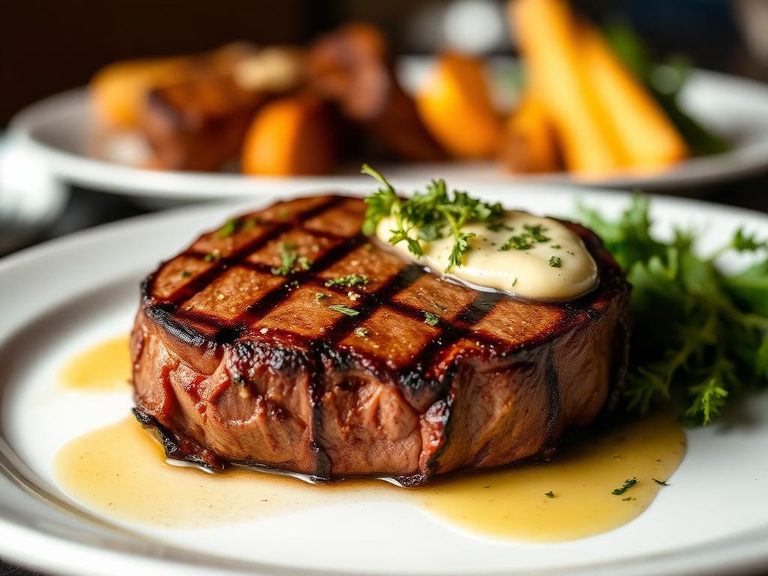
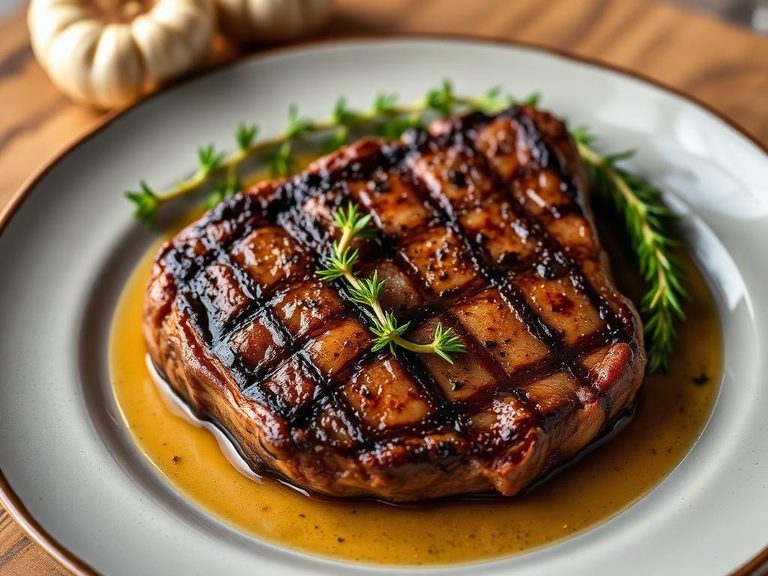
This is the lean, boneless heart of the ribeye, trimmed of all visible fat and grilled to a deep, savory crust. The texture is exceptionally tender and fine-grained, offering a pure, beefy flavor without the chew of tougher cuts. With nearly 30 grams of high-quality protein per 100g and minimal fat, it's a powerhouse for muscle maintenance and satiety.
Calorie split: 63% protein · 0% carbs · 37% fat
↓ Full nutrition💚 Why it's loved
People love it for its buttery tenderness and clean, concentrated beef flavor that shines with simple seasoning. It's a versatile centerpiece that cooks quickly, making it perfect for a fast weeknight meal or a refined dinner.
⚠️ Watch-outs & how to enjoy it better
As a very lean cut, it can dry out if overcooked, becoming tough and less flavorful. Those monitoring saturated fat intake should note that while lower in fat than a standard ribeye, it still contains some. To counteract dryness, use a meat thermometer to pull it at 130-135°F (54-57°C) for medium-rare, and let it rest for 5-10 minutes before slicing to retain juices.
Key benefits
- Excellent source of complete, high-quality protein
- Very low in carbohydrates, suitable for ketogenic diets
- Rich in bioavailable iron (heme iron) for energy
- Provides essential B vitamins, especially B12 for nerve function
- Naturally low in sugar and fiber
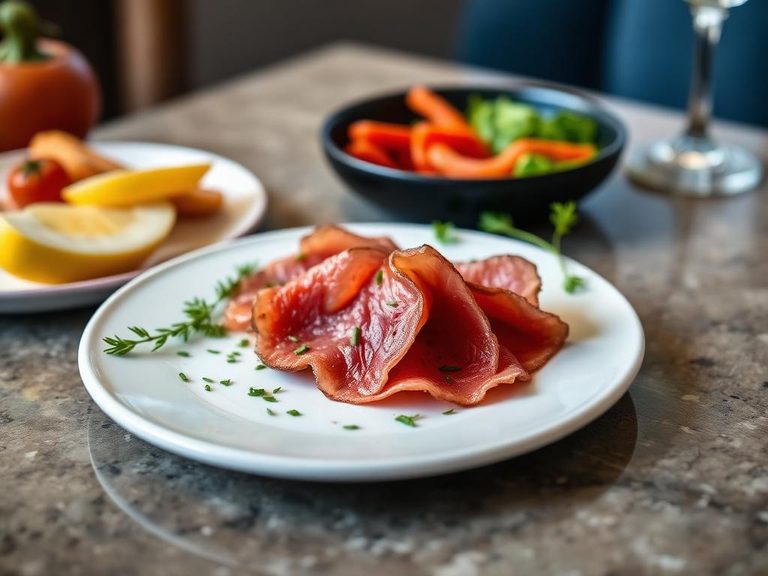
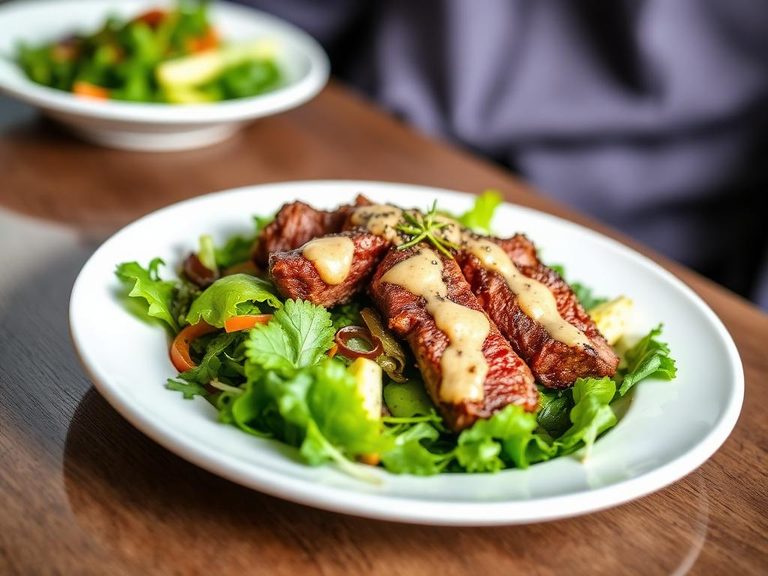
🍽️ Popular dishes
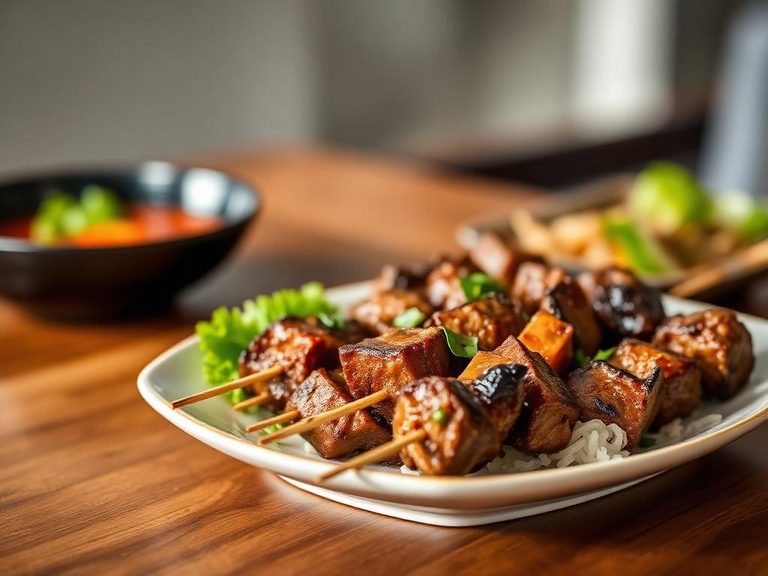
🌍 Where it's eaten
💡 Did you know?
The 'filet' in its name refers to its shape and tenderness, not its origin from the tenderloin; it's actually cut from the longissimus dorsi muscle of the rib section.
Full nutrition (USDA data · scales with serving)
| Water | 62.2 g |
| Energy | 186 kcal |
| Energy | 778 kj |
| Protein | 29.4 g |
| Total lipid (fat) | 7.6 g |
| Ash | 1.1 g |
| Carbohydrate, by difference | 0.00 g |
| Fiber, total dietary | 0.00 g |
| Total Sugars | 0.00 g |
| Calcium, Ca | 6.0 mg |
| Iron, Fe | 3.6 mg |
| Magnesium, Mg | 27.0 mg |
| Phosphorus, P | 242 mg |
| Potassium, K | 383 mg |
| Sodium, Na | 87.0 mg |
| Zinc, Zn | 11.0 mg |
| Copper, Cu | 0.14 mg |
| Selenium, Se | 36.2 ug |
| Vitamin C, total ascorbic acid | 0.00 mg |
| Thiamin | 0.09 mg |
| Riboflavin | 0.44 mg |
| Niacin | 4.7 mg |
| Vitamin B-6 | 0.48 mg |
| Folate, total | 7.0 ug |
| Folic acid | 0.00 ug |
| Folate, food | 7.0 ug |
| Folate, DFE | 7.0 ug |
| Vitamin B-12 | 3.4 ug |
| Vitamin B-12, added | 0.00 ug |
| Vitamin A, RAE | 2.0 ug |
| Retinol | 2.0 ug |
| Carotene, beta | 0.00 ug |
| Carotene, alpha | 0.00 ug |
| Cryptoxanthin, beta | 0.00 ug |
| Vitamin A, IU | 7.0 iu |
| Lycopene | 0.00 ug |
| Lutein + zeaxanthin | 0.00 ug |
| Vitamin D (D2 + D3), International Units | 3.0 iu |
| Vitamin D (D2 + D3) | 0.10 ug |
| Vitamin D3 (cholecalciferol) | 0.10 ug |
| Vitamin K (phylloquinone) | 1.6 ug |
| Alcohol, ethyl | 0.00 g |
| Caffeine | 0.00 mg |
| Theobromine | 0.00 mg |
Fat & fatty acid profile (per 100g)
| Fatty acids, total saturated | 2.6 g |
| SFA 4:0 | 0.00 g |
| SFA 6:0 | 0.00 g |
| SFA 8:0 | 0.00 g |
| SFA 10:0 | 0.00 g |
| SFA 12:0 | 0.01 g |
| SFA 14:0 | 0.12 g |
| SFA 16:0 | 1.4 g |
| SFA 17:0 | 0.05 g |
| SFA 18:0 | 1.0 g |
| SFA 20:0 | 0.00 g |
| SFA 24:0 | 0.01 g |
| Fatty acids, total monounsaturated | 3.2 g |
| MUFA 14:1 | 0.03 g |
| MUFA 16:1 | 0.26 g |
| MUFA 17:1 | 0.06 g |
| MUFA 18:1 | 2.8 g |
| MUFA 18:1 c | 2.5 g |
| MUFA 20:1 | 0.01 g |
| MUFA 22:1 | 0.00 g |
| Fatty acids, total polyunsaturated | 0.26 g |
| PUFA 18:2 | 0.19 g |
| PUFA 18:2 n-6 c,c | 0.17 g |
| PUFA 18:2 CLAs | 0.02 g |
| PUFA 18:3 | 0.02 g |
| PUFA 18:3 n-6 c,c,c | 0.02 g |
| PUFA 18:4 | 0.00 g |
| PUFA 20:2 n-6 c,c | 0.00 g |
| PUFA 20:4 | 0.04 g |
| PUFA 20:5 n-3 (EPA) | 0.00 g |
| PUFA 22:5 n-3 (DPA) | 0.01 g |
| PUFA 22:6 n-3 (DHA) | 0.00 g |
| Fatty acids, total trans | 0.29 g |
| Fatty acids, total trans-monoenoic | 0.29 g |
| TFA 18:1 t | 0.29 g |
| Cholesterol | 82.0 mg |
Amino acid profile (per 100g)
| Tryptophan | 0.36 g |
| Threonine | 1.5 g |
| Isoleucine | 1.5 g |
| Leucine | 2.8 g |
| Lysine | 3.2 g |
| Methionine | 0.88 g |
| Cystine | 0.33 g |
| Phenylalanine | 1.3 g |
| Tyrosine | 1.2 g |
| Valine | 1.6 g |
| Arginine | 2.2 g |
| Histidine | 1.3 g |
| Alanine | 2.0 g |
| Aspartic acid | 3.2 g |
| Glutamic acid | 5.4 g |
| Glycine | 1.4 g |
| Proline | 1.4 g |
| Serine | 1.3 g |
| Hydroxyproline | 0.15 g |
FAQ
How is this different from a regular ribeye steak?
A regular ribeye includes the 'spinalis dorsi' (ribeye cap) and significant marbling of fat throughout. This filet is the lean, central 'eye' of the ribeye, meticulously trimmed of all external and internal fat.
What's the best way to cook it to prevent it from drying out?
High-heat, fast cooking is key. Grill or pan-sear it over high heat for a short time. Use an instant-read thermometer and remove it from heat at 130°F (54°C) for medium-rare. Let it rest for 5-10 minutes before slicing against the grain.
Is it a good choice for a low-fat diet?
Relative to other steak cuts, yes. At 7.61g of fat per 100g, it is leaner than a standard ribeye (which can have 15-20g fat). However, it's still a red meat and contains saturated fat, so portion control is advised for strict low-fat diets.
Nutrient density (calculated · NRF9.3)
Nutrient Rich Foods index: beneficial nutrients (protein, fiber, vitamins, minerals) minus saturated fat, added sugar & sodium, per 100 kcal.
NRF9.3 index — Fulgoni, Keast & Drewnowski, 2009. Computed from USDA nutrients.
Weight-loss friendliness (composite index)
Energy density 1.86 kcal/g · 63% calories from protein · 0.0 g fiber · 0.0 g sugar per 100 g.
Composite of energy density (Rolls et al., 1999), protein & fiber satiety, minus sugar. A calculated heuristic — ranks satiety-per-calorie, not a clinical measure.
Dietary load (calculated from USDA values)
Potential renal acid load. Positive = acid-forming, negative = alkaline-forming.
Sodium-to-potassium ratio: 0.23 (lower is better — aim for ≤ 1)
Sodium:potassium per WHO potassium guidance. Computed from USDA nutrients.