

Beans, snap, green, raw
Whole food · Vegetables and Vegetable Products

Photo: Wikipedia
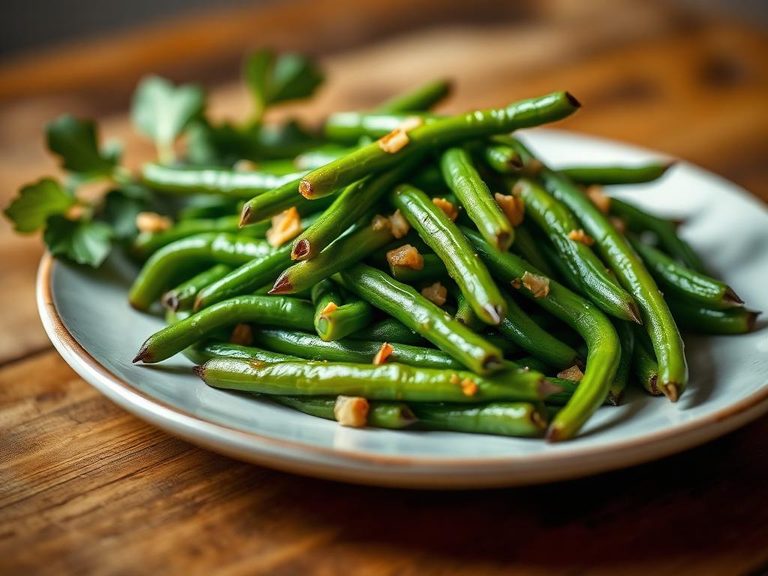
Snap beans are crisp, slender pods with a bright green color and a satisfying snap when bitten. They offer a mild, slightly sweet, and grassy flavor with a refreshing, juicy texture. Nutritionally, they are a low-calorie source of dietary fiber and provide a modest amount of plant-based protein.
Calorie split: 20% protein · 75% carbs · 5% fat
↓ Full nutrition💚 Why it's loved
People love snap beans for their versatile, mild flavor that complements both raw and cooked preparations, and their satisfying crunch. They are a staple in many cuisines, often featured in simple, fresh dishes that highlight their natural taste.
⚠️ Watch-outs & how to enjoy it better
Raw snap beans contain lectins, which can cause digestive discomfort if consumed in large quantities; cooking thoroughly neutralizes them. Some individuals may experience gas or bloating from the fiber content, which can be mitigated by starting with smaller portions and ensuring adequate water intake.
Key benefits
- Low in calories, supporting weight management.
- Good source of dietary fiber for digestive health.
- Provides vitamin C, an antioxidant.
- Contains vitamin K, important for bone health.
- Naturally low in fat and sodium.
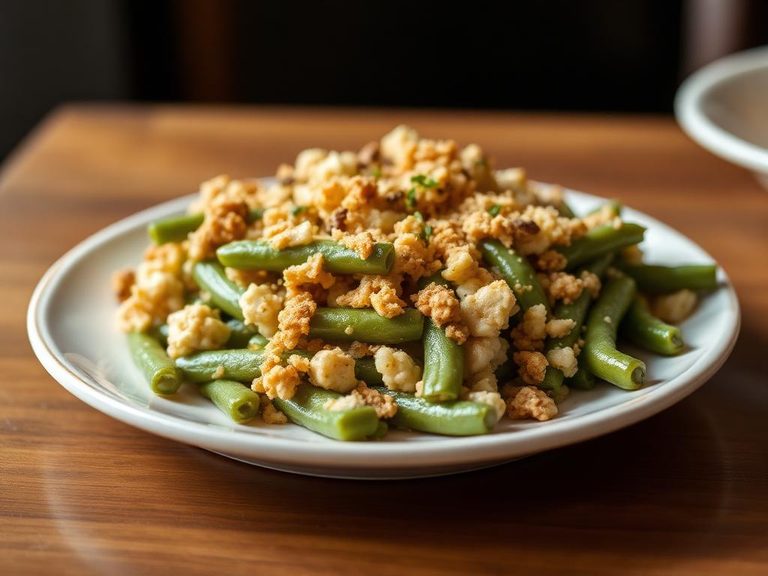
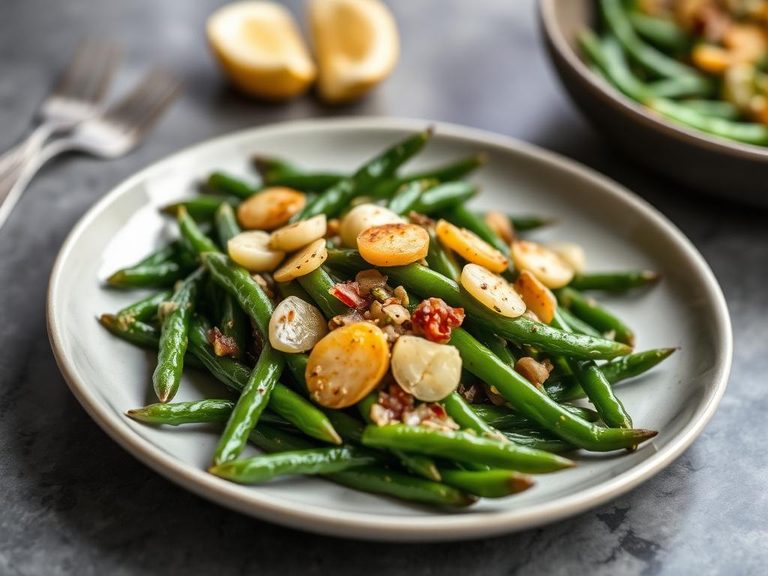
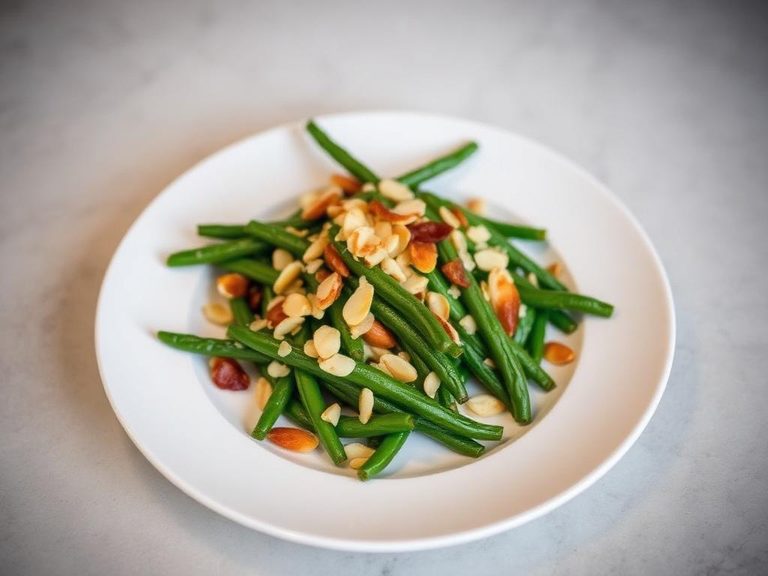
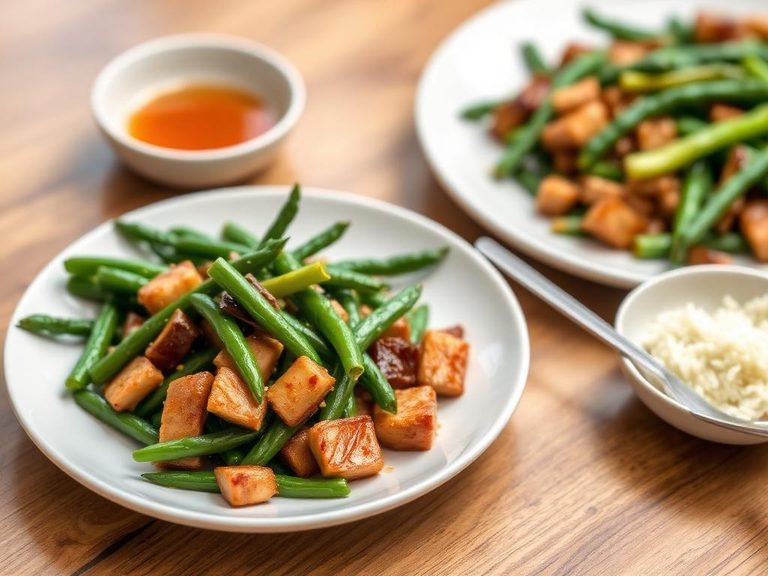
🍽️ Popular dishes
🌍 Where it's eaten
💡 Did you know?
The 'snap' in snap beans refers to the sound the pod makes when it breaks cleanly in half, a sign of freshness.
Full nutrition (USDA data · scales with serving)
| Water | 90.3 g |
| Energy | 31.0 kcal |
| Energy | 131 kj |
| Protein | 1.8 g |
| Total lipid (fat) | 0.22 g |
| Ash | 0.66 g |
| Carbohydrate, by difference | 7.0 g |
| Fiber, total dietary | 2.7 g |
| Total Sugars | 3.3 g |
| Sucrose | 0.36 g |
| Glucose | 1.5 g |
| Fructose | 1.4 g |
| Lactose | 0.00 g |
| Maltose | 0.00 g |
| Galactose | 0.00 g |
| Starch | 0.88 g |
| Calcium, Ca | 37.0 mg |
| Iron, Fe | 1.0 mg |
| Magnesium, Mg | 25.0 mg |
| Phosphorus, P | 38.0 mg |
| Potassium, K | 211 mg |
| Sodium, Na | 6.0 mg |
| Zinc, Zn | 0.24 mg |
| Copper, Cu | 0.07 mg |
| Manganese, Mn | 0.22 mg |
| Selenium, Se | 0.60 ug |
| Fluoride, F | 19.0 ug |
| Vitamin C, total ascorbic acid | 12.2 mg |
| Thiamin | 0.08 mg |
| Riboflavin | 0.10 mg |
| Niacin | 0.73 mg |
| Pantothenic acid | 0.23 mg |
| Vitamin B-6 | 0.14 mg |
| Folate, total | 33.0 ug |
| Folic acid | 0.00 ug |
| Folate, food | 33.0 ug |
| Folate, DFE | 33.0 ug |
| Choline, total | 15.3 mg |
| Betaine | 0.10 mg |
| Vitamin B-12 | 0.00 ug |
| Vitamin B-12, added | 0.00 ug |
| Vitamin A, RAE | 35.0 ug |
| Retinol | 0.00 ug |
| Carotene, beta | 379 ug |
| Carotene, alpha | 69.0 ug |
| Cryptoxanthin, beta | 0.00 ug |
| Vitamin A, IU | 690 iu |
| Lycopene | 0.00 ug |
| Lutein + zeaxanthin | 640 ug |
| Vitamin E (alpha-tocopherol) | 0.41 mg |
| Vitamin E, added | 0.00 mg |
| Vitamin D (D2 + D3), International Units | 0.00 iu |
| Vitamin D (D2 + D3) | 0.00 ug |
| Vitamin K (phylloquinone) | 43.0 ug |
| Alcohol, ethyl | 0.00 g |
| Caffeine | 0.00 mg |
| Theobromine | 0.00 mg |
Fat & fatty acid profile (per 100g)
| Fatty acids, total saturated | 0.05 g |
| SFA 4:0 | 0.00 g |
| SFA 6:0 | 0.00 g |
| SFA 8:0 | 0.00 g |
| SFA 10:0 | 0.00 g |
| SFA 12:0 | 0.00 g |
| SFA 14:0 | 0.00 g |
| SFA 16:0 | 0.04 g |
| SFA 18:0 | 0.01 g |
| Fatty acids, total monounsaturated | 0.01 g |
| MUFA 16:1 | 0.00 g |
| MUFA 18:1 | 0.01 g |
| MUFA 20:1 | 0.00 g |
| MUFA 22:1 | 0.00 g |
| Fatty acids, total polyunsaturated | 0.11 g |
| PUFA 18:2 | 0.04 g |
| PUFA 18:3 | 0.07 g |
| PUFA 18:4 | 0.00 g |
| PUFA 20:4 | 0.00 g |
| PUFA 20:5 n-3 (EPA) | 0.00 g |
| PUFA 22:5 n-3 (DPA) | 0.00 g |
| PUFA 22:6 n-3 (DHA) | 0.00 g |
| Fatty acids, total trans | 0.00 g |
| Cholesterol | 0.00 mg |
Amino acid profile (per 100g)
| Tryptophan | 0.02 g |
| Threonine | 0.08 g |
| Isoleucine | 0.07 g |
| Leucine | 0.11 g |
| Lysine | 0.09 g |
| Methionine | 0.02 g |
| Cystine | 0.02 g |
| Phenylalanine | 0.07 g |
| Tyrosine | 0.04 g |
| Valine | 0.09 g |
| Arginine | 0.07 g |
| Histidine | 0.03 g |
| Alanine | 0.08 g |
| Aspartic acid | 0.26 g |
| Glutamic acid | 0.19 g |
| Glycine | 0.07 g |
| Proline | 0.07 g |
| Serine | 0.10 g |
FAQ
Are snap beans and green beans the same thing?
Yes, 'snap bean' is a general term for beans harvested for their edible pod, and 'green bean' is the most common type. Other varieties include yellow wax beans and purple beans.
Should I trim the ends before cooking?
Yes, it's standard practice to trim the stem end. Some also remove the thin, fibrous string that can run along the seam, though modern varieties are often bred to be 'stringless'.
What's the best way to store fresh snap beans?
Store them unwashed in a perforated plastic bag in the refrigerator's crisper drawer. They are best used within a few days for optimal crispness and flavor.
Nutrient density (calculated · NRF9.3)
Nutrient Rich Foods index: beneficial nutrients (protein, fiber, vitamins, minerals) minus saturated fat, added sugar & sodium, per 100 kcal.
NRF9.3 index — Fulgoni, Keast & Drewnowski, 2009. Computed from USDA nutrients.
Weight-loss friendliness (composite index)
Energy density 0.31 kcal/g · 24% calories from protein · 2.7 g fiber · 3.3 g sugar per 100 g.
Composite of energy density (Rolls et al., 1999), protein & fiber satiety, minus sugar. A calculated heuristic — ranks satiety-per-calorie, not a clinical measure.
Dietary load (calculated from USDA values)
Potential renal acid load. Positive = acid-forming, negative = alkaline-forming.
Sodium-to-potassium ratio: 0.03 (lower is better — aim for ≤ 1)
Sodium:potassium per WHO potassium guidance. Computed from USDA nutrients.