Almond milk, unsweetened, plain, shelf stable
Whole food · Beverages

Photo: Wikipedia
A smooth, creamy, plant-based beverage made from almonds and water, offering a mild, nutty flavor and a light, slightly watery texture. Nutritionally, it is very low in calories and carbohydrates, with a small amount of healthy fats from the almonds. It is a popular, dairy-free alternative that provides a clean, neutral base for both sweet and savory applications.
💚 Why it's loved
People love its mild, versatile flavor that doesn't overpower other ingredients, making it perfect for cereal, coffee, or smoothies. Its light texture and long shelf life also make it a convenient, everyday staple for plant-based diets and lactose-intolerant individuals.
⚠️ Watch-outs & how to enjoy it better
As a tree nut product, it is a common allergen and must be avoided by those with almond allergies. Its low protein and fiber content mean it won't provide the same satiety as cow's milk or higher-protein alternatives. To counteract this, pair it with protein-rich foods like oats or protein powder in smoothies, or use it in dishes that include other protein sources.
Key benefits
- Very low in calories and carbohydrates
- Naturally dairy-free and lactose-free
- Good source of vitamin E from almonds
- Provides healthy monounsaturated fats
- Shelf-stable for convenient storage
🍽️ Popular dishes
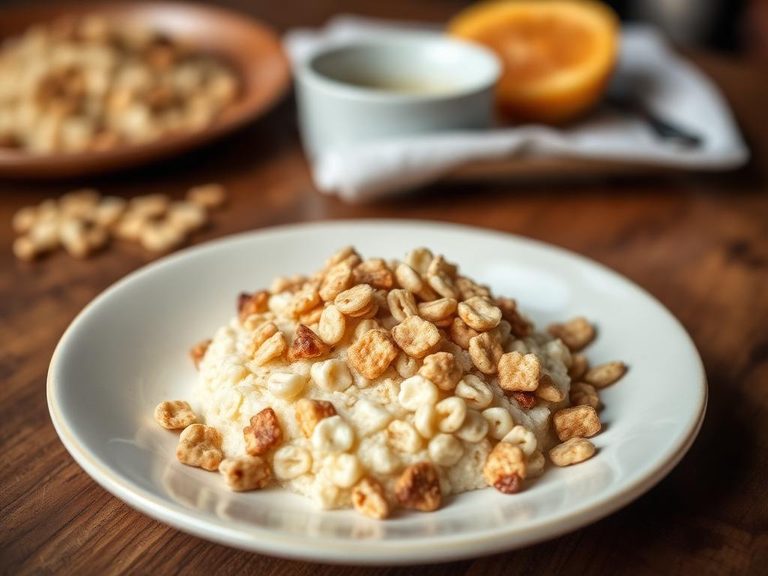
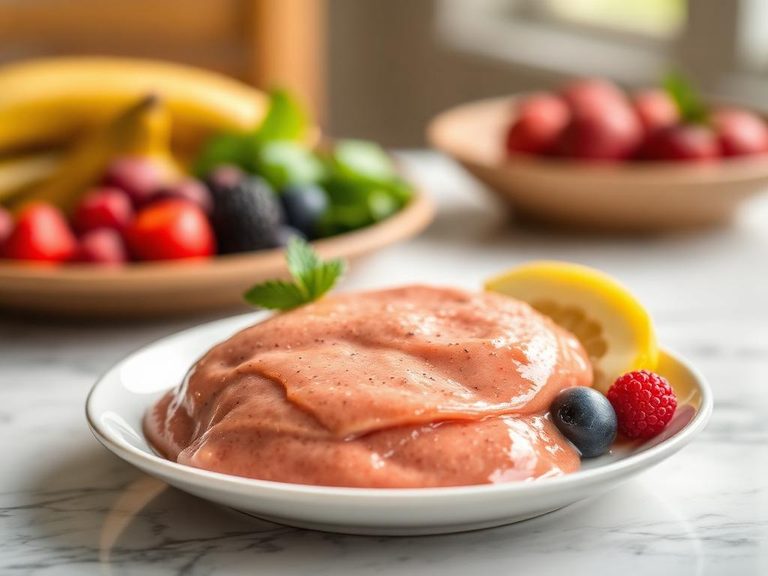
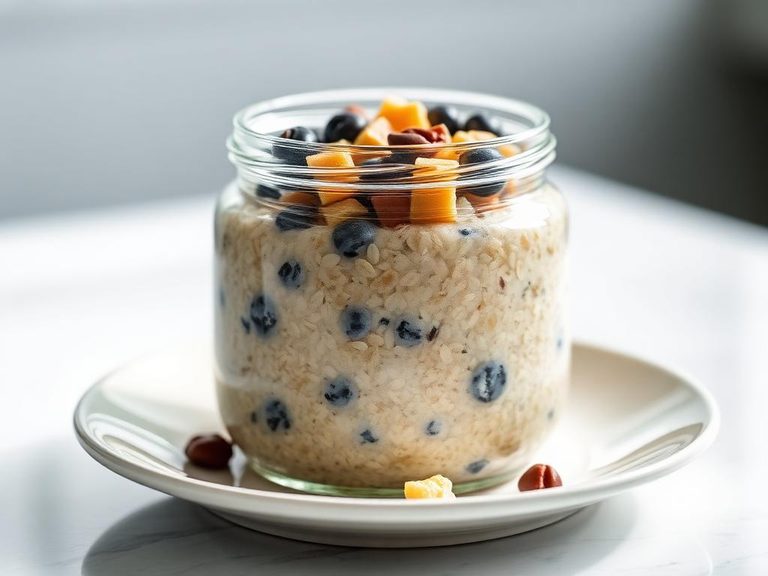
🌍 Where it's eaten
💡 Did you know?
The shelf-stable version is ultra-pasteurized and packaged in aseptic cartons, allowing it to be stored unopened at room temperature for months, much like canned goods.
Full nutrition (scales with serving)
| Water | 97.4 g |
| Energy (Atwater General Factors) | 14.6 kcal |
| Energy (Atwater Specific Factors) | 14.6 kcal |
| Nitrogen | 0.09 g |
| Protein | 0.55 g |
| Total lipid (fat) | 1.2 g |
| Total fat (NLEA) | 1.1 g |
| Ash | 0.49 g |
| Carbohydrate, by difference | 0.34 g |
| Carbohydrate, by summation | 0.00 g |
| Fiber, total dietary | 0.00 g |
| Sugars, Total | 0.00 g |
| Sucrose | 0.00 g |
| Glucose | 0.00 g |
| Fructose | 0.00 g |
| Lactose | 0.00 g |
| Maltose | 0.00 g |
| Galactose | 0.00 g |
| Calcium, Ca | 173 mg |
| Iron, Fe | 0.29 mg |
| Magnesium, Mg | 6.8 mg |
| Phosphorus, P | 29.9 mg |
| Potassium, K | 30.8 mg |
| Sodium, Na | 59.6 mg |
| Zinc, Zn | 0.17 mg |
| Copper, Cu | 0.02 mg |
| Manganese, Mn | 0.04 mg |
| Iodine, I | 0.00 ug |
| Selenium, Se | 0.00 ug |
| Molybdenum, Mo | 0.00 ug |
| Thiamin | 0.00 mg |
| Riboflavin | 0.03 mg |
| Niacin | 0.07 mg |
| Vitamin B-6 | 0.00 mg |
| Biotin | 1.0 ug |
| Folate, total | 0.00 ug |
| Vitamin B-12 | 0.34 ug |
| Vitamin A, RAE | 41.4 ug |
| Retinol | 41.4 ug |
| Vitamin E (alpha-tocopherol) | 3.3 mg |
| Tocopherol, beta | 0.00 mg |
| Tocopherol, gamma | 0.03 mg |
| Tocopherol, delta | 0.00 mg |
| Tocotrienol, alpha | 0.00 mg |
| Tocotrienol, beta | 0.00 mg |
| Tocotrienol, gamma | 0.00 mg |
| Tocotrienol, delta | 0.00 mg |
| Vitamin D (D2 + D3), International Units | 37.1 iu |
| Vitamin D (D2 + D3) | 0.93 ug |
| Vitamin D2 (ergocalciferol) | 0.93 ug |
| Vitamin D3 (cholecalciferol) | 0.00 ug |
| Fatty acids, total saturated | 0.10 g |
| SFA 4:0 | 0.00 g |
| SFA 5:0 | 0.00 g |
| SFA 6:0 | 0.00 g |
| SFA 7:0 | 0.00 g |
| SFA 8:0 | 0.00 g |
| SFA 9:0 | 0.00 g |
| SFA 10:0 | 0.00 g |
| SFA 11:0 | 0.00 g |
| SFA 12:0 | 0.00 g |
| SFA 14:0 | 0.00 g |
| SFA 15:0 | 0.00 g |
| SFA 16:0 | 0.08 g |
| SFA 17:0 | 0.00 g |
| SFA 18:0 | 0.02 g |
| SFA 20:0 | 0.00 g |
| SFA 21:0 | 0.00 g |
| SFA 22:0 | 0.00 g |
| SFA 23:0 | 0.00 g |
| SFA 24:0 | 0.00 g |
| Fatty acids, total monounsaturated | 0.73 g |
| MUFA 12:1 | 0.00 g |
| MUFA 14:1 c | 0.00 g |
| MUFA 15:1 | 0.00 g |
| MUFA 16:1 c | 0.01 g |
| MUFA 17:1 | 0.00 g |
| MUFA 17:1 c | 0.00 g |
| MUFA 18:1 c | 0.72 g |
| MUFA 20:1 c | 0.00 g |
| MUFA 22:1 c | 0.00 g |
| MUFA 22:1 n-9 | 0.00 g |
| MUFA 22:1 n-11 | 0.00 g |
| MUFA 24:1 c | 0.00 g |
| Fatty acids, total polyunsaturated | 0.28 g |
| PUFA 18:2 c | 0.28 g |
| PUFA 18:2 n-6 c,c | 0.28 g |
| PUFA 18:2 CLAs | 0.00 g |
| PUFA 18:3 c | 0.00 g |
| PUFA 18:3 n-3 c,c,c (ALA) | 0.00 g |
| PUFA 18:3 n-6 c,c,c | 0.00 g |
| PUFA 18:4 | 0.00 g |
| PUFA 20:2 c | 0.00 g |
| PUFA 20:2 n-6 c,c | 0.00 g |
| PUFA 20:3 c | 0.00 g |
| PUFA 20:3 n-3 | 0.00 g |
| PUFA 20:3 n-6 | 0.00 g |
| PUFA 20:3 n-9 | 0.00 g |
| PUFA 22:3 | 0.00 g |
| PUFA 20:4 | 0.00 g |
| PUFA 20:4c | 0.00 g |
| PUFA 20:5c | 0.00 g |
| PUFA 20:5 n-3 (EPA) | 0.00 g |
| PUFA 22:2 | 0.00 g |
| PUFA 22:5 c | 0.00 g |
| PUFA 22:4 | 0.00 g |
| PUFA 22:5 n-3 (DPA) | 0.00 g |
| PUFA 22:6 c | 0.00 g |
| PUFA 22:6 n-3 (DHA) | 0.00 g |
| Fatty acids, total trans | 0.00 g |
| Fatty acids, total trans-monoenoic | 0.00 g |
| TFA 14:1 t | 0.00 g |
| TFA 16:1 t | 0.00 g |
| TFA 18:1 t | 0.00 g |
| TFA 20:1 t | 0.00 g |
| TFA 22:1 t | 0.00 g |
| TFA 18:2 t not further defined | 0.00 g |
| TFA 18:2 t | 0.00 g |
| Fatty acids, total trans-polyenoic | 0.00 g |
| TFA 18:3 t | 0.00 g |
FAQ
How does unsweetened almond milk compare nutritionally to cow's milk?
It is significantly lower in calories, protein, and carbohydrates. It is also lower in calcium and vitamin D unless fortified. It is a good choice for those limiting calories, carbs, or dairy, but not a direct nutritional substitute for growing children or those needing high protein.
Can I use it for baking?
Yes, it works well as a 1:1 substitute for milk in many baking recipes like muffins, pancakes, and cakes. Its low protein and fat content may result in a slightly less rich or tender crumb compared to dairy milk.
Why does it sometimes separate in coffee?
The acidity and heat of coffee can cause the proteins and fats in almond milk to curdle. Using a barista blend (formulated with stabilizers) or pouring the milk in first before adding coffee can help prevent this.