Beef, chuck for stew, separable lean and fat, select, raw
Whole food · Beef Products

Photo: Wikipedia
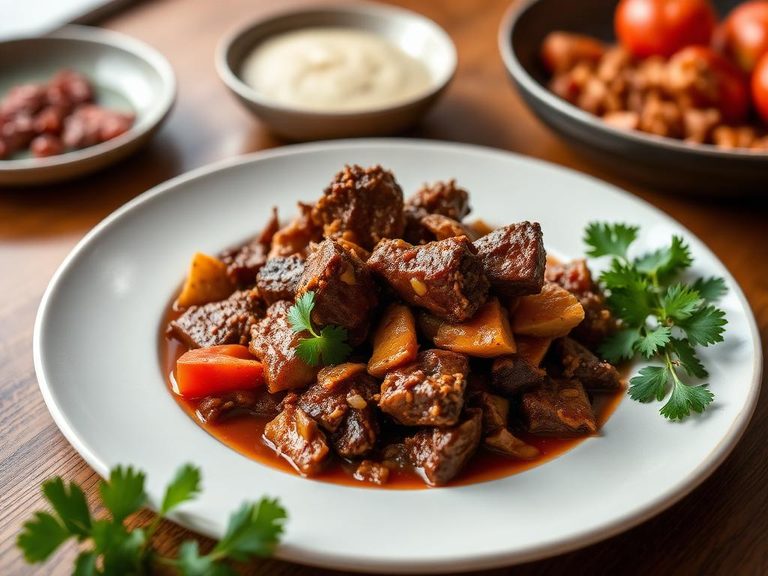
This is the classic, well-marbled cut from the shoulder, prized for its rich beefy flavor and ideal texture when slow-cooked. The generous intramuscular fat and connective tissue melt during braising, transforming the lean meat into fork-tender, succulent morsels. Nutritionally, it's a powerhouse of high-quality protein and essential minerals like zinc and iron.
💚 Why it's loved
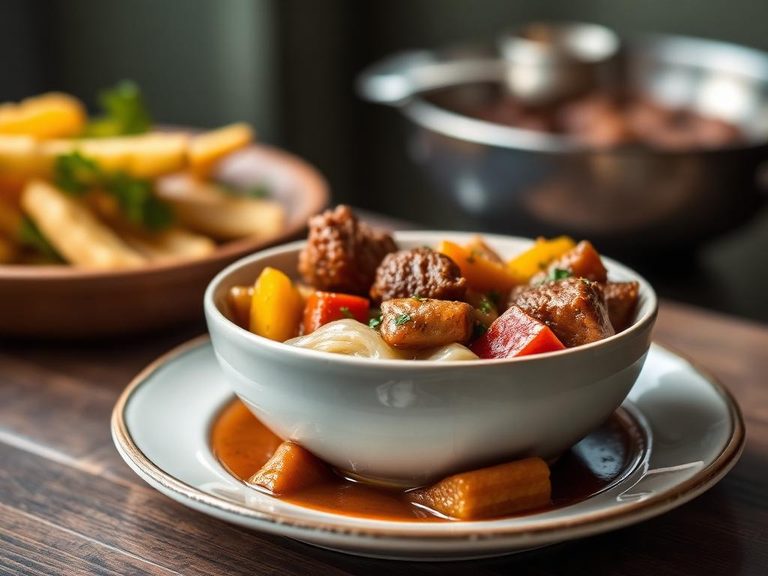
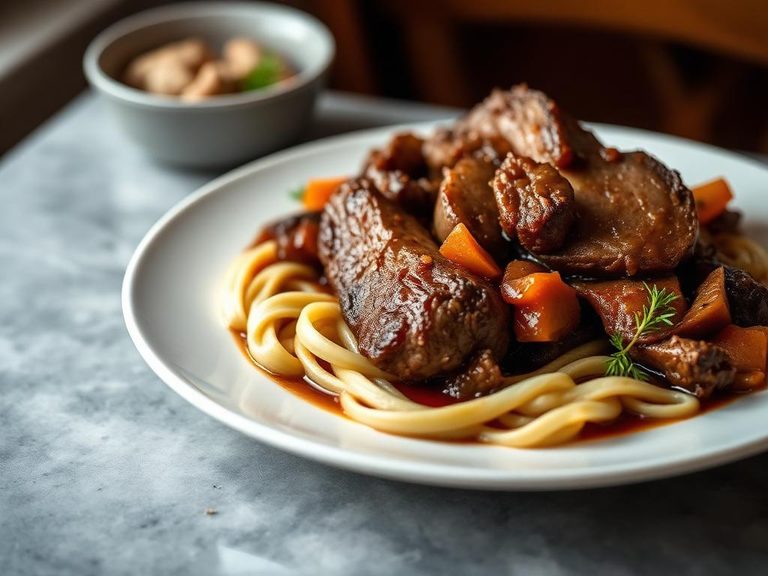
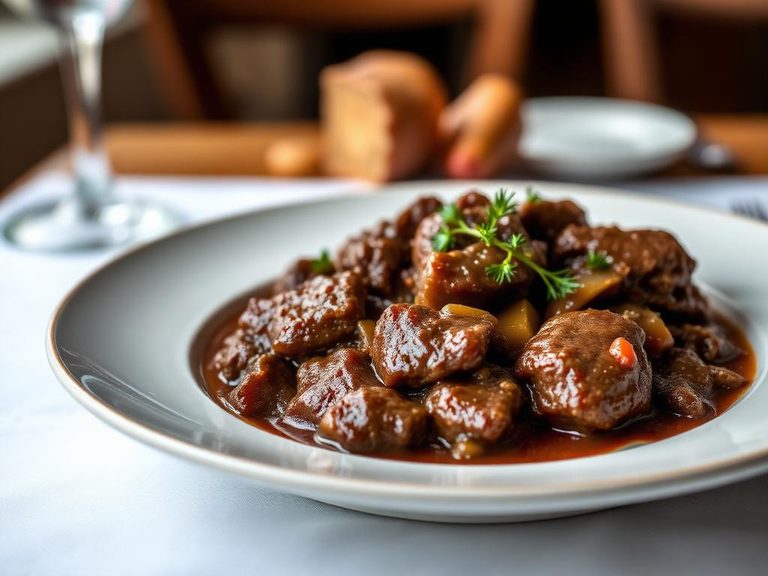
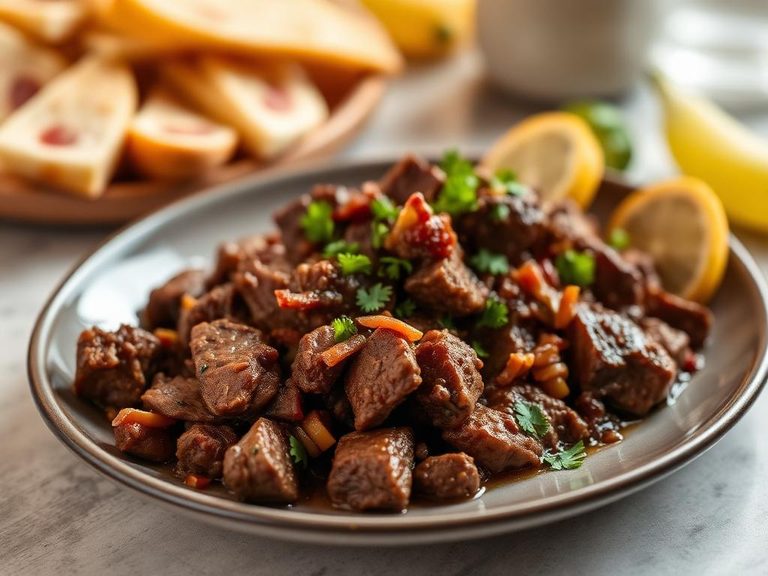
People adore chuck roast for its deep, beefy flavor that only intensifies with slow cooking, creating the ultimate comfort food. Its ability to become melt-in-your-mouth tender makes it the star of hearty, one-pot meals that are both satisfying and economical.
⚠️ Watch-outs & how to enjoy it better
If not cooked properly, the abundant connective tissue can remain tough and chewy. To counteract this, always use a low-and-slow method like braising, stewing, or pot-roasting, and ensure the meat is fully submerged in liquid. For those monitoring saturated fat intake, trimming visible fat before cooking and skimming the rendered fat from the finished dish can help.
Key benefits
- Excellent source of complete protein for muscle maintenance.
- Rich in heme iron, which is highly absorbable.
- Provides zinc for immune function and wound healing.
- Contains B vitamins, especially B12, for nerve health.
- The fat content aids in the absorption of fat-soluble vitamins.
🍽️ Popular dishes
🌍 Where it's eaten
💡 Did you know?
The 'chuck' gets its name from the shoulder blade bone it contains; historically, this cut was used in 'chuck wagons' to feed cowboys on cattle drives.
Full nutrition (scales with serving)
| Water | 72.8 g |
| Energy | 124 kcal |
| Energy | 520 kj |
| Protein | 21.9 g |
| Total lipid (fat) | 4.0 g |
| Ash | 1.1 g |
| Carbohydrate, by difference | 0.21 g |
| Fiber, total dietary | 0.00 g |
| Total Sugars | 0.00 g |
| Calcium, Ca | 14.0 mg |
| Iron, Fe | 2.2 mg |
| Magnesium, Mg | 20.0 mg |
| Phosphorus, P | 209 mg |
| Potassium, K | 359 mg |
| Sodium, Na | 81.0 mg |
| Zinc, Zn | 5.5 mg |
| Copper, Cu | 0.09 mg |
| Manganese, Mn | 0.01 mg |
| Selenium, Se | 26.0 ug |
| Vitamin C, total ascorbic acid | 0.00 mg |
| Thiamin | 0.08 mg |
| Riboflavin | 0.17 mg |
| Niacin | 5.2 mg |
| Pantothenic acid | 0.67 mg |
| Vitamin B-6 | 0.57 mg |
| Folate, total | 4.0 ug |
| Folic acid | 0.00 ug |
| Folate, food | 4.0 ug |
| Folate, DFE | 4.0 ug |
| Choline, total | 74.6 mg |
| Betaine | 12.8 mg |
| Vitamin B-12 | 2.4 ug |
| Vitamin B-12, added | 0.00 ug |
| Vitamin A, RAE | 2.0 ug |
| Retinol | 2.0 ug |
| Carotene, beta | 0.00 ug |
| Carotene, alpha | 0.00 ug |
| Cryptoxanthin, beta | 0.00 ug |
| Vitamin A, IU | 7.0 iu |
| Lycopene | 0.00 ug |
| Lutein + zeaxanthin | 0.00 ug |
| Vitamin E (alpha-tocopherol) | 0.15 mg |
| Vitamin E, added | 0.00 mg |
| Vitamin D (D2 + D3), International Units | 3.0 iu |
| Vitamin D (D2 + D3) | 0.10 ug |
| Vitamin D3 (cholecalciferol) | 0.10 ug |
| Vitamin K (phylloquinone) | 1.5 ug |
| Alcohol, ethyl | 0.00 g |
| Caffeine | 0.00 mg |
| Theobromine | 0.00 mg |
Fat & fatty acid profile (per 100g)
| Fatty acids, total saturated | 1.7 g |
| SFA 4:0 | 0.00 g |
| SFA 6:0 | 0.00 g |
| SFA 8:0 | 0.00 g |
| SFA 10:0 | 0.00 g |
| SFA 12:0 | 0.00 g |
| SFA 14:0 | 0.11 g |
| SFA 16:0 | 0.96 g |
| SFA 17:0 | 0.05 g |
| SFA 18:0 | 0.63 g |
| SFA 20:0 | 0.00 g |
| SFA 24:0 | 0.01 g |
| Fatty acids, total monounsaturated | 2.2 g |
| MUFA 14:1 | 0.02 g |
| MUFA 16:1 | 0.15 g |
| MUFA 17:1 | 0.04 g |
| MUFA 18:1 | 2.0 g |
| MUFA 18:1 c | 1.7 g |
| MUFA 18:1-11 t (18:1t n-7) | 0.14 g |
| MUFA 20:1 | 0.00 g |
| MUFA 22:1 | 0.00 g |
| Fatty acids, total polyunsaturated | 0.29 g |
| PUFA 18:2 | 0.24 g |
| PUFA 18:2 n-6 c,c | 0.22 g |
| PUFA 18:2 CLAs | 0.01 g |
| PUFA 18:3 | 0.00 g |
| PUFA 18:3 n-3 c,c,c (ALA) | 0.00 g |
| PUFA 18:4 | 0.00 g |
| PUFA 20:2 n-6 c,c | 0.00 g |
| PUFA 20:4 | 0.04 g |
| PUFA 20:5 n-3 (EPA) | 0.00 g |
| PUFA 22:5 n-3 (DPA) | 0.00 g |
| PUFA 22:6 n-3 (DHA) | 0.00 g |
| Fatty acids, total trans | 0.21 g |
| Fatty acids, total trans-monoenoic | 0.21 g |
| TFA 18:1 t | 0.21 g |
| Cholesterol | 66.0 mg |
Amino acid profile (per 100g)
| Tryptophan | 0.25 g |
| Threonine | 0.99 g |
| Isoleucine | 0.96 g |
| Leucine | 1.8 g |
| Lysine | 2.0 g |
| Methionine | 0.64 g |
| Cystine | 0.23 g |
| Phenylalanine | 0.85 g |
| Tyrosine | 0.78 g |
| Valine | 1.0 g |
| Arginine | 1.5 g |
| Histidine | 0.72 g |
| Alanine | 1.3 g |
| Aspartic acid | 2.0 g |
| Glutamic acid | 3.6 g |
| Glycine | 0.97 g |
| Proline | 0.90 g |
| Serine | 0.86 g |
| Hydroxyproline | 0.11 g |
FAQ
What's the best cooking method for chuck?
Braising or stewing is ideal. The moist, low-heat environment breaks down the tough collagen into gelatin, making the meat tender and creating a rich sauce.
Can I cook chuck roast quickly?
Not effectively. Using a pressure cooker or Instant Pot can significantly reduce the time (to about 45-60 minutes under pressure), but it still requires a pressurized, moist environment to tenderize the cut.
Is chuck roast the same as chuck steak?
They come from the same shoulder section. A 'roast' is a larger, thicker piece meant for slow cooking whole, while a 'steak' (like a chuck eye steak) is cut thinner and can be grilled or pan-seared, though it benefits from a quick marinade.