Pork, shoulder, petite tender, boneless, separable lean and fat, cooked, broiled
Whole food · Pork Products

Photo: Wikipedia
This is a lean, boneless cut from the pork shoulder, broiled to a juicy, slightly chewy finish with a mild, savory flavor. It's a protein powerhouse, delivering over 27 grams of protein per 100 grams with minimal fat and zero carbohydrates. The broiling method creates a pleasant, slightly caramelized exterior while keeping the interior tender.
💚 Why it's loved
People love its robust, meaty flavor and satisfying chew that holds up well to bold seasonings and sauces. It's a versatile canvas for grilling, stir-fries, or slicing for sandwiches, making it a staple in home cooking.
⚠️ Watch-outs & how to enjoy it better
As a lean cut, it can become dry if overcooked, so careful temperature control is key. It's also a red meat, so those monitoring saturated fat intake or with specific health conditions may wish to consume it in moderation. To counteract dryness, marinate before cooking, use a meat thermometer, and let it rest after broiling. Pair with a fiber-rich vegetable or salad to balance the meal.
Key benefits
- Excellent source of complete protein for muscle maintenance
- Very low in carbohydrates, suitable for keto or low-carb diets
- Good source of B vitamins like thiamin and niacin
- Contains minerals like selenium and phosphorus
- Leaner than many other pork shoulder preparations
🍽️ Popular dishes
🌍 Where it's eaten
💡 Did you know?
The 'petite tender' is also known as the pork tenderloin's larger, more marbled cousin from the shoulder, often marketed as a budget-friendly alternative to premium cuts.
Full nutrition (scales with serving)
| Water | 68.7 g |
| Energy | 155 kcal |
| Energy | 650 kj |
| Protein | 27.5 g |
| Total lipid (fat) | 4.2 g |
| Ash | 1.2 g |
| Carbohydrate, by difference | 0.00 g |
| Fiber, total dietary | 0.00 g |
| Total Sugars | 0.00 g |
| Calcium, Ca | 8.0 mg |
| Iron, Fe | 1.3 mg |
| Magnesium, Mg | 27.0 mg |
| Phosphorus, P | 254 mg |
| Potassium, K | 415 mg |
| Sodium, Na | 53.0 mg |
| Zinc, Zn | 2.7 mg |
| Copper, Cu | 0.10 mg |
| Manganese, Mn | 0.01 mg |
| Selenium, Se | 27.0 ug |
| Vitamin C, total ascorbic acid | 0.00 mg |
| Thiamin | 0.73 mg |
| Riboflavin | 0.47 mg |
| Niacin | 6.3 mg |
| Pantothenic acid | 0.98 mg |
| Vitamin B-6 | 0.59 mg |
| Folate, total | 1.0 ug |
| Folic acid | 0.00 ug |
| Folate, food | 1.0 ug |
| Folate, DFE | 1.0 ug |
| Choline, total | 112 mg |
| Betaine | 5.1 mg |
| Vitamin B-12 | 0.76 ug |
| Vitamin B-12, added | 0.00 ug |
| Vitamin A, RAE | 0.00 ug |
| Retinol | 0.00 ug |
| Carotene, beta | 0.00 ug |
| Carotene, alpha | 0.00 ug |
| Cryptoxanthin, beta | 0.00 ug |
| Vitamin A, IU | 0.00 iu |
| Lycopene | 0.00 ug |
| Lutein + zeaxanthin | 0.00 ug |
| Vitamin E (alpha-tocopherol) | 0.10 mg |
| Vitamin E, added | 0.00 mg |
| Vitamin K (phylloquinone) | 0.00 ug |
| Vitamin K (Dihydrophylloquinone) | 0.00 ug |
| Alcohol, ethyl | 0.00 g |
| Caffeine | 0.00 mg |
| Theobromine | 0.00 mg |
Fat & fatty acid profile (per 100g)
| Fatty acids, total saturated | 1.3 g |
| SFA 4:0 | 0.00 g |
| SFA 6:0 | 0.00 g |
| SFA 8:0 | 0.00 g |
| SFA 10:0 | 0.00 g |
| SFA 12:0 | 0.00 g |
| SFA 14:0 | 0.04 g |
| SFA 15:0 | 0.00 g |
| SFA 16:0 | 0.83 g |
| SFA 17:0 | 0.01 g |
| SFA 18:0 | 0.43 g |
| SFA 20:0 | 0.00 g |
| SFA 22:0 | 0.00 g |
| SFA 24:0 | 0.00 g |
| Fatty acids, total monounsaturated | 1.7 g |
| MUFA 14:1 | 0.00 g |
| MUFA 15:1 | 0.00 g |
| MUFA 16:1 | 0.11 g |
| MUFA 17:1 | 0.00 g |
| MUFA 18:1 | 1.6 g |
| MUFA 18:1 c | 1.6 g |
| MUFA 20:1 | 0.02 g |
| MUFA 22:1 | 0.00 g |
| MUFA 22:1 c | 0.00 g |
| Fatty acids, total polyunsaturated | 0.62 g |
| PUFA 18:2 | 0.52 g |
| PUFA 18:2 n-6 c,c | 0.51 g |
| PUFA 18:3 | 0.01 g |
| PUFA 18:3 n-3 c,c,c (ALA) | 0.01 g |
| PUFA 18:3 n-6 c,c,c | 0.00 g |
| PUFA 18:4 | 0.00 g |
| PUFA 20:2 n-6 c,c | 0.02 g |
| PUFA 20:3 | 0.00 g |
| PUFA 20:4 | 0.07 g |
| PUFA 20:5 n-3 (EPA) | 0.00 g |
| PUFA 22:5 n-3 (DPA) | 0.00 g |
| PUFA 22:6 n-3 (DHA) | 0.00 g |
| Fatty acids, total trans | 0.02 g |
| Fatty acids, total trans-monoenoic | 0.02 g |
| TFA 18:1 t | 0.02 g |
| TFA 18:2 t,t | 0.00 g |
| Fatty acids, total trans-polyenoic | 0.00 g |
| Cholesterol | 82.0 mg |
Amino acid profile (per 100g)
| Tryptophan | 0.33 g |
| Threonine | 1.2 g |
| Isoleucine | 1.3 g |
| Leucine | 2.3 g |
| Lysine | 2.4 g |
| Methionine | 0.75 g |
| Cystine | 0.31 g |
| Phenylalanine | 1.1 g |
| Tyrosine | 1.1 g |
| Valine | 1.4 g |
| Arginine | 1.8 g |
| Histidine | 1.1 g |
| Alanine | 1.6 g |
| Aspartic acid | 2.6 g |
| Glutamic acid | 4.2 g |
| Glycine | 1.2 g |
| Proline | 1.1 g |
| Serine | 1.1 g |
| Hydroxyproline | 0.10 g |
FAQ
Is pork shoulder petite tender the same as pork tenderloin?
No. They come from different parts of the pig. The petite tender is from the shoulder (picnic or butt area) and has more marbling and connective tissue, while the tenderloin is from the loin and is extremely lean and tender.
How do I prevent it from drying out when broiling?
Pat the meat dry, season well, and broil on high heat for a short time, flipping once. Use a meat thermometer and remove it when the internal temperature reaches 145°F (63°C), then let it rest for 3-5 minutes before slicing.
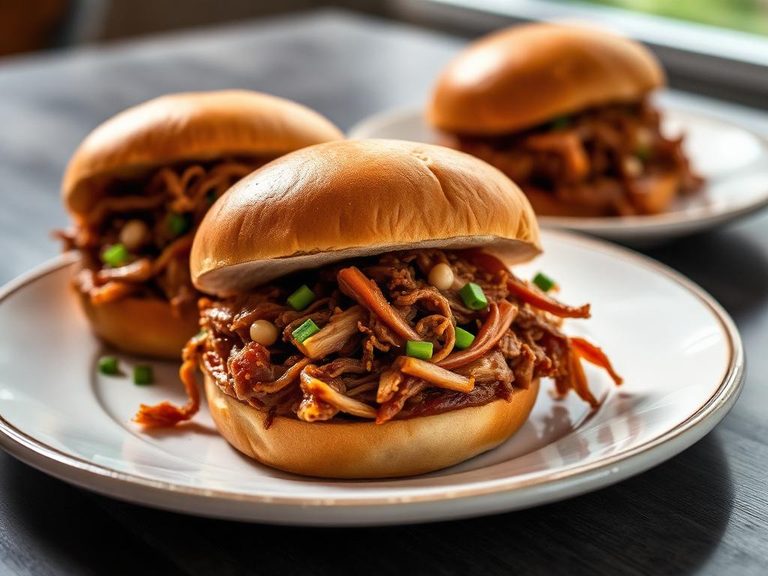
Can I use this cut for pulled pork?
While traditional pulled pork uses fattier shoulder cuts (like Boston butt), this leaner petite tender can be used for a lighter version. It will require careful, slow cooking (like braising) and added liquid to prevent it from becoming too dry.