

Soup, chunky chicken noodle, canned, ready-to-serve
Whole food · Soups, Sauces, and Gravies
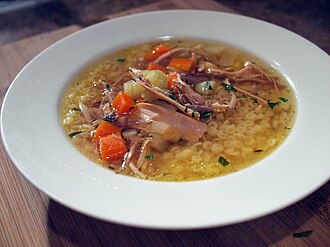
Photo: Wikipedia
This is a hearty, ready-to-eat canned soup featuring tender chunks of chicken, soft egg noodles, and a savory, slightly salty broth. The texture is satisfyingly chunky, with the noodles providing a soft chew against the firmer chicken. Nutritionally, it's a very low-calorie option that provides a modest amount of protein per serving.
Calorie split: 30% protein · 44% carbs · 26% fat
↓ Full nutrition💚 Why it's loved
People love it for its comforting, familiar 'homemade' flavor and the satisfying combination of chicken, noodles, and broth. It's a versatile staple that can be enjoyed straight from the can, doctored up with extra spices, or used as a quick base for other dishes.
⚠️ Watch-outs & how to enjoy it better
A common downside is its typically high sodium content, which can contribute to water retention and is a concern for those monitoring blood pressure. It may also contain common allergens like wheat (from noodles) and soy. To counteract, choose low-sodium versions when available, pair it with a fresh, potassium-rich side salad to help balance electrolytes, and be mindful of portion size if sodium is a concern.
Key benefits
- Very low in calories (41 kcal per 100g)
- Provides a source of complete protein from chicken
- Contains some dietary fiber from vegetables and noodles
- Extremely convenient and shelf-stable
- Offers a warm, hydrating meal base
🍽️ Popular dishes
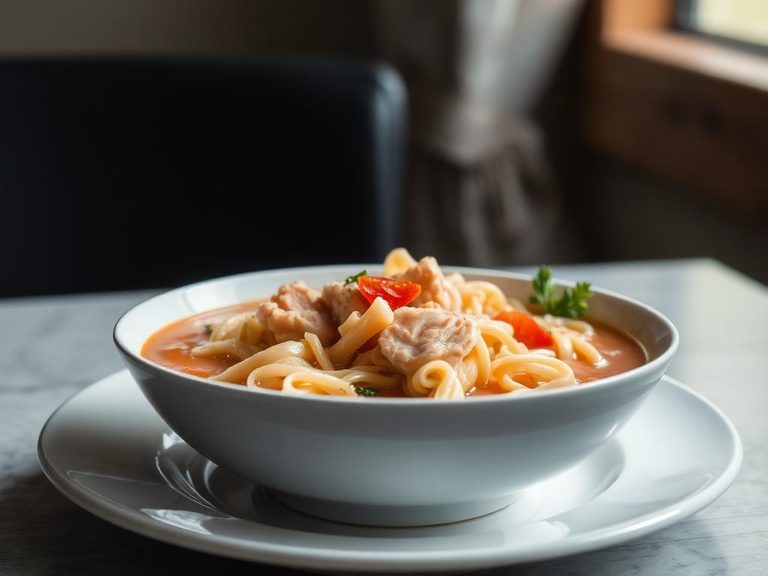
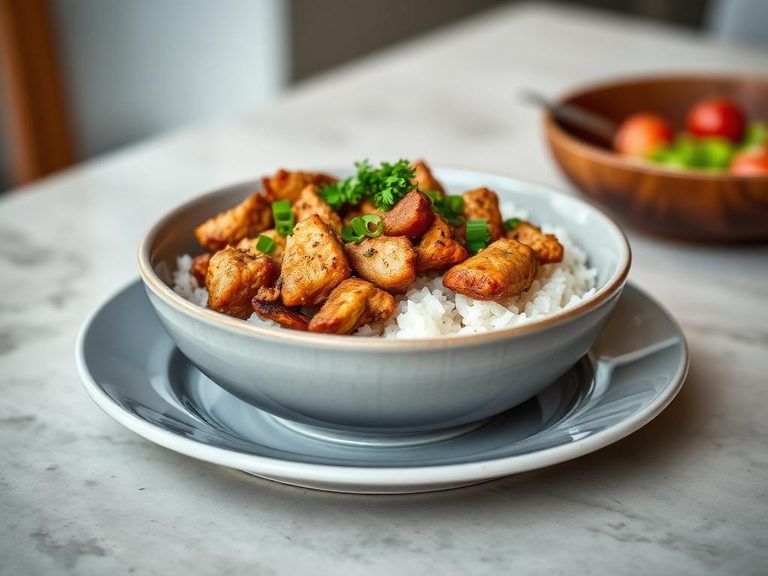
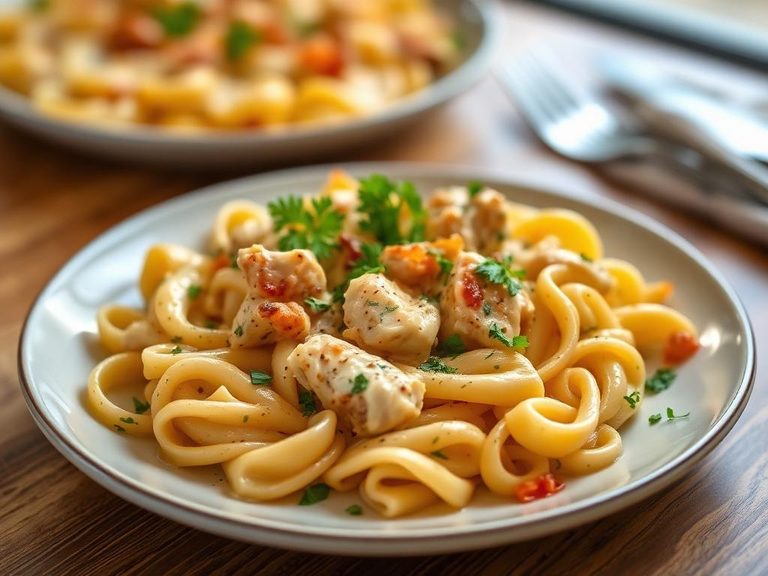
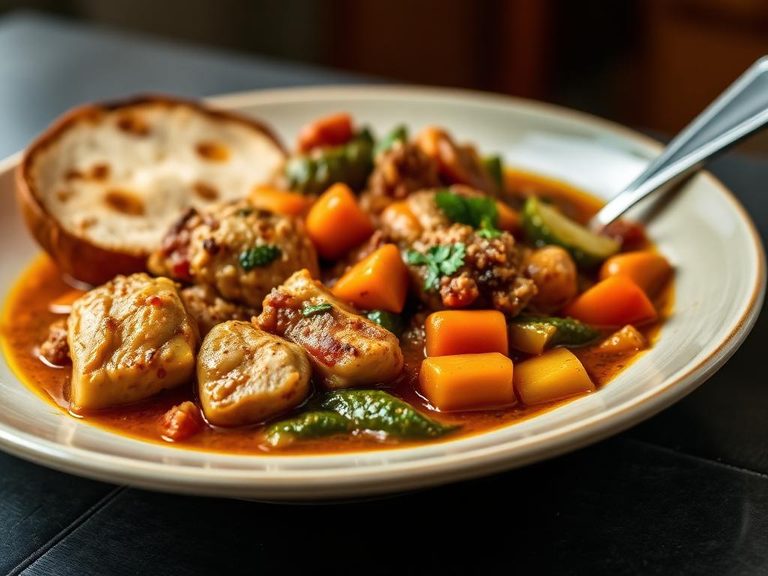
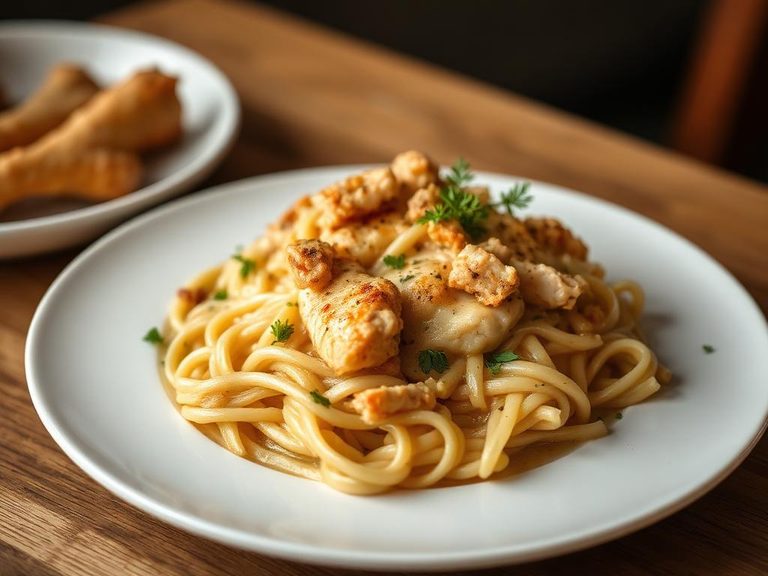
🌍 Where it's eaten
💡 Did you know?
The modern, canned version of chicken noodle soup became a cultural icon in the United States largely due to its marketing as a 'penicillin' for colds during the 1930s and 1940s.
Full nutrition (USDA data · scales with serving)
| Water | 89.9 g |
| Energy | 41.0 kcal |
| Energy | 170 kj |
| Protein | 3.1 g |
| Total lipid (fat) | 1.2 g |
| Ash | 1.4 g |
| Carbohydrate, by difference | 4.5 g |
| Fiber, total dietary | 0.80 g |
| Total Sugars | 0.38 g |
| Sucrose | 0.38 g |
| Glucose | 0.00 g |
| Fructose | 0.00 g |
| Lactose | 0.00 g |
| Maltose | 0.00 g |
| Galactose | 0.00 g |
| Starch | 3.5 g |
| Calcium, Ca | 11.0 mg |
| Iron, Fe | 0.35 mg |
| Magnesium, Mg | 7.0 mg |
| Phosphorus, P | 36.0 mg |
| Potassium, K | 117 mg |
| Sodium, Na | 306 mg |
| Zinc, Zn | 0.17 mg |
| Copper, Cu | 0.03 mg |
| Manganese, Mn | 0.06 mg |
| Selenium, Se | 4.9 ug |
| Fluoride, F | 54.5 ug |
| Vitamin C, total ascorbic acid | 0.40 mg |
| Thiamin | 0.02 mg |
| Riboflavin | 0.02 mg |
| Niacin | 1.2 mg |
| Pantothenic acid | 0.09 mg |
| Vitamin B-6 | 0.05 mg |
| Folate, total | 9.0 ug |
| Folic acid | 3.0 ug |
| Folate, food | 6.0 ug |
| Folate, DFE | 11.0 ug |
| Choline, total | 6.2 mg |
| Vitamin B-12 | 0.08 ug |
| Vitamin B-12, added | 0.00 ug |
| Vitamin A, RAE | 62.0 ug |
| Retinol | 1.0 ug |
| Carotene, beta | 593 ug |
| Carotene, alpha | 266 ug |
| Cryptoxanthin, beta | 14.0 ug |
| Vitamin A, IU | 1224 iu |
| Lycopene | 0.00 ug |
| Lutein + zeaxanthin | 58.0 ug |
| Vitamin E (alpha-tocopherol) | 0.12 mg |
| Vitamin E, added | 0.00 mg |
| Tocopherol, beta | 0.00 mg |
| Tocopherol, gamma | 0.03 mg |
| Tocopherol, delta | 0.00 mg |
| Vitamin D (D2 + D3), International Units | 0.00 iu |
| Vitamin D (D2 + D3) | 0.00 ug |
| Vitamin K (phylloquinone) | 1.7 ug |
| Alcohol, ethyl | 0.00 g |
| Caffeine | 0.00 mg |
| Theobromine | 0.00 mg |
Fat & fatty acid profile (per 100g)
| Fatty acids, total saturated | 0.63 g |
| SFA 4:0 | 0.00 g |
| SFA 6:0 | 0.00 g |
| SFA 8:0 | 0.00 g |
| SFA 10:0 | 0.00 g |
| SFA 12:0 | 0.00 g |
| SFA 14:0 | 0.03 g |
| SFA 16:0 | 0.46 g |
| SFA 18:0 | 0.13 g |
| Fatty acids, total monounsaturated | 0.30 g |
| MUFA 16:1 | 0.04 g |
| MUFA 18:1 | 0.25 g |
| MUFA 20:1 | 0.01 g |
| MUFA 22:1 | 0.00 g |
| Fatty acids, total polyunsaturated | 0.17 g |
| PUFA 18:2 | 0.15 g |
| PUFA 18:3 | 0.01 g |
| PUFA 18:4 | 0.00 g |
| PUFA 20:4 | 0.00 g |
| PUFA 20:5 n-3 (EPA) | 0.00 g |
| PUFA 22:5 n-3 (DPA) | 0.00 g |
| PUFA 22:6 n-3 (DHA) | 0.00 g |
| Fatty acids, total trans | 0.00 g |
| Cholesterol | 5.0 mg |
Amino acid profile (per 100g)
Estimated from Soup, bean with pork, canned, condensed — USDA does not publish this profile for Soup.
| Tryptophan | 0.06 g |
| Threonine | 0.24 g |
| Isoleucine | 0.29 g |
| Leucine | 0.48 g |
| Lysine | 0.40 g |
| Methionine | 0.07 g |
| Cystine | 0.07 g |
| Phenylalanine | 0.33 g |
| Tyrosine | 0.18 g |
| Valine | 0.32 g |
| Arginine | 0.31 g |
| Histidine | 0.15 g |
| Alanine | 0.29 g |
| Aspartic acid | 0.66 g |
| Glutamic acid | 1.1 g |
| Glycine | 0.28 g |
| Proline | 0.27 g |
| Serine | 0.29 g |
FAQ
Is canned chicken noodle soup healthy?
It can be part of a healthy diet. It's low in calories and provides protein, but the main nutritional concern is often high sodium. Opting for low-sodium varieties and pairing it with nutrient-dense sides like vegetables can make it a balanced meal.
How long does canned chicken noodle soup last?
Unopened, it can last for years past the 'best by' date if stored in a cool, dry place. Once opened, it should be transferred to a sealed container in the refrigerator and consumed within 3-4 days.
Can I eat it straight from the can?
Yes, it's fully cooked and safe to eat cold. However, for the best flavor and texture, it is typically heated on the stove or in a microwave until steaming hot.
Nutrient density (calculated · NRF9.3)
Nutrient Rich Foods index: beneficial nutrients (protein, fiber, vitamins, minerals) minus saturated fat, added sugar & sodium, per 100 kcal.
NRF9.3 index — Fulgoni, Keast & Drewnowski, 2009. Computed from USDA nutrients.
Weight-loss friendliness (composite index)
Energy density 0.41 kcal/g · 30% calories from protein · 0.8 g fiber · 0.4 g sugar per 100 g.
Composite of energy density (Rolls et al., 1999), protein & fiber satiety, minus sugar. A calculated heuristic — ranks satiety-per-calorie, not a clinical measure.
Dietary load (calculated from USDA values)
Potential renal acid load. Positive = acid-forming, negative = alkaline-forming.
Sodium-to-potassium ratio: 2.62 (lower is better — aim for ≤ 1)
Sodium:potassium per WHO potassium guidance. Computed from USDA nutrients.