

Rice and vermicelli mix, beef flavor, prepared with 80% margarine
Whole food · Meals, Entrees, and Side Dishes

Photo: Wikipedia
This is a quick-cooking, savory blend of rice and thin rice vermicelli, typically toasted before preparation, that yields a fluffy, slightly chewy base with a rich, beefy umami flavor. The noodles provide a delicate, slippery contrast to the firmer rice grains. Nutritionally, it's a low-fat, carbohydrate-focused side dish that delivers quick energy.
Calorie split: 9% protein · 69% carbs · 22% fat
↓ Full nutrition💚 Why it's loved
People love it for its comforting, savory beef flavor and the satisfying textural interplay between the soft rice and delicate noodles. It's a nostalgic, convenient staple that can be a standalone side or a canvas for adding proteins and vegetables.
⚠️ Watch-outs & how to enjoy it better
As a refined carbohydrate with minimal fiber (0.6g) and no sugar, it can cause rapid blood-sugar spikes, making it less ideal for those managing diabetes or seeking sustained energy. The preparation with margarine adds processed fats. To counteract, pair it with a source of protein (like grilled chicken or tofu) and healthy fats (like avocado or nuts), and add plenty of non-starchy vegetables to increase fiber and slow digestion.
Key benefits
- Quick-cooking convenience food
- Low in fat (3.2g per 100g)
- Provides quick-release carbohydrates for energy
- Shelf-stable and non-perishable
- Versatile base for many cuisines
🍽️ Popular dishes
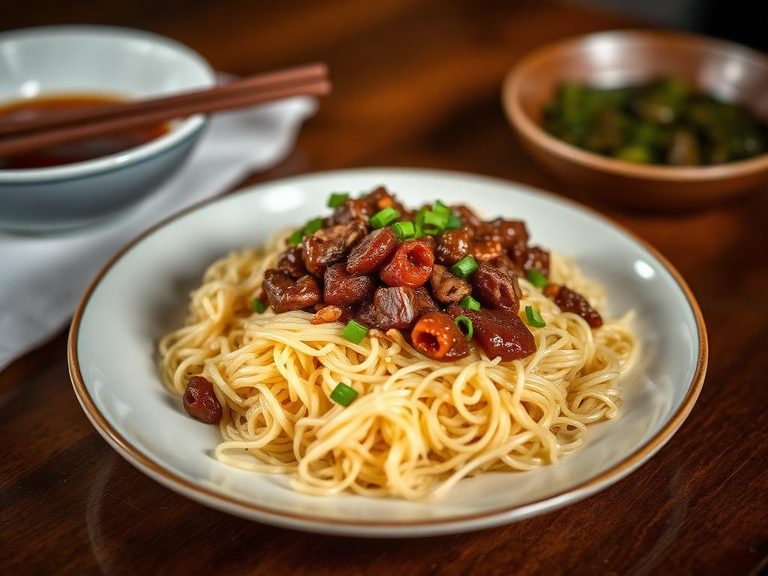
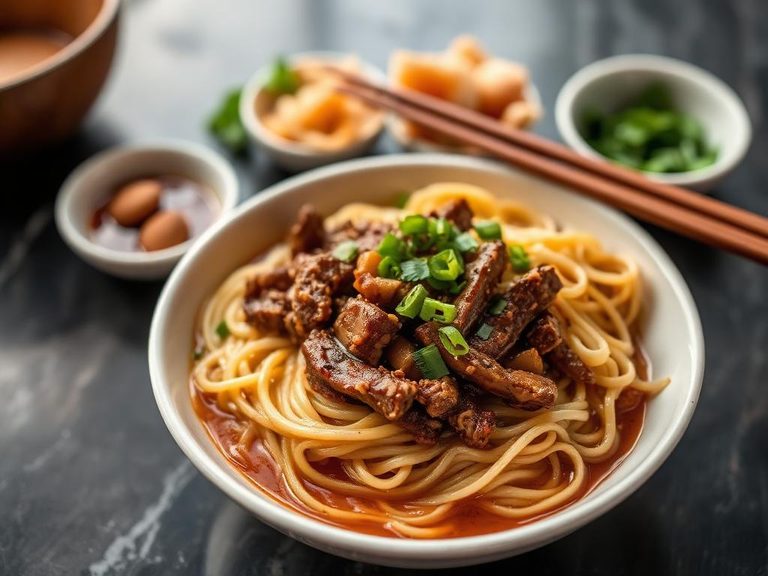
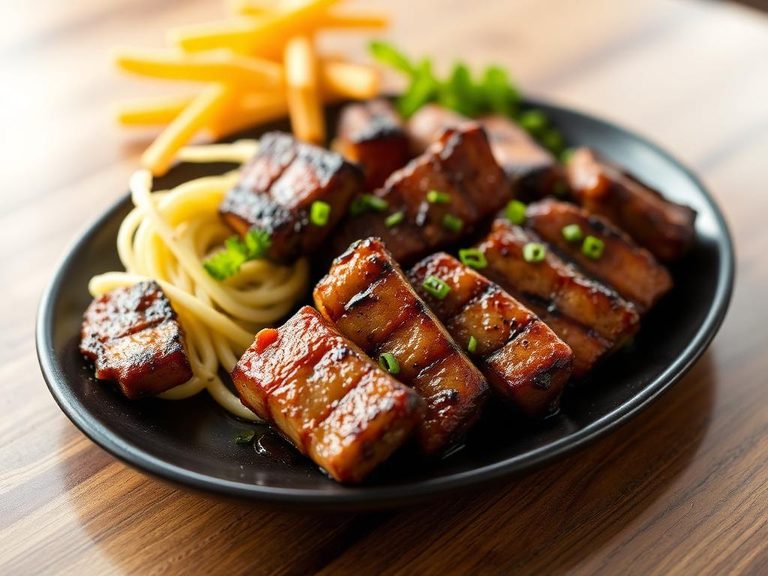
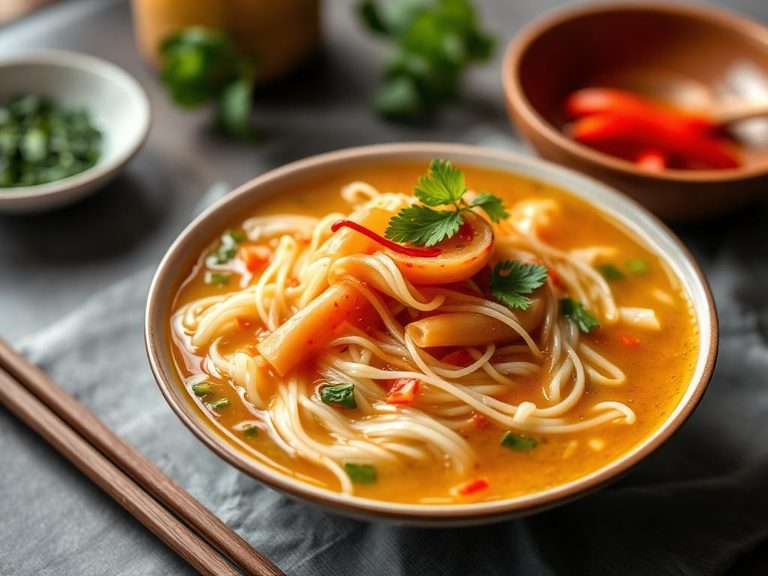
🌍 Where it's eaten
💡 Did you know?
The process of toasting the rice and vermicelli in margarine or oil before boiling is a key step called 'pilaf method' or 'pilau,' which deepens the nutty flavor and helps keep the grains separate.
Full nutrition (USDA data · scales with serving)
| Water | 70.9 g |
| Energy | 129 kcal |
| Energy | 539 kj |
| Protein | 2.8 g |
| Total lipid (fat) | 3.2 g |
| Ash | 1.0 g |
| Carbohydrate, by difference | 22.0 g |
| Fiber, total dietary | 0.60 g |
| Starch | 18.4 g |
| Calcium, Ca | 10.0 mg |
| Iron, Fe | 0.88 mg |
| Magnesium, Mg | 10.0 mg |
| Phosphorus, P | 33.0 mg |
| Potassium, K | 48.0 mg |
| Sodium, Na | 364 mg |
| Zinc, Zn | 0.42 mg |
| Copper, Cu | 0.05 mg |
| Manganese, Mn | 0.26 mg |
| Selenium, Se | 7.5 ug |
| Thiamin | 0.16 mg |
| Riboflavin | 0.02 mg |
| Niacin | 1.4 mg |
| Pantothenic acid | 0.15 mg |
| Vitamin B-6 | 0.01 mg |
| Vitamin E (alpha-tocopherol) | 0.27 mg |
| Tocopherol, beta | 0.06 mg |
| Tocopherol, gamma | 2.4 mg |
| Tocopherol, delta | 1.0 mg |
| Tocotrienol, alpha | 0.02 mg |
| Tocotrienol, beta | 0.05 mg |
| Tocotrienol, gamma | 0.06 mg |
| Tocotrienol, delta | 0.00 mg |
Fat & fatty acid profile (per 100g)
| Fatty acids, total saturated | 0.68 g |
| SFA 4:0 | 0.15 g |
| SFA 6:0 | 0.00 g |
| SFA 8:0 | 0.00 g |
| SFA 10:0 | 0.00 g |
| SFA 12:0 | 0.00 g |
| SFA 14:0 | 0.01 g |
| SFA 15:0 | 0.00 g |
| SFA 16:0 | 0.32 g |
| SFA 17:0 | 0.00 g |
| SFA 18:0 | 0.18 g |
| SFA 20:0 | 0.01 g |
| SFA 22:0 | 0.01 g |
| SFA 24:0 | 0.00 g |
| Fatty acids, total monounsaturated | 1.1 g |
| MUFA 14:1 | 0.00 g |
| MUFA 15:1 | 0.00 g |
| MUFA 16:1 | 0.00 g |
| MUFA 16:1 c | 0.00 g |
| MUFA 17:1 | 0.00 g |
| MUFA 18:1 | 1.1 g |
| MUFA 18:1 c | 0.74 g |
| MUFA 20:1 | 0.01 g |
| MUFA 22:1 | 0.00 g |
| MUFA 22:1 c | 0.00 g |
| MUFA 24:1 c | 0.00 g |
| Fatty acids, total polyunsaturated | 0.92 g |
| PUFA 18:2 | 0.81 g |
| PUFA 18:2 n-6 c,c | 0.79 g |
| PUFA 18:2 CLAs | 0.00 g |
| PUFA 18:3 | 0.10 g |
| PUFA 18:3 n-3 c,c,c (ALA) | 0.10 g |
| PUFA 18:3 n-6 c,c,c | 0.00 g |
| PUFA 18:4 | 0.00 g |
| PUFA 20:2 n-6 c,c | 0.00 g |
| PUFA 20:3 | 0.00 g |
| PUFA 20:3 n-3 | 0.00 g |
| PUFA 20:3 n-6 | 0.00 g |
| PUFA 20:4 | 0.00 g |
| PUFA 20:5 n-3 (EPA) | 0.00 g |
| PUFA 22:4 | 0.00 g |
| PUFA 22:5 n-3 (DPA) | 0.00 g |
| PUFA 22:6 n-3 (DHA) | 0.00 g |
| Fatty acids, total trans | 0.38 g |
| Fatty acids, total trans-monoenoic | 0.37 g |
| TFA 16:1 t | 0.00 g |
| TFA 18:1 t | 0.37 g |
| TFA 22:1 t | 0.00 g |
| TFA 18:2 t not further defined | 0.02 g |
| Fatty acids, total trans-polyenoic | 0.02 g |
Amino acid profile (per 100g)
Estimated from Rice and vermicelli mix, rice pilaf flavor, unprepared — USDA does not publish this profile for Rice and vermicelli mix.
| Tryptophan | 0.09 g |
| Threonine | 0.22 g |
| Isoleucine | 0.28 g |
| Leucine | 0.52 g |
| Lysine | 0.19 g |
| Methionine | 0.14 g |
| Cystine | 0.13 g |
| Phenylalanine | 0.32 g |
| Tyrosine | 0.18 g |
| Valine | 0.37 g |
| Arginine | 0.57 g |
| Histidine | 0.15 g |
| Alanine | 0.35 g |
| Aspartic acid | 0.64 g |
| Glutamic acid | 1.2 g |
| Glycine | 0.30 g |
| Proline | 0.39 g |
| Serine | 0.30 g |
| Hydroxyproline | 0.00 g |
FAQ
Is this the same as instant noodles?
No. While both are convenient, this is a mix of rice grains and rice vermicelli, not wheat-based instant noodles. The texture is lighter and less chewy, and the flavor profile is typically simpler and less salty.
Can I use this as a base for a soup?
Yes, but you'll need to add significantly more water or broth than the package directs for a 'prepared' side dish. The vermicelli will absorb liquid, so monitor the consistency.
Why is it prepared with margarine?
Margarine is a cost-effective fat used in the manufacturing process to toast the grains and noodles, which develops flavor and improves texture. You can often prepare it with butter, olive oil, or another cooking oil at home for a different taste.
Nutrient density (calculated · NRF9.3)
Nutrient Rich Foods index: beneficial nutrients (protein, fiber, vitamins, minerals) minus saturated fat, added sugar & sodium, per 100 kcal.
NRF9.3 index — Fulgoni, Keast & Drewnowski, 2009. Computed from USDA nutrients.
Weight-loss friendliness (composite index)
Energy density 1.29 kcal/g · 9% calories from protein · 0.6 g fiber · 0.0 g sugar per 100 g.
Composite of energy density (Rolls et al., 1999), protein & fiber satiety, minus sugar. A calculated heuristic — ranks satiety-per-calorie, not a clinical measure.
Dietary load (calculated from USDA values)
Potential renal acid load. Positive = acid-forming, negative = alkaline-forming.
Sodium-to-potassium ratio: 7.58 (lower is better — aim for ≤ 1)
Sodium:potassium per WHO potassium guidance. Computed from USDA nutrients.