

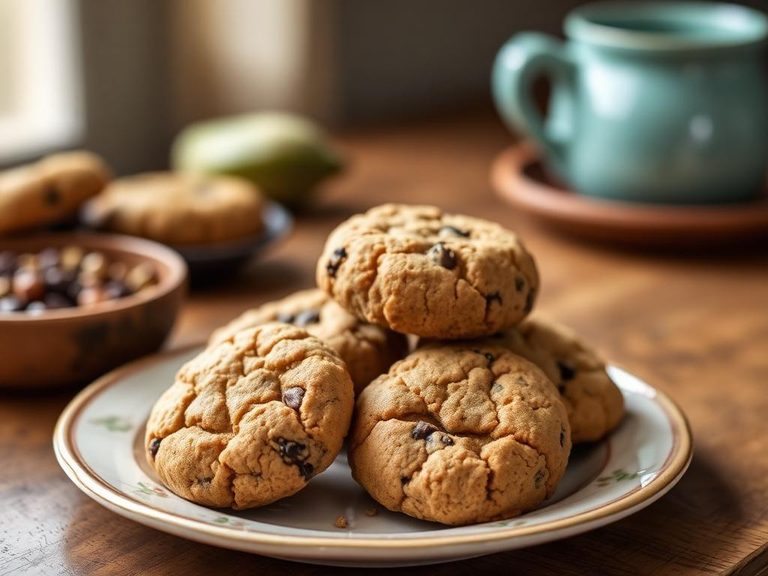
Piki bread, made from blue cornmeal (Hopi)
Whole food · American Indian/Alaska Native Foods

Photo: Wikipedia
Piki bread is a traditional Hopi flatbread with a striking blue hue, made from finely ground blue cornmeal. It has a dense, slightly crumbly texture and a deep, earthy, nutty corn flavor. Its nutrition is notable for its high fiber content and significant plant-based protein.
Calorie split: 9% protein · 74% carbs · 17% fat
↓ Full nutrition💚 Why it's loved
People love it for its unique, robust corn flavor and its deep cultural significance in Hopi ceremonies and daily life. It's a versatile staple that pairs well with both savory and mildly sweet accompaniments.
⚠️ Watch-outs & how to enjoy it better
Its dense texture can be challenging for some palates, and its high fiber content may cause digestive discomfort if introduced too quickly. To counteract this, start with small portions and ensure adequate water intake. Pairing it with a healthy fat or protein can also aid digestion and balance blood sugar response.
Key benefits
- High in dietary fiber for digestive health
- Good source of plant-based protein
- Naturally gluten-free grain
- Contains anthocyanins from blue corn
- Low in sugar
🍽️ Popular dishes
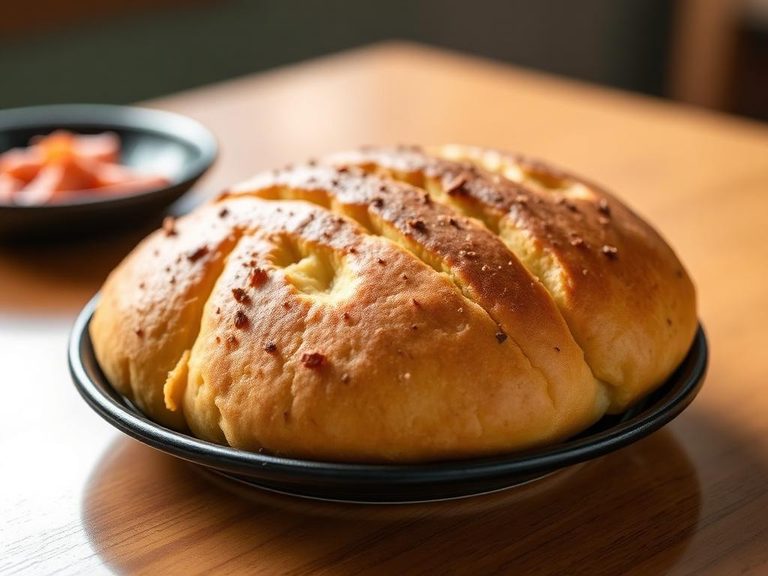
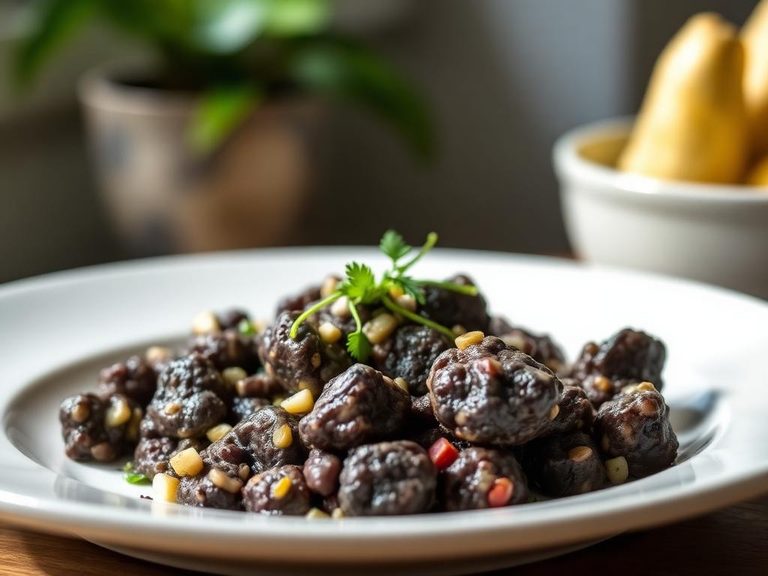
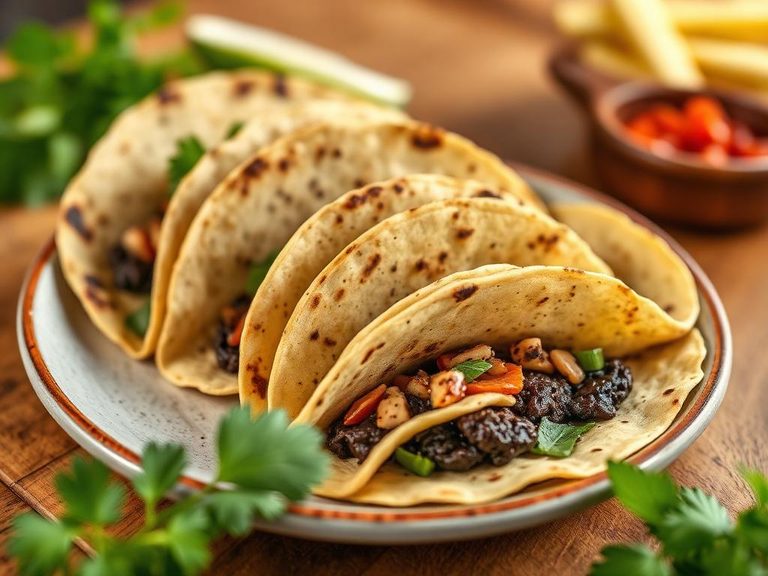
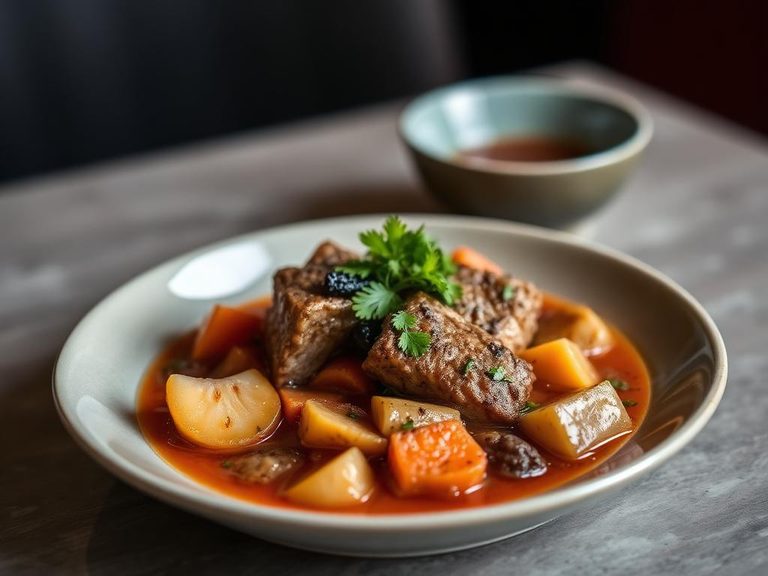
🌍 Where it's eaten
💡 Did you know?
The traditional method of making piki involves a woman painting a thin batter onto a hot, smooth stone with a yucca leaf brush, a skill passed down through generations.
Full nutrition (USDA data · scales with serving)
| Water | 9.0 g |
| Energy | 390 kcal |
| Energy | 1630 kj |
| Protein | 9.1 g |
| Total lipid (fat) | 7.2 g |
| Ash | 2.6 g |
| Carbohydrate, by difference | 72.2 g |
| Fiber, total dietary | 9.2 g |
| Total Sugars | 1.6 g |
| Sucrose | 1.6 g |
| Glucose | 0.00 g |
| Fructose | 0.00 g |
| Lactose | 0.00 g |
| Maltose | 0.00 g |
| Galactose | 0.00 g |
| Starch | 61.3 g |
| Calcium, Ca | 184 mg |
| Iron, Fe | 6.1 mg |
| Magnesium, Mg | 181 mg |
| Phosphorus, P | 374 mg |
| Potassium, K | 604 mg |
| Sodium, Na | 60.0 mg |
| Zinc, Zn | 3.8 mg |
| Copper, Cu | 0.29 mg |
| Manganese, Mn | 1.8 mg |
| Selenium, Se | 14.6 ug |
| Thiamin | 0.16 mg |
| Riboflavin | 0.05 mg |
| Niacin | 2.9 mg |
| Pantothenic acid | 0.72 mg |
| Vitamin B-6 | 0.54 mg |
| Vitamin A, RAE | 0.00 ug |
| Carotene, beta | 1.0 ug |
| Carotene, alpha | 0.00 ug |
| Cryptoxanthin, beta | 1.0 ug |
| Vitamin A, IU | 3.0 iu |
| Lycopene | 0.00 ug |
| Lutein + zeaxanthin | 9.0 ug |
| Vitamin E (alpha-tocopherol) | 0.76 mg |
| Tocopherol, beta | 0.03 mg |
| Tocopherol, gamma | 4.8 mg |
| Tocopherol, delta | 0.15 mg |
| Tocotrienol, alpha | 0.31 mg |
| Tocotrienol, beta | 0.02 mg |
| Tocotrienol, gamma | 0.64 mg |
| Tocotrienol, delta | 0.05 mg |
| Vitamin K (phylloquinone) | 0.20 ug |
| Vitamin K (Dihydrophylloquinone) | 0.00 ug |
| Vitamin K (Menaquinone-4) | 0.00 ug |
Fat & fatty acid profile (per 100g)
| Fatty acids, total saturated | 0.82 g |
| SFA 4:0 | 0.01 g |
| SFA 6:0 | 0.00 g |
| SFA 8:0 | 0.00 g |
| SFA 10:0 | 0.01 g |
| SFA 12:0 | 0.00 g |
| SFA 14:0 | 0.00 g |
| SFA 15:0 | 0.00 g |
| SFA 16:0 | 0.56 g |
| SFA 17:0 | 0.01 g |
| SFA 18:0 | 0.18 g |
| SFA 20:0 | 0.03 g |
| SFA 22:0 | 0.01 g |
| SFA 24:0 | 0.01 g |
| Fatty acids, total monounsaturated | 1.8 g |
| MUFA 14:1 | 0.00 g |
| MUFA 15:1 | 0.00 g |
| MUFA 16:1 | 0.01 g |
| MUFA 16:1 c | 0.01 g |
| MUFA 17:1 | 0.00 g |
| MUFA 18:1 | 1.7 g |
| MUFA 18:1 c | 1.7 g |
| MUFA 20:1 | 0.02 g |
| MUFA 22:1 | 0.00 g |
| MUFA 22:1 c | 0.00 g |
| MUFA 24:1 c | 0.00 g |
| Fatty acids, total polyunsaturated | 1.6 g |
| PUFA 18:2 | 1.6 g |
| PUFA 18:2 n-6 c,c | 1.6 g |
| PUFA 18:2 CLAs | 0.00 g |
| PUFA 18:3 | 0.04 g |
| PUFA 18:3 n-3 c,c,c (ALA) | 0.04 g |
| PUFA 18:3 n-6 c,c,c | 0.00 g |
| PUFA 18:4 | 0.00 g |
| PUFA 20:2 n-6 c,c | 0.00 g |
| PUFA 20:3 | 0.00 g |
| PUFA 20:3 n-3 | 0.00 g |
| PUFA 20:3 n-6 | 0.00 g |
| PUFA 20:4 | 0.00 g |
| PUFA 20:5 n-3 (EPA) | 0.00 g |
| PUFA 22:4 | 0.00 g |
| PUFA 22:5 n-3 (DPA) | 0.00 g |
| PUFA 22:6 n-3 (DHA) | 0.00 g |
| Fatty acids, total trans | 0.01 g |
| Fatty acids, total trans-monoenoic | 0.00 g |
| TFA 16:1 t | 0.00 g |
| TFA 18:1 t | 0.00 g |
| TFA 22:1 t | 0.00 g |
| TFA 18:2 t not further defined | 0.00 g |
| Fatty acids, total trans-polyenoic | 0.00 g |
FAQ
Is piki bread gluten-free?
Yes, authentic piki bread made from 100% blue cornmeal is naturally gluten-free, as corn is not a gluten-containing grain.
What does piki bread taste like?
It has a distinct, earthy, and nutty flavor from the blue corn, which is deeper and more complex than yellow or white corn. The texture is typically dense and slightly crumbly.
How is piki bread different from regular cornbread?
Piki is a traditional Hopi flatbread, often thinner and cooked on a stone, while cornbread is a leavened quick bread baked in a pan. Piki's flavor is also more pronounced due to the specific blue corn variety used.
Nutrient density (calculated · NRF9.3)
Nutrient Rich Foods index: beneficial nutrients (protein, fiber, vitamins, minerals) minus saturated fat, added sugar & sodium, per 100 kcal.
NRF9.3 index — Fulgoni, Keast & Drewnowski, 2009. Computed from USDA nutrients.
Weight-loss friendliness (composite index)
Energy density 3.90 kcal/g · 9% calories from protein · 9.2 g fiber · 1.6 g sugar per 100 g.
Composite of energy density (Rolls et al., 1999), protein & fiber satiety, minus sugar. A calculated heuristic — ranks satiety-per-calorie, not a clinical measure.
Dietary load (calculated from USDA values)
Potential renal acid load. Positive = acid-forming, negative = alkaline-forming.
Sodium-to-potassium ratio: 0.10 (lower is better — aim for ≤ 1)
Sodium:potassium per WHO potassium guidance. Computed from USDA nutrients.