Hopi Piki Bread
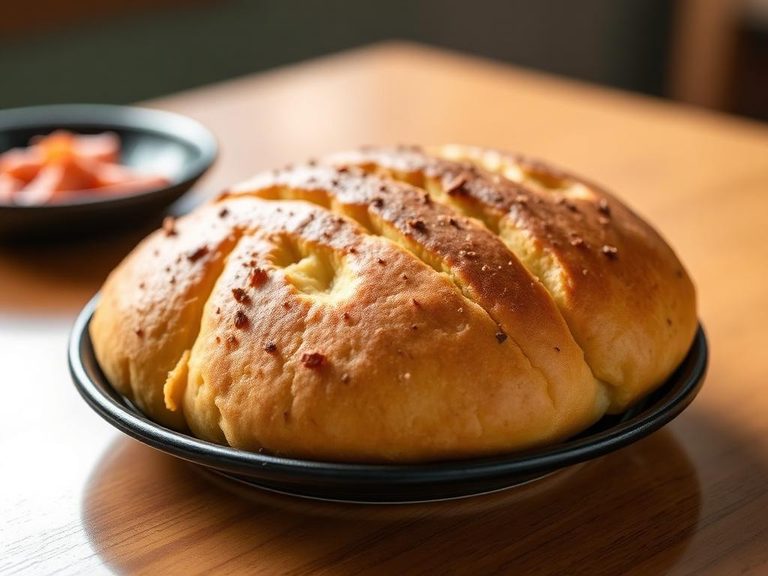
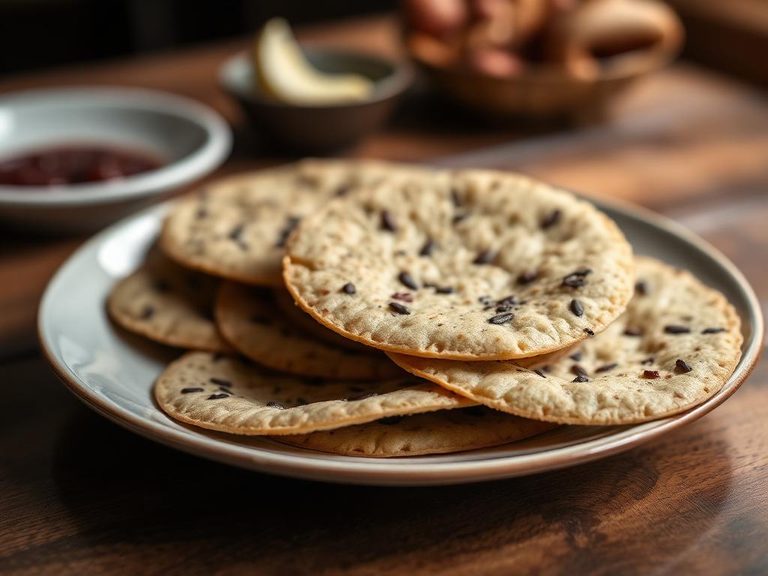
Hopi Piki Bread is a traditional, thin, paper-like bread made by the Hopi people of the American Southwest. It is crafted from a unique blue cornmeal batter mixed with water and a natural alkaline agent called 'ash water' or 'lye,' which gives it a distinct blue-gray color and a slightly tangy, earthy flavor. The batter is skillfully spread in a circular pattern onto a hot, smooth stone or griddle to cook.
🍽️ Nutrition at a glance
Piki bread is primarily a source of complex carbohydrates from the blue corn, providing sustained energy. It is low in fat and protein, but the traditional preparation with ash water significantly increases its calcium content and makes certain nutrients like niacin more bioavailable.
Nutrition breakdown
| Calories | 80 kcal |
| Protein | 1.5 g |
| Carbs | 17 g |
| Fat | 0.5 g |
| Fiber | 1.5 g |
| Sugar | 0.2 g |
| Sodium | 10 mg |
| Calcium | 60 mg |
| Iron | 0.5 mg |
| Niacin (B3) | 1.2 mg |
| Thiamin (B1) | 0.1 mg |
| Phosphorus | 45 mg |
| Magnesium | 20 mg |
| Zinc | 0.3 mg |
| Potassium | 60 mg |
Per 1 piece (approx. 30 g) · estimated, varies by recipe
💡 What's interesting
The use of alkaline ash water is a key cultural and nutritional innovation; it not only preserves the corn's blue color but also boosts calcium levels and prevents pellagra by releasing bound niacin (vitamin B3) in the corn, a process known as nixtamalization.