

Oil, industrial, coconut (hydrogenated), used for whipped toppings and coffee whiteners
Whole food · Fats and Oils

Photo: Wikipedia
This is a highly processed, solid form of coconut oil that has been hydrogenated to create a smooth, creamy, and shelf-stable fat. It has a neutral, mildly sweet coconut aroma and a rich, waxy texture that melts on contact with heat, making it ideal for creating stable foams and emulsions. Nutritionally, it is almost pure fat, providing 880 kcal per 100g with zero protein, carbs, or fiber.
Calorie split: 0% protein · 0% carbs · 100% fat
↓ Full nutrition💚 Why it's loved
People love it for its unparalleled ability to create light, airy, and stable whipped toppings that hold their shape for days. Its neutral taste and creamy texture make it a versatile, workhorse ingredient in coffee whiteners and dessert fillings, providing a rich mouthfeel without a strong coconut flavor.
⚠️ Watch-outs & how to enjoy it better
This industrial fat is extremely high in calories and saturated fat, with no nutritional benefits, and its hydrogenation process can create harmful trans fats. To counteract this, use it sparingly as a functional ingredient rather than a primary fat, and always pair it with nutrient-dense foods like fruit or whole grains to add fiber and vitamins.
Key benefits
- Provides a stable, high-smoke-point fat for industrial food production
- Creates a smooth, creamy mouthfeel in whipped toppings and coffee whiteners
- Extends shelf life of processed foods due to its hydrogenated, solid state
- Offers a neutral flavor profile that doesn't overpower other ingredients
- Cost-effective ingredient for creating volume and texture in commercial products
🍽️ Popular dishes
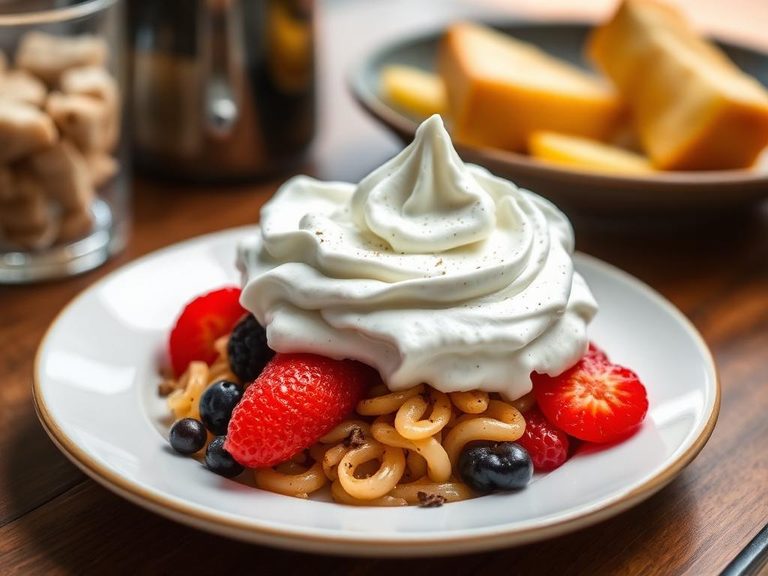





🌍 Where it's eaten
💡 Did you know?
The hydrogenation process turns liquid coconut oil into a solid at room temperature, which is why it's used to create the stable, fluffy texture in canned whipped toppings that don't melt like real cream.
Full nutrition (USDA data · scales with serving)
| Water | 0.07 g |
| Energy | 880 kcal |
| Energy | 3680 kj |
| Protein | 0.00 g |
| Total lipid (fat) | 99.5 g |
| Ash | 0.01 g |
| Carbohydrate, by difference | 0.00 g |
| Fiber, total dietary | 0.00 g |
| Total Sugars | 0.00 g |
| Calcium, Ca | 1.0 mg |
| Iron, Fe | 0.15 mg |
| Magnesium, Mg | 0.00 mg |
| Phosphorus, P | 0.00 mg |
| Potassium, K | 2.0 mg |
| Sodium, Na | 7.0 mg |
| Zinc, Zn | 0.04 mg |
| Copper, Cu | 0.00 mg |
| Manganese, Mn | 0.00 mg |
| Selenium, Se | 0.00 ug |
| Vitamin C, total ascorbic acid | 0.00 mg |
| Thiamin | 0.00 mg |
| Riboflavin | 0.00 mg |
| Niacin | 0.00 mg |
| Pantothenic acid | 0.00 mg |
| Vitamin B-6 | 0.00 mg |
| Folate, total | 0.00 ug |
| Folic acid | 0.00 ug |
| Folate, food | 0.00 ug |
| Folate, DFE | 0.00 ug |
| Choline, total | 0.30 mg |
| Vitamin B-12 | 0.00 ug |
| Vitamin B-12, added | 0.00 ug |
| Vitamin A, RAE | 0.00 ug |
| Retinol | 0.00 ug |
| Carotene, beta | 0.00 ug |
| Carotene, alpha | 0.00 ug |
| Cryptoxanthin, beta | 0.00 ug |
| Vitamin A, IU | 0.00 iu |
| Lycopene | 0.00 ug |
| Lutein + zeaxanthin | 0.00 ug |
| Vitamin E (alpha-tocopherol) | 0.09 mg |
| Vitamin E, added | 0.00 mg |
| Tocopherol, beta | 0.00 mg |
| Tocopherol, gamma | 0.20 mg |
| Tocopherol, delta | 0.00 mg |
| Vitamin K (phylloquinone) | 0.50 ug |
| Alcohol, ethyl | 0.00 g |
| Caffeine | 0.00 mg |
| Theobromine | 0.00 mg |
Fat & fatty acid profile (per 100g)
| Fatty acids, total saturated | 93.5 g |
| SFA 4:0 | 0.06 g |
| SFA 6:0 | 0.63 g |
| SFA 8:0 | 7.6 g |
| SFA 10:0 | 5.5 g |
| SFA 12:0 | 44.2 g |
| SFA 14:0 | 16.4 g |
| SFA 16:0 | 8.6 g |
| SFA 18:0 | 10.4 g |
| SFA 20:0 | 0.14 g |
| Fatty acids, total monounsaturated | 0.27 g |
| MUFA 16:1 | 0.00 g |
| MUFA 18:1 | 0.27 g |
| MUFA 18:1 c | 0.00 g |
| MUFA 20:1 | 0.00 g |
| MUFA 22:1 | 0.00 g |
| Fatty acids, total polyunsaturated | 0.00 g |
| PUFA 18:2 | 0.00 g |
| PUFA 18:2 n-6 c,c | 0.00 g |
| PUFA 18:3 | 0.00 g |
| PUFA 18:3i | 0.00 g |
| PUFA 18:4 | 0.00 g |
| PUFA 20:4 | 0.00 g |
| PUFA 20:5 n-3 (EPA) | 0.00 g |
| PUFA 22:5 n-3 (DPA) | 0.00 g |
| PUFA 22:6 n-3 (DHA) | 0.00 g |
| Fatty acids, total trans | 0.27 g |
| Fatty acids, total trans-monoenoic | 0.27 g |
| TFA 18:1 t | 0.27 g |
| Fatty acids, total trans-polyenoic | 0.00 g |
| Cholesterol | 0.00 mg |
| Phytosterols | 86.0 mg |
Amino acid profile (per 100g)
| Tryptophan | 0.00 g |
| Threonine | 0.00 g |
| Isoleucine | 0.00 g |
| Leucine | 0.00 g |
| Lysine | 0.00 g |
| Methionine | 0.00 g |
| Cystine | 0.00 g |
| Phenylalanine | 0.00 g |
| Tyrosine | 0.00 g |
| Valine | 0.00 g |
| Arginine | 0.00 g |
| Histidine | 0.00 g |
| Alanine | 0.00 g |
| Aspartic acid | 0.00 g |
| Glutamic acid | 0.00 g |
| Glycine | 0.00 g |
| Proline | 0.00 g |
| Serine | 0.00 g |
FAQ
Is this the same as regular coconut oil?
No. Regular coconut oil is typically cold-pressed or refined and is liquid or semi-solid. This is a highly processed, hydrogenated version specifically engineered for industrial food applications like whipped toppings and coffee whiteners.
Can I use this for cooking at home?
While technically possible, it's not recommended. It's an industrial ingredient designed for specific food textures, not general cooking. Its high saturated fat and potential trans fat content make it less healthy than regular coconut oil or other cooking fats.
Why is it used in coffee whiteners?
It provides a creamy, rich mouthfeel and helps the whiteners dissolve smoothly in hot coffee. Its solid state at room temperature also helps create a stable, emulsified product that doesn't separate easily.
Nutrient density (calculated · NRF9.3)
Nutrient Rich Foods index: beneficial nutrients (protein, fiber, vitamins, minerals) minus saturated fat, added sugar & sodium, per 100 kcal.
NRF9.3 index — Fulgoni, Keast & Drewnowski, 2009. Computed from USDA nutrients.
Weight-loss friendliness (composite index)
Energy density 8.80 kcal/g · 0% calories from protein · 0.0 g fiber · 0.0 g sugar per 100 g.
Composite of energy density (Rolls et al., 1999), protein & fiber satiety, minus sugar. A calculated heuristic — ranks satiety-per-calorie, not a clinical measure.
Dietary load (calculated from USDA values)
Potential renal acid load. Positive = acid-forming, negative = alkaline-forming.
Sodium-to-potassium ratio: 3.50 (lower is better — aim for ≤ 1)
Sodium:potassium per WHO potassium guidance. Computed from USDA nutrients.