

Oil, industrial, coconut, confection fat, typical basis for ice cream coatings
Whole food · Fats and Oils

Photo: Wikipedia
This is a highly refined, solid-at-room-temperature coconut oil specifically formulated for the confectionery industry, most notably as the primary fat in ice cream coatings and 'magic shell' toppings. It has a very mild, clean flavor and a smooth, waxy texture that hardens into a satisfying, brittle snap when chilled. Nutritionally, it is a pure fat source, providing 884 calories and 100g of fat per 100g, with no protein, carbohydrates, or fiber.
Calorie split: 0% protein · 0% carbs · 100% fat
↓ Full nutrition💚 Why it's loved
People love it for the magical, satisfying 'crack' it creates on ice cream, transforming a soft dessert into a textural experience. Its versatility allows for a clean, glossy finish on confections without adding unwanted flavor.
⚠️ Watch-outs & how to enjoy it better
As a pure, highly saturated fat, it is extremely calorie-dense and offers no nutritional benefits beyond energy, which can be a concern for those managing weight or heart health. To mitigate this, use it sparingly as a functional coating rather than a dietary staple, and balance it with protein-rich or fiber-rich foods in the overall meal.
Key benefits
- Provides a stable, crisp texture for frozen dessert coatings
- Has a high smoke point, suitable for certain industrial frying applications
- Offers a neutral flavor that does not overpower other ingredients
- Contains medium-chain triglycerides (MCTs) for quick energy metabolism
- Acts as a natural preservative due to its high saturated fat content
🍽️ Popular dishes
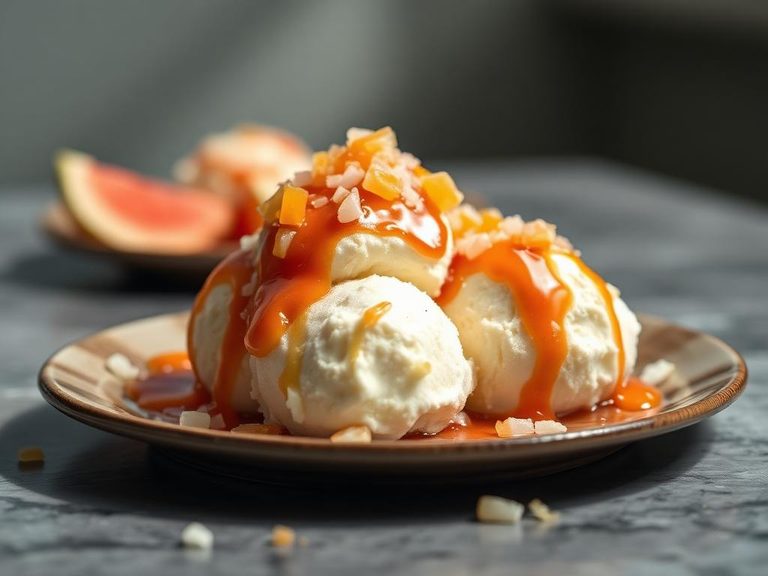

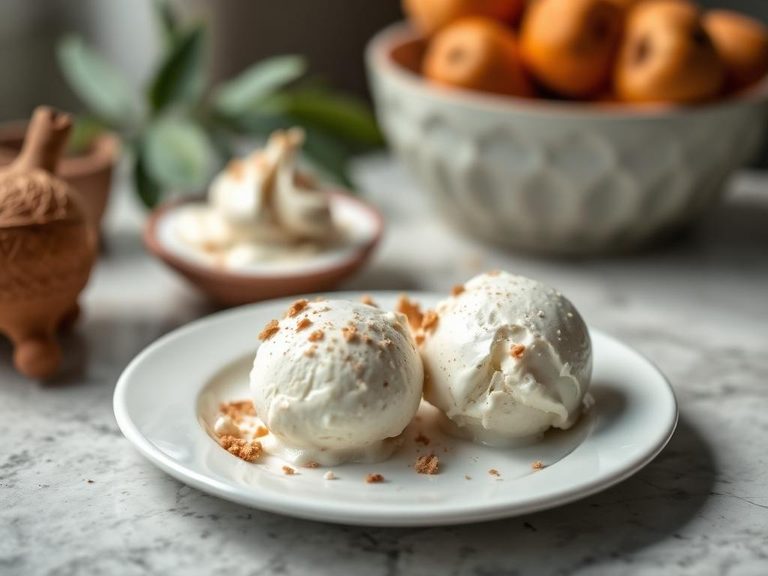

🌍 Where it's eaten
💡 Did you know?
This specific type of coconut oil is engineered to have a sharp melting point around body temperature (33-35°C / 91-95°F), which is why it stays solid in the freezer but melts instantly in your mouth.
Full nutrition (USDA data · scales with serving)
| Water | 0.08 g |
| Energy | 884 kcal |
| Energy | 3699 kj |
| Protein | 0.00 g |
| Total lipid (fat) | 100 g |
| Ash | 0.01 g |
| Carbohydrate, by difference | 0.00 g |
| Fiber, total dietary | 0.00 g |
| Total Sugars | 0.00 g |
| Calcium, Ca | 2.0 mg |
| Iron, Fe | 0.15 mg |
| Magnesium, Mg | 0.00 mg |
| Phosphorus, P | 0.00 mg |
| Potassium, K | 2.0 mg |
| Sodium, Na | 5.0 mg |
| Zinc, Zn | 0.04 mg |
| Copper, Cu | 0.00 mg |
| Manganese, Mn | 0.00 mg |
| Selenium, Se | 0.00 ug |
| Vitamin C, total ascorbic acid | 0.00 mg |
| Thiamin | 0.00 mg |
| Riboflavin | 0.00 mg |
| Niacin | 0.00 mg |
| Pantothenic acid | 0.00 mg |
| Vitamin B-6 | 0.00 mg |
| Folate, total | 0.00 ug |
| Folic acid | 0.00 ug |
| Folate, food | 0.00 ug |
| Folate, DFE | 0.00 ug |
| Choline, total | 0.30 mg |
| Vitamin B-12 | 0.00 ug |
| Vitamin B-12, added | 0.00 ug |
| Vitamin A, RAE | 0.00 ug |
| Retinol | 0.00 ug |
| Carotene, beta | 0.00 ug |
| Carotene, alpha | 0.00 ug |
| Cryptoxanthin, beta | 0.00 ug |
| Vitamin A, IU | 0.00 iu |
| Lycopene | 0.00 ug |
| Lutein + zeaxanthin | 0.00 ug |
| Vitamin E (alpha-tocopherol) | 0.09 mg |
| Vitamin E, added | 0.00 mg |
| Tocopherol, beta | 0.00 mg |
| Tocopherol, gamma | 0.20 mg |
| Tocopherol, delta | 0.00 mg |
| Vitamin D (D2 + D3), International Units | 0.00 iu |
| Vitamin D (D2 + D3) | 0.00 ug |
| Vitamin K (phylloquinone) | 0.50 ug |
| Alcohol, ethyl | 0.00 g |
| Caffeine | 0.00 mg |
| Theobromine | 0.00 mg |
Fat & fatty acid profile (per 100g)
| Fatty acids, total saturated | 86.5 g |
| SFA 4:0 | 0.06 g |
| SFA 6:0 | 0.75 g |
| SFA 8:0 | 7.9 g |
| SFA 10:0 | 5.6 g |
| SFA 12:0 | 44.5 g |
| SFA 14:0 | 16.7 g |
| SFA 16:0 | 8.2 g |
| SFA 18:0 | 2.8 g |
| SFA 20:0 | 0.04 g |
| Fatty acids, total monounsaturated | 5.7 g |
| MUFA 16:1 | 0.00 g |
| MUFA 18:1 | 5.7 g |
| MUFA 18:1 c | 5.7 g |
| MUFA 20:1 | 0.00 g |
| MUFA 22:1 | 0.00 g |
| Fatty acids, total polyunsaturated | 1.4 g |
| PUFA 18:2 | 1.4 g |
| PUFA 18:2 n-6 c,c | 1.4 g |
| PUFA 18:3 | 0.00 g |
| PUFA 18:3i | 0.00 g |
| PUFA 18:4 | 0.00 g |
| PUFA 20:4 | 0.00 g |
| PUFA 20:5 n-3 (EPA) | 0.00 g |
| PUFA 22:5 n-3 (DPA) | 0.00 g |
| PUFA 22:6 n-3 (DHA) | 0.00 g |
| Fatty acids, total trans | 0.00 g |
| Fatty acids, total trans-monoenoic | 0.00 g |
| TFA 18:1 t | 0.00 g |
| Fatty acids, total trans-polyenoic | 0.00 g |
| Cholesterol | 0.00 mg |
| Phytosterols | 86.0 mg |
Amino acid profile (per 100g)
| Tryptophan | 0.00 g |
| Threonine | 0.00 g |
| Isoleucine | 0.00 g |
| Leucine | 0.00 g |
| Lysine | 0.00 g |
| Methionine | 0.00 g |
| Cystine | 0.00 g |
| Phenylalanine | 0.00 g |
| Tyrosine | 0.00 g |
| Valine | 0.00 g |
| Arginine | 0.00 g |
| Histidine | 0.00 g |
| Alanine | 0.00 g |
| Aspartic acid | 0.00 g |
| Glutamic acid | 0.00 g |
| Glycine | 0.00 g |
| Proline | 0.00 g |
| Serine | 0.00 g |
FAQ
What is the difference between this and regular coconut oil?
This is a specialized, often fractionated or hydrogenated, coconut oil designed for confectionery use. It has a more consistent melting profile and is often more refined to be flavor-neutral, unlike virgin coconut oil which has a distinct coconut taste.
Is this oil healthy to consume?
It is a concentrated source of saturated fat and calories with no protein, carbs, or micronutrients. While it can be part of a diet in moderation, it should be considered a functional ingredient rather than a health food.
Can I use this to cook at home?
While possible, it's not ideal for home cooking due to its specific formulation for coatings. For home use, regular refined or virgin coconut oil is more versatile and cost-effective.
Why does it make a 'cracking' sound on ice cream?
The oil is liquid at room temperature but solidifies rapidly when it contacts the cold surface of ice cream. This rapid phase change creates a thin, brittle shell that cracks when bitten.
Nutrient density (calculated · NRF9.3)
Nutrient Rich Foods index: beneficial nutrients (protein, fiber, vitamins, minerals) minus saturated fat, added sugar & sodium, per 100 kcal.
NRF9.3 index — Fulgoni, Keast & Drewnowski, 2009. Computed from USDA nutrients.
Weight-loss friendliness (composite index)
Energy density 8.84 kcal/g · 0% calories from protein · 0.0 g fiber · 0.0 g sugar per 100 g.
Composite of energy density (Rolls et al., 1999), protein & fiber satiety, minus sugar. A calculated heuristic — ranks satiety-per-calorie, not a clinical measure.
Dietary load (calculated from USDA values)
Potential renal acid load. Positive = acid-forming, negative = alkaline-forming.
Sodium-to-potassium ratio: 2.50 (lower is better — aim for ≤ 1)
Sodium:potassium per WHO potassium guidance. Computed from USDA nutrients.