

Oil, industrial, canola for salads, woks and light frying
Whole food · Fats and Oils

Photo: Wikipedia
This is a refined, light-tasting oil pressed from canola seeds, prized for its clean, neutral flavor that lets other ingredients shine. Its texture is smooth and fluid, with a high smoke point ideal for high-heat cooking without burning. Nutritionally, it is 100% fat, providing 884 kcal per 100g, and is a top source of heart-healthy monounsaturated fats and plant-based omega-3s.
Calorie split: 0% protein · 0% carbs · 100% fat
↓ Full nutrition💚 Why it's loved
People love it for its incredibly neutral taste, which makes it a true 'team player' in the kitchen—it won't overpower delicate dressings or the natural flavors of stir-fried vegetables and proteins. Its light texture and high smoke point make it a reliable, everyday workhorse for everything from sautéing to baking.
⚠️ Watch-outs & how to enjoy it better
As a pure fat, it is very calorie-dense, so overuse can lead to unintended calorie surplus. To counteract this, practice strict portion control (e.g., measuring with a teaspoon) and use non-stick pans or cooking sprays to reduce the amount needed. Some refined oils can contain trace amounts of trans fats from processing; look for labels that specify '0g trans fat' and consider using unrefined, cold-pressed versions for lower-heat applications.
Key benefits
- High in monounsaturated fats (oleic acid)
- Good source of plant-based omega-3 (ALA)
- Low in saturated fat compared to many cooking oils
- High smoke point for versatile cooking
🍽️ Popular dishes
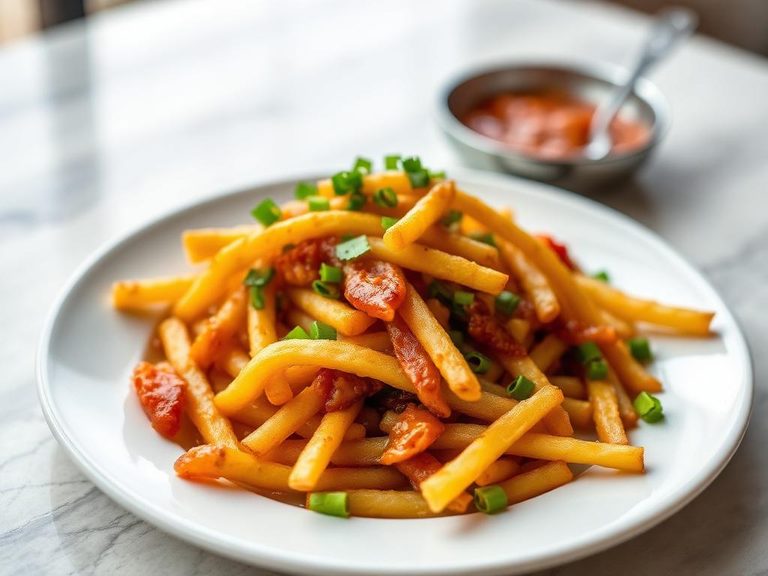

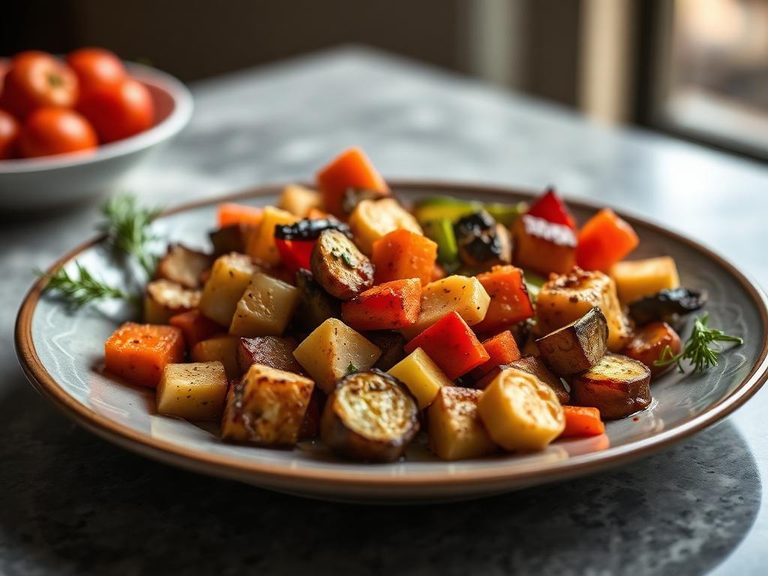

🌍 Where it's eaten
💡 Did you know?
Canola stands for 'Canadian Oil, Low Acid,' a name developed in the 1970s for a new low-erucic acid rapeseed cultivar bred in Canada.
Full nutrition (USDA data · scales with serving)
| Water | 0.00 g |
| Energy | 884 kcal |
| Energy | 3699 kj |
| Protein | 0.00 g |
| Total lipid (fat) | 100 g |
| Ash | 0.00 g |
| Carbohydrate, by difference | 0.00 g |
| Fiber, total dietary | 0.00 g |
| Total Sugars | 0.00 g |
| Calcium, Ca | 0.00 mg |
| Iron, Fe | 0.00 mg |
| Magnesium, Mg | 0.00 mg |
| Phosphorus, P | 0.00 mg |
| Potassium, K | 0.00 mg |
| Sodium, Na | 0.00 mg |
| Zinc, Zn | 0.00 mg |
| Copper, Cu | 0.00 mg |
| Manganese, Mn | 0.00 mg |
| Selenium, Se | 0.00 ug |
| Vitamin C, total ascorbic acid | 0.00 mg |
| Thiamin | 0.00 mg |
| Riboflavin | 0.00 mg |
| Niacin | 0.00 mg |
| Pantothenic acid | 0.00 mg |
| Vitamin B-6 | 0.00 mg |
| Folate, total | 0.00 ug |
| Folic acid | 0.00 ug |
| Folate, food | 0.00 ug |
| Folate, DFE | 0.00 ug |
| Choline, total | 0.20 mg |
| Vitamin B-12 | 0.00 ug |
| Vitamin B-12, added | 0.00 ug |
| Vitamin A, RAE | 0.00 ug |
| Retinol | 0.00 ug |
| Carotene, beta | 0.00 ug |
| Carotene, alpha | 0.00 ug |
| Cryptoxanthin, beta | 0.00 ug |
| Vitamin A, IU | 0.00 iu |
| Lycopene | 0.00 ug |
| Lutein + zeaxanthin | 0.00 ug |
| Vitamin E (alpha-tocopherol) | 17.5 mg |
| Vitamin E, added | 0.00 mg |
| Vitamin K (phylloquinone) | 71.3 ug |
| Alcohol, ethyl | 0.00 g |
| Caffeine | 0.00 mg |
| Theobromine | 0.00 mg |
Fat & fatty acid profile (per 100g)
| Fatty acids, total saturated | 7.8 g |
| SFA 4:0 | 0.00 g |
| SFA 6:0 | 0.00 g |
| SFA 8:0 | 0.00 g |
| SFA 10:0 | 0.00 g |
| SFA 12:0 | 0.04 g |
| SFA 14:0 | 0.07 g |
| SFA 15:0 | 0.04 g |
| SFA 16:0 | 4.2 g |
| SFA 17:0 | 0.06 g |
| SFA 18:0 | 2.3 g |
| SFA 20:0 | 0.73 g |
| SFA 22:0 | 0.34 g |
| Fatty acids, total monounsaturated | 61.1 g |
| MUFA 16:1 | 0.28 g |
| MUFA 16:1 c | 0.28 g |
| MUFA 18:1 | 59.8 g |
| MUFA 18:1 c | 59.5 g |
| MUFA 20:1 | 1.1 g |
| MUFA 22:1 | 0.00 g |
| Fatty acids, total polyunsaturated | 26.4 g |
| PUFA 18:2 | 18.8 g |
| PUFA 18:2 n-6 c,c | 18.6 g |
| PUFA 18:2 i | 0.19 g |
| PUFA 18:3 | 7.6 g |
| PUFA 18:3 n-3 c,c,c (ALA) | 6.3 g |
| PUFA 18:3i | 1.3 g |
| PUFA 18:4 | 0.00 g |
| PUFA 20:4 | 0.00 g |
| PUFA 20:5 n-3 (EPA) | 0.00 g |
| PUFA 22:5 n-3 (DPA) | 0.00 g |
| PUFA 22:6 n-3 (DHA) | 0.00 g |
| Fatty acids, total trans | 1.8 g |
| Fatty acids, total trans-monoenoic | 0.29 g |
| TFA 18:1 t | 0.29 g |
| Fatty acids, total trans-polyenoic | 1.5 g |
| Cholesterol | 0.00 mg |
Amino acid profile (per 100g)
Estimated from Oil, safflower, salad or cooking, high oleic (primary safflower oil of commerce) — USDA does not publish this profile for Oil.
| Tryptophan | 0.00 g |
| Threonine | 0.00 g |
| Isoleucine | 0.00 g |
| Leucine | 0.00 g |
| Lysine | 0.00 g |
| Methionine | 0.00 g |
| Cystine | 0.00 g |
| Phenylalanine | 0.00 g |
| Tyrosine | 0.00 g |
| Valine | 0.00 g |
| Arginine | 0.00 g |
| Histidine | 0.00 g |
| Alanine | 0.00 g |
| Aspartic acid | 0.00 g |
| Glutamic acid | 0.00 g |
| Glycine | 0.00 g |
| Proline | 0.00 g |
| Serine | 0.00 g |
FAQ
What does 'high smoke point' mean for this oil?
It means the oil can be heated to a relatively high temperature (around 400°F / 204°C) before it starts to break down, smoke, and produce harmful compounds, making it safe for frying and searing.
Is canola oil the same as vegetable oil?
Not exactly. 'Vegetable oil' is a generic term often for a blend of oils (like soybean, corn, or palm). Canola oil is specifically derived from the canola plant and is typically higher in monounsaturated fats.
How should I store it to maintain freshness?
Store it in a cool, dark place like a pantry, away from the stove. For longer-term storage, refrigeration can help slow oxidation and preserve its mild flavor.
Nutrient density (calculated · NRF9.3)
Nutrient Rich Foods index: beneficial nutrients (protein, fiber, vitamins, minerals) minus saturated fat, added sugar & sodium, per 100 kcal.
NRF9.3 index — Fulgoni, Keast & Drewnowski, 2009. Computed from USDA nutrients.
Weight-loss friendliness (composite index)
Energy density 8.84 kcal/g · 0% calories from protein · 0.0 g fiber · 0.0 g sugar per 100 g.
Composite of energy density (Rolls et al., 1999), protein & fiber satiety, minus sugar. A calculated heuristic — ranks satiety-per-calorie, not a clinical measure.
Dietary load (calculated from USDA values)
Potential renal acid load. Positive = acid-forming, negative = alkaline-forming.
Sodium:potassium per WHO potassium guidance. Computed from USDA nutrients.