

Vinaigrettes

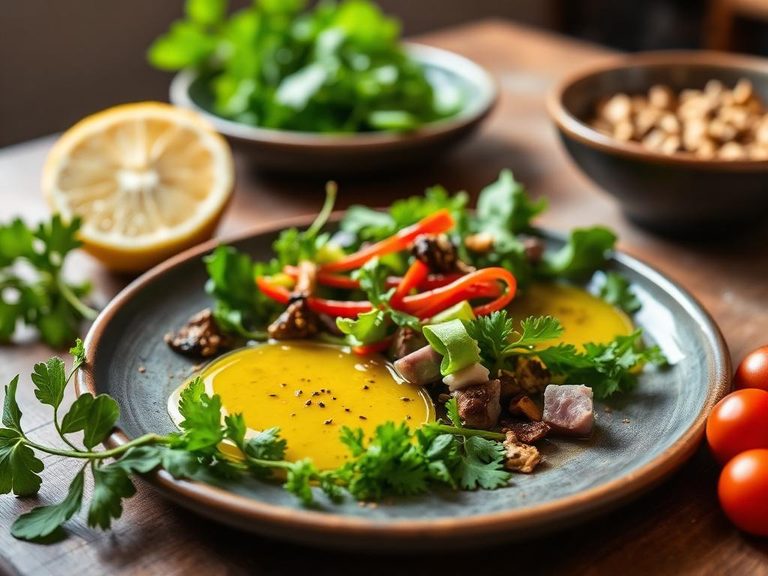
Vinaigrettes are a versatile category of cold sauces or dressings, typically made by emulsifying an acidic component like vinegar or citrus juice with a fat such as oil, often seasoned with herbs, spices, and mustard. While originating in French cuisine, they have become a global staple, used to dress salads, marinate proteins, or brighten up cooked vegetables.
🍳 View the full Vinaigrettes recipe →
🍽️ Nutrition at a glance
Vinaigrettes are primarily a source of fat from the oil base, with negligible carbohydrates and protein. A standard tablespoon serving contains roughly 45-90 calories, depending on the oil-to-acid ratio, and provides heart-healthy unsaturated fats and vitamin E.
Nutrition breakdown
| Calories | 90 kcal |
| Protein | 0 g |
| Carbs | 1 g |
| Fat | 10 g |
| Fiber | 0 g |
| Sugar | 0 g |
| Sodium | 200 mg |
| Vitamin E | 1.5 mg |
| Vitamin K | 10 mcg |
| Sodium | 200 mg |
| Potassium | 10 mg |
| Monounsaturated Fat | 7 g |
| Polyunsaturated Fat | 1.5 g |
| Saturated Fat | 1.5 g |
| Magnesium | 2 mg |
Per 2 tablespoons (30 g) · estimated, varies by recipe
💡 What's interesting
The classic 'emulsion' of a vinaigrette is a fascinating culinary science experiment, where mustard acts as a natural emulsifier to bind oil and vinegar into a smooth, stable sauce. Nutritionally, the oil in a vinaigrette helps the body absorb fat-soluble vitamins (like A, D, E, and K) from the salad greens and vegetables it's paired with.
🍽️ Related dishes
AI estimate may be inaccurate · Terms