

Vinaigrettes and salad dressings
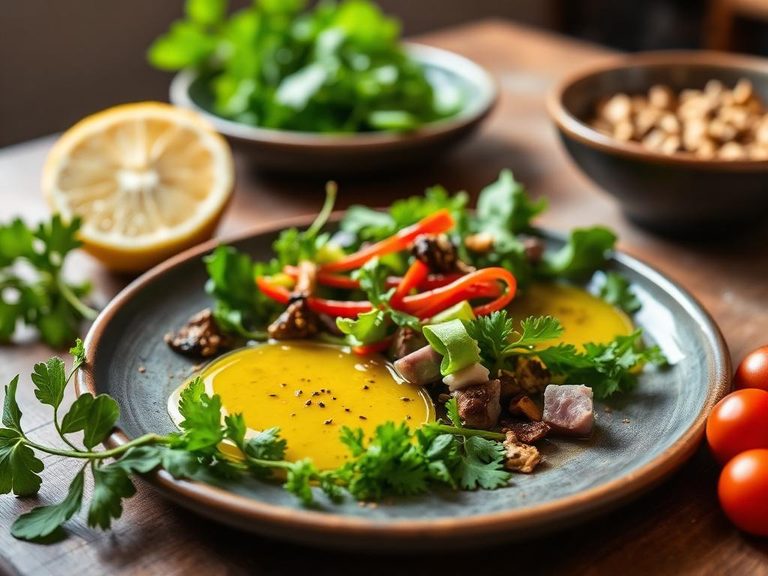
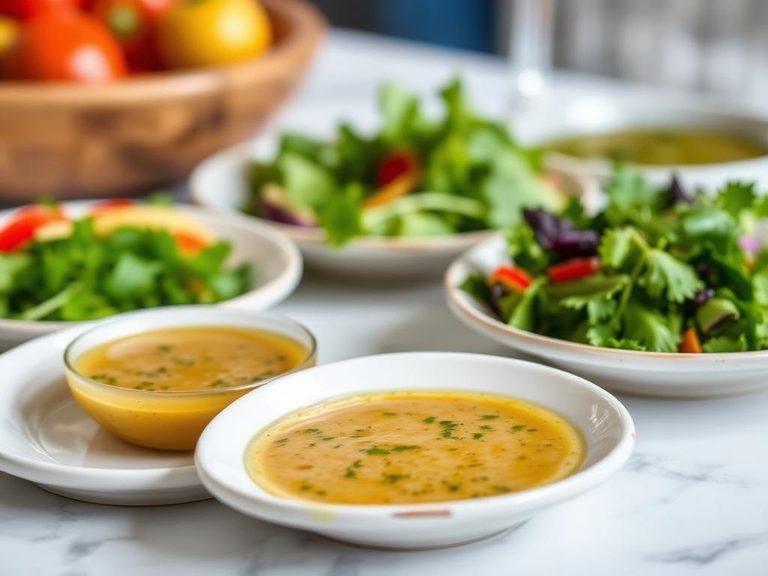
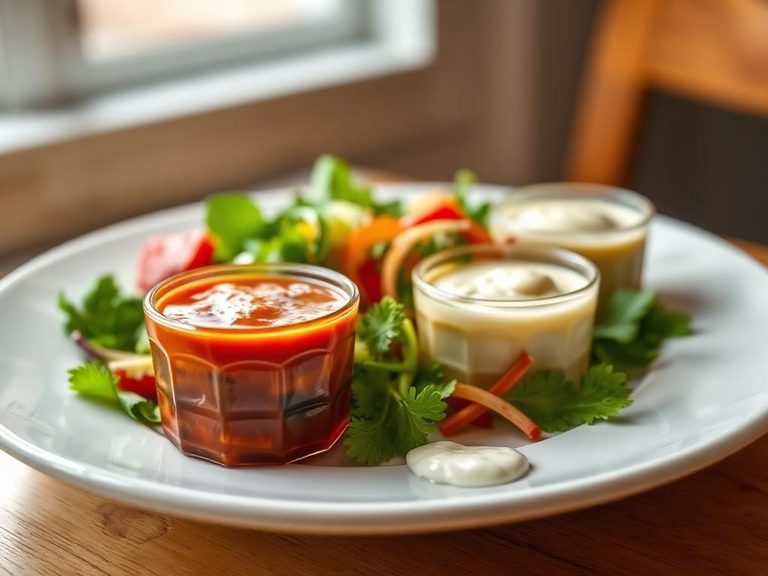
Vinaigrettes and salad dressings are flavorful mixtures used to coat and enhance salads, vegetables, and other dishes. A classic vinaigrette is a simple emulsion of oil and vinegar, often with mustard, herbs, and seasonings, while creamy dressings like ranch or Caesar incorporate ingredients like yogurt, mayonnaise, or cheese. These dressings have roots in ancient culinary traditions but became widely popularized in French and American cuisine.
🍳 View the full Vinaigrettes and salad dressings recipe →
🍽️ Nutrition at a glance
Vinaigrettes are generally high in healthy fats from oils like olive or canola, with minimal carbs and protein, providing key nutrients like vitamin E and antioxidants. A typical serving (about 2 tablespoons) ranges from 80 to 150 calories, depending on the oil-to-acid ratio and added ingredients.
Nutrition breakdown
| Calories | 73 kcal |
| Protein | 0.1 g |
| Carbs | 1.2 g |
| Fat | 7.8 g |
| Fiber | 0 g |
| Sugar | 0.8 g |
| Sodium | 130 mg |
| Vitamin E | 1.2 mg |
| Vitamin K | 8 µg |
| Vitamin A | 2 µg RAE |
| Potassium | 15 mg |
| Magnesium | 2 mg |
| Phosphorus | 8 mg |
| Manganese | 0.1 mg |
| Iron | 0.1 mg |
Per 1 tablespoon (15 g) · estimated, varies by recipe
💡 What's interesting
Culturally, vinaigrettes represent a timeless culinary principle of balancing fat and acid, which is fundamental in many global cuisines. Nutritionally, they can enhance the absorption of fat-soluble vitamins (like A, D, E, and K) from salads, making them a functional complement to healthy eating.
🍽️ Related dishes

AI estimate may be inaccurate · Terms