Flavoring for Vinaigrettes
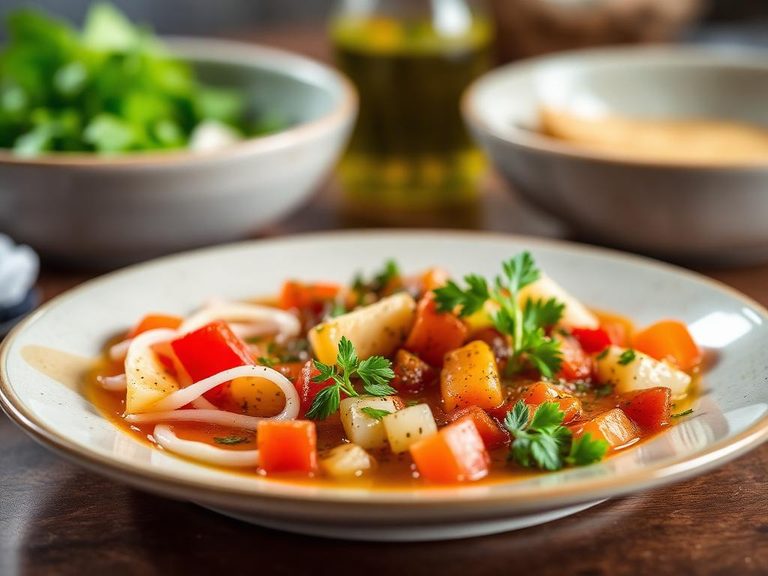
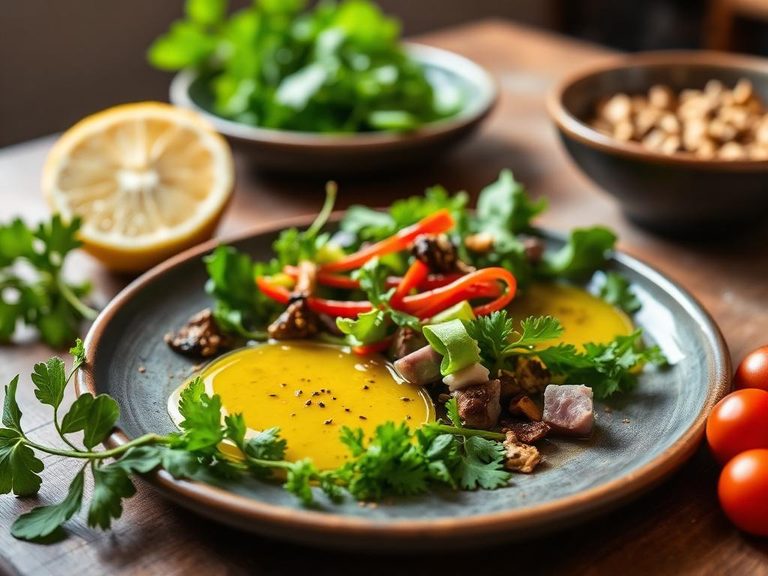
Flavoring for Vinaigrettes is a foundational emulsion of oil, acid, and seasonings used to dress salads, marinate proteins, or brighten cooked vegetables. Its core ingredients are typically a neutral or extra-virgin olive oil, an acidic component like vinegar or lemon juice, and a blend of herbs, spices, and aromatics such as mustard, garlic, or shallots. This versatile preparation is a cornerstone of French and broader Western culinary traditions.
🍽️ Nutrition at a glance
This flavoring is primarily a source of fats, with the oil providing healthy monounsaturated and polyunsaturated fats. It is very low in carbohydrates and protein, offering minimal calories from those macronutrients. A typical serving provides a significant amount of fat-soluble vitamins like Vitamin E and K, depending on the oil used.
Nutrition breakdown
| Calories | 120 kcal |
| Protein | 0 g |
| Carbs | 0.5 g |
| Fat | 14 g |
| Fiber | 0 g |
| Sugar | 0.2 g |
| Sodium | 150 mg |
| Vitamin E | 2 mg |
| Vitamin K | 10 µg |
| Monounsaturated Fat | 10 g |
| Polyunsaturated Fat | 2 g |
| Saturated Fat | 1.5 g |
| Omega-3 Fatty Acids | 0.1 g |
| Sodium | 150 mg |
| Potassium | 5 mg |
Per 2 tablespoons (30 g) · estimated, varies by recipe
💡 What's interesting
The classic vinaigrette is a temporary emulsion, meaning the oil and acid will separate if left to stand, which is why it's traditionally whisked or shaken just before serving. Nutritionally, the fat in the dressing helps the body absorb fat-soluble vitamins (like A, D, E, K) from the vegetables in the salad it's dressed upon.