

Flavoring for baked beans
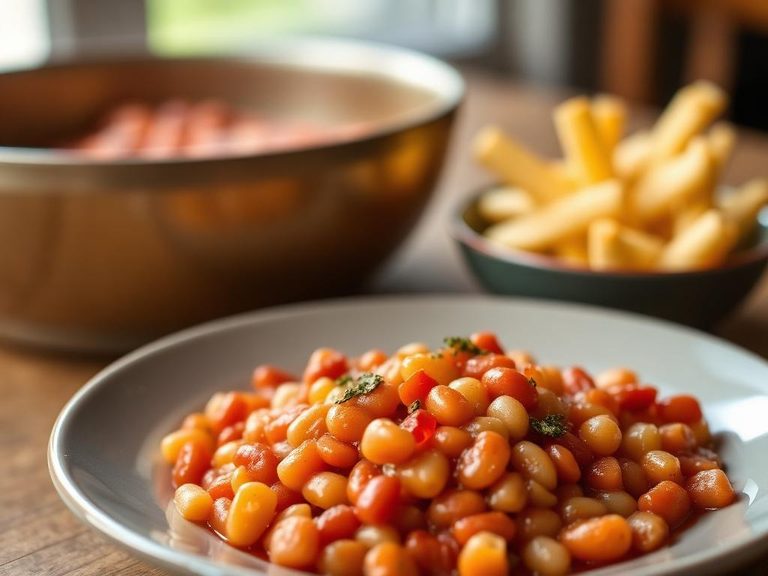
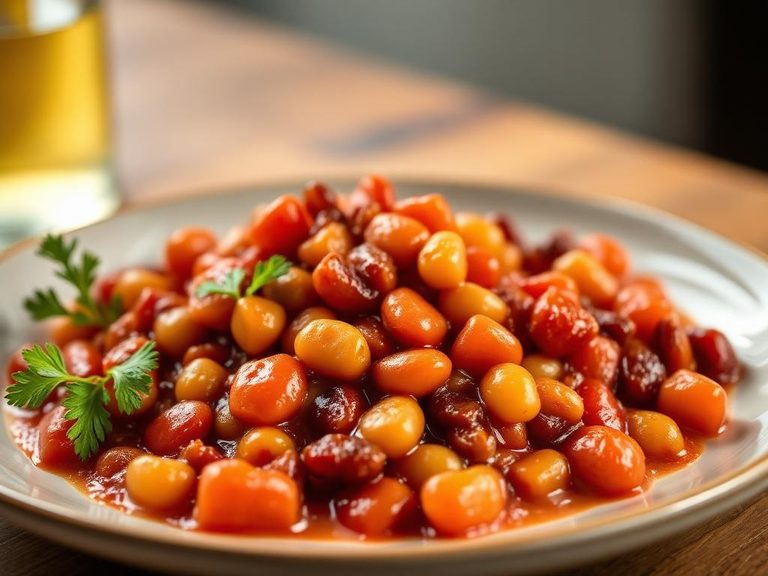
Flavoring for baked beans is a savory, sweet, and tangy sauce or seasoning blend used to enhance canned or homemade baked beans. It typically includes ingredients like brown sugar, molasses, mustard, onion, garlic, and sometimes bacon or Worcestershire sauce. This flavoring is a staple in American and British cuisine, particularly associated with barbecue and comfort food.
🍳 View the full Flavoring for baked beans recipe →
🍽️ Nutrition at a glance
This flavoring is generally high in carbohydrates from sugars like brown sugar and molasses, with minimal protein or fat unless meat-based additions are included. A typical serving (about 2 tablespoons) provides around 50-80 calories, primarily from sugars, and offers small amounts of iron and antioxidants from ingredients like molasses or tomatoes.
Nutrition breakdown
| Calories | 30 kcal |
| Protein | 0.5 g |
| Carbs | 6 g |
| Fat | 0.5 g |
| Fiber | 0.5 g |
| Sugar | 4 g |
| Sodium | 480 mg |
| Potassium | 120 mg |
| Calcium | 15 mg |
| Iron | 0.3 mg |
| Vitamin C | 2 mg |
| Vitamin A | 10 mcg RAE |
| Thiamin (B1) | 0.02 mg |
| Niacin (B3) | 0.4 mg |
| Magnesium | 10 mg |
Per 2 tablespoons (30 g) · estimated, varies by recipe
💡 What's interesting
Baked bean flavoring has roots in colonial American and British cooking, where sweeteners like molasses were used to preserve and flavor beans. Nutritionally, it can transform a simple legume dish into a calorie-dense comfort food, balancing the beans' natural fiber and protein with added sugars for a distinctive sweet-savory profile.
🍽️ Related dishes




AI estimate may be inaccurate · Terms