

Baked beans
Common food

Photo: Wikipedia
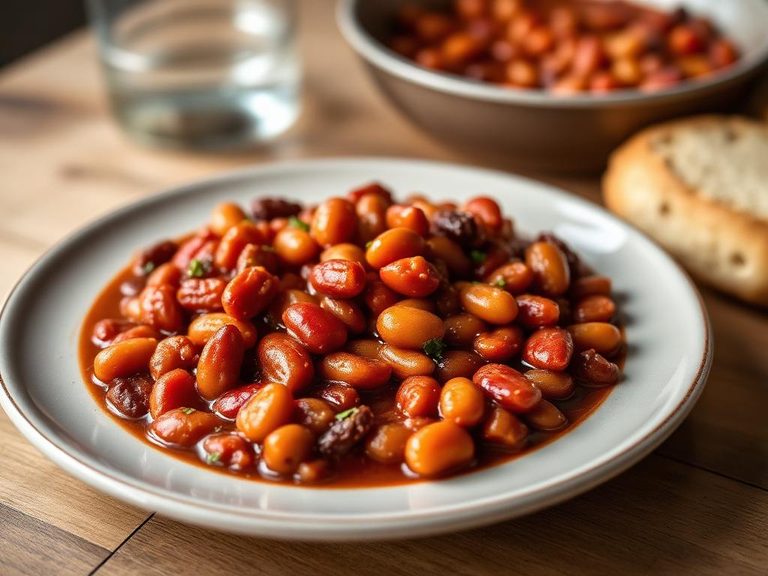
Baked beans are tender white beans slow-cooked in a sweet and savory tomato-based sauce, yielding a comforting, creamy texture with a rich, umami depth. Nutritionally, they are a standout source of plant-based protein and dietary fiber, making them a satisfying and energy-dense staple.
Calorie split: 16% protein · 77% carbs · 7% fat
↓ Full nutrition💚 Why it's loved
People adore baked beans for their perfect balance of sweet, tangy, and savory flavors, and their incredible versatility as a side dish, topping, or standalone meal. They are deeply embedded in cultural traditions, from British breakfasts to American barbecues.
⚠️ Watch-outs & how to enjoy it better
Canned varieties can be high in sodium and added sugars, which may cause blood-sugar spikes or be concerning for those managing hypertension. To counteract this, choose low-sodium or no-added-sugar versions, rinse them before use, and pair with protein (like eggs) or healthy fats (like avocado) to blunt the glycemic response.
Key benefits
- High in plant-based protein for muscle maintenance
- Excellent source of dietary fiber for digestive health
- Low in fat, supporting heart-healthy diets
- Rich in complex carbohydrates for sustained energy
- Contains essential minerals like iron and folate
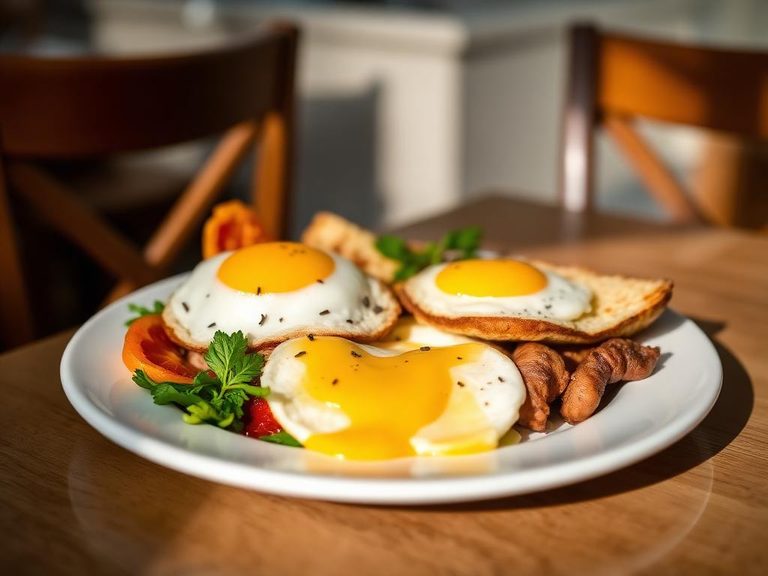
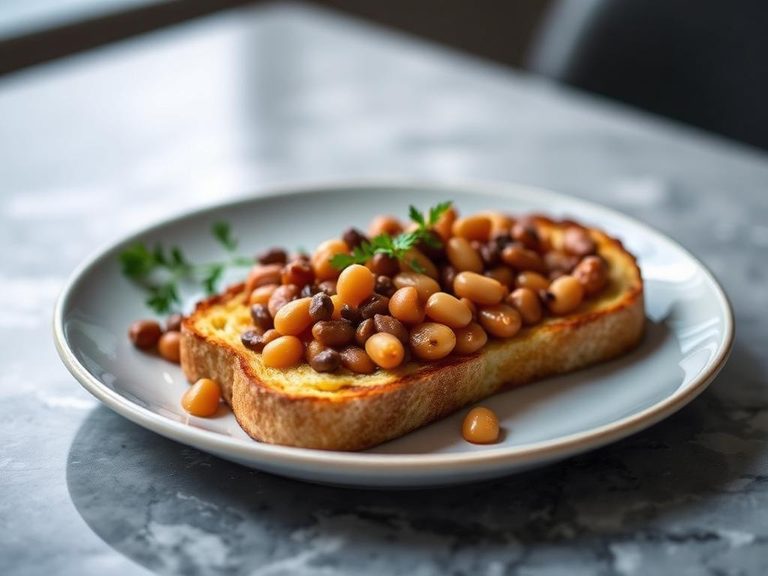
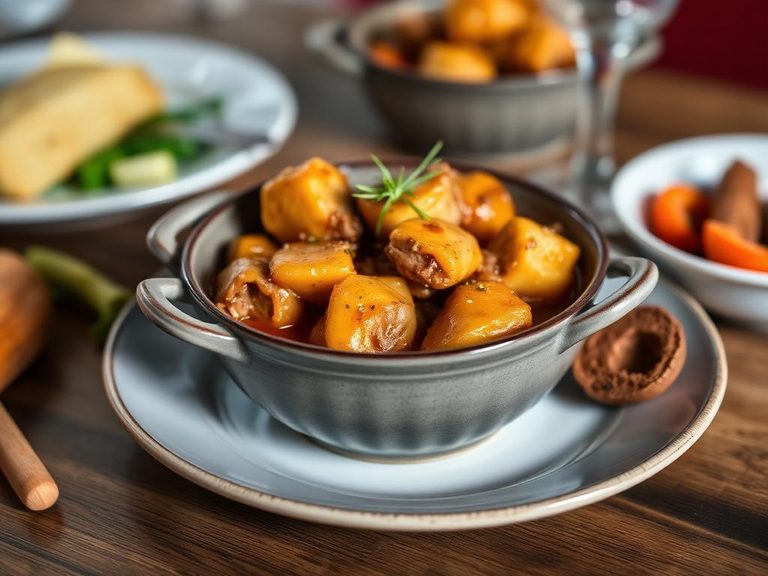
🍽️ Popular dishes

🌍 Where it's eaten
💡 Did you know?
The traditional Boston method for baking beans involved slow-cooking them in a brick oven overnight with a piece of salt pork and plenty of molasses, a practice that earned the city the nickname 'Beantown'.
Full nutrition (USDA data · scales with serving)
| Water | 71.5 g |
| Energy | 105 kcal |
| Protein | 4.5 g |
| Total lipid (fat) | 0.89 g |
| Carbohydrate, by difference | 21.6 g |
| Fiber, total dietary | 4.4 g |
| Total Sugars | 8.2 g |
| Calcium, Ca | 39.0 mg |
| Iron, Fe | 1.4 mg |
| Magnesium, Mg | 30.0 mg |
| Phosphorus, P | 88.0 mg |
| Potassium, K | 231 mg |
| Sodium, Na | 391 mg |
| Zinc, Zn | 0.51 mg |
| Copper, Cu | 0.17 mg |
| Selenium, Se | 4.8 ug |
| Vitamin C, total ascorbic acid | 0.00 mg |
| Thiamin | 0.03 mg |
| Riboflavin | 0.01 mg |
| Niacin | 0.29 mg |
| Vitamin B-6 | 0.05 mg |
| Folate, total | 8.0 ug |
| Folic acid | 0.00 ug |
| Folate, food | 8.0 ug |
| Folate, DFE | 8.0 ug |
| Choline, total | 22.3 mg |
| Vitamin B-12 | 0.00 ug |
| Vitamin B-12, added | 0.00 ug |
| Vitamin A, RAE | 1.0 ug |
| Retinol | 0.00 ug |
| Carotene, beta | 9.0 ug |
| Carotene, alpha | 0.00 ug |
| Cryptoxanthin, beta | 2.0 ug |
| Lycopene | 83.0 ug |
| Lutein + zeaxanthin | 9.0 ug |
| Vitamin E (alpha-tocopherol) | 0.04 mg |
| Vitamin E, added | 0.00 mg |
| Vitamin D (D2 + D3) | 0.00 ug |
| Vitamin K (phylloquinone) | 0.40 ug |
| Alcohol, ethyl | 0.00 g |
| Caffeine | 0.00 mg |
| Theobromine | 0.00 mg |
Fat & fatty acid profile (per 100g)
| Fatty acids, total saturated | 0.23 g |
| SFA 4:0 | 0.00 g |
| SFA 6:0 | 0.00 g |
| SFA 8:0 | 0.00 g |
| SFA 10:0 | 0.00 g |
| SFA 12:0 | 0.00 g |
| SFA 14:0 | 0.01 g |
| SFA 16:0 | 0.16 g |
| SFA 18:0 | 0.05 g |
| Fatty acids, total monounsaturated | 0.22 g |
| MUFA 16:1 | 0.01 g |
| MUFA 18:1 | 0.20 g |
| MUFA 20:1 | 0.01 g |
| MUFA 22:1 | 0.01 g |
| Fatty acids, total polyunsaturated | 0.40 g |
| PUFA 18:2 | 0.22 g |
| PUFA 18:3 | 0.18 g |
| PUFA 18:4 | 0.00 g |
| PUFA 20:4 | 0.00 g |
| PUFA 20:5 n-3 (EPA) | 0.00 g |
| PUFA 22:5 n-3 (DPA) | 0.00 g |
| PUFA 22:6 n-3 (DHA) | 0.00 g |
| Cholesterol | 7.0 mg |
Amino acid profile (per 100g)
Estimated from Beans, baked, home prepared — USDA does not publish this profile for Baked beans.
| Tryptophan | 0.07 g |
| Threonine | 0.23 g |
| Isoleucine | 0.24 g |
| Leucine | 0.43 g |
| Lysine | 0.38 g |
| Methionine | 0.09 g |
| Cystine | 0.06 g |
| Phenylalanine | 0.29 g |
| Tyrosine | 0.15 g |
| Valine | 0.28 g |
| Arginine | 0.36 g |
| Histidine | 0.15 g |
| Alanine | 0.24 g |
| Aspartic acid | 0.64 g |
| Glutamic acid | 0.84 g |
| Glycine | 0.23 g |
| Proline | 0.24 g |
| Serine | 0.29 g |
FAQ
Are baked beans healthy?
Yes, they are a nutritious source of protein, fiber, and complex carbs. However, their healthiness depends on the sauce; opt for varieties low in added sugar and sodium for the best benefits.
Why are canned baked beans so sugary?
The sauce, especially in traditional recipes, often uses molasses, brown sugar, or maple syrup for the classic sweet and tangy flavor. Reading labels helps you find options with less added sugar.
Can I eat baked beans on a low-carb diet?
They are relatively high in carbohydrates due to the beans and sauce, so they may not fit strict low-carb plans. However, they can be part of a balanced diet in controlled portions.
Nutrient density (calculated · NRF9.3)
Nutrient Rich Foods index: beneficial nutrients (protein, fiber, vitamins, minerals) minus saturated fat, added sugar & sodium, per 100 kcal.
NRF9.3 index — Fulgoni, Keast & Drewnowski, 2009. Computed from USDA nutrients.
Weight-loss friendliness (composite index)
Energy density 1.05 kcal/g · 17% calories from protein · 4.4 g fiber · 8.2 g sugar per 100 g.
Composite of energy density (Rolls et al., 1999), protein & fiber satiety, minus sugar. A calculated heuristic — ranks satiety-per-calorie, not a clinical measure.
Dietary load (calculated from USDA values)
Potential renal acid load. Positive = acid-forming, negative = alkaline-forming.
Sodium-to-potassium ratio: 1.69 (lower is better — aim for ≤ 1)
Sodium:potassium per WHO potassium guidance. Computed from USDA nutrients.