

Vegetables, mixed (corn, lima beans, peas, green beans, carrots) canned, no salt added
Whole food · Vegetables and Vegetable Products
This is a vibrant medley of sweet corn, tender lima beans, garden peas, crisp green beans, and diced carrots, all preserved in a can without added salt. The texture is a delightful mix of soft, starchy kernels and firmer, snappier vegetables, offering a mild, earthy sweetness. Nutritionally, it's a low-calorie, high-fiber blend that provides a convenient way to eat a variety of vegetables.
Calorie split: 15% protein · 80% carbs · 5% fat
↓ Full nutrition💚 Why it's loved
People love this mix for its incredible convenience and comforting, familiar flavor that requires minimal preparation. It's a versatile staple that can be quickly heated as a side dish or tossed into countless recipes, evoking a sense of home cooking.
⚠️ Watch-outs & how to enjoy it better
The canning process can soften the vegetables, reducing their fresh crunch and potentially altering some heat-sensitive nutrients. Those monitoring blood sugar should be mindful, as the starchy corn and lima beans can cause a quicker rise in glucose. Tip: Pair it with a source of protein (like chicken or beans) and healthy fat (like olive oil) to slow digestion and stabilize blood sugar response.
Key benefits
- Excellent source of dietary fiber (3.1g per 100g)
- Very low in fat (0.2g per 100g)
- Provides plant-based protein (1.4g per 100g)
- No added salt, supporting heart health
- Convenient source of mixed vegetable nutrients
🍽️ Popular dishes
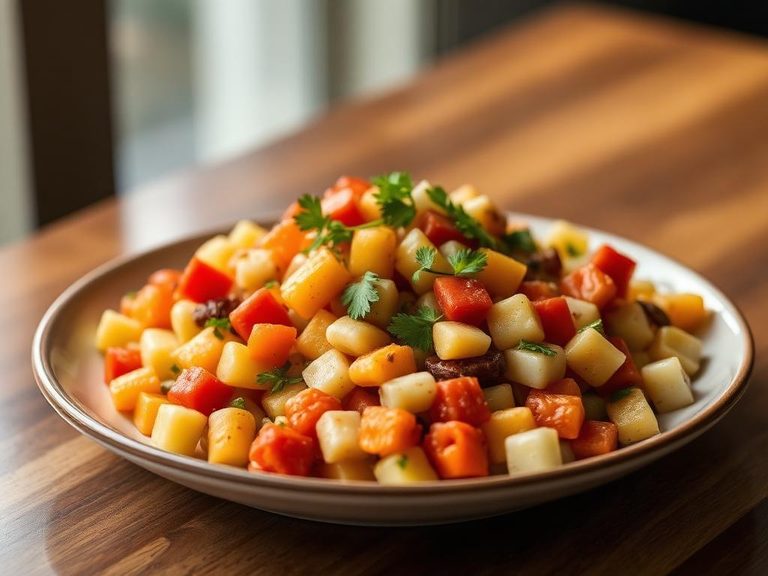

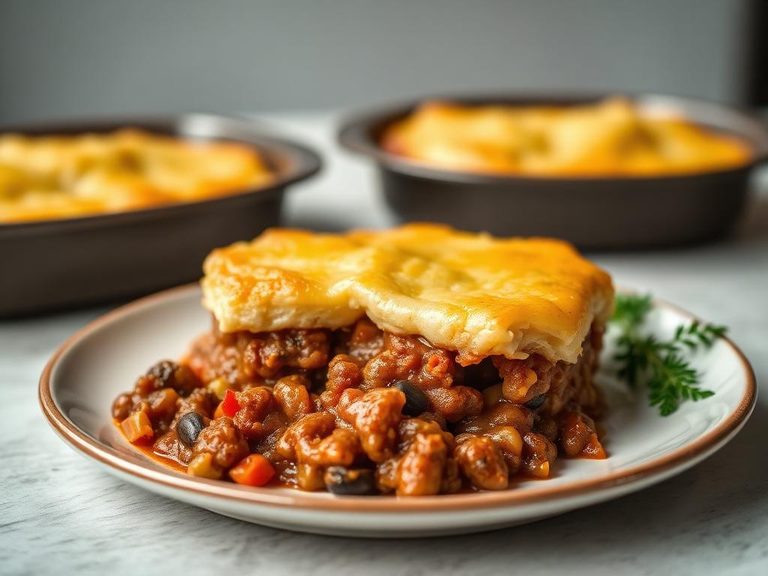
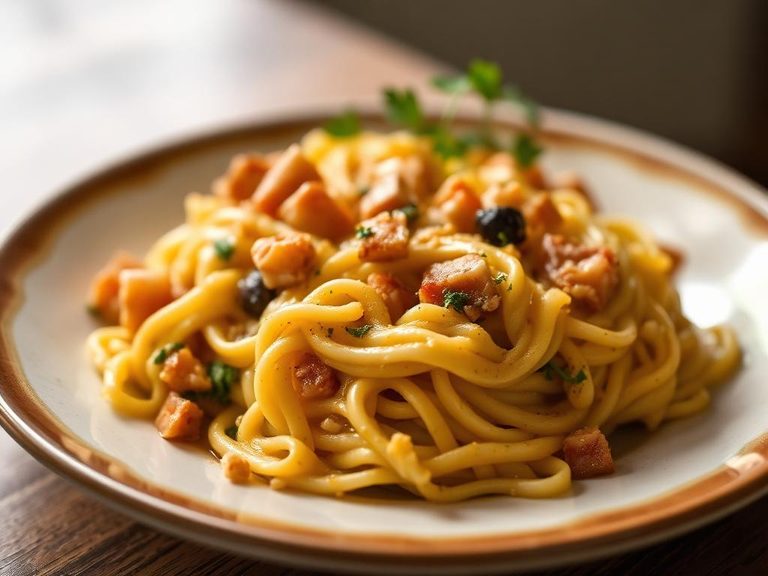
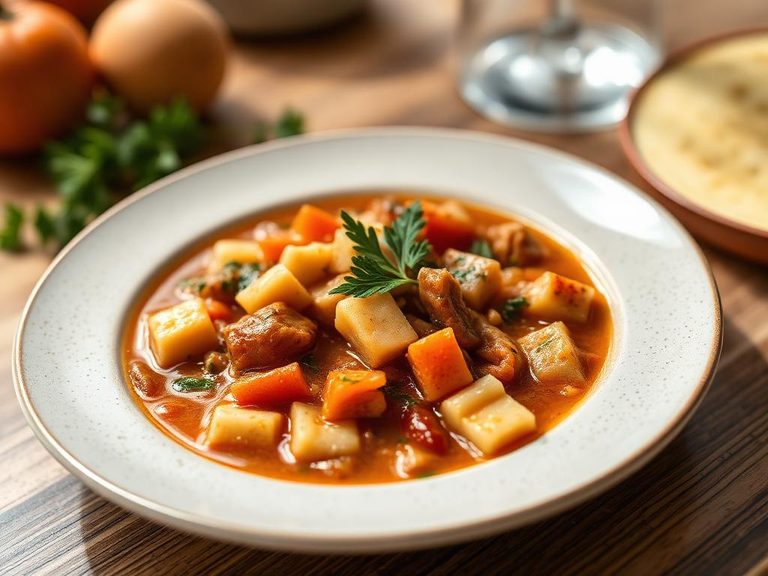
🌍 Where it's eaten
💡 Did you know?
The classic American dish 'succotash' is derived from the Narragansett word 'msíckquatash,' which referred to a cooked corn and bean dish, highlighting the ancient pairing of these two ingredients.
Full nutrition (USDA data · scales with serving)
| Water | 90.2 g |
| Energy | 37.0 kcal |
| Energy | 153 kj |
| Protein | 1.4 g |
| Total lipid (fat) | 0.20 g |
| Ash | 0.89 g |
| Carbohydrate, by difference | 7.3 g |
| Fiber, total dietary | 3.1 g |
| Total Sugars | 2.4 g |
| Calcium, Ca | 21.0 mg |
| Iron, Fe | 0.65 mg |
| Magnesium, Mg | 15.0 mg |
| Phosphorus, P | 37.0 mg |
| Potassium, K | 138 mg |
| Sodium, Na | 26.0 mg |
| Zinc, Zn | 0.51 mg |
| Copper, Cu | 0.10 mg |
| Selenium, Se | 0.30 ug |
| Fluoride, F | 37.0 ug |
| Vitamin C, total ascorbic acid | 3.8 mg |
| Thiamin | 0.03 mg |
| Riboflavin | 0.04 mg |
| Niacin | 0.48 mg |
| Vitamin B-6 | 0.08 mg |
| Folate, total | 18.0 ug |
| Folic acid | 0.00 ug |
| Folate, food | 18.0 ug |
| Folate, DFE | 18.0 ug |
| Choline, total | 18.6 mg |
| Vitamin B-12 | 0.00 ug |
| Vitamin B-12, added | 0.00 ug |
| Vitamin A, RAE | 583 ug |
| Retinol | 0.00 ug |
| Carotene, beta | 5670 ug |
| Carotene, alpha | 2636 ug |
| Cryptoxanthin, beta | 5.0 ug |
| Vitamin A, IU | 11651 iu |
| Lycopene | 0.00 ug |
| Lutein + zeaxanthin | 493 ug |
| Vitamin E (alpha-tocopherol) | 0.29 mg |
| Vitamin E, added | 0.00 mg |
| Vitamin D (D2 + D3), International Units | 0.00 iu |
| Vitamin D (D2 + D3) | 0.00 ug |
| Vitamin K (phylloquinone) | 18.2 ug |
| Alcohol, ethyl | 0.00 g |
| Caffeine | 0.00 mg |
| Theobromine | 0.00 mg |
Fat & fatty acid profile (per 100g)
| Fatty acids, total saturated | 0.04 g |
| SFA 4:0 | 0.00 g |
| SFA 6:0 | 0.00 g |
| SFA 8:0 | 0.00 g |
| SFA 10:0 | 0.00 g |
| SFA 12:0 | 0.00 g |
| SFA 14:0 | 0.00 g |
| SFA 16:0 | 0.03 g |
| SFA 18:0 | 0.00 g |
| Fatty acids, total monounsaturated | 0.02 g |
| MUFA 16:1 | 0.00 g |
| MUFA 18:1 | 0.02 g |
| MUFA 20:1 | 0.00 g |
| MUFA 22:1 | 0.00 g |
| Fatty acids, total polyunsaturated | 0.10 g |
| PUFA 18:2 | 0.07 g |
| PUFA 18:3 | 0.03 g |
| PUFA 18:4 | 0.00 g |
| PUFA 20:4 | 0.00 g |
| PUFA 20:5 n-3 (EPA) | 0.00 g |
| PUFA 22:5 n-3 (DPA) | 0.00 g |
| PUFA 22:6 n-3 (DHA) | 0.00 g |
| Fatty acids, total trans | 0.00 g |
| Cholesterol | 0.00 mg |
Amino acid profile (per 100g)
Estimated from Vegetables, mixed, canned, solids and liquids — USDA does not publish this profile for Vegetables.
| Tryptophan | 0.01 g |
| Threonine | 0.06 g |
| Isoleucine | 0.07 g |
| Leucine | 0.10 g |
| Lysine | 0.09 g |
| Methionine | 0.02 g |
| Cystine | 0.01 g |
| Phenylalanine | 0.06 g |
| Tyrosine | 0.04 g |
| Valine | 0.07 g |
| Arginine | 0.10 g |
| Histidine | 0.04 g |
| Alanine | 0.06 g |
| Aspartic acid | 0.15 g |
| Glutamic acid | 0.19 g |
| Glycine | 0.05 g |
| Proline | 0.04 g |
| Serine | 0.07 g |
FAQ
Is canned mixed vegetables as healthy as fresh?
Canned vegetables are picked and processed at peak ripeness, which can preserve nutrients well. While some heat-sensitive vitamins (like Vitamin C) may be reduced, the fiber and minerals remain largely intact. The key benefit is the absence of added salt in this version, making it a healthy choice.
How can I improve the texture of canned mixed vegetables?
For a better texture, drain and rinse them, then quickly sauté in a hot pan with a little oil for 2-3 minutes instead of just boiling. This can restore some firmness and add a pleasant roasted note.
What does 'no salt added' mean for this product?
It means no sodium chloride (table salt) was included during the canning process. The vegetables naturally contain very small amounts of sodium. This makes it a heart-healthier option compared to regular canned vegetables, which can be high in sodium for preservation and flavor.
Nutrient density (calculated · NRF9.3)
Nutrient Rich Foods index: beneficial nutrients (protein, fiber, vitamins, minerals) minus saturated fat, added sugar & sodium, per 100 kcal.
NRF9.3 index — Fulgoni, Keast & Drewnowski, 2009. Computed from USDA nutrients.
Weight-loss friendliness (composite index)
Energy density 0.37 kcal/g · 15% calories from protein · 3.1 g fiber · 2.4 g sugar per 100 g.
Composite of energy density (Rolls et al., 1999), protein & fiber satiety, minus sugar. A calculated heuristic — ranks satiety-per-calorie, not a clinical measure.
Dietary load (calculated from USDA values)
Potential renal acid load. Positive = acid-forming, negative = alkaline-forming.
Sodium-to-potassium ratio: 0.19 (lower is better — aim for ≤ 1)
Sodium:potassium per WHO potassium guidance. Computed from USDA nutrients.