

Beans, liquid from stewed kidney beans
Whole food · Legumes and Legume Products

Photo: Wikipedia
This is the flavorful, slightly starchy liquid left after simmering kidney beans, often called 'bean broth' or 'pot liquor.' It has a mild, earthy, savory taste with a silky, slightly viscous texture from dissolved starches and proteins. Nutritionally, it's a low-calorie source of plant-based protein and healthy fats, making it a nutritious base for soups and sauces.
Calorie split: 15% protein · 24% carbs · 61% fat
↓ Full nutrition💚 Why it's loved
People love it for its deep, comforting umami flavor that forms the soul of many bean-based dishes. It's cherished for its versatility as a cooking liquid that infuses other ingredients with rich, savory depth.
⚠️ Watch-outs & how to enjoy it better
The liquid can be high in sodium if salt was added during cooking, which may be a concern for those monitoring intake. It also contains lectins, which are reduced but not eliminated by cooking; proper boiling is essential. To counteract, use it in dishes where you can control added salt, and ensure beans were boiled vigorously for at least 10 minutes.
Key benefits
- Provides plant-based protein and healthy fats in a low-calorie liquid.
- Rich in soluble fiber, which can support digestive health.
- Contains minerals like iron and potassium leached from the beans.
- Acts as a natural, flavorful base for soups, stews, and sauces.
- Helps reduce food waste by utilizing the entire cooked bean.
🍽️ Popular dishes
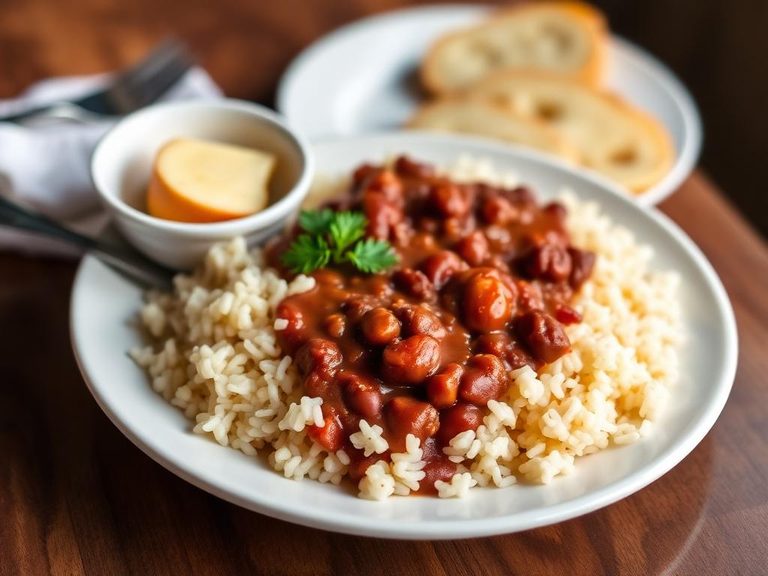
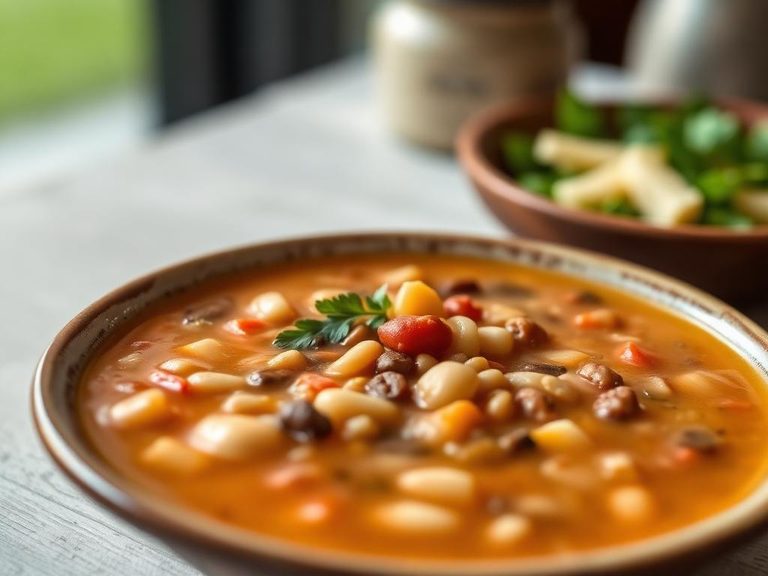
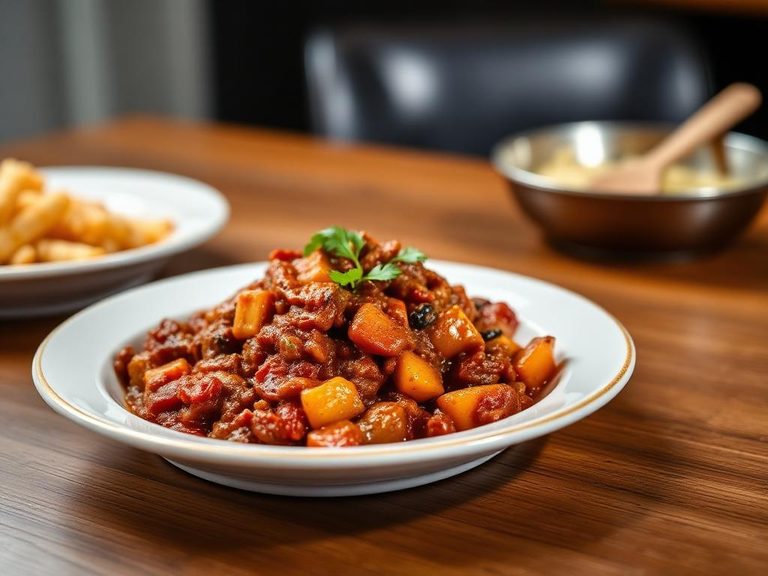
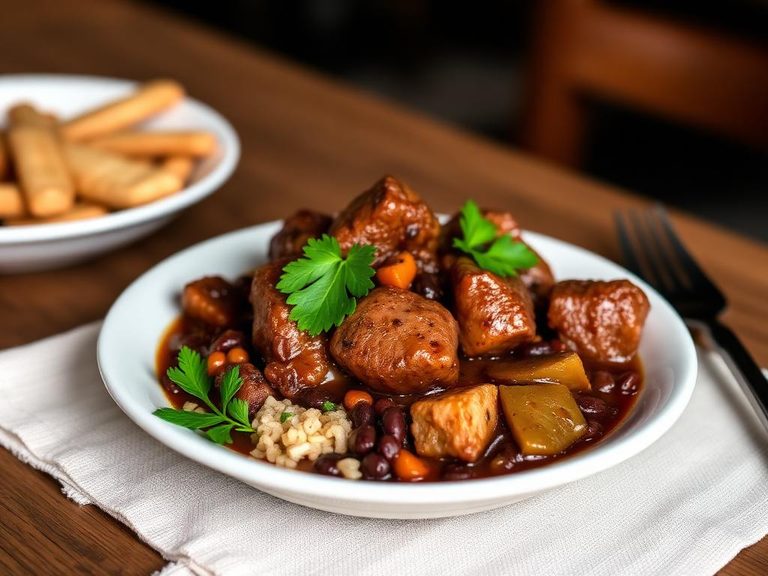
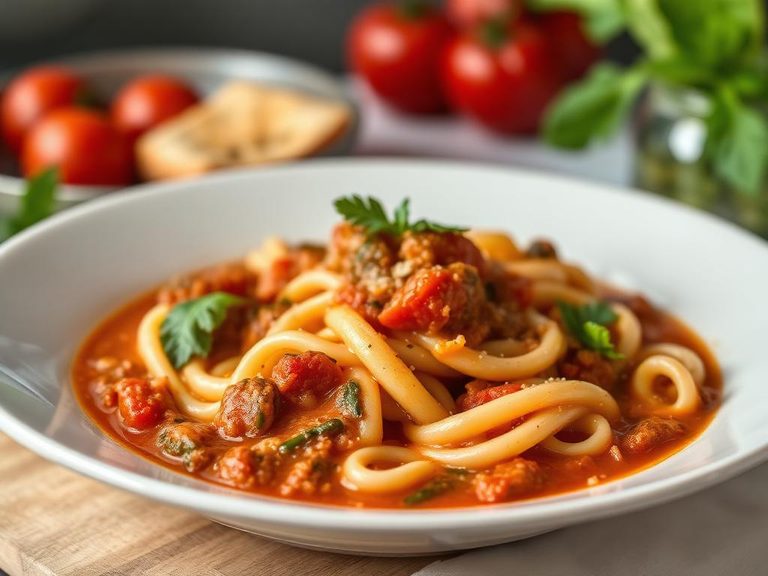
🌍 Where it's eaten
💡 Did you know?
The starchy liquid from cooked beans is a traditional folk remedy for soothing minor skin irritations like sunburn or rashes.
Full nutrition (USDA data · scales with serving)
| Water | 91.5 g |
| Energy | 47.0 kcal |
| Energy | 197 kj |
| Protein | 1.8 g |
| Total lipid (fat) | 3.2 g |
| Ash | 0.70 g |
| Carbohydrate, by difference | 2.8 g |
| Fiber, total dietary | 0.10 g |
| Total Sugars | 0.00 g |
| Calcium, Ca | 13.0 mg |
| Iron, Fe | 2.0 mg |
| Magnesium, Mg | 37.0 mg |
| Phosphorus, P | 88.0 mg |
| Potassium, K | 408 mg |
| Sodium, Na | 2.0 mg |
| Zinc, Zn | 0.49 mg |
| Copper, Cu | 0.10 mg |
| Selenium, Se | 0.50 ug |
| Vitamin C, total ascorbic acid | 0.00 mg |
| Thiamin | 0.10 mg |
| Riboflavin | 0.09 mg |
| Niacin | 0.39 mg |
| Vitamin B-6 | 0.03 mg |
| Folate, total | 33.0 ug |
| Folic acid | 0.00 ug |
| Folate, food | 33.0 ug |
| Folate, DFE | 33.0 ug |
| Choline, total | 13.5 mg |
| Vitamin B-12 | 0.02 ug |
| Vitamin B-12, added | 0.00 ug |
| Vitamin A, RAE | 0.00 ug |
| Retinol | 0.00 ug |
| Carotene, beta | 0.00 ug |
| Carotene, alpha | 0.00 ug |
| Cryptoxanthin, beta | 0.00 ug |
| Vitamin A, IU | 0.00 iu |
| Lycopene | 0.00 ug |
| Lutein + zeaxanthin | 0.00 ug |
| Vitamin E (alpha-tocopherol) | 0.00 mg |
| Vitamin E, added | 0.00 mg |
| Vitamin D (D2 + D3), International Units | 0.00 iu |
| Vitamin D (D2 + D3) | 0.00 ug |
| Vitamin K (phylloquinone) | 0.00 ug |
| Alcohol, ethyl | 0.00 g |
| Caffeine | 0.00 mg |
| Theobromine | 0.00 mg |
Fat & fatty acid profile (per 100g)
| Fatty acids, total saturated | 1.2 g |
| SFA 4:0 | 0.00 g |
| SFA 6:0 | 0.00 g |
| SFA 8:0 | 0.00 g |
| SFA 10:0 | 0.00 g |
| SFA 12:0 | 0.01 g |
| SFA 14:0 | 0.04 g |
| SFA 16:0 | 0.73 g |
| SFA 18:0 | 0.39 g |
| Fatty acids, total monounsaturated | 1.5 g |
| MUFA 16:1 | 0.10 g |
| MUFA 18:1 | 1.4 g |
| MUFA 20:1 | 0.00 g |
| MUFA 22:1 | 0.00 g |
| Fatty acids, total polyunsaturated | 0.34 g |
| PUFA 18:2 | 0.30 g |
| PUFA 18:3 | 0.03 g |
| PUFA 18:4 | 0.00 g |
| PUFA 20:4 | 0.01 g |
| PUFA 20:5 n-3 (EPA) | 0.00 g |
| PUFA 22:5 n-3 (DPA) | 0.00 g |
| PUFA 22:6 n-3 (DHA) | 0.00 g |
| Fatty acids, total trans | 0.00 g |
| Cholesterol | 4.0 mg |
Amino acid profile (per 100g)
Estimated from Lima beans, thin seeded (baby), mature seeds, cooked, boiled, without salt — USDA does not publish this profile for Beans.
| Tryptophan | 0.10 g |
| Threonine | 0.35 g |
| Isoleucine | 0.42 g |
| Leucine | 0.69 g |
| Lysine | 0.54 g |
| Methionine | 0.10 g |
| Cystine | 0.09 g |
| Phenylalanine | 0.46 g |
| Tyrosine | 0.28 g |
| Valine | 0.48 g |
| Arginine | 0.49 g |
| Histidine | 0.25 g |
| Alanine | 0.41 g |
| Aspartic acid | 1.0 g |
| Glutamic acid | 1.1 g |
| Glycine | 0.34 g |
| Proline | 0.37 g |
| Serine | 0.54 g |
FAQ
Is bean liquid nutritious?
Yes, it contains soluble fiber, protein, and minerals like potassium and iron that leach from the beans during cooking. It's a low-calorie way to add flavor and nutrients to dishes.
Can I use canned bean liquid?
You can, but it's often very high in sodium. It's best used in cooking where you can control salt, or you can rinse the beans first if using the liquid separately.
How do I store it?
Cool it quickly, refrigerate in an airtight container for up to 4 days, or freeze for up to 3 months. It may gel when cold due to the starch content.
Nutrient density (calculated · NRF9.3)
Nutrient Rich Foods index: beneficial nutrients (protein, fiber, vitamins, minerals) minus saturated fat, added sugar & sodium, per 100 kcal.
NRF9.3 index — Fulgoni, Keast & Drewnowski, 2009. Computed from USDA nutrients.
Weight-loss friendliness (composite index)
Energy density 0.47 kcal/g · 15% calories from protein · 0.1 g fiber · 0.0 g sugar per 100 g.
Composite of energy density (Rolls et al., 1999), protein & fiber satiety, minus sugar. A calculated heuristic — ranks satiety-per-calorie, not a clinical measure.
Dietary load (calculated from USDA values)
Potential renal acid load. Positive = acid-forming, negative = alkaline-forming.
Sodium-to-potassium ratio: 0.00 (lower is better — aim for ≤ 1)
Sodium:potassium per WHO potassium guidance. Computed from USDA nutrients.