Beans, baked, home prepared
Whole food · Legumes and Legume Products

Photo: Wikipedia
Home-baked beans are tender legumes slow-cooked in a rich, savory-sweet sauce until the beans are creamy and the sauce is thick and glossy. They offer a hearty, comforting texture with a balanced flavor profile that is both earthy and subtly sweet. Nutritionally, they are a solid source of plant-based protein and dietary fiber.
💚 Why it's loved
People love baked beans for their deep, comforting flavor and incredible versatility—they are a staple side dish, a hearty breakfast component, or a simple, satisfying meal on their own. Their cultural significance in British, American, and Australian cuisine makes them a nostalgic and beloved comfort food.
⚠️ Watch-outs & how to enjoy it better
The primary concern is often the high sodium content in canned versions, which can be problematic for blood pressure management. Additionally, the carbohydrate load, while from complex sources, can still cause blood-sugar spikes in sensitive individuals. To mitigate, choose low-sodium varieties, rinse canned beans, or make them from scratch to control salt. Pairing with a source of protein (like an egg or sausage) and healthy fat can help slow carbohydrate absorption.
Key benefits
- Excellent source of dietary fiber for digestive health
- Good plant-based protein source
- Rich in complex carbohydrates for sustained energy
- Low in sugar (naturally)
- Contains essential minerals like iron and folate
🍽️ Popular dishes
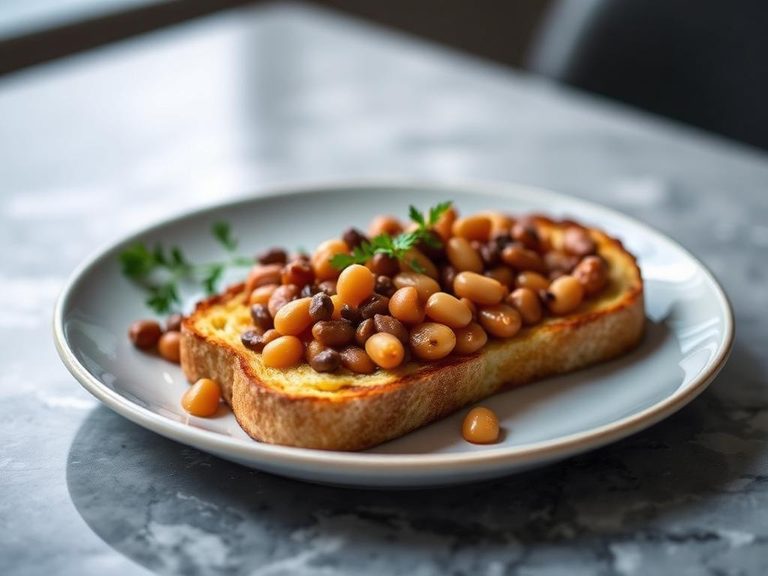
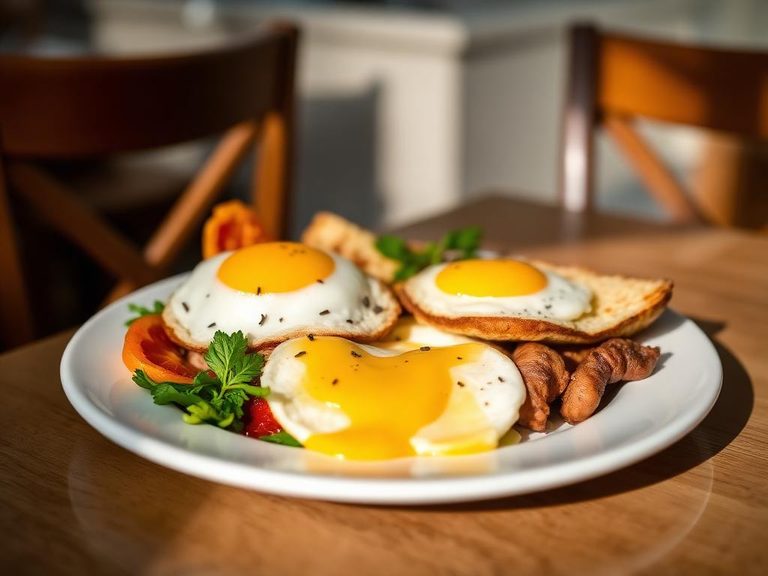
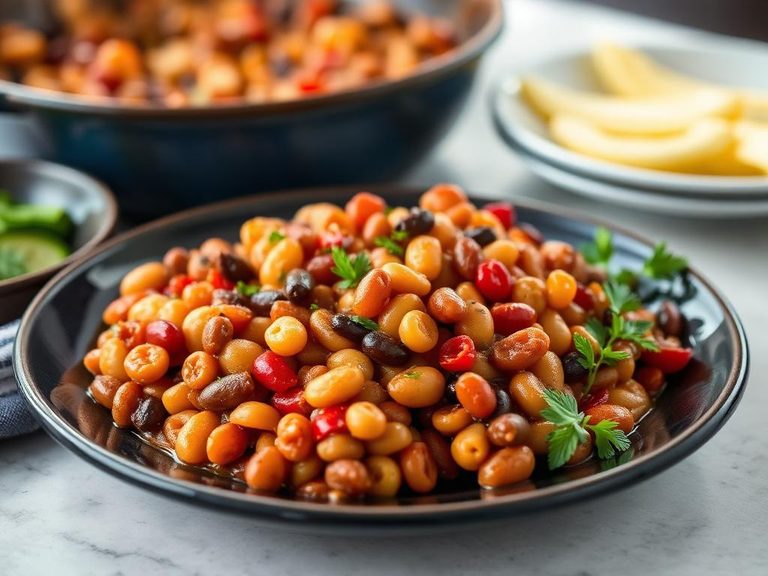
🌍 Where it's eaten
💡 Did you know?
The tradition of baking beans in a molasses or tomato-based sauce in North America was heavily influenced by Native American cooking techniques, which the Pilgrims learned and adapted.
Full nutrition (scales with serving)
| Water | 65.2 g |
| Energy | 155 kcal |
| Energy | 649 kj |
| Protein | 5.5 g |
| Total lipid (fat) | 5.2 g |
| Ash | 2.5 g |
| Carbohydrate, by difference | 21.6 g |
| Fiber, total dietary | 5.5 g |
| Calcium, Ca | 61.0 mg |
| Iron, Fe | 2.0 mg |
| Magnesium, Mg | 43.0 mg |
| Phosphorus, P | 109 mg |
| Potassium, K | 358 mg |
| Sodium, Na | 422 mg |
| Zinc, Zn | 0.73 mg |
| Copper, Cu | 0.16 mg |
| Manganese, Mn | 0.26 mg |
| Selenium, Se | 5.7 ug |
| Vitamin C, total ascorbic acid | 1.1 mg |
| Thiamin | 0.14 mg |
| Riboflavin | 0.05 mg |
| Niacin | 0.41 mg |
| Pantothenic acid | 0.15 mg |
| Vitamin B-6 | 0.09 mg |
| Folate, total | 48.0 ug |
| Folic acid | 0.00 ug |
| Folate, food | 48.0 ug |
| Folate, DFE | 48.0 ug |
| Vitamin B-12 | 0.00 ug |
| Vitamin A, RAE | 0.00 ug |
| Retinol | 0.00 ug |
| Vitamin A, IU | 0.00 iu |
| Vitamin D (D2 + D3), International Units | 0.00 iu |
| Vitamin D (D2 + D3) | 0.00 ug |
Fat & fatty acid profile (per 100g)
| Fatty acids, total saturated | 1.9 g |
| SFA 10:0 | 0.01 g |
| SFA 12:0 | 0.01 g |
| SFA 14:0 | 0.06 g |
| SFA 16:0 | 1.2 g |
| SFA 18:0 | 0.63 g |
| Fatty acids, total monounsaturated | 2.1 g |
| MUFA 16:1 | 0.13 g |
| MUFA 18:1 | 2.0 g |
| MUFA 20:1 | 0.05 g |
| Fatty acids, total polyunsaturated | 0.74 g |
| PUFA 18:2 | 0.59 g |
| PUFA 18:3 | 0.15 g |
| Fatty acids, total trans | 0.00 g |
| Cholesterol | 5.0 mg |
Amino acid profile (per 100g)
| Tryptophan | 0.07 g |
| Threonine | 0.23 g |
| Isoleucine | 0.24 g |
| Leucine | 0.43 g |
| Lysine | 0.38 g |
| Methionine | 0.09 g |
| Cystine | 0.06 g |
| Phenylalanine | 0.29 g |
| Tyrosine | 0.15 g |
| Valine | 0.28 g |
| Arginine | 0.36 g |
| Histidine | 0.15 g |
| Alanine | 0.24 g |
| Aspartic acid | 0.64 g |
| Glutamic acid | 0.84 g |
| Glycine | 0.23 g |
| Proline | 0.24 g |
| Serine | 0.29 g |
FAQ
Are baked beans a good source of protein?
Yes, they are a good plant-based protein source, providing about 5.5 grams per 100 grams, which is beneficial for vegetarians and vegans.
Why are baked beans sometimes considered unhealthy?
Commercially canned baked beans can be very high in added sugar and sodium. Making them at home allows you to control these ingredients significantly.
Can I eat baked beans on a low-carb diet?
Traditional baked beans are relatively high in carbohydrates (about 21.6g per 100g), so they may not fit strict low-carb diets, but they are excellent for balanced or high-fiber eating plans.