

Mollusks, mussel, blue, raw
Whole food · Finfish and Shellfish Products

Photo: Wikipedia
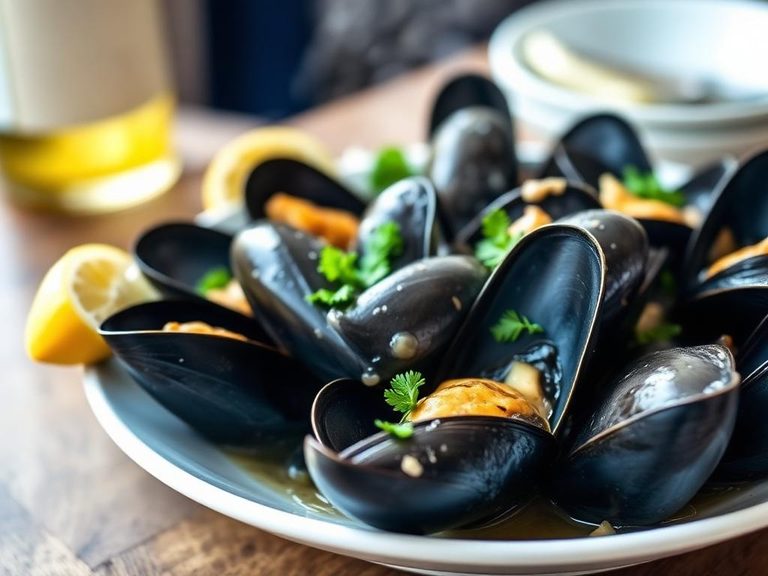
Blue mussels are briny, ocean-sweet bivalves with a tender, slightly chewy texture and a deep orange hue when cooked. They are a lean protein powerhouse, offering nearly 12 grams of protein per 100 grams with minimal fat and calories. Their distinct flavor carries a clean, mineral-rich taste of the sea, making them a staple in coastal cuisines worldwide.
Calorie split: 58% protein · 18% carbs · 24% fat
↓ Full nutrition💚 Why it's loved
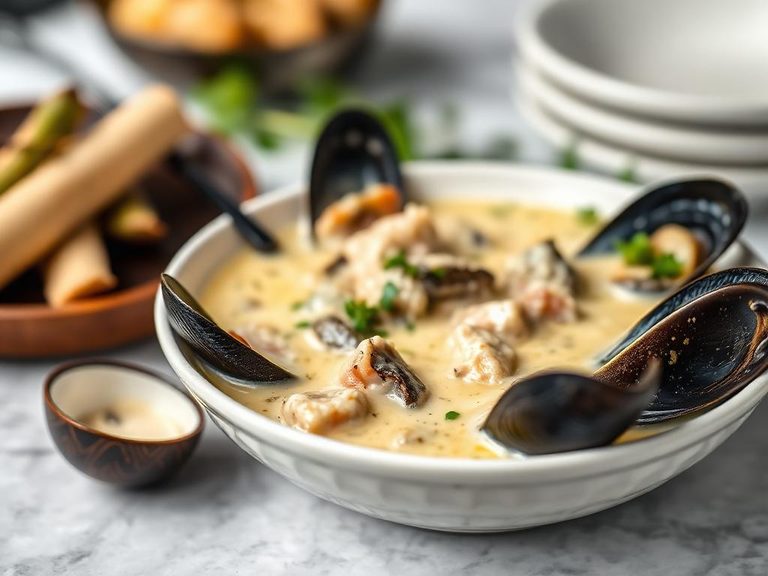
People love blue mussels for their intensely savory, umami-rich flavor that perfectly absorbs broths, wines, and garlic. Their versatility allows them to shine in simple steamed dishes or complex stews, and they hold deep cultural significance in maritime regions from Belgium to New Zealand.
⚠️ Watch-outs & how to enjoy it better
As filter feeders, mussels can accumulate toxins or heavy metals from polluted waters, so sourcing from clean, reputable farms or harvesters is crucial. They are also a common shellfish allergen. To mitigate any potential oceanic 'muddiness,' purge them in cold salted water for 20-30 minutes before cooking to expel sand.
Key benefits
- Excellent source of high-quality, complete protein
- Rich in vitamin B12, essential for nerve function
- Good source of manganese, supporting bone health
- Contains selenium, an important antioxidant mineral
- Low in calories and saturated fat
🍽️ Popular dishes
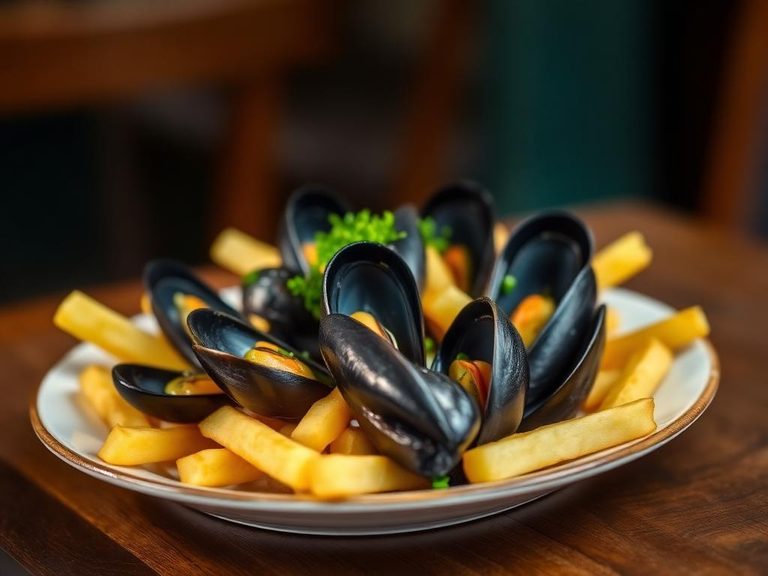
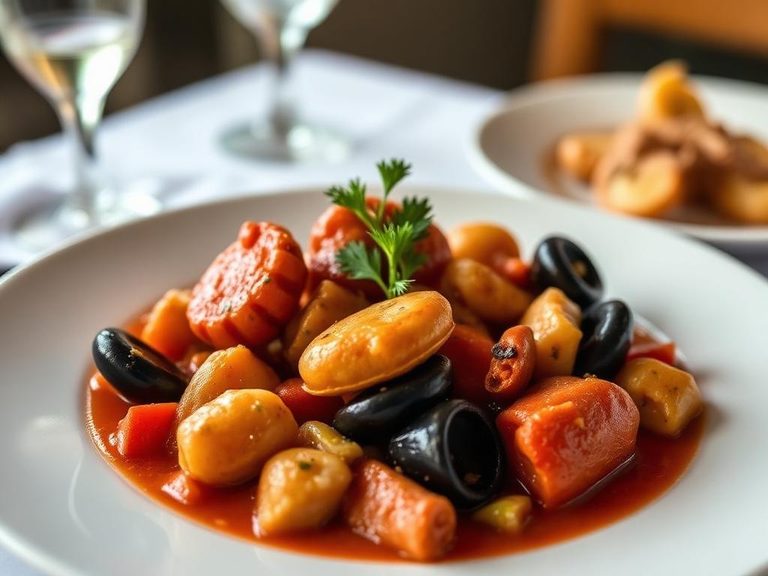
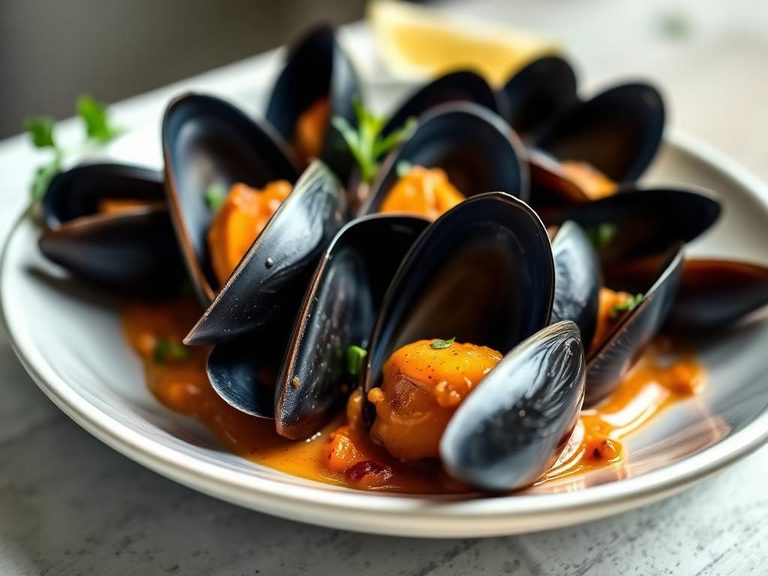
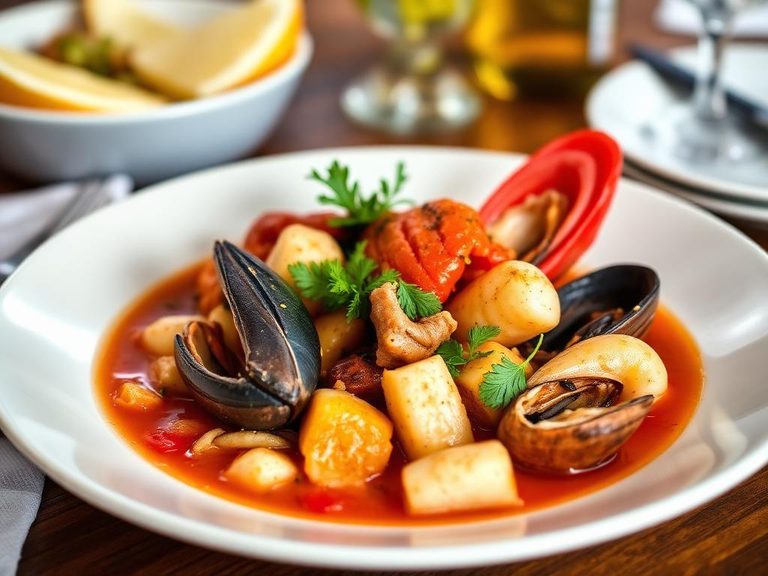
🌍 Where it's eaten
💡 Did you know?
A single blue mussel can filter up to 10 gallons (about 38 liters) of water per day, helping to clarify and clean its marine environment.
Full nutrition (USDA data · scales with serving)
| Water | 80.6 g |
| Energy | 86.0 kcal |
| Energy | 360 kj |
| Protein | 11.9 g |
| Total lipid (fat) | 2.2 g |
| Ash | 1.6 g |
| Carbohydrate, by difference | 3.7 g |
| Fiber, total dietary | 0.00 g |
| Total Sugars | 0.00 g |
| Calcium, Ca | 26.0 mg |
| Iron, Fe | 4.0 mg |
| Magnesium, Mg | 34.0 mg |
| Phosphorus, P | 197 mg |
| Potassium, K | 320 mg |
| Sodium, Na | 286 mg |
| Zinc, Zn | 1.6 mg |
| Copper, Cu | 0.09 mg |
| Manganese, Mn | 3.4 mg |
| Selenium, Se | 44.8 ug |
| Vitamin C, total ascorbic acid | 8.0 mg |
| Thiamin | 0.16 mg |
| Riboflavin | 0.21 mg |
| Niacin | 1.6 mg |
| Pantothenic acid | 0.50 mg |
| Vitamin B-6 | 0.05 mg |
| Folate, total | 42.0 ug |
| Folic acid | 0.00 ug |
| Folate, food | 42.0 ug |
| Folate, DFE | 42.0 ug |
| Choline, total | 65.0 mg |
| Vitamin B-12 | 12.0 ug |
| Vitamin B-12, added | 0.00 ug |
| Vitamin A, RAE | 48.0 ug |
| Retinol | 48.0 ug |
| Carotene, beta | 0.00 ug |
| Carotene, alpha | 0.00 ug |
| Cryptoxanthin, beta | 0.00 ug |
| Vitamin A, IU | 160 iu |
| Lycopene | 0.00 ug |
| Lutein + zeaxanthin | 0.00 ug |
| Vitamin E (alpha-tocopherol) | 0.55 mg |
| Vitamin E, added | 0.00 mg |
| Tocopherol, beta | 0.00 mg |
| Tocopherol, gamma | 0.02 mg |
| Tocopherol, delta | 0.00 mg |
| Tocotrienol, alpha | 0.00 mg |
| Tocotrienol, beta | 0.00 mg |
| Tocotrienol, gamma | 0.00 mg |
| Vitamin D (D2 + D3), International Units | 0.00 iu |
| Vitamin D (D2 + D3) | 0.00 ug |
| Vitamin D3 (cholecalciferol) | 0.00 ug |
| Vitamin K (phylloquinone) | 0.10 ug |
| Alcohol, ethyl | 0.00 g |
| Caffeine | 0.00 mg |
| Theobromine | 0.00 mg |
Fat & fatty acid profile (per 100g)
| Fatty acids, total saturated | 0.42 g |
| SFA 4:0 | 0.00 g |
| SFA 6:0 | 0.00 g |
| SFA 8:0 | 0.00 g |
| SFA 10:0 | 0.00 g |
| SFA 12:0 | 0.00 g |
| SFA 14:0 | 0.06 g |
| SFA 16:0 | 0.29 g |
| SFA 18:0 | 0.07 g |
| Fatty acids, total monounsaturated | 0.51 g |
| MUFA 16:1 | 0.14 g |
| MUFA 18:1 | 0.20 g |
| MUFA 20:1 | 0.14 g |
| MUFA 22:1 | 0.03 g |
| Fatty acids, total polyunsaturated | 0.61 g |
| PUFA 18:2 | 0.02 g |
| PUFA 18:3 | 0.02 g |
| PUFA 18:4 | 0.04 g |
| PUFA 20:4 | 0.07 g |
| PUFA 20:5 n-3 (EPA) | 0.19 g |
| PUFA 22:5 n-3 (DPA) | 0.02 g |
| PUFA 22:6 n-3 (DHA) | 0.25 g |
| Cholesterol | 28.0 mg |
Amino acid profile (per 100g)
| Tryptophan | 0.13 g |
| Threonine | 0.51 g |
| Isoleucine | 0.52 g |
| Leucine | 0.84 g |
| Lysine | 0.89 g |
| Methionine | 0.27 g |
| Cystine | 0.16 g |
| Phenylalanine | 0.43 g |
| Tyrosine | 0.38 g |
| Valine | 0.52 g |
| Arginine | 0.87 g |
| Histidine | 0.23 g |
| Alanine | 0.72 g |
| Aspartic acid | 1.1 g |
| Glutamic acid | 1.6 g |
| Glycine | 0.74 g |
| Proline | 0.49 g |
| Serine | 0.53 g |
FAQ
How do I know if a raw mussel is safe to eat?
The shell should be tightly closed or close when tapped. Discard any that remain open after tapping. After cooking, discard any mussels that did not open.
Do I need to debeard mussels?
Yes. The 'beard' (byssus thread) is a fibrous filament used by the mussel to attach to surfaces. Pinch it firmly and pull it towards the hinge of the shell to remove before cooking.
What's the best way to store fresh mussels?
Keep them in the refrigerator in an open container covered with a damp cloth or paper towel. Do not seal them in an airtight bag or store them in water, as they need to breathe. Use within 1-2 days of purchase.
Nutrient density (calculated · NRF9.3)
Nutrient Rich Foods index: beneficial nutrients (protein, fiber, vitamins, minerals) minus saturated fat, added sugar & sodium, per 100 kcal.
NRF9.3 index — Fulgoni, Keast & Drewnowski, 2009. Computed from USDA nutrients.
Weight-loss friendliness (composite index)
Energy density 0.86 kcal/g · 55% calories from protein · 0.0 g fiber · 0.0 g sugar per 100 g.
Composite of energy density (Rolls et al., 1999), protein & fiber satiety, minus sugar. A calculated heuristic — ranks satiety-per-calorie, not a clinical measure.
Dietary load (calculated from USDA values)
Potential renal acid load. Positive = acid-forming, negative = alkaline-forming.
Sodium-to-potassium ratio: 0.89 (lower is better — aim for ≤ 1)
Sodium:potassium per WHO potassium guidance. Computed from USDA nutrients.