

Jams, preserves, marmalades, sweetened with fruit juice
Whole food · Sweets

Photo: Wikipedia
This is a fruit spread where the sweetness comes entirely from the fruit's own juice, not added refined sugar. The texture is typically thick and spreadable, with a vibrant, concentrated fruit flavor that can range from tart to deeply sweet. Nutritionally, it's a source of quick energy from carbohydrates, primarily natural sugars.
Calorie split: 0% protein · 100% carbs · 0% fat
↓ Full nutrition💚 Why it's loved
People love it for delivering a pure, intense fruit taste that feels both indulgent and slightly more wholesome than sugar-laden versions. Its versatility makes it a beloved companion for breakfast toast, a filling for pastries, or a glaze for meats.
⚠️ Watch-outs & how to enjoy it better
The high natural sugar content (42g per 100g) can cause rapid blood-sugar spikes, making it unsuitable for diabetics or those managing sugar intake. To counteract this, pair it with protein or healthy fats (e.g., on whole-grain toast with nut butter) and practice strict portion control.
Key benefits
- Provides quick energy from natural fruit sugars
- Contains small amounts of dietary fiber from fruit pulp
- Offers a concentrated source of fruit flavor without added fats
- Can be a way to preserve seasonal fruit flavors
- Often contains more fruit content than conventional jams
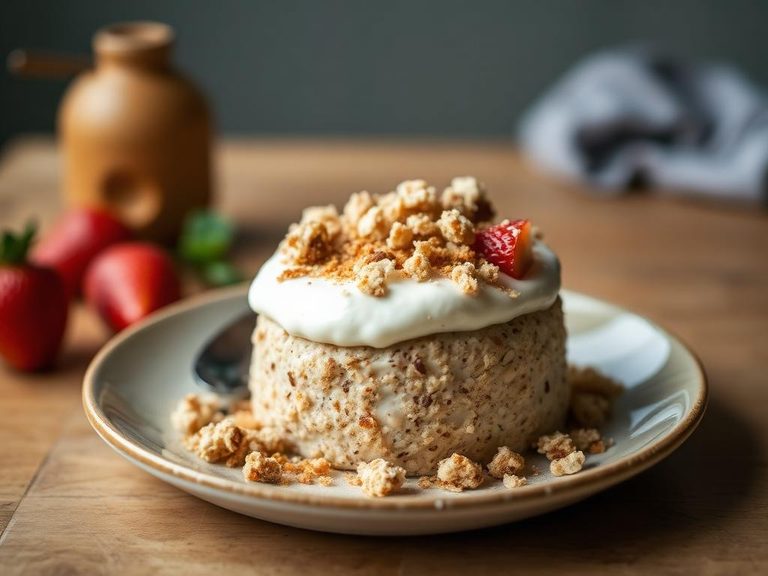
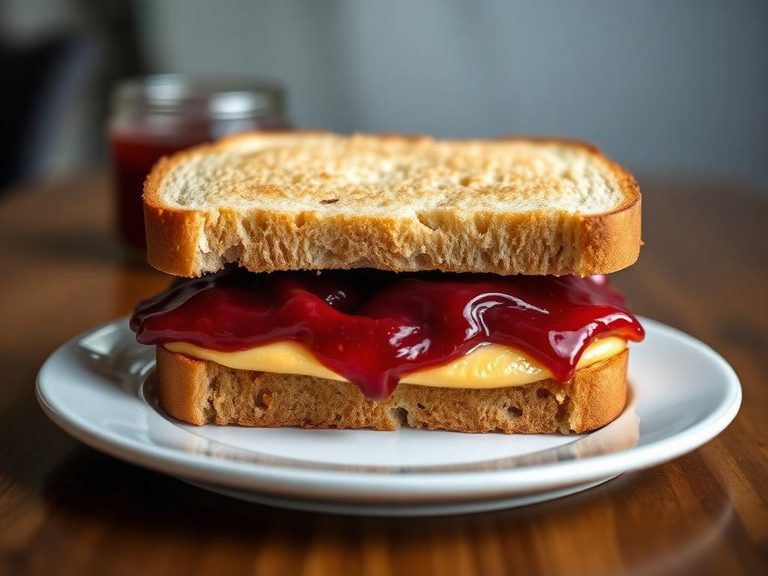
🍽️ Popular dishes
🌍 Where it's eaten
💡 Did you know?
The legal definition of 'jam' in the EU requires a minimum fruit content of 35%, but fruit-juice-sweetened versions often exceed this, sometimes containing over 50% fruit.
Full nutrition (USDA data · scales with serving)
| Water | 46.8 g |
| Energy | 212 kcal |
| Energy | 886 kj |
| Protein | 0.00 g |
| Total lipid (fat) | 0.00 g |
| Ash | 0.23 g |
| Carbohydrate, by difference | 52.9 g |
| Fiber, total dietary | 0.90 g |
| Total Sugars | 42.0 g |
| Calcium, Ca | 11.0 mg |
| Iron, Fe | 0.34 mg |
| Magnesium, Mg | 5.0 mg |
| Phosphorus, P | 6.0 mg |
| Potassium, K | 65.0 mg |
| Sodium, Na | 0.00 mg |
| Zinc, Zn | 0.20 mg |
| Copper, Cu | 0.03 mg |
| Manganese, Mn | 0.16 mg |
| Selenium, Se | 0.80 ug |
| Fluoride, F | 1.1 ug |
| Vitamin C, total ascorbic acid | 18.1 mg |
| Thiamin | 0.03 mg |
| Riboflavin | 0.02 mg |
| Niacin | 0.20 mg |
| Pantothenic acid | 0.05 mg |
| Vitamin B-6 | 0.01 mg |
| Folate, total | 7.0 ug |
| Folic acid | 0.00 ug |
| Folate, food | 7.0 ug |
| Folate, DFE | 7.0 ug |
| Choline, total | 2.5 mg |
| Betaine | 0.00 mg |
| Vitamin B-12 | 0.00 ug |
| Vitamin B-12, added | 0.00 ug |
| Vitamin A, RAE | 1.0 ug |
| Retinol | 0.00 ug |
| Carotene, beta | 12.0 ug |
| Carotene, alpha | 0.00 ug |
| Cryptoxanthin, beta | 0.00 ug |
| Vitamin A, IU | 20.0 iu |
| Lycopene | 0.00 ug |
| Lutein + zeaxanthin | 12.0 ug |
| Vitamin E (alpha-tocopherol) | 0.13 mg |
| Vitamin E, added | 0.00 mg |
| Tocopherol, beta | 0.00 mg |
| Tocopherol, gamma | 0.00 mg |
| Tocopherol, delta | 0.00 mg |
| Tocotrienol, alpha | 0.00 mg |
| Tocotrienol, beta | 0.00 mg |
| Tocotrienol, gamma | 0.00 mg |
| Vitamin D (D2 + D3), International Units | 0.00 iu |
| Vitamin D (D2 + D3) | 0.00 ug |
| Vitamin K (phylloquinone) | 1.0 ug |
| Alcohol, ethyl | 0.00 g |
| Caffeine | 0.00 mg |
| Theobromine | 0.00 mg |
Fat & fatty acid profile (per 100g)
| Fatty acids, total saturated | 0.00 g |
| SFA 4:0 | 0.00 g |
| SFA 6:0 | 0.00 g |
| SFA 8:0 | 0.00 g |
| SFA 10:0 | 0.00 g |
| SFA 12:0 | 0.00 g |
| SFA 14:0 | 0.00 g |
| SFA 15:0 | 0.00 g |
| SFA 16:0 | 0.00 g |
| SFA 17:0 | 0.00 g |
| SFA 18:0 | 0.00 g |
| SFA 20:0 | 0.00 g |
| SFA 22:0 | 0.00 g |
| Fatty acids, total monounsaturated | 0.00 g |
| MUFA 16:1 | 0.00 g |
| MUFA 18:1 | 0.00 g |
| MUFA 20:1 | 0.00 g |
| MUFA 22:1 | 0.00 g |
| Fatty acids, total polyunsaturated | 0.00 g |
| PUFA 18:2 | 0.00 g |
| PUFA 18:3 | 0.00 g |
| PUFA 18:4 | 0.00 g |
| PUFA 20:4 | 0.00 g |
| PUFA 20:5 n-3 (EPA) | 0.00 g |
| PUFA 22:5 n-3 (DPA) | 0.00 g |
| PUFA 22:6 n-3 (DHA) | 0.00 g |
| Fatty acids, total trans | 0.00 g |
| Cholesterol | 0.00 mg |
Amino acid profile (per 100g)
Estimated from Jams and preserves — USDA does not publish this profile for Jams.
| Tryptophan | 0.01 g |
| Threonine | 0.02 g |
| Isoleucine | 0.02 g |
| Leucine | 0.04 g |
| Lysine | 0.03 g |
| Methionine | 0.00 g |
| Cystine | 0.01 g |
| Phenylalanine | 0.02 g |
| Tyrosine | 0.03 g |
| Valine | 0.02 g |
| Arginine | 0.03 g |
| Histidine | 0.01 g |
| Alanine | 0.04 g |
| Aspartic acid | 0.17 g |
| Glutamic acid | 0.11 g |
| Glycine | 0.03 g |
| Proline | 0.02 g |
| Serine | 0.03 g |
FAQ
How is this different from regular jam?
The key difference is the sweetener. Regular jam uses added cane sugar or corn syrup, while this version uses concentrated fruit juice (like apple or grape) to achieve sweetness, resulting in a different flavor profile and sugar source.
Is it healthier than sugar-sweetened jam?
It's a nuanced comparison. It avoids refined sugar and may have a slightly lower glycemic impact due to the presence of fruit fibers and fructose, but the total sugar content is still very high. It's best viewed as a 'less processed' option rather than a health food.
Why does it sometimes have a runnier texture?
Without the gelling assistance of high-sugar concentration, fruit-juice-sweetened spreads rely more on natural pectin from the fruit and sometimes added pectin. Variations in fruit pectin levels can lead to a softer set compared to traditional jams.
Nutrient density (calculated · NRF9.3)
Nutrient Rich Foods index: beneficial nutrients (protein, fiber, vitamins, minerals) minus saturated fat, added sugar & sodium, per 100 kcal.
NRF9.3 index — Fulgoni, Keast & Drewnowski, 2009. Computed from USDA nutrients.
Weight-loss friendliness (composite index)
Energy density 2.12 kcal/g · 0% calories from protein · 0.9 g fiber · 42.0 g sugar per 100 g.
Composite of energy density (Rolls et al., 1999), protein & fiber satiety, minus sugar. A calculated heuristic — ranks satiety-per-calorie, not a clinical measure.
Dietary load (calculated from USDA values)
Potential renal acid load. Positive = acid-forming, negative = alkaline-forming.
Sodium-to-potassium ratio: 0.00 (lower is better — aim for ≤ 1)
Sodium:potassium per WHO potassium guidance. Computed from USDA nutrients.