

Elk, free range, roast, eye of round, raw (Shoshone Bannock)
Whole food · American Indian/Alaska Native Foods

Photo: Wikipedia
This is a lean, free-range cut of elk, specifically the eye of round, sourced from Shoshone Bannock traditions. It has a deep, gamey flavor with a firm, dense texture that is best when slow-cooked or roasted to prevent toughness. Nutritionally, it is an exceptionally high-protein, virtually fat-free meat, providing nearly 20 grams of protein per 100g with minimal calories.
Calorie split: 81% protein · 0% carbs · 19% fat
↓ Full nutrition💚 Why it's loved
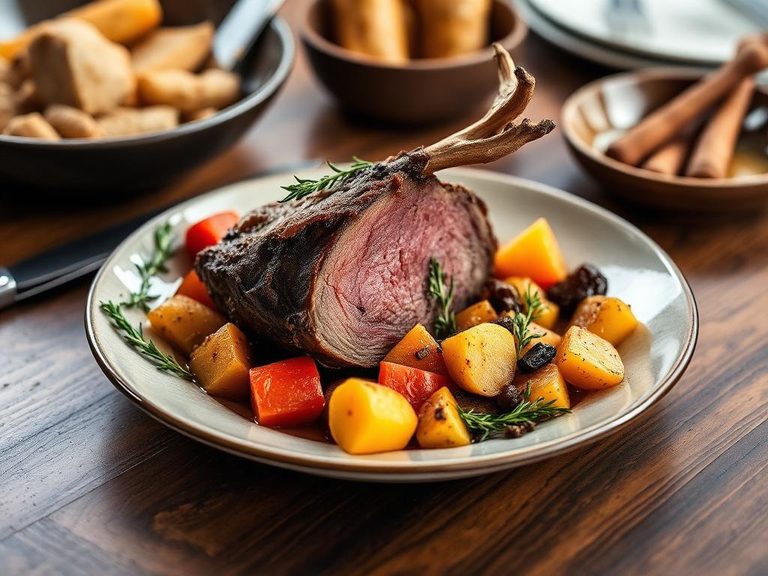
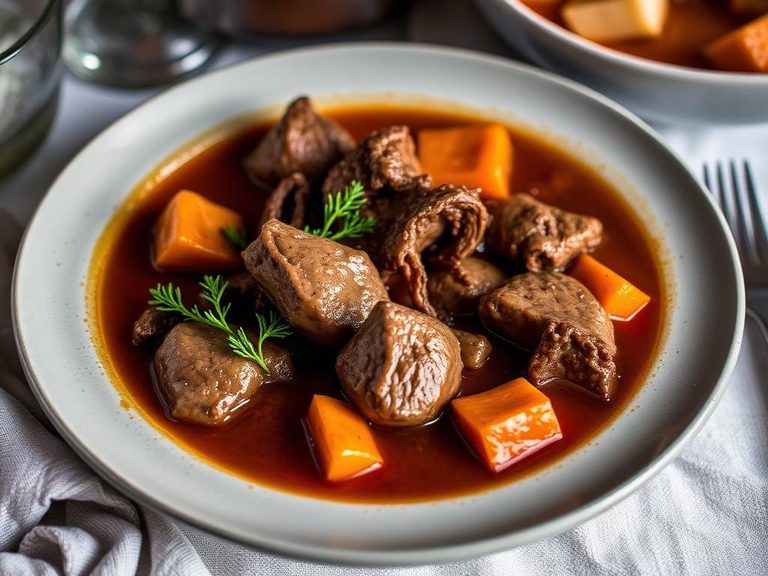
People love it for its rich, robust flavor that is leaner than beef but more flavorful than venison, often described as a clean, earthy taste. Its versatility in roasts and stews makes it a prized ingredient in both traditional and modern game cuisine.
⚠️ Watch-outs & how to enjoy it better
The eye of round is a very lean and tough cut if overcooked, which can lead to a dry, chewy texture. To counteract this, it's best prepared using low-and-slow cooking methods like braising or roasting to an internal temperature of 135°F (57°C) for medium-rare, and it should always be sliced against the grain to maximize tenderness.
Key benefits
- Extremely high in protein for muscle repair and satiety.
- Very low in fat, especially saturated fat, making it heart-healthy.
- Rich in iron and B vitamins like B12 and niacin.
- Free-range sourcing often means a better fatty acid profile and fewer contaminants.
- Naturally low in carbohydrates and sugars.
🍽️ Popular dishes
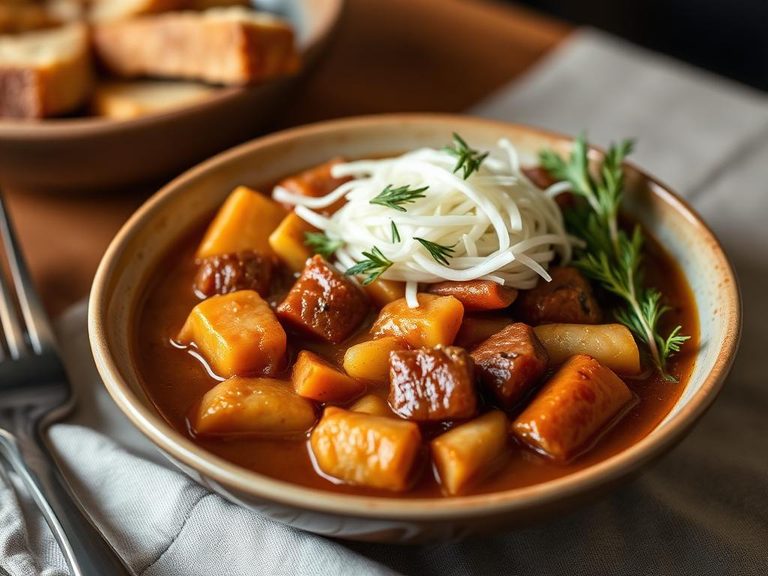
🌍 Where it's eaten
💡 Did you know?
Elk meat is often called 'the other red meat' and is considered a delicacy in many regions, with free-range elk having a diet that can include over 100 different plant species, contributing to its unique flavor profile.
Full nutrition (USDA data · scales with serving)
| Water | 76.5 g |
| Energy | 98.0 kcal |
| Energy | 409 kj |
| Protein | 19.7 g |
| Total lipid (fat) | 2.1 g |
| Ash | 0.94 g |
| Carbohydrate, by difference | 0.00 g |
| Fiber, total dietary | 0.00 g |
| Total Sugars | 0.00 g |
| Sucrose | 0.00 g |
| Glucose | 0.00 g |
| Fructose | 0.00 g |
| Lactose | 0.00 g |
| Maltose | 0.00 g |
| Galactose | 0.00 g |
| Starch | 0.00 g |
| Calcium, Ca | 4.0 mg |
| Iron, Fe | 2.3 mg |
| Magnesium, Mg | 24.0 mg |
| Phosphorus, P | 215 mg |
| Potassium, K | 367 mg |
| Sodium, Na | 43.0 mg |
| Zinc, Zn | 4.2 mg |
| Copper, Cu | 0.14 mg |
| Manganese, Mn | 0.01 mg |
| Selenium, Se | 15.8 ug |
| Vitamin C, total ascorbic acid | 0.00 mg |
| Thiamin | 0.16 mg |
| Riboflavin | 0.27 mg |
| Niacin | 6.6 mg |
| Pantothenic acid | 0.63 mg |
| Vitamin B-6 | 0.89 mg |
| Vitamin B-12 | 1.8 ug |
| Vitamin B-12, added | 0.00 ug |
| Vitamin A, RAE | 0.00 ug |
| Carotene, beta | 0.00 ug |
| Carotene, alpha | 0.00 ug |
| Cryptoxanthin, beta | 0.00 ug |
| Vitamin A, IU | 0.00 iu |
| Lycopene | 0.00 ug |
| Lutein + zeaxanthin | 0.00 ug |
| Alcohol, ethyl | 0.00 g |
| Caffeine | 0.00 mg |
| Theobromine | 0.00 mg |
Fat & fatty acid profile (per 100g)
| Fatty acids, total saturated | 0.83 g |
| SFA 8:0 | 0.00 g |
| SFA 10:0 | 0.00 g |
| SFA 12:0 | 0.00 g |
| SFA 14:0 | 0.07 g |
| SFA 15:0 | 0.01 g |
| SFA 16:0 | 0.58 g |
| SFA 17:0 | 0.01 g |
| SFA 18:0 | 0.15 g |
| SFA 20:0 | 0.00 g |
| SFA 22:0 | 0.00 g |
| Fatty acids, total monounsaturated | 0.90 g |
| MUFA 14:1 | 0.04 g |
| MUFA 15:1 | 0.00 g |
| MUFA 16:1 | 0.31 g |
| MUFA 17:1 | 0.00 g |
| MUFA 18:1 | 0.55 g |
| MUFA 18:1 c | 0.53 g |
| MUFA 20:1 | 0.01 g |
| Fatty acids, total polyunsaturated | 0.12 g |
| PUFA 18:2 | 0.08 g |
| PUFA 18:2 n-6 c,c | 0.07 g |
| PUFA 18:3 | 0.02 g |
| PUFA 18:3 n-3 c,c,c (ALA) | 0.02 g |
| PUFA 18:3 n-6 c,c,c | 0.00 g |
| PUFA 20:2 n-6 c,c | 0.00 g |
| PUFA 20:3 | 0.00 g |
| PUFA 20:4 | 0.01 g |
| Fatty acids, total trans | 0.03 g |
| Fatty acids, total trans-monoenoic | 0.02 g |
| TFA 18:1 t | 0.02 g |
| TFA 18:2 t,t | 0.02 g |
| Fatty acids, total trans-polyenoic | 0.02 g |
Amino acid profile (per 100g)
| Tryptophan | 0.23 g |
| Threonine | 0.75 g |
| Isoleucine | 0.95 g |
| Leucine | 1.8 g |
| Lysine | 1.5 g |
| Methionine | 0.65 g |
| Cystine | 0.25 g |
| Phenylalanine | 0.85 g |
| Tyrosine | 0.75 g |
| Valine | 1.5 g |
| Arginine | 1.3 g |
| Histidine | 0.72 g |
| Alanine | 1.2 g |
| Aspartic acid | 1.9 g |
| Glutamic acid | 3.2 g |
| Glycine | 0.91 g |
| Proline | 0.82 g |
| Serine | 1.0 g |
| Hydroxyproline | 0.05 g |
FAQ
How does elk eye of round differ from beef eye of round?
Elk is significantly leaner and lower in fat than beef, with a more pronounced, gamey flavor. It also tends to be tougher due to its low fat content, requiring careful cooking to avoid dryness.
What is the best way to cook elk eye of round to keep it tender?
Slow-roasting, braising, or sous-vide cooking are ideal. Avoid overcooking; aim for medium-rare (135°F/57°C) and always slice against the grain.
Is elk meat safe for people with dietary restrictions?
Elk is naturally gluten-free, dairy-free, and very low in fat, making it suitable for many diets. However, it's always best to check for any cross-contamination in processing.
Nutrient density (calculated · NRF9.3)
Nutrient Rich Foods index: beneficial nutrients (protein, fiber, vitamins, minerals) minus saturated fat, added sugar & sodium, per 100 kcal.
NRF9.3 index — Fulgoni, Keast & Drewnowski, 2009. Computed from USDA nutrients.
Weight-loss friendliness (composite index)
Energy density 0.98 kcal/g · 81% calories from protein · 0.0 g fiber · 0.0 g sugar per 100 g.
Composite of energy density (Rolls et al., 1999), protein & fiber satiety, minus sugar. A calculated heuristic — ranks satiety-per-calorie, not a clinical measure.
Dietary load (calculated from USDA values)
Potential renal acid load. Positive = acid-forming, negative = alkaline-forming.
Sodium-to-potassium ratio: 0.12 (lower is better — aim for ≤ 1)
Sodium:potassium per WHO potassium guidance. Computed from USDA nutrients.