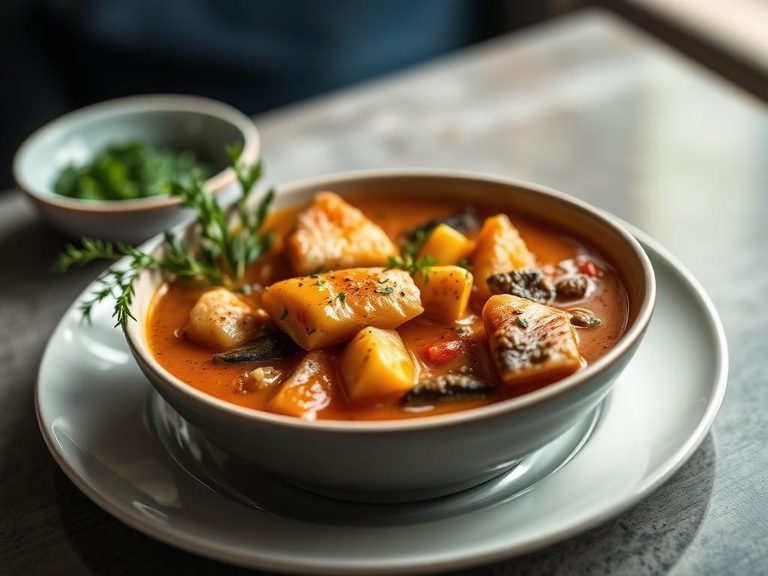
Shoshone Bannock Elk Stew
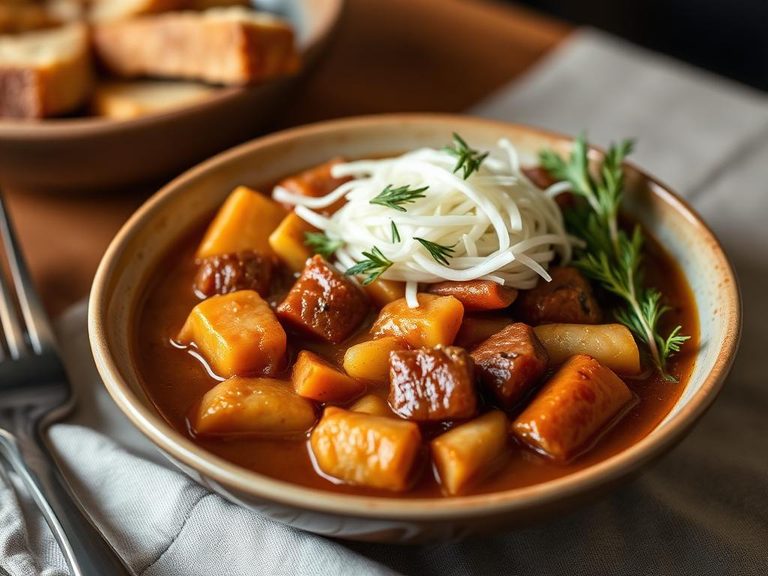
Shoshone Bannock Elk Stew is a hearty, traditional dish from the Shoshone and Bannock peoples of the Great Basin and Intermountain West. It features lean, cubed elk meat simmered with foraged or cultivated root vegetables like wild onions, potatoes, and carrots in a savory broth. The stew reflects a deep connection to the land and seasonal hunting practices.
🍽️ Nutrition at a glance
This stew is exceptionally high in protein due to the lean elk meat, with moderate carbohydrates from the vegetables and minimal added fat. It is a nutrient-dense meal, providing significant iron, B vitamins, and potassium, with a rough calorie estimate of 250-350 per standard serving.
Nutrition breakdown
| Calories | 310 kcal |
| Protein | 32 g |
| Carbs | 18 g |
| Fat | 11 g |
| Fiber | 4 g |
| Sugar | 5 g |
| Sodium | 480 mg |
| Iron | 4.2 mg |
| Potassium | 620 mg |
| Vitamin B12 | 2.8 mcg |
| Zinc | 5.1 mg |
| Niacin (B3) | 8.5 mg |
| Selenium | 22 mcg |
| Phosphorus | 290 mg |
| Vitamin B6 | 0.6 mg |
Per 1.5 cups (360 g) · estimated, varies by recipe
💡 What's interesting
Culturally, this dish represents a sustainable, nose-to-tail approach to food, utilizing lean game meat and local plants. Nutritionally, elk is one of the leanest red meats available, offering a high-protein, low-fat alternative to beef while being rich in conjugated linoleic acid (CLA), a beneficial fatty acid.