Shoshone Bannock Fish Stew
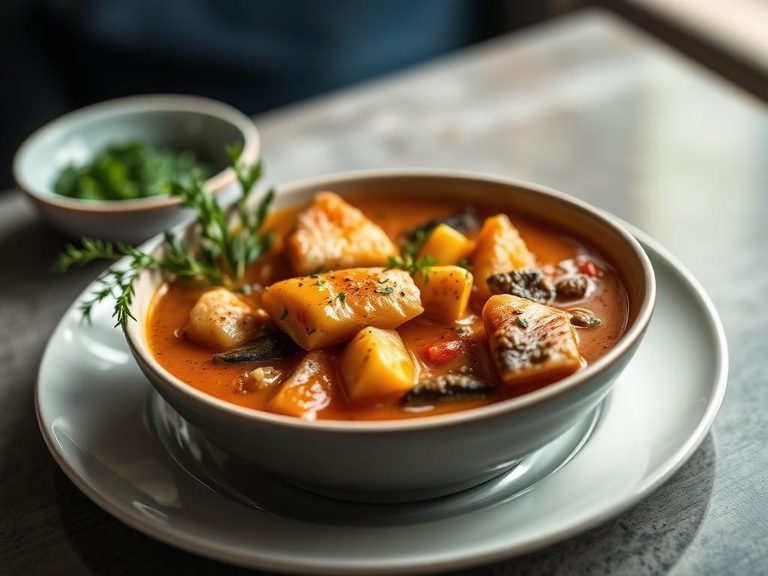
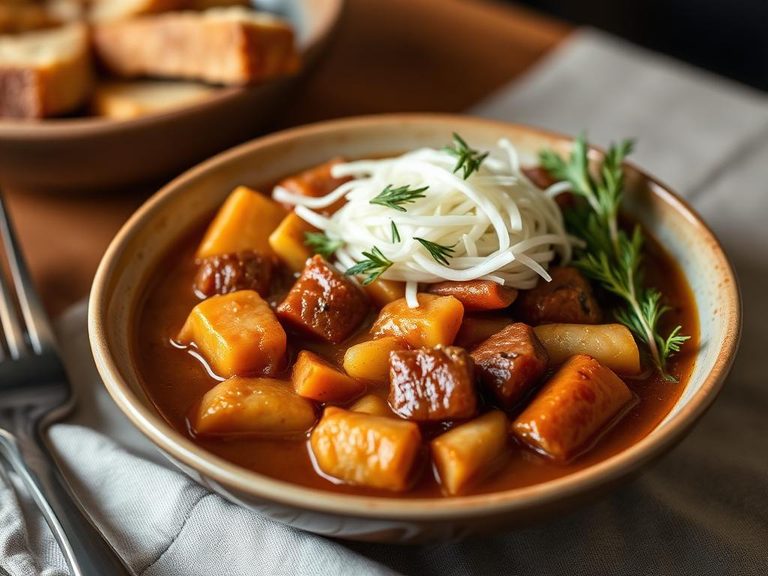
Shoshone Bannock Fish Stew is a traditional Native American dish from the Great Basin region, made by simmering freshwater fish (like trout or suckers) with wild roots, berries, and sometimes cornmeal or flour for thickening. It reflects the resourceful foraging and fishing practices of the Shoshone and Bannock peoples, often prepared in a communal pot over an open fire.
🍽️ Nutrition at a glance
This stew is a balanced, protein-rich meal with moderate carbs from foraged plants or added thickeners, and minimal fat unless cooked with added oil or fatty fish. A typical serving provides essential nutrients like omega-3s, potassium, and B vitamins, with roughly 250-350 calories depending on ingredients.
Nutrition breakdown
| Calories | 300 kcal |
| Protein | 25 g |
| Carbs | 20 g |
| Fat | 10 g |
| Fiber | 4 g |
| Sugar | 3 g |
| Sodium | 450 mg |
| Potassium | 520 mg |
| Phosphorus | 320 mg |
| Vitamin B12 | 4.5 mcg |
| Niacin (B3) | 6 mg |
| Omega-3 fatty acids | 0.8 g |
| Iron | 2.5 mg |
| Magnesium | 45 mg |
| Zinc | 1.8 mg |
Per 1 cup (240 g) · estimated, varies by recipe
💡 What's interesting
Culturally, this dish showcases Indigenous food sovereignty, using locally sourced, seasonal ingredients that connect people to the land. Nutritionally, it's unique for combining lean protein with wild plants, offering a natural source of antioxidants and fiber often missing in modern diets.