

Corn, sweet, yellow, cooked, boiled, drained, without salt
Whole food · Vegetables and Vegetable Products
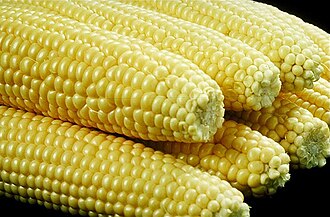
Photo: Wikipedia
Sweet yellow corn, boiled and drained, is a vibrant, plump kernel that bursts with a juicy, starchy sweetness and a satisfying, tender bite. It's a naturally low-fat, fiber-rich source of energy, delivering a notable amount of carbohydrates and a touch of plant-based protein in every serving.
Calorie split: 12% protein · 76% carbs · 12% fat
↓ Full nutrition💚 Why it's loved
People love it for its comforting, sun-sweet flavor and the satisfying pop of its kernels, which make it a joyful addition to countless meals. Its incredible versatility allows it to shine in everything from simple side dishes to complex salads, salsas, and baked goods.
⚠️ Watch-outs & how to enjoy it better
The high carbohydrate content can cause blood sugar spikes for some individuals, and it's a common allergen for those with corn sensitivities. To mitigate blood sugar impact, pair it with a source of protein (like beans or meat) or healthy fat (like avocado or olive oil) to slow digestion, and practice portion control.
Key benefits
- Good source of dietary fiber for digestive health.
- Provides natural energy from complex carbohydrates.
- Contains essential minerals like magnesium and phosphorus.
- Naturally low in fat and sodium when cooked without salt.
- Offers plant-based protein for a balanced diet.
🍽️ Popular dishes
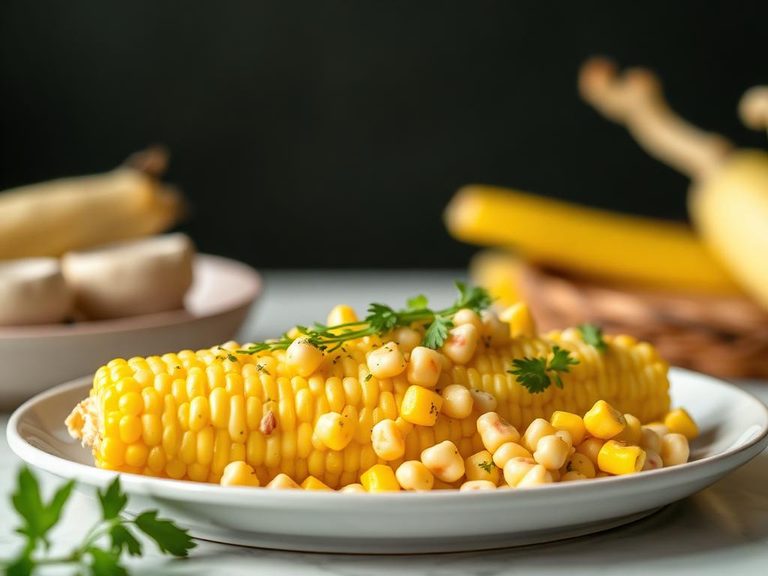
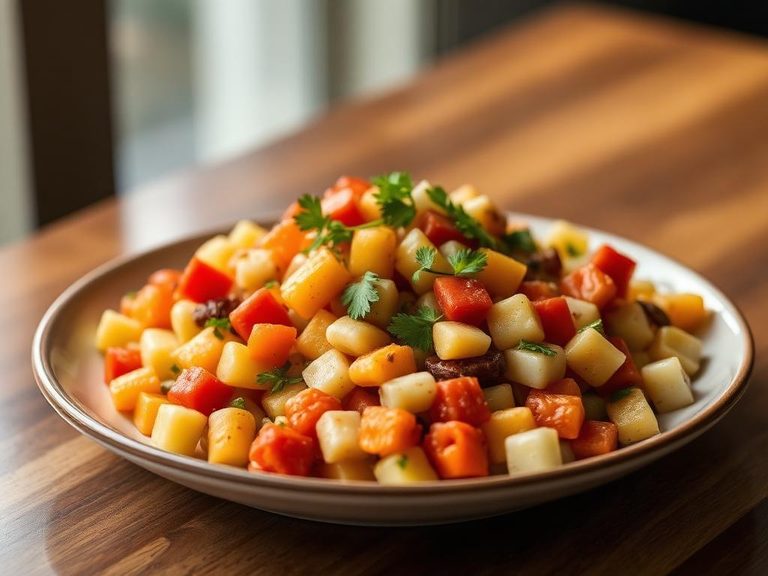
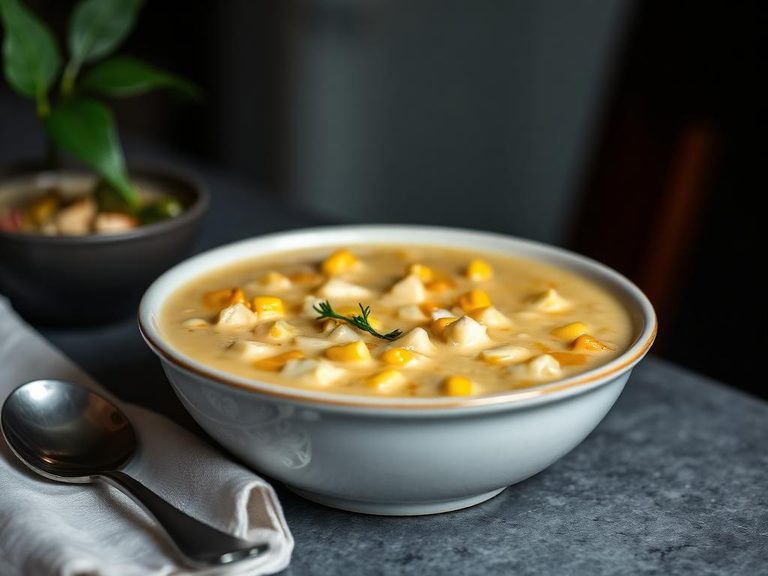
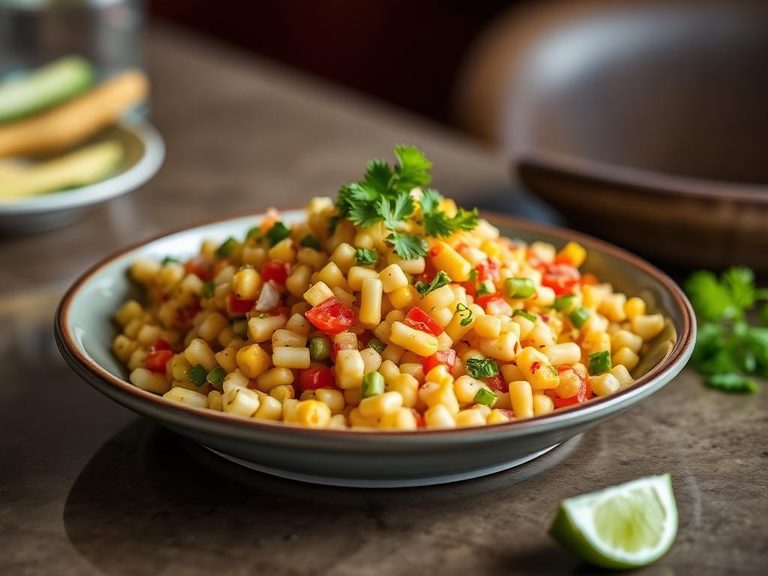
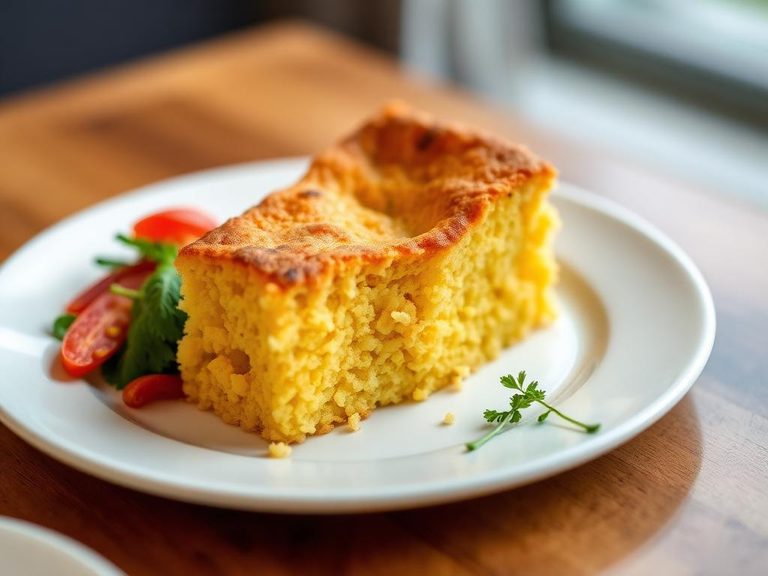
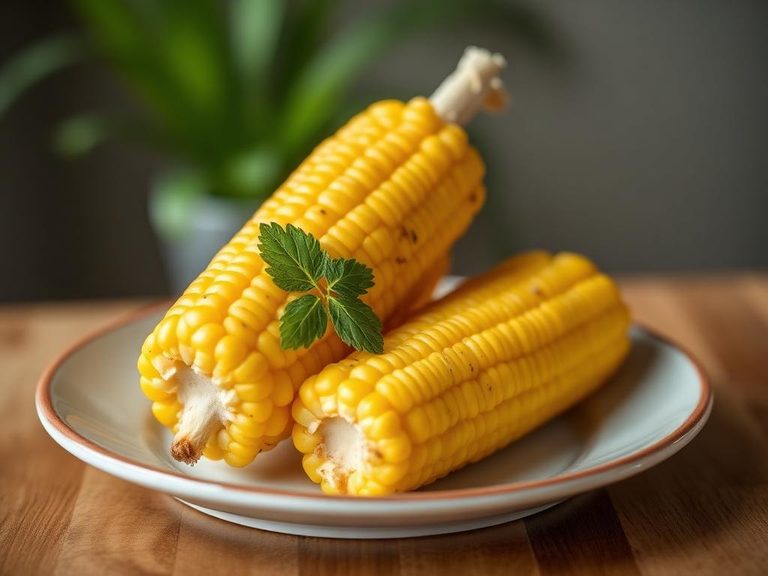
🌍 Where it's eaten
💡 Did you know?
The average ear of corn has about 800 kernels arranged in 16 rows, and each silk thread is attached to a single kernel, guiding pollen for fertilization.
Full nutrition (USDA data · scales with serving)
| Water | 73.4 g |
| Energy | 96.0 kcal |
| Energy | 401 kj |
| Protein | 3.4 g |
| Total lipid (fat) | 1.5 g |
| Ash | 0.71 g |
| Carbohydrate, by difference | 21.0 g |
| Fiber, total dietary | 2.4 g |
| Total Sugars | 4.5 g |
| Sucrose | 2.7 g |
| Glucose | 0.84 g |
| Fructose | 0.79 g |
| Lactose | 0.00 g |
| Maltose | 0.17 g |
| Galactose | 0.00 g |
| Starch | 7.2 g |
| Calcium, Ca | 3.0 mg |
| Iron, Fe | 0.45 mg |
| Magnesium, Mg | 26.0 mg |
| Phosphorus, P | 77.0 mg |
| Potassium, K | 218 mg |
| Sodium, Na | 1.0 mg |
| Zinc, Zn | 0.62 mg |
| Copper, Cu | 0.05 mg |
| Manganese, Mn | 0.17 mg |
| Selenium, Se | 0.20 ug |
| Vitamin C, total ascorbic acid | 5.5 mg |
| Thiamin | 0.09 mg |
| Riboflavin | 0.06 mg |
| Niacin | 1.7 mg |
| Pantothenic acid | 0.79 mg |
| Vitamin B-6 | 0.14 mg |
| Folate, total | 23.0 ug |
| Folic acid | 0.00 ug |
| Folate, food | 23.0 ug |
| Folate, DFE | 23.0 ug |
| Choline, total | 29.1 mg |
| Vitamin B-12 | 0.00 ug |
| Vitamin B-12, added | 0.00 ug |
| Vitamin A, RAE | 13.0 ug |
| Retinol | 0.00 ug |
| Carotene, beta | 66.0 ug |
| Carotene, alpha | 23.0 ug |
| Cryptoxanthin, beta | 161 ug |
| Vitamin A, IU | 263 iu |
| Lycopene | 0.00 ug |
| Lutein + zeaxanthin | 906 ug |
| Vitamin E (alpha-tocopherol) | 0.09 mg |
| Vitamin E, added | 0.00 mg |
| Tocopherol, beta | 0.00 mg |
| Tocopherol, gamma | 0.19 mg |
| Tocopherol, delta | 0.00 mg |
| Vitamin D (D2 + D3), International Units | 0.00 iu |
| Vitamin D (D2 + D3) | 0.00 ug |
| Vitamin K (phylloquinone) | 0.40 ug |
| Alcohol, ethyl | 0.00 g |
| Caffeine | 0.00 mg |
| Theobromine | 0.00 mg |
Fat & fatty acid profile (per 100g)
| Fatty acids, total saturated | 0.20 g |
| SFA 4:0 | 0.00 g |
| SFA 6:0 | 0.00 g |
| SFA 8:0 | 0.00 g |
| SFA 10:0 | 0.00 g |
| SFA 12:0 | 0.00 g |
| SFA 14:0 | 0.00 g |
| SFA 16:0 | 0.18 g |
| SFA 18:0 | 0.01 g |
| Fatty acids, total monounsaturated | 0.37 g |
| MUFA 16:1 | 0.00 g |
| MUFA 18:1 | 0.37 g |
| MUFA 20:1 | 0.00 g |
| MUFA 22:1 | 0.00 g |
| Fatty acids, total polyunsaturated | 0.60 g |
| PUFA 18:2 | 0.59 g |
| PUFA 18:3 | 0.02 g |
| PUFA 18:4 | 0.00 g |
| PUFA 20:4 | 0.00 g |
| PUFA 20:5 n-3 (EPA) | 0.00 g |
| PUFA 22:5 n-3 (DPA) | 0.00 g |
| PUFA 22:6 n-3 (DHA) | 0.00 g |
| Fatty acids, total trans | 0.00 g |
| Cholesterol | 0.00 mg |
Amino acid profile (per 100g)
| Tryptophan | 0.02 g |
| Threonine | 0.13 g |
| Isoleucine | 0.13 g |
| Leucine | 0.36 g |
| Lysine | 0.14 g |
| Methionine | 0.07 g |
| Cystine | 0.03 g |
| Phenylalanine | 0.15 g |
| Tyrosine | 0.13 g |
| Valine | 0.19 g |
| Arginine | 0.14 g |
| Histidine | 0.09 g |
| Alanine | 0.30 g |
| Aspartic acid | 0.25 g |
| Glutamic acid | 0.66 g |
| Glycine | 0.13 g |
| Proline | 0.30 g |
| Serine | 0.16 g |
FAQ
Is boiled corn a good source of vitamins?
Yes, it's a good source of B vitamins like thiamine and folate, as well as vitamin C, though some nutrients can leach into the cooking water. Steaming or microwaving can help retain more.
How does the nutrition change if I add butter or salt?
Adding butter significantly increases the fat and calorie content, while adding salt increases sodium. The base nutrition of the corn itself remains the same.
Is corn considered a vegetable or a grain?
Botanically, it's a fruit (a caryopsis), but culinarily, it's treated as a starchy vegetable. When dried and ground, it becomes a grain (cornmeal).
Nutrient density (calculated · NRF9.3)
Nutrient Rich Foods index: beneficial nutrients (protein, fiber, vitamins, minerals) minus saturated fat, added sugar & sodium, per 100 kcal.
NRF9.3 index — Fulgoni, Keast & Drewnowski, 2009. Computed from USDA nutrients.
Weight-loss friendliness (composite index)
Energy density 0.96 kcal/g · 14% calories from protein · 2.4 g fiber · 4.5 g sugar per 100 g.
Composite of energy density (Rolls et al., 1999), protein & fiber satiety, minus sugar. A calculated heuristic — ranks satiety-per-calorie, not a clinical measure.
Dietary load (calculated from USDA values)
Potential renal acid load. Positive = acid-forming, negative = alkaline-forming.
Sodium-to-potassium ratio: 0.00 (lower is better — aim for ≤ 1)
Sodium:potassium per WHO potassium guidance. Computed from USDA nutrients.