

Cheese, mozzarella, whole milk
Whole food · Dairy and Egg Products
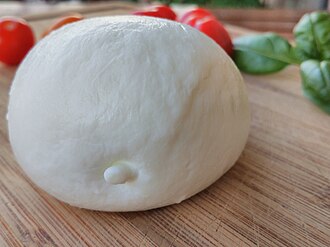
Photo: Wikipedia
Whole milk mozzarella is a soft, elastic Italian cheese made from water buffalo or cow's milk, celebrated for its mild, milky flavor and signature 'pasta filata' (stretched curd) texture that becomes gloriously stringy when melted. It's a protein-packed, high-fat dairy staple, delivering about 22 grams of protein and 22 grams of fat per 100 grams, with virtually no carbs or sugar.
Calorie split: 30% protein · 3% carbs · 67% fat
↓ Full nutrition💚 Why it's loved
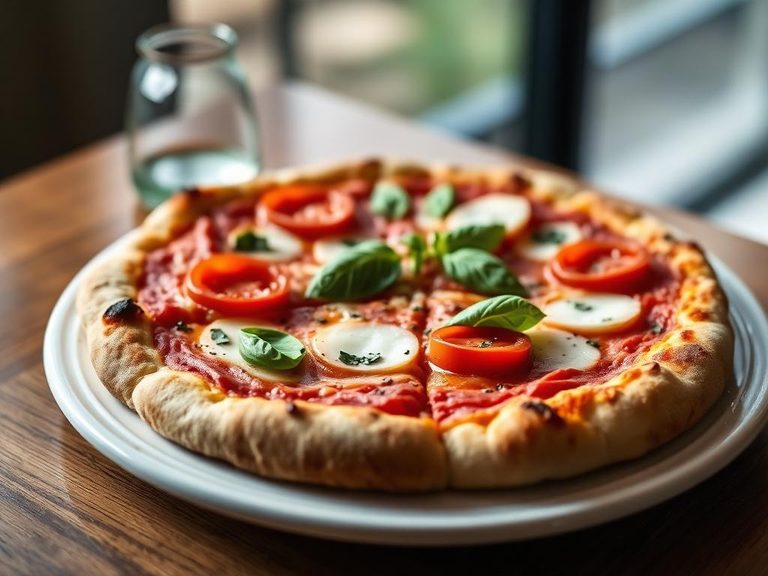
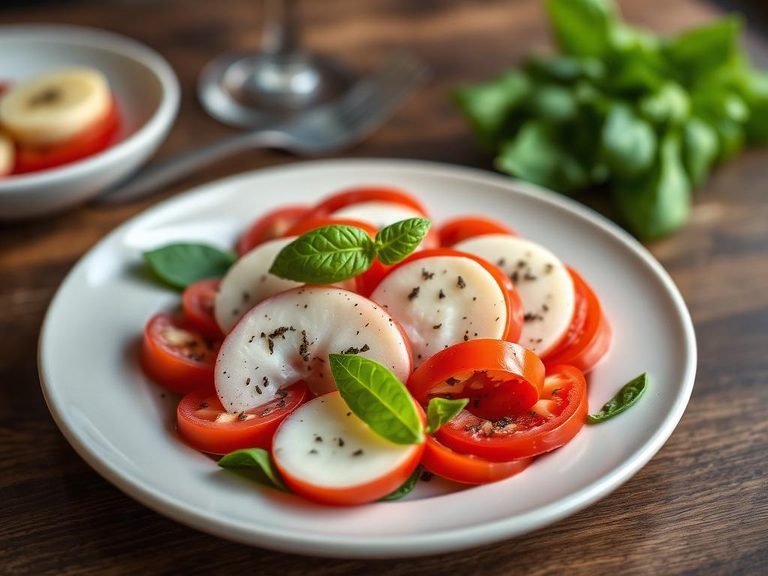
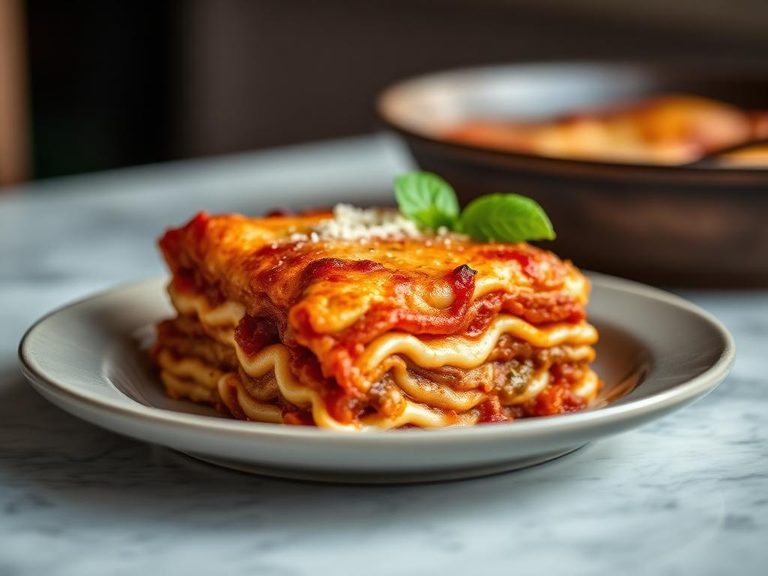
People adore it for its unparalleled melting quality, creating the iconic, stretchy cheese pull on pizzas and in baked dishes. Its fresh, delicate flavor also makes it a versatile star in both hot and cold preparations, from Caprese salad to lasagna.
⚠️ Watch-outs & how to enjoy it better
Its high saturated fat and sodium content can be a concern for heart health or blood pressure management. As a dairy product, it's a common allergen and contains lactose, which may cause digestive issues for some. To counteract, use it as a flavorful accent rather than the main event, opt for part-skim versions occasionally, and pair it with fiber-rich vegetables like in a salad or on a veggie-loaded pizza.
Key benefits
- Excellent source of complete protein for muscle repair and satiety.
- Rich in calcium for bone and dental health.
- Provides conjugated linoleic acid (CLA), a naturally occurring fatty acid.
- Contains phosphorus and zinc for immune function.
- Low in lactose compared to many other cheeses.
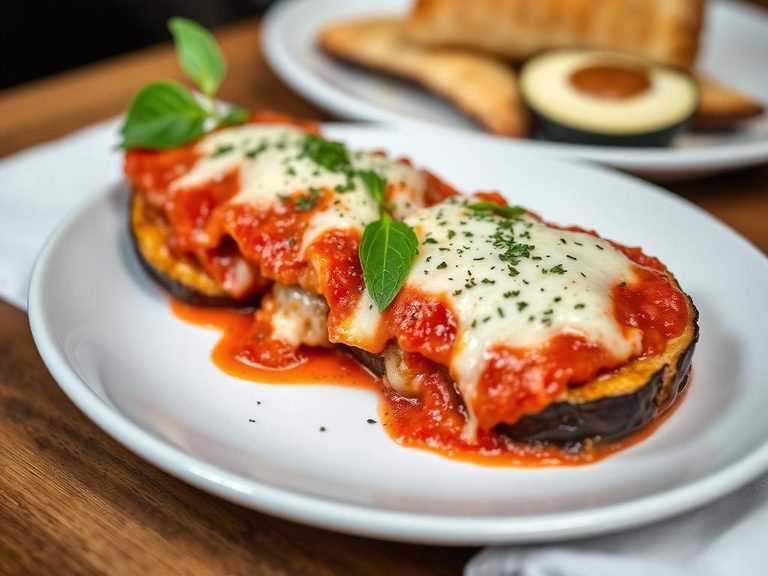
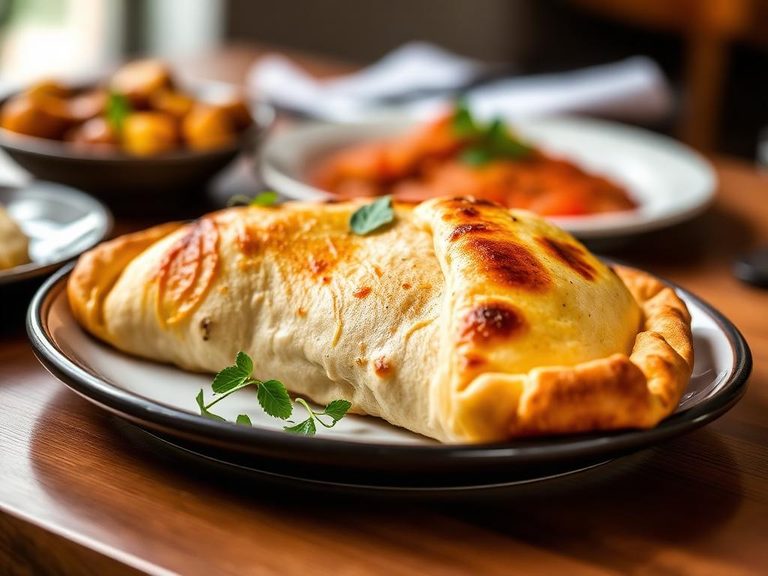
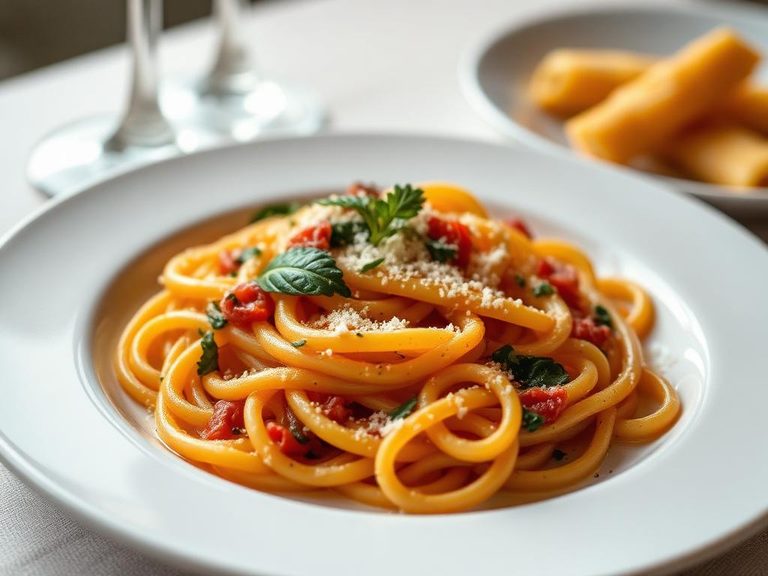
🍽️ Popular dishes
🌍 Where it's eaten
💡 Did you know?
The name 'mozzarella' derives from the Italian word 'mozzare,' meaning 'to cut,' referring to the traditional method of pulling and cutting the hot cheese curd by hand into individual balls.
Full nutrition (USDA data · scales with serving)
| Water | 50.0 g |
| Energy | 299 kcal |
| Energy | 1249 kj |
| Protein | 22.2 g |
| Total lipid (fat) | 22.1 g |
| Ash | 3.3 g |
| Carbohydrate, by difference | 2.4 g |
| Fiber, total dietary | 0.00 g |
| Total Sugars | 0.00 g |
| Sucrose | 0.00 g |
| Glucose | 0.00 g |
| Fructose | 0.00 g |
| Lactose | 0.00 g |
| Maltose | 0.00 g |
| Galactose | 0.00 g |
| Calcium, Ca | 505 mg |
| Iron, Fe | 0.44 mg |
| Magnesium, Mg | 20.0 mg |
| Phosphorus, P | 354 mg |
| Potassium, K | 76.0 mg |
| Sodium, Na | 486 mg |
| Zinc, Zn | 2.9 mg |
| Copper, Cu | 0.01 mg |
| Manganese, Mn | 0.03 mg |
| Selenium, Se | 17.0 ug |
| Vitamin C, total ascorbic acid | 0.00 mg |
| Thiamin | 0.03 mg |
| Riboflavin | 0.28 mg |
| Niacin | 0.10 mg |
| Pantothenic acid | 0.14 mg |
| Vitamin B-6 | 0.04 mg |
| Folate, total | 7.0 ug |
| Folic acid | 0.00 ug |
| Folate, food | 7.0 ug |
| Folate, DFE | 7.0 ug |
| Choline, total | 15.4 mg |
| Vitamin B-12 | 2.3 ug |
| Vitamin B-12, added | 0.00 ug |
| Vitamin A, RAE | 179 ug |
| Retinol | 174 ug |
| Carotene, beta | 57.0 ug |
| Carotene, alpha | 0.00 ug |
| Cryptoxanthin, beta | 0.00 ug |
| Vitamin A, IU | 676 iu |
| Lycopene | 0.00 ug |
| Lutein + zeaxanthin | 0.00 ug |
| Vitamin E (alpha-tocopherol) | 0.19 mg |
| Vitamin E, added | 0.00 mg |
| Vitamin D (D2 + D3), International Units | 16.0 iu |
| Vitamin D (D2 + D3) | 0.40 ug |
| Vitamin D3 (cholecalciferol) | 0.40 ug |
| Vitamin K (phylloquinone) | 2.3 ug |
| Vitamin K (Dihydrophylloquinone) | 0.00 ug |
| Alcohol, ethyl | 0.00 g |
| Caffeine | 0.00 mg |
| Theobromine | 0.00 mg |
Fat & fatty acid profile (per 100g)
| Fatty acids, total saturated | 13.9 g |
| SFA 4:0 | 0.81 g |
| SFA 6:0 | 0.45 g |
| SFA 8:0 | 0.26 g |
| SFA 10:0 | 0.58 g |
| SFA 12:0 | 0.69 g |
| SFA 14:0 | 2.2 g |
| SFA 16:0 | 5.3 g |
| SFA 18:0 | 2.4 g |
| Fatty acids, total monounsaturated | 6.6 g |
| MUFA 16:1 | 0.60 g |
| MUFA 18:1 | 5.6 g |
| MUFA 20:1 | 0.00 g |
| MUFA 22:1 | 0.00 g |
| Fatty acids, total polyunsaturated | 0.77 g |
| PUFA 18:2 | 0.39 g |
| PUFA 18:3 | 0.37 g |
| PUFA 18:4 | 0.00 g |
| PUFA 20:4 | 0.00 g |
| PUFA 20:5 n-3 (EPA) | 0.00 g |
| PUFA 22:5 n-3 (DPA) | 0.00 g |
| PUFA 22:6 n-3 (DHA) | 0.00 g |
| Cholesterol | 79.0 mg |
Amino acid profile (per 100g)
| Tryptophan | 0.52 g |
| Threonine | 0.98 g |
| Isoleucine | 1.1 g |
| Leucine | 1.8 g |
| Lysine | 0.96 g |
| Methionine | 0.52 g |
| Cystine | 0.12 g |
| Phenylalanine | 1.0 g |
| Tyrosine | 1.0 g |
| Valine | 1.3 g |
| Arginine | 0.52 g |
| Histidine | 0.52 g |
| Alanine | 0.71 g |
| Aspartic acid | 1.6 g |
| Glutamic acid | 4.5 g |
| Glycine | 0.52 g |
| Proline | 2.4 g |
| Serine | 0.73 g |
FAQ
What's the difference between fresh mozzarella and low-moisture mozzarella?
Fresh mozzarella is soft, moist, and typically sold in brine, with a delicate flavor ideal for salads. Low-moisture mozzarella is aged, firmer, and shredded or sliced, designed for optimal melting and browning on pizza and in baked dishes.
Is mozzarella a good source of protein?
Yes, it's an excellent source. With about 22 grams of protein per 100 grams, it provides all essential amino acids, making it a high-quality protein choice for supporting muscle health.
Can people with lactose intolerance eat mozzarella?
It can be better tolerated than some cheeses. The cheesemaking process reduces lactose content, and fresh mozzarella typically has about 1-2 grams of lactose per 100g. However, sensitivity varies, so portion control or choosing aged, low-moisture versions may help.
Nutrient density (calculated · NRF9.3)
Nutrient Rich Foods index: beneficial nutrients (protein, fiber, vitamins, minerals) minus saturated fat, added sugar & sodium, per 100 kcal.
NRF9.3 index — Fulgoni, Keast & Drewnowski, 2009. Computed from USDA nutrients.
Weight-loss friendliness (composite index)
Energy density 2.99 kcal/g · 30% calories from protein · 0.0 g fiber · 0.0 g sugar per 100 g.
Composite of energy density (Rolls et al., 1999), protein & fiber satiety, minus sugar. A calculated heuristic — ranks satiety-per-calorie, not a clinical measure.
Dietary load (calculated from USDA values)
Potential renal acid load. Positive = acid-forming, negative = alkaline-forming.
Sodium-to-potassium ratio: 6.39 (lower is better — aim for ≤ 1)
Sodium:potassium per WHO potassium guidance. Computed from USDA nutrients.