

Beef, top loin petite roast, boneless, separable lean only, trimmed to 1/8" fat, select, cooked, roasted
Whole food · Beef Products

Photo: Wikipedia
This is a lean, boneless cut from the top loin of the beef, expertly trimmed to a thin 1/8-inch fat cap and roasted to a juicy, tender finish. The flavor is rich and beefy, with a fine-grained, melt-in-your-mouth texture that's characteristic of premium loin cuts. Nutritionally, it's a protein powerhouse, delivering nearly 30 grams of high-quality protein per 100 grams with minimal fat and virtually no carbohydrates.
Calorie split: 63% protein · 2% carbs · 35% fat
↓ Full nutrition💚 Why it's loved
People adore this cut for its buttery tenderness and clean, pronounced beef flavor that isn't overpowered by fat. It's incredibly versatile for both simple weeknight roasts and elegant holiday centerpieces, embodying classic, celebratory beef cookery.
⚠️ Watch-outs & how to enjoy it better
As a lean roast, it can become dry and tough if overcooked, which is a common pitfall for home cooks. Those monitoring saturated fat intake should be mindful of portion size, and it's a red meat, which some dietary guidelines recommend limiting. To counteract dryness, use a meat thermometer to pull it at 130-135°F for medium-rare, and let it rest thoroughly before slicing against the grain.
Key benefits
- Exceptionally high in complete protein for muscle maintenance and satiety.
- Very low in carbohydrates, making it suitable for low-carb and ketogenic diets.
- Good source of bioavailable iron and zinc.
- Provides B vitamins, especially B12, crucial for nerve function.
- Trimmed to a specific, controlled fat level for consistent nutrition.
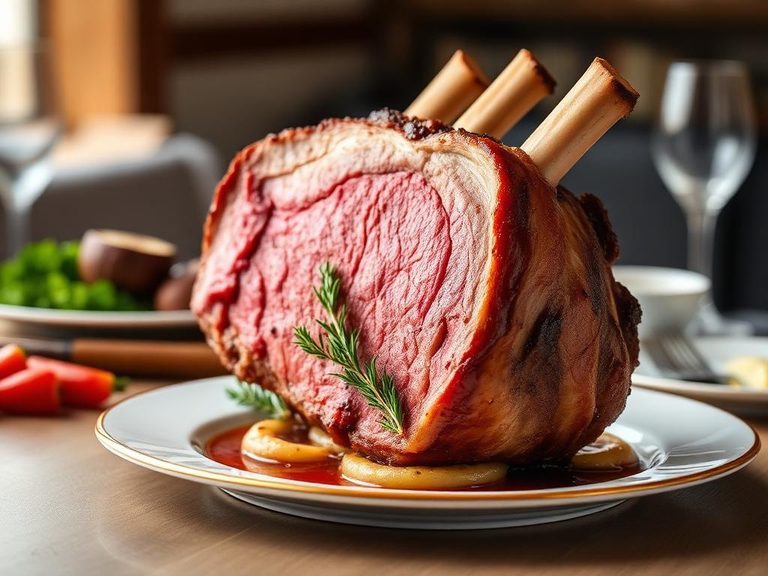
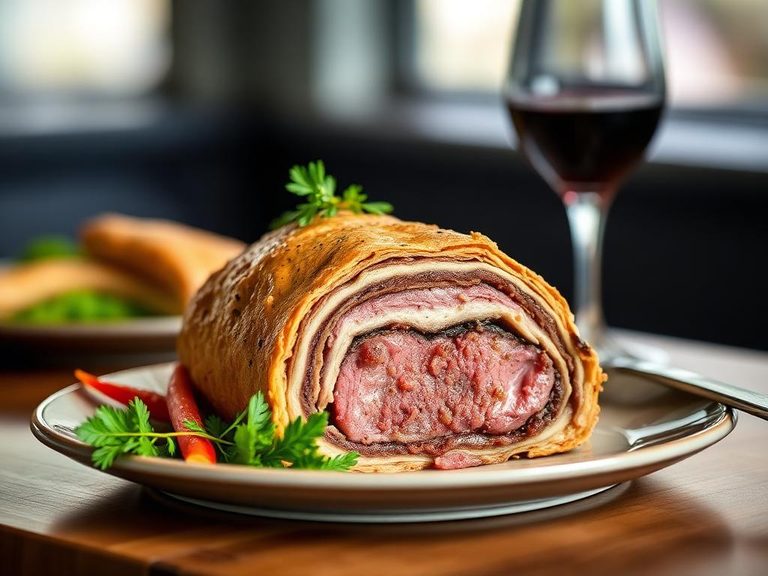
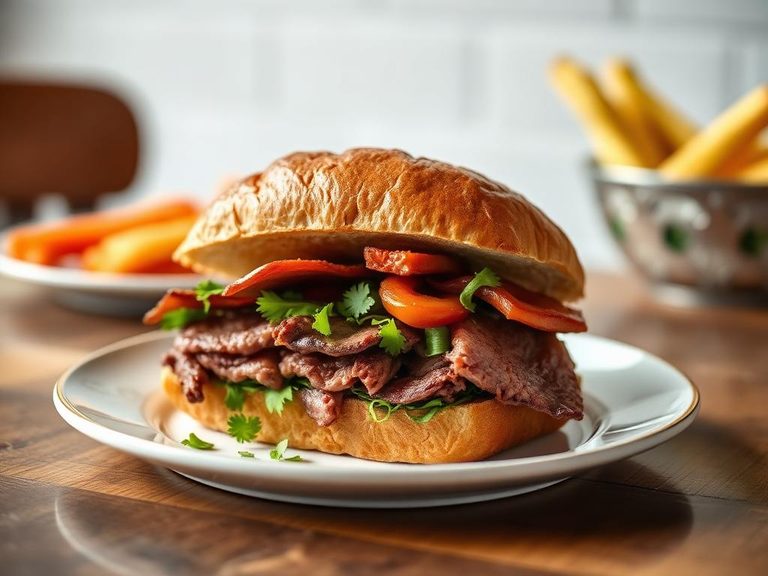
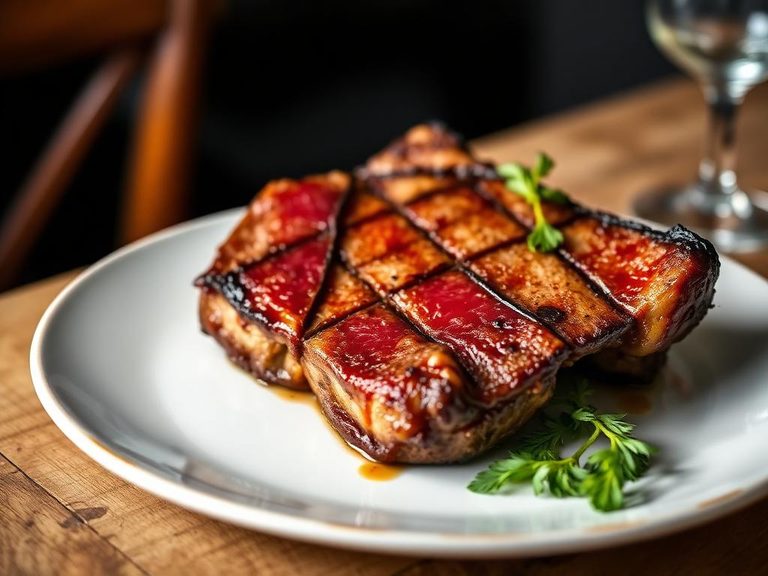
🍽️ Popular dishes

🌍 Where it's eaten
💡 Did you know?
The 'top loin' is the same muscle that, when left bone-in and sliced into thick steaks, becomes the famous and expensive New York Strip or Kansas City Strip steak.
Full nutrition (USDA data · scales with serving)
| Water | 62.7 g |
| Energy | 179 kcal |
| Energy | 751 kj |
| Protein | 28.5 g |
| Total lipid (fat) | 7.0 g |
| Ash | 1.1 g |
| Carbohydrate, by difference | 0.74 g |
| Fiber, total dietary | 0.00 g |
| Total Sugars | 0.00 g |
| Calcium, Ca | 22.0 mg |
| Iron, Fe | 1.9 mg |
| Magnesium, Mg | 26.0 mg |
| Phosphorus, P | 245 mg |
| Potassium, K | 396 mg |
| Sodium, Na | 64.0 mg |
| Zinc, Zn | 5.5 mg |
| Copper, Cu | 0.08 mg |
| Selenium, Se | 33.7 ug |
| Vitamin C, total ascorbic acid | 0.00 mg |
| Thiamin | 0.08 mg |
| Riboflavin | 0.15 mg |
| Niacin | 8.3 mg |
| Vitamin B-6 | 0.63 mg |
| Folate, total | 7.0 ug |
| Folic acid | 0.00 ug |
| Folate, food | 7.0 ug |
| Folate, DFE | 7.0 ug |
| Vitamin B-12 | 4.7 ug |
| Vitamin B-12, added | 0.00 ug |
| Vitamin A, RAE | 2.0 ug |
| Retinol | 2.0 ug |
| Carotene, beta | 0.00 ug |
| Carotene, alpha | 0.00 ug |
| Cryptoxanthin, beta | 0.00 ug |
| Vitamin A, IU | 8.0 iu |
| Lycopene | 0.00 ug |
| Lutein + zeaxanthin | 0.00 ug |
| Vitamin D (D2 + D3), International Units | 3.0 iu |
| Vitamin D (D2 + D3) | 0.10 ug |
| Vitamin D3 (cholecalciferol) | 0.10 ug |
| Vitamin K (phylloquinone) | 1.6 ug |
| Alcohol, ethyl | 0.00 g |
| Caffeine | 0.00 mg |
| Theobromine | 0.00 mg |
Fat & fatty acid profile (per 100g)
| Fatty acids, total saturated | 2.3 g |
| SFA 4:0 | 0.00 g |
| SFA 6:0 | 0.00 g |
| SFA 8:0 | 0.00 g |
| SFA 10:0 | 0.00 g |
| SFA 12:0 | 0.01 g |
| SFA 14:0 | 0.17 g |
| SFA 16:0 | 1.4 g |
| SFA 17:0 | 0.09 g |
| SFA 18:0 | 0.65 g |
| SFA 20:0 | 0.00 g |
| SFA 24:0 | 0.01 g |
| Fatty acids, total monounsaturated | 3.0 g |
| MUFA 14:1 | 0.03 g |
| MUFA 16:1 | 0.18 g |
| MUFA 17:1 | 0.04 g |
| MUFA 18:1 | 2.8 g |
| MUFA 18:1 c | 2.4 g |
| MUFA 20:1 | 0.01 g |
| MUFA 22:1 | 0.00 g |
| Fatty acids, total polyunsaturated | 0.33 g |
| PUFA 18:2 | 0.28 g |
| PUFA 18:2 n-6 c,c | 0.26 g |
| PUFA 18:2 CLAs | 0.02 g |
| PUFA 18:3 | 0.01 g |
| PUFA 18:3 n-6 c,c,c | 0.01 g |
| PUFA 18:4 | 0.00 g |
| PUFA 20:2 n-6 c,c | 0.00 g |
| PUFA 20:4 | 0.04 g |
| PUFA 20:5 n-3 (EPA) | 0.00 g |
| PUFA 22:5 n-3 (DPA) | 0.01 g |
| PUFA 22:6 n-3 (DHA) | 0.00 g |
| Fatty acids, total trans | 0.36 g |
| Fatty acids, total trans-monoenoic | 0.36 g |
| TFA 18:1 t | 0.36 g |
| Cholesterol | 85.0 mg |
Amino acid profile (per 100g)
| Tryptophan | 0.37 g |
| Threonine | 1.6 g |
| Isoleucine | 1.6 g |
| Leucine | 2.9 g |
| Lysine | 3.3 g |
| Methionine | 0.90 g |
| Cystine | 0.34 g |
| Phenylalanine | 1.3 g |
| Tyrosine | 1.3 g |
| Valine | 1.7 g |
| Arginine | 2.3 g |
| Histidine | 1.3 g |
| Alanine | 2.0 g |
| Aspartic acid | 3.3 g |
| Glutamic acid | 5.5 g |
| Glycine | 1.5 g |
| Proline | 1.4 g |
| Serine | 1.4 g |
| Hydroxyproline | 0.14 g |
FAQ
What's the best way to cook this roast to keep it tender?
The key is high-heat searing followed by a lower oven temperature, and most importantly, not overcooking it. Use a meat thermometer and aim for an internal temperature of 130-135°F (54-57°C) for medium-rare, then let it rest for at least 15 minutes before carving.
Is this the same as a tenderloin roast?
No. The top loin (strip loin) has more marbling and a richer beef flavor than the extremely lean tenderloin (filet mignon). The top loin is often considered the best balance of tenderness, flavor, and value for a roast.
Why is it called 'petite roast'?
The 'petite' designation typically refers to a smaller, more compact roast, often cut from the center of the loin, making it ideal for smaller households or as a more manageable centerpiece than a full-sized rib roast.
Nutrient density (calculated · NRF9.3)
Nutrient Rich Foods index: beneficial nutrients (protein, fiber, vitamins, minerals) minus saturated fat, added sugar & sodium, per 100 kcal.
NRF9.3 index — Fulgoni, Keast & Drewnowski, 2009. Computed from USDA nutrients.
Weight-loss friendliness (composite index)
Energy density 1.79 kcal/g · 64% calories from protein · 0.0 g fiber · 0.0 g sugar per 100 g.
Composite of energy density (Rolls et al., 1999), protein & fiber satiety, minus sugar. A calculated heuristic — ranks satiety-per-calorie, not a clinical measure.
Dietary load (calculated from USDA values)
Potential renal acid load. Positive = acid-forming, negative = alkaline-forming.
Sodium-to-potassium ratio: 0.16 (lower is better — aim for ≤ 1)
Sodium:potassium per WHO potassium guidance. Computed from USDA nutrients.