

Beef, loin, top sirloin cap steak, boneless, separable lean and fat, trimmed to 1/8" fat, choice, cooked, grilled
Whole food · Beef Products

Photo: Wikipedia
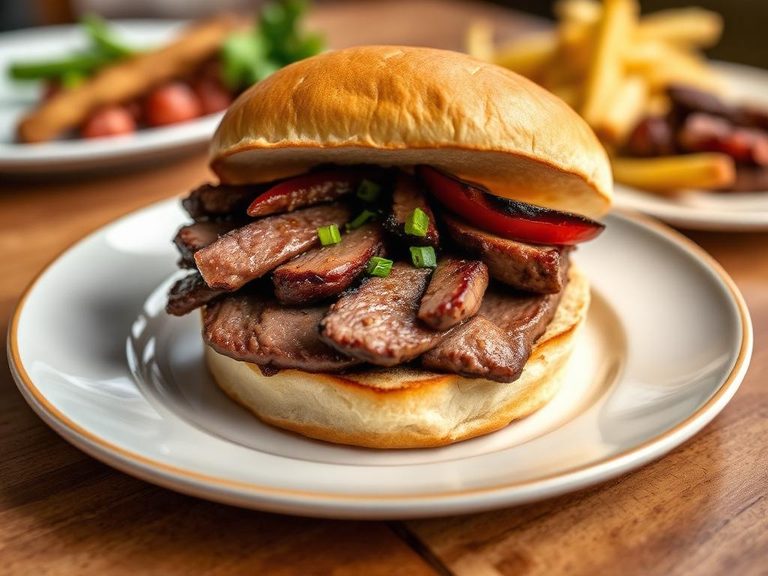
The top sirloin cap, or picanha, is a robust, flavorful cut from the upper rear of the cow, prized for its rich beefiness and a distinctive layer of fat that bastes the meat during grilling. When cooked, it offers a satisfying, slightly chewy texture with a tender, juicy interior, delivering a classic steakhouse experience. Nutritionally, it is a powerhouse of high-quality protein with a moderate fat content, providing substantial energy and essential amino acids.
Calorie split: 44% protein · 2% carbs · 54% fat
↓ Full nutrition💚 Why it's loved
People adore it for its deep, savory beef flavor and the satisfying contrast between the seared exterior and the tender, fatty cap. Its versatility makes it a star in both simple grilled preparations and elaborate dishes, often celebrated in Brazilian churrasco and Argentine asado traditions.
⚠️ Watch-outs & how to enjoy it better
The relatively high fat content can be a concern for those monitoring saturated fat intake, and the cut can become tough if overcooked or sliced against the grain. To mitigate, opt for leaner trim levels, practice portion control, and pair it with fiber-rich vegetables like roasted broccoli or a leafy salad to balance the meal.
Key benefits
- Excellent source of complete protein for muscle repair and satiety
- Rich in bioavailable iron and zinc for immune function
- Provides B vitamins, especially B12, for energy metabolism
- Contains creatine, which may support muscle performance
🍽️ Popular dishes
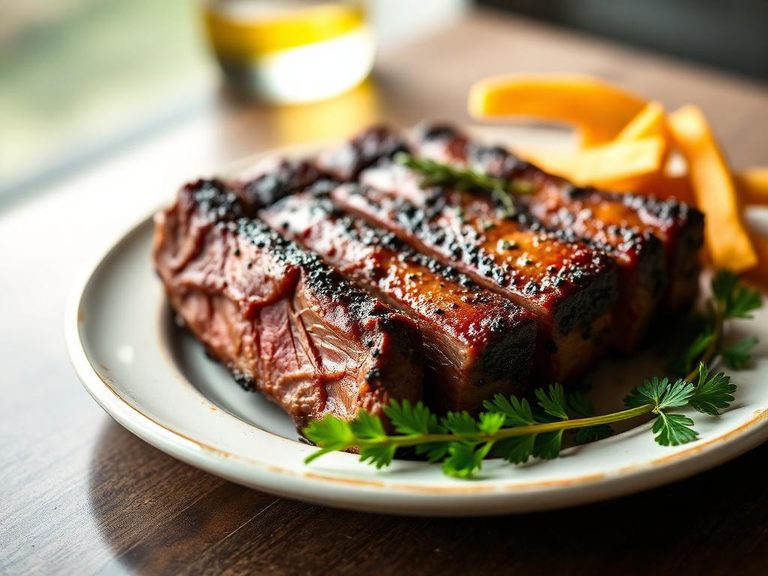
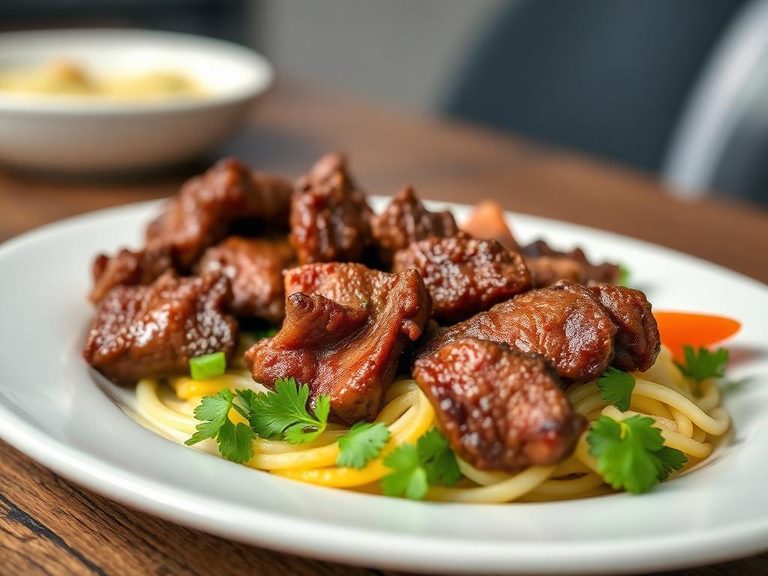
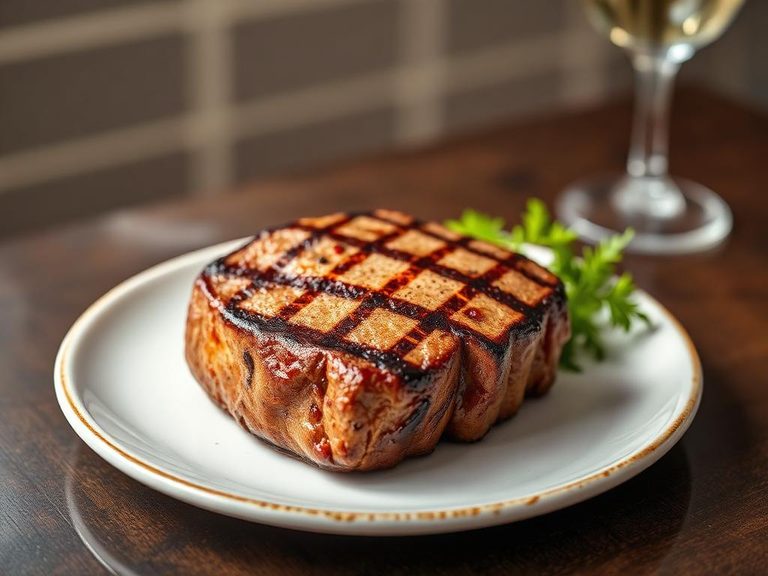
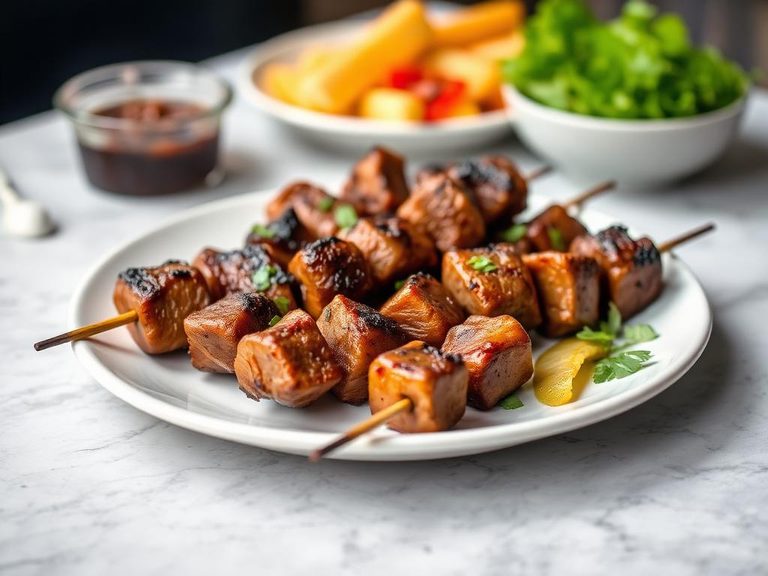
🌍 Where it's eaten
💡 Did you know?
The top sirloin cap is often called 'picanha' in Brazil, where it's considered the king of cuts and is traditionally skewered in a distinctive C-shape on a metal rod for slow roasting over open coals.
Full nutrition (USDA data · scales with serving)
| Water | 57.2 g |
| Energy | 238 kcal |
| Energy | 997 kj |
| Protein | 26.3 g |
| Total lipid (fat) | 14.3 g |
| Ash | 1.1 g |
| Carbohydrate, by difference | 1.1 g |
| Fiber, total dietary | 0.00 g |
| Total Sugars | 0.00 g |
| Calcium, Ca | 7.0 mg |
| Iron, Fe | 3.2 mg |
| Magnesium, Mg | 26.0 mg |
| Phosphorus, P | 231 mg |
| Potassium, K | 368 mg |
| Sodium, Na | 91.0 mg |
| Zinc, Zn | 10.2 mg |
| Copper, Cu | 0.16 mg |
| Selenium, Se | 35.0 ug |
| Vitamin C, total ascorbic acid | 0.00 mg |
| Thiamin | 0.07 mg |
| Riboflavin | 0.26 mg |
| Niacin | 4.0 mg |
| Vitamin B-6 | 0.40 mg |
| Folate, total | 6.0 ug |
| Folic acid | 0.00 ug |
| Folate, food | 6.0 ug |
| Folate, DFE | 6.0 ug |
| Vitamin B-12 | 2.8 ug |
| Vitamin B-12, added | 0.00 ug |
| Vitamin A, RAE | 7.0 ug |
| Retinol | 7.0 ug |
| Carotene, beta | 0.00 ug |
| Carotene, alpha | 0.00 ug |
| Cryptoxanthin, beta | 0.00 ug |
| Vitamin A, IU | 23.0 iu |
| Lycopene | 0.00 ug |
| Lutein + zeaxanthin | 0.00 ug |
| Vitamin D (D2 + D3), International Units | 7.0 iu |
| Vitamin D (D2 + D3) | 0.20 ug |
| Vitamin D3 (cholecalciferol) | 0.20 ug |
| Vitamin K (phylloquinone) | 1.6 ug |
| Alcohol, ethyl | 0.00 g |
| Caffeine | 0.00 mg |
| Theobromine | 0.00 mg |
Fat & fatty acid profile (per 100g)
| Fatty acids, total saturated | 5.1 g |
| SFA 4:0 | 0.00 g |
| SFA 6:0 | 0.00 g |
| SFA 8:0 | 0.00 g |
| SFA 10:0 | 0.01 g |
| SFA 12:0 | 0.01 g |
| SFA 14:0 | 0.34 g |
| SFA 16:0 | 2.9 g |
| SFA 17:0 | 0.15 g |
| SFA 18:0 | 1.7 g |
| SFA 20:0 | 0.00 g |
| SFA 24:0 | 0.01 g |
| Fatty acids, total monounsaturated | 7.1 g |
| MUFA 14:1 | 0.11 g |
| MUFA 16:1 | 0.49 g |
| MUFA 17:1 | 0.16 g |
| MUFA 18:1 | 6.3 g |
| MUFA 18:1 c | 5.6 g |
| MUFA 20:1 | 0.03 g |
| MUFA 22:1 | 0.00 g |
| Fatty acids, total polyunsaturated | 0.52 g |
| PUFA 18:2 | 0.44 g |
| PUFA 18:2 n-6 c,c | 0.37 g |
| PUFA 18:2 CLAs | 0.07 g |
| PUFA 18:3 | 0.03 g |
| PUFA 18:3 n-6 c,c,c | 0.03 g |
| PUFA 18:4 | 0.00 g |
| PUFA 20:2 n-6 c,c | 0.00 g |
| PUFA 20:4 | 0.05 g |
| PUFA 20:5 n-3 (EPA) | 0.00 g |
| PUFA 22:5 n-3 (DPA) | 0.01 g |
| PUFA 22:6 n-3 (DHA) | 0.00 g |
| Fatty acids, total trans | 0.69 g |
| Fatty acids, total trans-monoenoic | 0.69 g |
| TFA 18:1 t | 0.69 g |
| Cholesterol | 83.0 mg |
Amino acid profile (per 100g)
| Tryptophan | 0.29 g |
| Threonine | 1.2 g |
| Isoleucine | 1.2 g |
| Leucine | 2.2 g |
| Lysine | 2.5 g |
| Methionine | 0.71 g |
| Cystine | 0.27 g |
| Phenylalanine | 1.0 g |
| Tyrosine | 0.97 g |
| Valine | 1.3 g |
| Arginine | 1.8 g |
| Histidine | 0.97 g |
| Alanine | 1.6 g |
| Aspartic acid | 2.5 g |
| Glutamic acid | 4.3 g |
| Glycine | 1.3 g |
| Proline | 1.2 g |
| Serine | 1.1 g |
| Hydroxyproline | 0.18 g |
FAQ
What is the difference between top sirloin cap and regular sirloin steak?
The top sirloin cap is the triangular muscle (also called picanha) that sits on top of the sirloin primal, featuring a distinct fat cap and a more pronounced beef flavor compared to the leaner, more uniform sirloin steak.
How should I cook top sirloin cap for the best results?
For optimal tenderness and flavor, grill or pan-sear it to medium-rare (130-135°F internal temperature), then let it rest for 5-10 minutes before slicing against the grain. This method preserves juiciness and allows the fat cap to render nicely.
Is top sirloin cap a good cut for low-carb diets?
Yes, it's an excellent choice for low-carb or ketogenic diets due to its high protein and fat content, with virtually no carbohydrates, making it a filling, nutrient-dense option.
Nutrient density (calculated · NRF9.3)
Nutrient Rich Foods index: beneficial nutrients (protein, fiber, vitamins, minerals) minus saturated fat, added sugar & sodium, per 100 kcal.
NRF9.3 index — Fulgoni, Keast & Drewnowski, 2009. Computed from USDA nutrients.
Weight-loss friendliness (composite index)
Energy density 2.38 kcal/g · 44% calories from protein · 0.0 g fiber · 0.0 g sugar per 100 g.
Composite of energy density (Rolls et al., 1999), protein & fiber satiety, minus sugar. A calculated heuristic — ranks satiety-per-calorie, not a clinical measure.
Dietary load (calculated from USDA values)
Potential renal acid load. Positive = acid-forming, negative = alkaline-forming.
Sodium-to-potassium ratio: 0.25 (lower is better — aim for ≤ 1)
Sodium:potassium per WHO potassium guidance. Computed from USDA nutrients.