

Turkey breast, low salt, prepackaged or deli, luncheon meat
Whole food · Sausages and Luncheon Meats

Photo: Wikipedia
This is lean, pre-sliced turkey breast, a staple of the American deli counter and lunchbox. Its texture is soft and uniform with a mild, subtly savory flavor, making it a blank canvas for other ingredients. Nutritionally, it's a protein powerhouse with very little fat, making it a go-to for high-protein, low-calorie meals.
Calorie split: 80% protein · 13% carbs · 7% fat
↓ Full nutrition💚 Why it's loved
People love it for its incredible versatility and convenience—it's the ultimate quick protein for sandwiches, wraps, salads, and roll-ups. Its mild taste pairs well with bold flavors like mustard, cranberry sauce, or spicy peppers.
⚠️ Watch-outs & how to enjoy it better
Even 'low salt' versions can be higher in sodium than fresh-cooked turkey, which may concern those monitoring blood pressure. To counteract this, rinse slices briefly under water or pair it with potassium-rich foods like avocado or leafy greens. It can also be a common vehicle for listeria if mishandled, so always check expiration dates and keep it refrigerated.
Key benefits
- Excellent source of complete protein for muscle maintenance
- Very low in fat and calories, supporting weight management
- Convenient, no-cook protein for quick meals and snacks
- Often lower in sodium than other deli meats when 'low salt' is specified
🍽️ Popular dishes
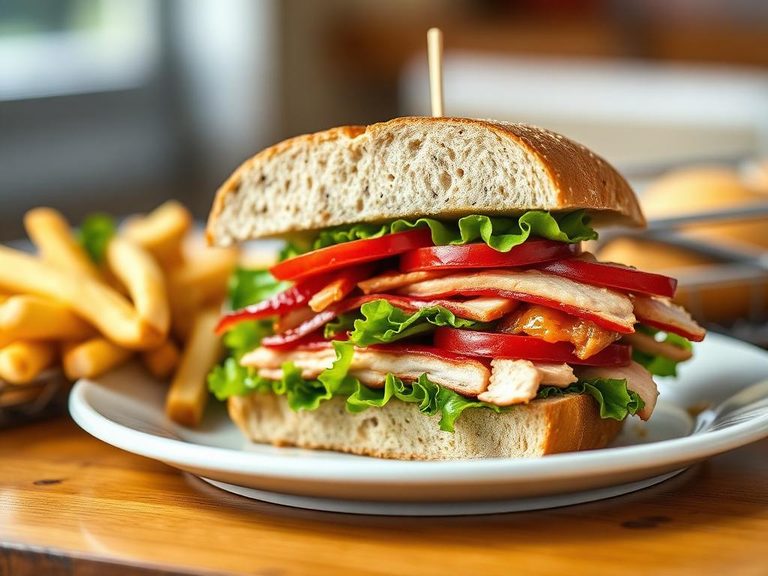
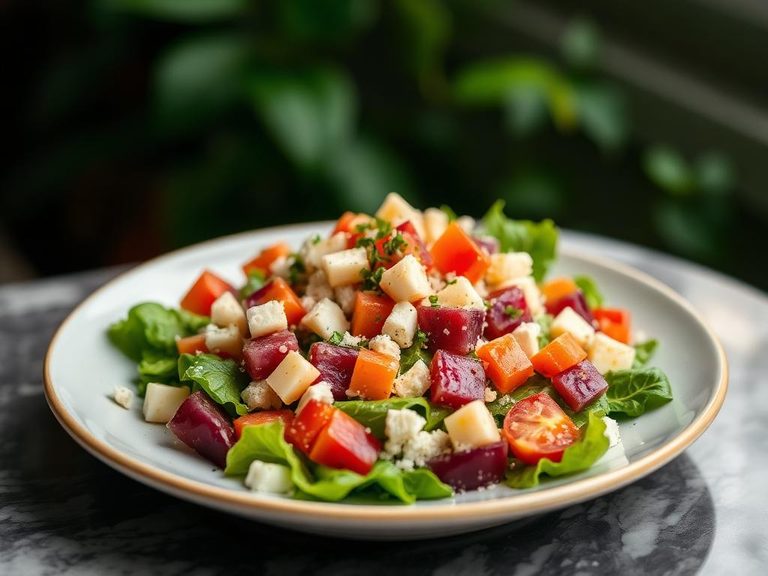
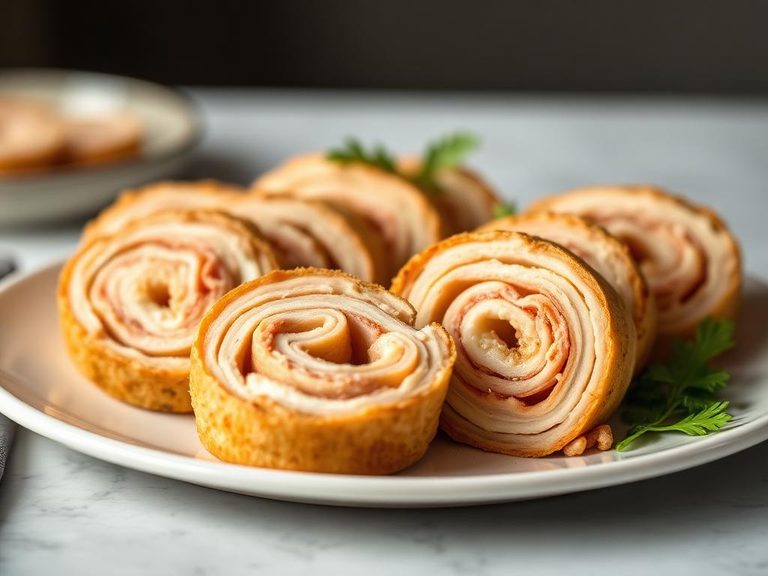
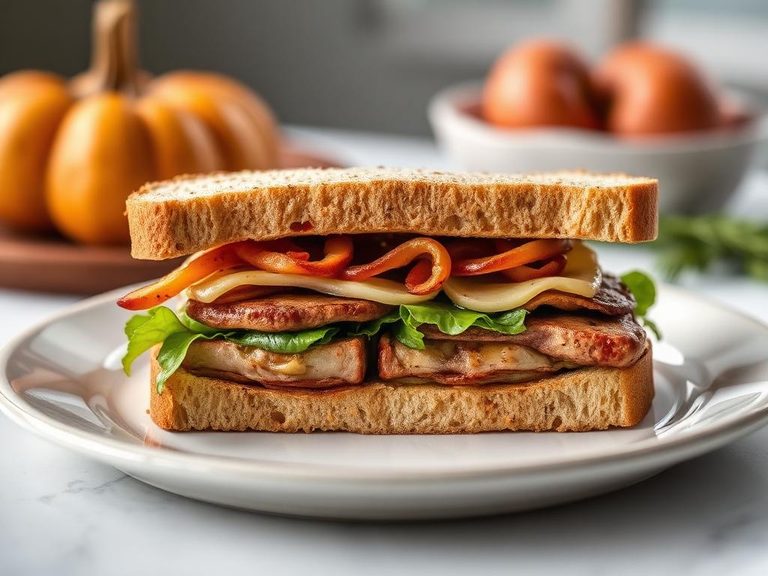
🌍 Where it's eaten
💡 Did you know?
The process for making deli-style turkey breast, where a paste of ground turkey is formed and cooked in a casing, was patented in 1963 by the Oscar Mayer company.
Full nutrition (USDA data · scales with serving)
| Water | 71.1 g |
| Energy | 109 kcal |
| Energy | 455 kj |
| Protein | 21.8 g |
| Total lipid (fat) | 0.83 g |
| Ash | 2.9 g |
| Carbohydrate, by difference | 3.5 g |
| Fiber, total dietary | 0.50 g |
| Total Sugars | 3.5 g |
| Calcium, Ca | 8.0 mg |
| Iron, Fe | 0.63 mg |
| Magnesium, Mg | 21.0 mg |
| Phosphorus, P | 162 mg |
| Potassium, K | 211 mg |
| Sodium, Na | 772 mg |
| Zinc, Zn | 1.3 mg |
| Copper, Cu | 0.06 mg |
| Manganese, Mn | 0.02 mg |
| Selenium, Se | 22.8 ug |
| Vitamin C, total ascorbic acid | 5.7 mg |
| Thiamin | 0.13 mg |
| Riboflavin | 0.32 mg |
| Niacin | 0.11 mg |
| Pantothenic acid | 0.17 mg |
| Vitamin B-6 | 0.13 mg |
| Folate, total | 4.0 ug |
| Folic acid | 0.00 ug |
| Folate, food | 4.0 ug |
| Folate, DFE | 4.0 ug |
| Choline, total | 66.4 mg |
| Betaine | 4.8 mg |
| Vitamin B-12 | 0.09 ug |
| Vitamin B-12, added | 0.00 ug |
| Vitamin A, RAE | 10.0 ug |
| Retinol | 10.0 ug |
| Carotene, beta | 0.00 ug |
| Carotene, alpha | 0.00 ug |
| Cryptoxanthin, beta | 0.00 ug |
| Vitamin A, IU | 33.0 iu |
| Lycopene | 0.00 ug |
| Lutein + zeaxanthin | 0.00 ug |
| Vitamin E (alpha-tocopherol) | 0.09 mg |
| Vitamin E, added | 0.00 mg |
| Tocopherol, beta | 0.00 mg |
| Tocopherol, gamma | 0.00 mg |
| Tocopherol, delta | 0.00 mg |
| Vitamin D (D2 + D3), International Units | 2.0 iu |
| Vitamin D (D2 + D3) | 0.10 ug |
| Vitamin D3 (cholecalciferol) | 0.10 ug |
| Vitamin K (phylloquinone) | 0.00 ug |
| Alcohol, ethyl | 0.00 g |
| Caffeine | 0.00 mg |
| Theobromine | 0.00 mg |
Fat & fatty acid profile (per 100g)
| Fatty acids, total saturated | 0.20 g |
| SFA 4:0 | 0.00 g |
| SFA 6:0 | 0.00 g |
| SFA 8:0 | 0.00 g |
| SFA 10:0 | 0.00 g |
| SFA 12:0 | 0.00 g |
| SFA 14:0 | 0.01 g |
| SFA 16:0 | 0.14 g |
| SFA 18:0 | 0.05 g |
| Fatty acids, total monounsaturated | 0.26 g |
| MUFA 16:1 | 0.04 g |
| MUFA 18:1 | 0.22 g |
| MUFA 20:1 | 0.00 g |
| MUFA 22:1 | 0.00 g |
| Fatty acids, total polyunsaturated | 0.18 g |
| PUFA 18:2 | 0.16 g |
| PUFA 18:3 | 0.01 g |
| PUFA 18:4 | 0.00 g |
| PUFA 20:4 | 0.01 g |
| PUFA 20:5 n-3 (EPA) | 0.00 g |
| PUFA 22:5 n-3 (DPA) | 0.00 g |
| PUFA 22:6 n-3 (DHA) | 0.00 g |
| Fatty acids, total trans | 0.00 g |
| Cholesterol | 44.0 mg |
| Phytosterols | 0.00 mg |
Amino acid profile (per 100g)
| Tryptophan | 0.19 g |
| Threonine | 0.76 g |
| Isoleucine | 0.89 g |
| Leucine | 1.4 g |
| Lysine | 1.6 g |
| Methionine | 0.49 g |
| Cystine | 0.18 g |
| Phenylalanine | 0.68 g |
| Tyrosine | 0.68 g |
| Valine | 0.91 g |
| Arginine | 1.2 g |
| Histidine | 0.53 g |
| Alanine | 1.1 g |
| Aspartic acid | 1.7 g |
| Glutamic acid | 2.8 g |
| Glycine | 0.85 g |
| Proline | 0.71 g |
| Serine | 0.76 g |
| Hydroxyproline | 0.00 g |
FAQ
Is prepackaged turkey breast as healthy as fresh roasted turkey?
Generally, fresh roasted turkey breast you cook yourself will be lower in sodium and additives. However, prepackaged 'low salt' versions are a convenient, lean protein source that fits well into a balanced diet.
Why does the nutrition label say it has sugar?
Small amounts of sugar or dextrose are often added to deli meats to balance flavor, aid in browning, and help with preservation. The amount per serving is typically minimal.
How can I tell if my deli turkey has gone bad?
Trust your senses: discard it if it has a sour smell, a slimy or tacky texture, or has developed any off-colors. Always adhere to the 'use-by' date on the package.
Nutrient density (calculated · NRF9.3)
Nutrient Rich Foods index: beneficial nutrients (protein, fiber, vitamins, minerals) minus saturated fat, added sugar & sodium, per 100 kcal.
NRF9.3 index — Fulgoni, Keast & Drewnowski, 2009. Computed from USDA nutrients.
Weight-loss friendliness (composite index)
Energy density 1.09 kcal/g · 80% calories from protein · 0.5 g fiber · 3.5 g sugar per 100 g.
Composite of energy density (Rolls et al., 1999), protein & fiber satiety, minus sugar. A calculated heuristic — ranks satiety-per-calorie, not a clinical measure.
Dietary load (calculated from USDA values)
Potential renal acid load. Positive = acid-forming, negative = alkaline-forming.
Sodium-to-potassium ratio: 3.66 (lower is better — aim for ≤ 1)
Sodium:potassium per WHO potassium guidance. Computed from USDA nutrients.