

Salad dressing, thousand island dressing, reduced fat
Whole food · Fats and Oils

Photo: Wikipedia
Thousand Island dressing is a creamy, pinkish-orange condiment with a chunky texture from finely chopped pickles and relish. It delivers a balanced tangy-sweet flavor profile, with a reduced-fat version offering a lighter mouthfeel while still providing a significant carbohydrate load from added sugars.
Calorie split: 2% protein · 48% carbs · 51% fat
↓ Full nutrition💚 Why it's loved
People love it for its iconic sweet-tangy-creamy flavor that instantly elevates simple dishes like burgers or salads. Its versatility as a dip, spread, or dressing makes it a familiar, comforting staple in American diners and home kitchens.
⚠️ Watch-outs & how to enjoy it better
The high sugar content (over 17g per 100g) can cause rapid blood-sugar spikes, making it less suitable for those managing diabetes. To counteract this, pair it with high-fiber vegetables or a protein source like grilled chicken to slow sugar absorption, and practice strict portion control. Those sensitive to sodium should also check labels, as it can be high in salt.
Key benefits
- Provides a quick source of energy from carbohydrates.
- Contains small amounts of dietary fiber from pickle relish.
- Offers a flavorful way to increase vegetable intake on salads.
- Reduced-fat formulation cuts calories compared to the original.
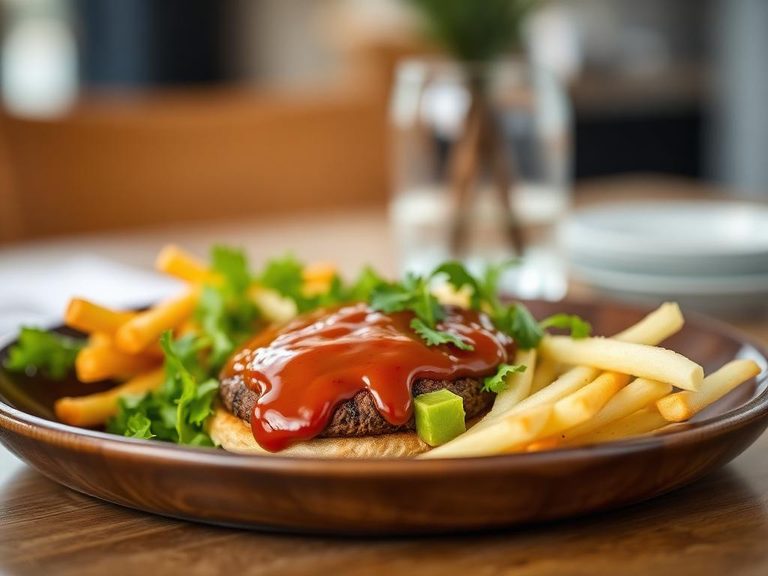
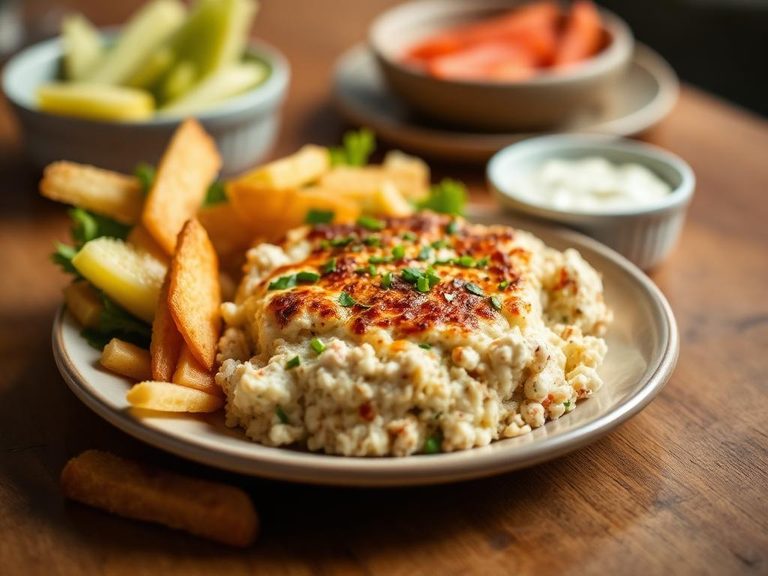
🍽️ Popular dishes
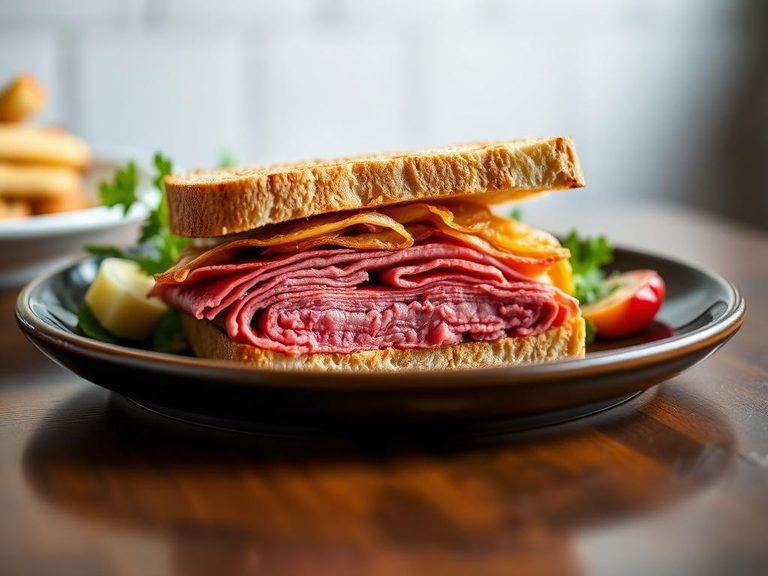
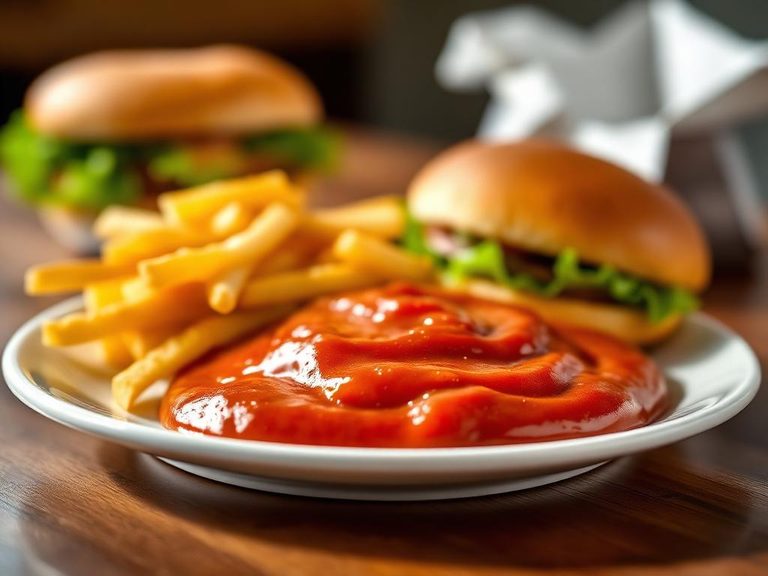
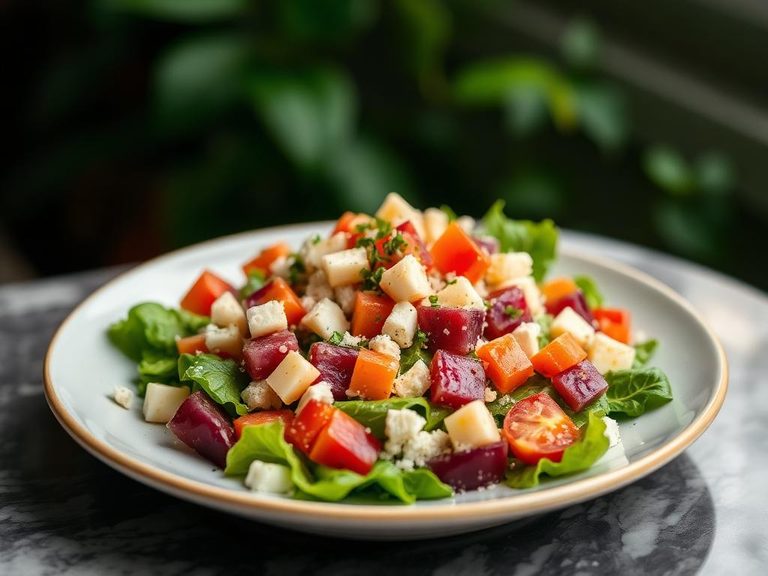
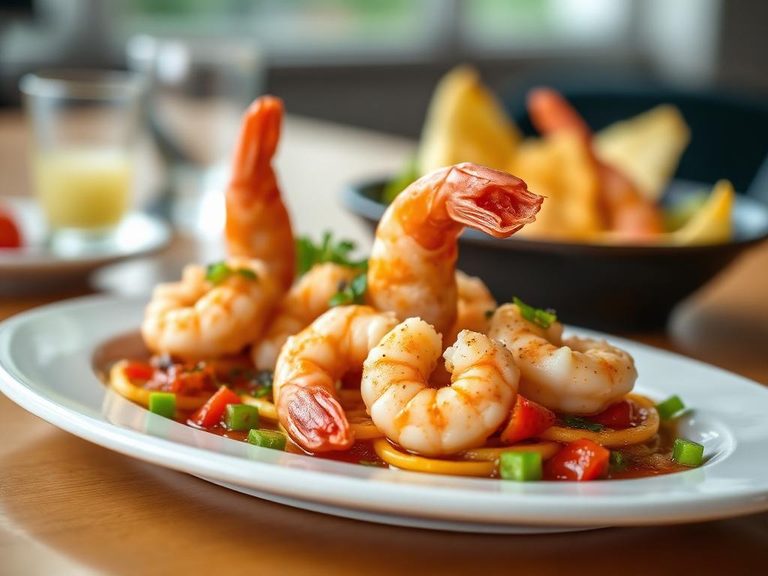
🌍 Where it's eaten
💡 Did you know?
Despite its name, Thousand Island dressing has no direct connection to the Thousand Islands region between the U.S. and Canada; it was popularized by a maître d'hotel at the Waldorf-Astoria Hotel in New York City.
Full nutrition (USDA data · scales with serving)
| Water | 60.7 g |
| Energy | 195 kcal |
| Energy | 815 kj |
| Protein | 0.83 g |
| Total lipid (fat) | 11.3 g |
| Ash | 3.1 g |
| Carbohydrate, by difference | 24.1 g |
| Fiber, total dietary | 1.2 g |
| Total Sugars | 17.3 g |
| Sucrose | 0.80 g |
| Glucose | 9.1 g |
| Fructose | 6.9 g |
| Lactose | 0.00 g |
| Maltose | 0.50 g |
| Galactose | 0.00 g |
| Starch | 4.9 g |
| Calcium, Ca | 27.0 mg |
| Iron, Fe | 0.90 mg |
| Magnesium, Mg | 7.0 mg |
| Phosphorus, P | 14.0 mg |
| Potassium, K | 202 mg |
| Sodium, Na | 955 mg |
| Zinc, Zn | 0.19 mg |
| Copper, Cu | 0.00 mg |
| Manganese, Mn | 0.12 mg |
| Selenium, Se | 0.00 ug |
| Vitamin C, total ascorbic acid | 1.5 mg |
| Thiamin | 0.05 mg |
| Riboflavin | 0.04 mg |
| Niacin | 0.44 mg |
| Pantothenic acid | 0.00 mg |
| Vitamin B-6 | 0.00 mg |
| Folate, total | 0.00 ug |
| Folic acid | 0.00 ug |
| Folate, food | 0.00 ug |
| Folate, DFE | 0.00 ug |
| Choline, total | 16.0 mg |
| Vitamin B-12 | 0.00 ug |
| Vitamin B-12, added | 0.00 ug |
| Vitamin A, RAE | 16.0 ug |
| Retinol | 0.00 ug |
| Carotene, beta | 154 ug |
| Carotene, alpha | 0.00 ug |
| Cryptoxanthin, beta | 65.0 ug |
| Vitamin A, IU | 311 iu |
| Lycopene | 3097 ug |
| Lutein + zeaxanthin | 100 ug |
| Vitamin E (alpha-tocopherol) | 1.0 mg |
| Vitamin E, added | 0.00 mg |
| Vitamin D (D2 + D3), International Units | 0.00 iu |
| Vitamin D (D2 + D3) | 0.00 ug |
| Vitamin K (phylloquinone) | 27.6 ug |
| Alcohol, ethyl | 0.00 g |
| Caffeine | 0.00 mg |
| Theobromine | 0.00 mg |
Fat & fatty acid profile (per 100g)
| Fatty acids, total saturated | 0.75 g |
| SFA 4:0 | 0.00 g |
| SFA 6:0 | 0.00 g |
| SFA 8:0 | 0.00 g |
| SFA 10:0 | 0.00 g |
| SFA 12:0 | 0.00 g |
| SFA 14:0 | 0.00 g |
| SFA 16:0 | 0.52 g |
| SFA 17:0 | 0.00 g |
| SFA 18:0 | 0.22 g |
| SFA 20:0 | 0.00 g |
| SFA 22:0 | 0.00 g |
| SFA 24:0 | 0.00 g |
| Fatty acids, total monounsaturated | 6.5 g |
| MUFA 14:1 | 0.00 g |
| MUFA 16:1 | 0.00 g |
| MUFA 17:1 | 0.00 g |
| MUFA 18:1 | 6.3 g |
| MUFA 20:1 | 0.18 g |
| MUFA 22:1 | 0.00 g |
| Fatty acids, total polyunsaturated | 2.7 g |
| PUFA 18:2 | 2.0 g |
| PUFA 18:3 | 0.74 g |
| PUFA 18:4 | 0.00 g |
| PUFA 20:4 | 0.00 g |
| PUFA 20:5 n-3 (EPA) | 0.00 g |
| PUFA 22:5 n-3 (DPA) | 0.00 g |
| PUFA 22:6 n-3 (DHA) | 0.00 g |
| Cholesterol | 11.0 mg |
Amino acid profile (per 100g)
| Tryptophan | 0.00 g |
| Threonine | 0.00 g |
| Isoleucine | 0.00 g |
| Leucine | 0.00 g |
| Lysine | 0.00 g |
| Methionine | 0.00 g |
| Cystine | 0.00 g |
| Phenylalanine | 0.00 g |
| Tyrosine | 0.00 g |
| Valine | 0.00 g |
| Arginine | 0.00 g |
| Histidine | 0.00 g |
| Alanine | 0.00 g |
| Aspartic acid | 0.00 g |
| Glutamic acid | 0.14 g |
| Glycine | 0.00 g |
| Proline | 0.00 g |
| Serine | 0.00 g |
FAQ
What is Thousand Island dressing made of?
A classic base of mayonnaise and ketchup (or chili sauce) is mixed with sweet pickle relish, finely chopped onions, and sometimes other seasonings like vinegar or Worcestershire sauce.
Is reduced-fat Thousand Island dressing healthier?
It is lower in total fat and calories than the full-fat version, but it often compensates with added sugars and thickeners to maintain flavor and texture, so the carbohydrate content remains high.
What can I use as a substitute for Thousand Island dressing?
You can make a quick version by mixing mayonnaise, ketchup, and a spoonful of sweet pickle relish. For a tangier, less sweet alternative, Russian dressing is similar but typically spicier.
Nutrient density (calculated · NRF9.3)
Nutrient Rich Foods index: beneficial nutrients (protein, fiber, vitamins, minerals) minus saturated fat, added sugar & sodium, per 100 kcal.
NRF9.3 index — Fulgoni, Keast & Drewnowski, 2009. Computed from USDA nutrients.
Weight-loss friendliness (composite index)
Energy density 1.95 kcal/g · 2% calories from protein · 1.2 g fiber · 17.3 g sugar per 100 g.
Composite of energy density (Rolls et al., 1999), protein & fiber satiety, minus sugar. A calculated heuristic — ranks satiety-per-calorie, not a clinical measure.
Dietary load (calculated from USDA values)
Potential renal acid load. Positive = acid-forming, negative = alkaline-forming.
Sodium-to-potassium ratio: 4.73 (lower is better — aim for ≤ 1)
Sodium:potassium per WHO potassium guidance. Computed from USDA nutrients.