

Papad
Whole food · Legumes and Legume Products

Photo: Wikipedia
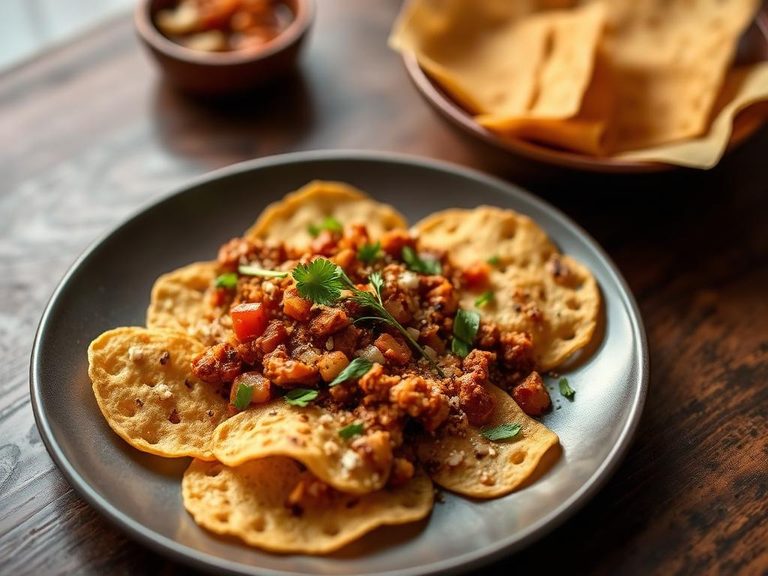
Papad is a thin, crisp Indian wafer made from seasoned lentil, rice, or chickpea flour, traditionally sun-dried and then deep-fried or roasted to a shattering crunch. Its texture is light and airy with a savory, often spicy or peppery flavor that intensifies when cooked. Nutritionally, it's a standout for its high protein and impressive fiber content relative to its calorie count.
Calorie split: 28% protein · 65% carbs · 8% fat
↓ Full nutrition💚 Why it's loved
People adore papad for its addictive, savory crunch that elevates any meal from simple to special. It's a beloved cultural staple, serving as a versatile appetizer, side, or snack that bridges regional Indian cuisines.
⚠️ Watch-outs & how to enjoy it better
Papad is often high in sodium, which can be a concern for those monitoring blood pressure. The frying method adds significant fat and calories, and it can be a common allergen for those sensitive to lentils or legumes. To counteract this, choose roasted or microwaved papad, pair it with a protein-rich dish like dal or yogurt, and practice portion control.
Key benefits
- Excellent source of plant-based protein (25.56g per 100g).
- Very high in dietary fiber (18.6g per 100g), aiding digestion.
- Naturally low in fat, especially when roasted instead of fried.
- Provides a satisfying, crunchy texture with minimal calories.
- Typically gluten-free when made from lentil flour.
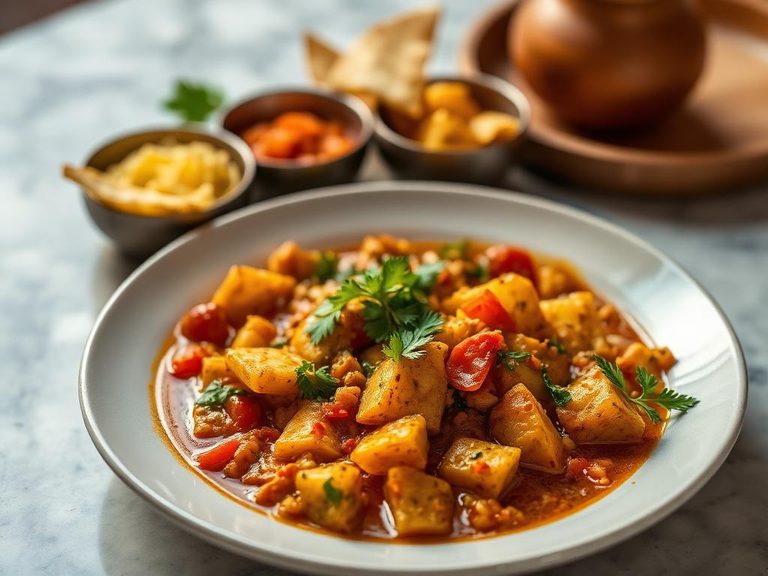
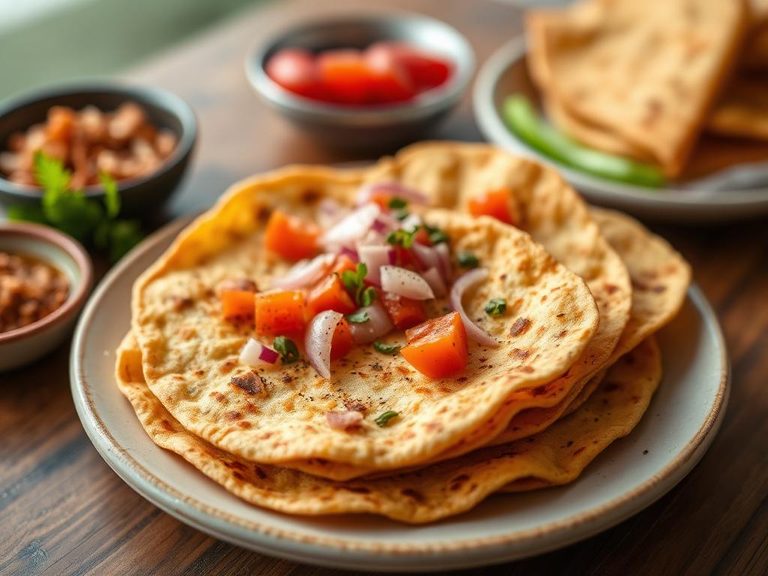
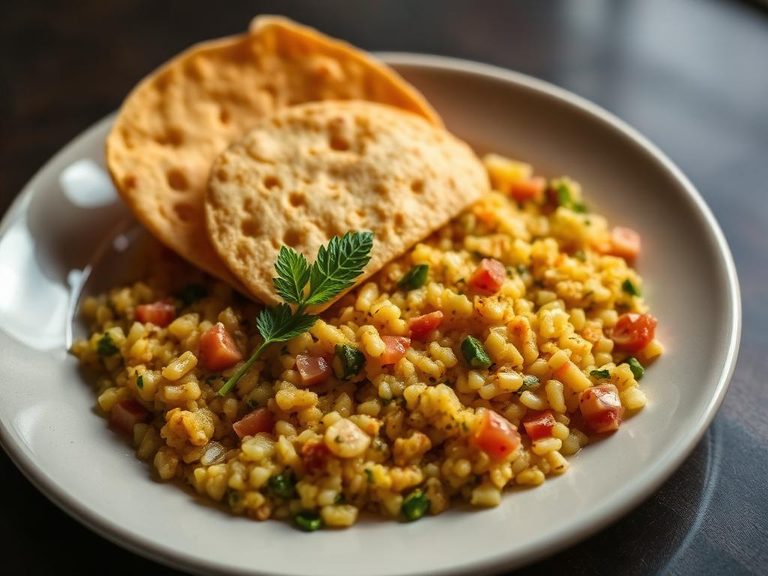
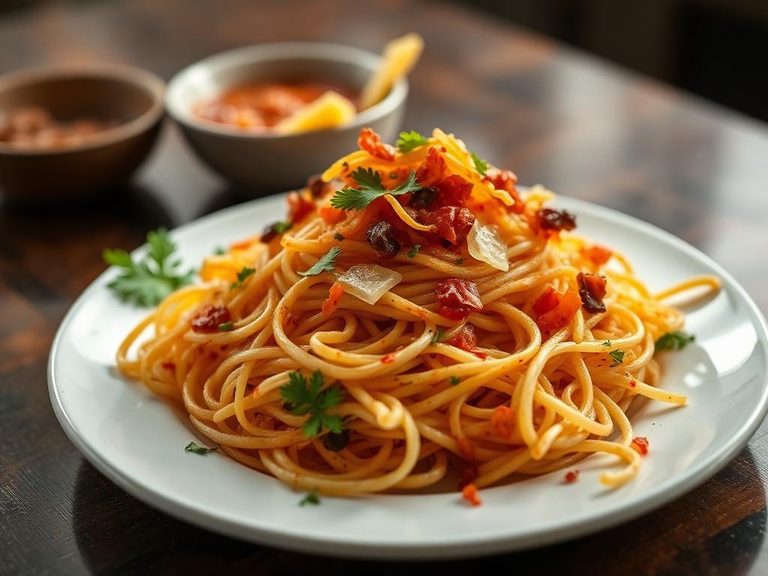
🍽️ Popular dishes
🌍 Where it's eaten
💡 Did you know?
The word 'papad' is believed to derive from the Sanskrit word 'parpataka,' meaning 'a thin, crisp cake,' highlighting its ancient roots in the Indian subcontinent.
Full nutrition (USDA data · scales with serving)
| Water | 3.5 g |
| Energy | 371 kcal |
| Energy | 1552 kj |
| Protein | 25.6 g |
| Total lipid (fat) | 3.3 g |
| Ash | 7.8 g |
| Carbohydrate, by difference | 59.9 g |
| Fiber, total dietary | 18.6 g |
| Total Sugars | 0.00 g |
| Calcium, Ca | 143 mg |
| Iron, Fe | 7.8 mg |
| Magnesium, Mg | 271 mg |
| Phosphorus, P | 385 mg |
| Potassium, K | 1000 mg |
| Sodium, Na | 1745 mg |
| Zinc, Zn | 3.4 mg |
| Copper, Cu | 1.00 mg |
| Manganese, Mn | 1.6 mg |
| Selenium, Se | 8.3 ug |
| Fluoride, F | 11.9 ug |
| Vitamin C, total ascorbic acid | 0.00 mg |
| Thiamin | 0.28 mg |
| Riboflavin | 0.26 mg |
| Niacin | 1.5 mg |
| Pantothenic acid | 0.92 mg |
| Vitamin B-6 | 0.28 mg |
| Folate, total | 219 ug |
| Folic acid | 0.00 ug |
| Folate, food | 219 ug |
| Folate, DFE | 219 ug |
| Choline, total | 0.40 mg |
| Betaine | 0.00 mg |
| Vitamin B-12 | 0.00 ug |
| Vitamin B-12, added | 0.00 ug |
| Vitamin A, RAE | 13.0 ug |
| Retinol | 13.0 ug |
| Carotene, beta | 4.0 ug |
| Carotene, alpha | 0.00 ug |
| Cryptoxanthin, beta | 0.00 ug |
| Vitamin A, IU | 50.0 iu |
| Lycopene | 0.00 ug |
| Lutein + zeaxanthin | 1.0 ug |
| Vitamin E (alpha-tocopherol) | 0.05 mg |
| Vitamin E, added | 0.00 mg |
| Tocopherol, beta | 0.00 mg |
| Tocopherol, gamma | 0.01 mg |
| Tocopherol, delta | 0.00 mg |
| Tocotrienol, alpha | 0.00 mg |
| Tocotrienol, beta | 0.00 mg |
| Tocotrienol, gamma | 0.00 mg |
| Tocotrienol, delta | 0.00 mg |
| Vitamin D (D2 + D3), International Units | 0.00 iu |
| Vitamin D (D2 + D3) | 0.00 ug |
| Vitamin K (phylloquinone) | 0.40 ug |
| Vitamin K (Dihydrophylloquinone) | 0.00 ug |
| Alcohol, ethyl | 0.00 g |
| Caffeine | 0.00 mg |
| Theobromine | 0.00 mg |
Fat & fatty acid profile (per 100g)
| Fatty acids, total saturated | 1.1 g |
| SFA 4:0 | 0.05 g |
| SFA 6:0 | 0.03 g |
| SFA 8:0 | 0.02 g |
| SFA 10:0 | 0.04 g |
| SFA 12:0 | 0.04 g |
| SFA 14:0 | 0.16 g |
| SFA 16:0 | 0.56 g |
| SFA 18:0 | 0.19 g |
| Fatty acids, total monounsaturated | 0.53 g |
| MUFA 16:1 | 0.04 g |
| MUFA 18:1 | 0.50 g |
| MUFA 20:1 | 0.00 g |
| MUFA 22:1 | 0.00 g |
| Fatty acids, total polyunsaturated | 1.1 g |
| PUFA 18:2 | 0.11 g |
| PUFA 18:3 | 1.0 g |
| PUFA 18:4 | 0.00 g |
| PUFA 20:4 | 0.00 g |
| PUFA 20:5 n-3 (EPA) | 0.00 g |
| PUFA 22:5 n-3 (DPA) | 0.00 g |
| PUFA 22:6 n-3 (DHA) | 0.00 g |
| Cholesterol | 4.0 mg |
| Phytosterols | 0.00 mg |
Amino acid profile (per 100g)
| Tryptophan | 0.27 g |
| Threonine | 0.89 g |
| Isoleucine | 1.3 g |
| Leucine | 2.1 g |
| Lysine | 1.7 g |
| Methionine | 0.37 g |
| Cystine | 0.24 g |
| Phenylalanine | 1.5 g |
| Tyrosine | 0.79 g |
| Valine | 1.4 g |
| Arginine | 1.7 g |
| Histidine | 0.71 g |
| Alanine | 1.1 g |
| Aspartic acid | 3.0 g |
| Glutamic acid | 4.2 g |
| Glycine | 1.1 g |
| Proline | 1.2 g |
| Serine | 1.3 g |
FAQ
Is papad gluten-free?
It can be. Traditional papad made from lentil, chickpea, or rice flour is gluten-free. However, some varieties use wheat flour, so always check the ingredients.
What's the healthiest way to cook papad?
Roasting over an open flame or microwaving are the healthiest methods, as they add no extra fat. This significantly reduces the calorie and fat content compared to deep-frying.
Can I eat papad on a diet?
Yes, in moderation. Its high fiber and protein can promote fullness. Opt for roasted papad and be mindful of portion size and sodium intake.
Nutrient density (calculated · NRF9.3)
Nutrient Rich Foods index: beneficial nutrients (protein, fiber, vitamins, minerals) minus saturated fat, added sugar & sodium, per 100 kcal.
NRF9.3 index — Fulgoni, Keast & Drewnowski, 2009. Computed from USDA nutrients.
Weight-loss friendliness (composite index)
Energy density 3.71 kcal/g · 28% calories from protein · 18.6 g fiber · 0.0 g sugar per 100 g.
Composite of energy density (Rolls et al., 1999), protein & fiber satiety, minus sugar. A calculated heuristic — ranks satiety-per-calorie, not a clinical measure.
Dietary load (calculated from USDA values)
Potential renal acid load. Positive = acid-forming, negative = alkaline-forming.
Sodium-to-potassium ratio: 1.75 (lower is better — aim for ≤ 1)
Sodium:potassium per WHO potassium guidance. Computed from USDA nutrients.