

Oil, bearded seal (Oogruk) (Alaska Native)
Whole food · American Indian/Alaska Native Foods

Photo: Wikipedia
Oogruk is a traditional, intensely rich oil rendered from the blubber of the bearded seal, a staple for Alaska Native communities. It has a smooth, thick, and slightly waxy texture at cool temperatures, melting on the tongue with a deep, clean, and subtly sweet marine flavor. Nutritionally, it is an almost pure source of dense, high-calorie energy, providing nearly 100 grams of fat per 100g.
Calorie split: 0% protein · 0% carbs · 100% fat
↓ Full nutrition💚 Why it's loved
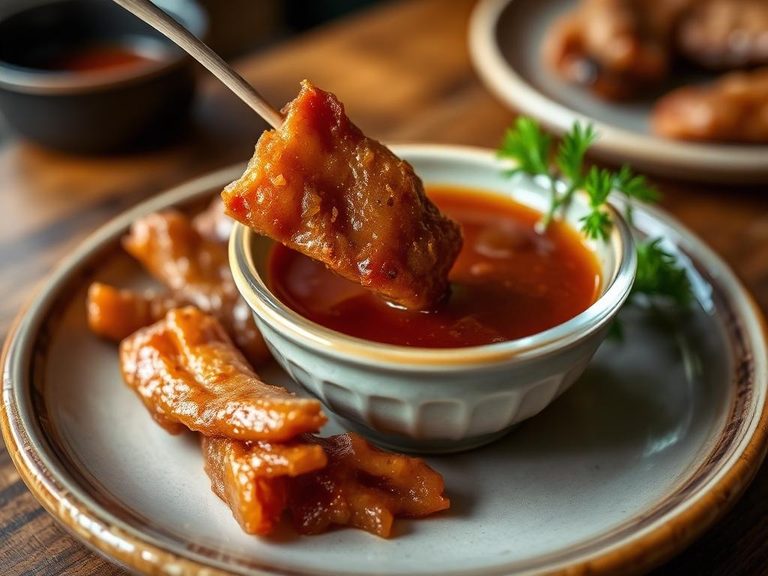
People love Oogruk for its unique, savory-sweet taste that is central to the cultural identity and subsistence lifestyle of Iñupiat and Yup'ik peoples. Its versatility is prized; it can be eaten raw, used as a cooking fat, or as a dip, providing essential warmth and sustenance.
⚠️ Watch-outs & how to enjoy it better
Due to its extremely high fat and calorie content, it is not suitable for low-fat diets and can contribute to excessive caloric intake if not portion-controlled. The strong, distinct marine flavor may be unfamiliar or off-putting to those unaccustomed to traditional Arctic foods. To enjoy it mindfully, pair small amounts with fiber-rich foods like berries or bannock, and use it as a condiment rather than a primary cooking oil.
Key benefits
- Provides extremely concentrated caloric energy for cold climates
- Rich in long-chain omega-3 fatty acids like EPA and DHA
- A primary source of fat-soluble vitamins A and D in traditional diets
- Culturally significant as a staple food and trade item
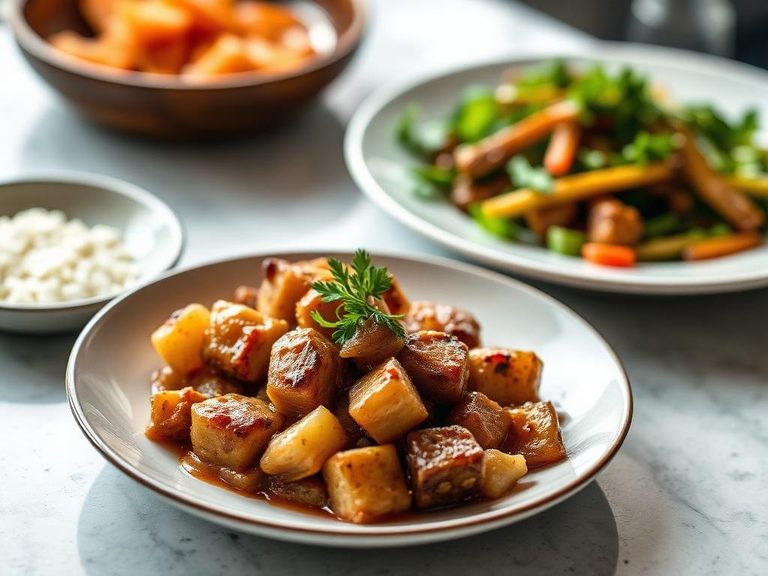
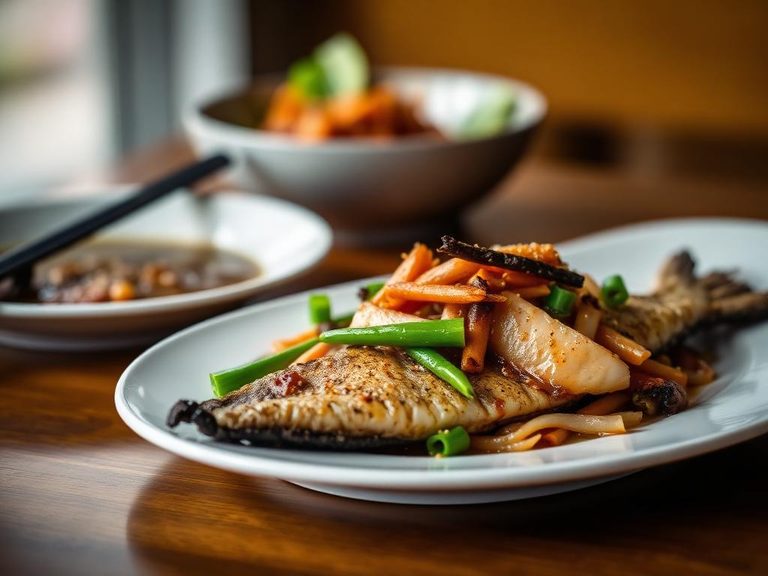
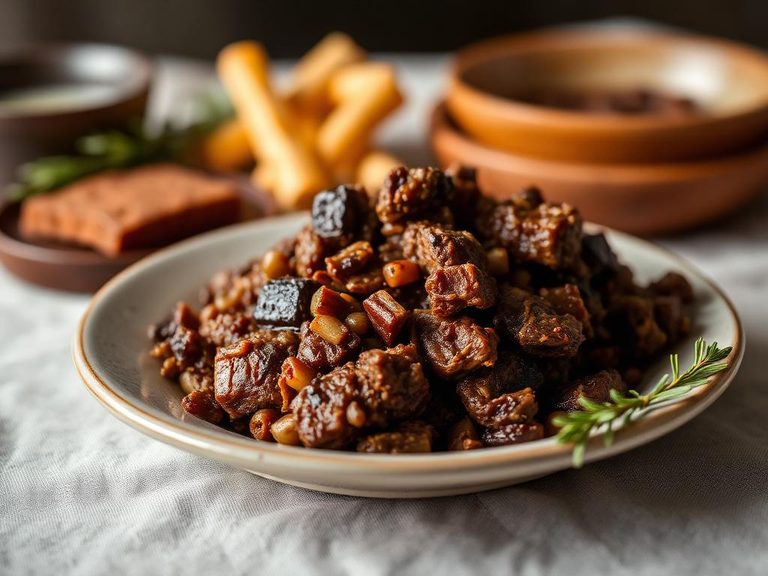
🍽️ Popular dishes
🌍 Where it's eaten
💡 Did you know?
In some communities, the quality and taste of Oogruk are so specific that elders can identify the particular seal or even the region it came from by its flavor.
Full nutrition (USDA data · scales with serving)
| Water | 0.02 g |
| Energy | 899 kcal |
| Energy | 3760 kj |
| Protein | 0.56 g |
| Total lipid (fat) | 99.6 g |
| Ash | 0.00 g |
| Carbohydrate, by difference | 0.00 g |
| Calcium, Ca | 0.00 mg |
| Iron, Fe | 0.00 mg |
| Magnesium, Mg | 0.00 mg |
| Phosphorus, P | 0.00 mg |
| Potassium, K | 0.00 mg |
| Sodium, Na | 0.00 mg |
| Zinc, Zn | 0.00 mg |
| Copper, Cu | 0.00 mg |
| Manganese, Mn | 0.00 mg |
| Selenium, Se | 3.3 ug |
| Vitamin C, total ascorbic acid | 0.00 mg |
| Thiamin | 0.01 mg |
| Riboflavin | 0.00 mg |
| Niacin | 0.00 mg |
| Pantothenic acid | 0.00 mg |
| Vitamin B-6 | 0.00 mg |
| Folate, total | 2.0 ug |
| Folate, food | 2.0 ug |
| Choline, total | 0.10 mg |
| Betaine | 0.00 mg |
| Vitamin B-12 | 0.00 ug |
| Vitamin A, RAE | 10.0 ug |
| Retinol | 10.0 ug |
| Vitamin A, IU | 33.0 iu |
| Vitamin E (alpha-tocopherol) | 10.3 mg |
| Tocopherol, beta | 0.00 mg |
| Tocopherol, gamma | 0.00 mg |
| Tocopherol, delta | 0.00 mg |
| Tocotrienol, alpha | 0.00 mg |
| Tocotrienol, beta | 0.00 mg |
| Tocotrienol, gamma | 0.00 mg |
| Tocotrienol, delta | 0.00 mg |
| Vitamin D (D2 + D3), International Units | 30.0 iu |
| Vitamin D (D2 + D3) | 0.70 ug |
| Vitamin K (phylloquinone) | 0.00 ug |
| Vitamin K (Dihydrophylloquinone) | 0.00 ug |
| Vitamin K (Menaquinone-4) | 1.4 ug |
Fat & fatty acid profile (per 100g)
| Fatty acids, total saturated | 10.9 g |
| SFA 8:0 | 0.00 g |
| SFA 10:0 | 0.00 g |
| SFA 12:0 | 0.08 g |
| SFA 14:0 | 2.5 g |
| SFA 15:0 | 0.31 g |
| SFA 16:0 | 6.9 g |
| SFA 17:0 | 0.16 g |
| SFA 18:0 | 0.94 g |
| SFA 20:0 | 0.02 g |
| SFA 22:0 | 0.00 g |
| SFA 24:0 | 0.00 g |
| Fatty acids, total monounsaturated | 47.1 g |
| MUFA 14:1 | 0.75 g |
| MUFA 15:1 | 0.11 g |
| MUFA 16:1 | 18.9 g |
| MUFA 17:1 | 0.29 g |
| MUFA 18:1 | 21.5 g |
| MUFA 20:1 | 4.8 g |
| MUFA 22:1 | 0.64 g |
| MUFA 24:1 c | 0.08 g |
| Fatty acids, total polyunsaturated | 33.0 g |
| PUFA 18:2 | 0.87 g |
| PUFA 18:3 | 0.85 g |
| PUFA 18:4 | 1.2 g |
| PUFA 20:2 n-6 c,c | 0.24 g |
| PUFA 20:3 | 0.18 g |
| PUFA 20:4 | 1.3 g |
| PUFA 20:5 n-3 (EPA) | 9.7 g |
| PUFA 21:5 | 0.35 g |
| PUFA 22:4 | 0.17 g |
| PUFA 22:5 n-3 (DPA) | 5.6 g |
| PUFA 22:6 n-3 (DHA) | 12.4 g |
| Cholesterol | 52.0 mg |
Amino acid profile (per 100g)
Estimated from Seal, bearded (Oogruk), meat, dried, in oil (Alaska Native) — USDA does not publish this profile for Oil.
| Tryptophan | 0.34 g |
| Threonine | 1.4 g |
| Isoleucine | 1.3 g |
| Leucine | 2.7 g |
| Lysine | 2.9 g |
| Methionine | 0.72 g |
| Cystine | 0.19 g |
| Phenylalanine | 1.4 g |
| Tyrosine | 0.92 g |
| Valine | 1.4 g |
| Arginine | 2.0 g |
| Histidine | 1.3 g |
| Alanine | 2.0 g |
| Aspartic acid | 2.9 g |
| Glutamic acid | 4.7 g |
| Glycine | 1.9 g |
| Proline | 1.6 g |
| Serine | 1.3 g |
FAQ
How is Oogruk different from other animal fats like lard or tallow?
Oogruk is uniquely high in marine-based omega-3 fatty acids and has a distinct, clean flavor profile tied to the bearded seal's diet. Its texture is smoother and less saturated than land-animal fats.
Can Oogruk be used for modern cooking?
Yes, it can be used as a high-heat cooking fat or a flavor enhancer in small amounts, similar to duck fat. Its strong taste is best suited for dishes where a rich, savory note is desired.
Is it safe to eat raw?
In traditional practice, fresh or frozen Oogruk is consumed raw. As with any raw animal product, ensuring it comes from a trusted, clean source is important for safety.
Nutrient density (calculated · NRF9.3)
Nutrient Rich Foods index: beneficial nutrients (protein, fiber, vitamins, minerals) minus saturated fat, added sugar & sodium, per 100 kcal.
NRF9.3 index — Fulgoni, Keast & Drewnowski, 2009. Computed from USDA nutrients.
Weight-loss friendliness (composite index)
Energy density 8.99 kcal/g · 0% calories from protein · 0.0 g fiber · 0.0 g sugar per 100 g.
Composite of energy density (Rolls et al., 1999), protein & fiber satiety, minus sugar. A calculated heuristic — ranks satiety-per-calorie, not a clinical measure.
Dietary load (calculated from USDA values)
Potential renal acid load. Positive = acid-forming, negative = alkaline-forming.
Sodium:potassium per WHO potassium guidance. Computed from USDA nutrients.