

Margarine, industrial, non-dairy, cottonseed, soy oil (partially hydrogenated ), for flaky pastries
Whole food · Fats and Oils

Photo: Wikipedia
This is a specialized industrial fat engineered for one purpose: creating impossibly flaky, layered pastries. It's a solid, white fat with a high melting point and a neutral, waxy mouthfeel, designed to be cut into dough without melting. Nutritionally, it's almost pure fat, providing 80.2g of total fat per 100g, with no protein, carbs, or fiber.
Calorie split: 1% protein · 0% carbs · 99% fat
↓ Full nutrition💚 Why it's loved
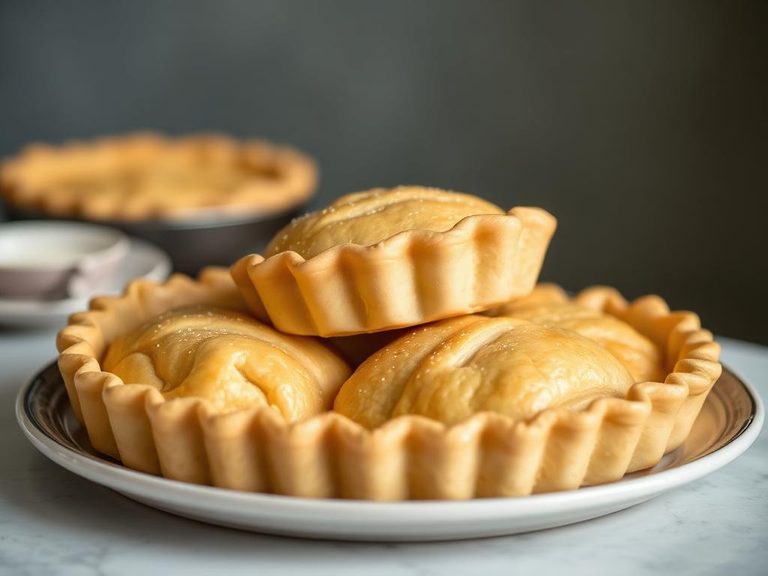
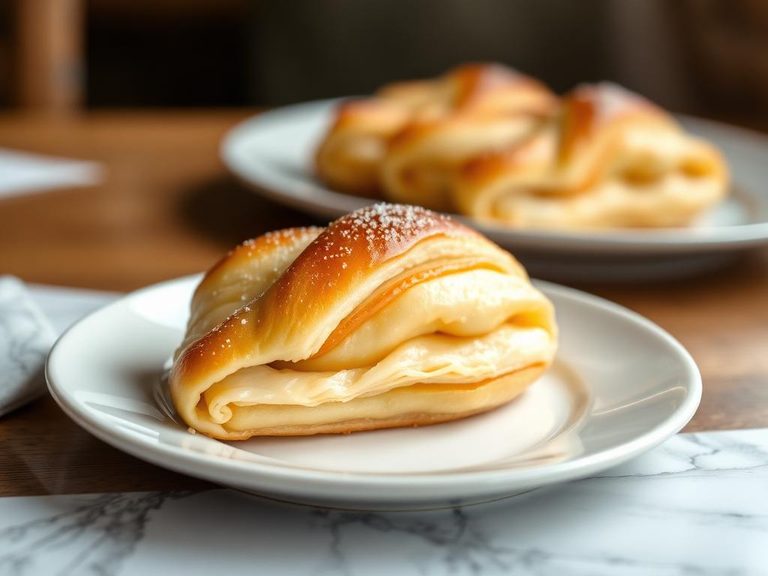
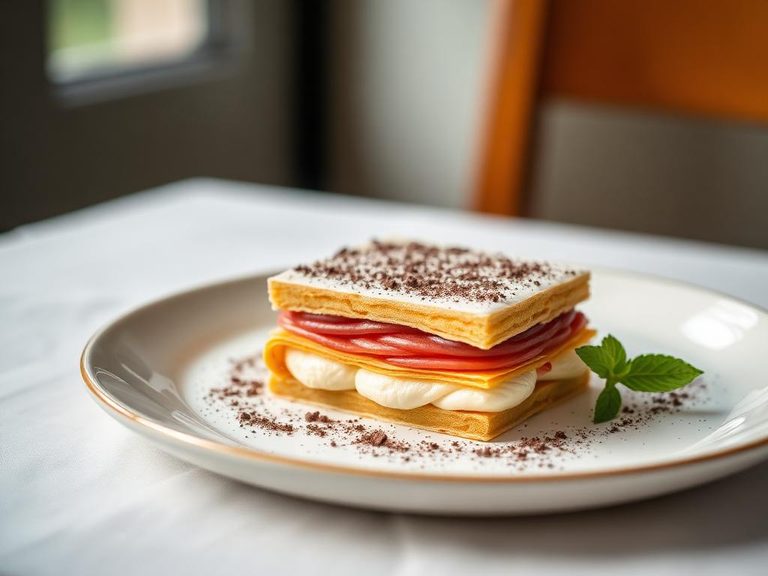
Bakers and pastry chefs love it for its reliability in creating the classic, shattering flakiness of croissants, puff pastry, and pie crusts. Its ability to stay solid during lamination and then melt cleanly in the oven is unmatched by many butter alternatives.
⚠️ Watch-outs & how to enjoy it better
This is a partially hydrogenated oil, meaning it contains trans fats, which are strongly linked to negative cardiovascular health outcomes. It offers no nutritional benefits beyond calories. For home bakers, using cold butter is often preferred for flavor; to mitigate health concerns, use it sparingly as a specialty ingredient and balance your diet with whole foods.
Key benefits
- Creates superior, distinct flaky layers in pastries
- High melting point prevents dough from becoming greasy
- Neutral flavor doesn't compete with other ingredients
- Long shelf life and stability in commercial baking
- Cost-effective for large-scale pastry production
🍽️ Popular dishes



🌍 Where it's eaten
💡 Did you know?
The invention of this type of fat was a direct response to a French government bounty in the 1860s, offered to anyone who could create a butter substitute for the navy and baking industry.
Full nutrition (USDA data · scales with serving)
| Water | 15.8 g |
| Energy | 714 kcal |
| Energy | 2989 kj |
| Protein | 1.9 g |
| Total lipid (fat) | 80.2 g |
| Ash | 2.0 g |
| Carbohydrate, by difference | 0.00 g |
| Fiber, total dietary | 0.00 g |
| Total Sugars | 0.00 g |
| Calcium, Ca | 66.0 mg |
| Iron, Fe | 0.00 mg |
| Magnesium, Mg | 6.0 mg |
| Phosphorus, P | 51.0 mg |
| Potassium, K | 94.0 mg |
| Sodium, Na | 879 mg |
| Zinc, Zn | 0.00 mg |
| Copper, Cu | 0.00 mg |
| Selenium, Se | 0.00 ug |
| Vitamin C, total ascorbic acid | 0.40 mg |
| Thiamin | 0.02 mg |
| Riboflavin | 0.08 mg |
| Niacin | 0.05 mg |
| Pantothenic acid | 0.19 mg |
| Vitamin B-6 | 0.02 mg |
| Folate, total | 3.0 ug |
| Folic acid | 0.00 ug |
| Folate, food | 3.0 ug |
| Folate, DFE | 3.0 ug |
| Vitamin B-12 | 0.21 ug |
| Vitamin B-12, added | 0.00 ug |
| Vitamin A, RAE | 1032 ug |
| Retinol | 981 ug |
| Carotene, beta | 610 ug |
| Carotene, alpha | 0.00 ug |
| Cryptoxanthin, beta | 0.00 ug |
| Vitamin A, IU | 4286 iu |
| Lycopene | 0.00 ug |
| Vitamin E (alpha-tocopherol) | 4.6 mg |
| Vitamin E, added | 0.00 mg |
| Vitamin D (D2 + D3), International Units | 0.00 iu |
| Vitamin D (D2 + D3) | 0.00 ug |
| Vitamin K (phylloquinone) | 106 ug |
| Alcohol, ethyl | 0.00 g |
| Caffeine | 0.00 mg |
| Theobromine | 0.00 mg |
Fat & fatty acid profile (per 100g)
| Fatty acids, total saturated | 20.4 g |
| SFA 4:0 | 0.00 g |
| SFA 6:0 | 0.00 g |
| SFA 8:0 | 0.00 g |
| SFA 10:0 | 0.00 g |
| SFA 12:0 | 0.05 g |
| SFA 14:0 | 0.12 g |
| SFA 15:0 | 0.04 g |
| SFA 16:0 | 9.6 g |
| SFA 17:0 | 0.11 g |
| SFA 18:0 | 10.0 g |
| SFA 20:0 | 0.28 g |
| SFA 22:0 | 0.28 g |
| Fatty acids, total monounsaturated | 46.7 g |
| MUFA 16:1 | 0.06 g |
| MUFA 16:1 c | 0.06 g |
| MUFA 18:1 | 46.6 g |
| MUFA 18:1 c | 25.1 g |
| MUFA 20:1 | 0.00 g |
| MUFA 22:1 | 0.00 g |
| Fatty acids, total polyunsaturated | 9.3 g |
| PUFA 18:2 | 8.5 g |
| PUFA 18:2 n-6 c,c | 5.8 g |
| PUFA 18:2 i | 2.7 g |
| PUFA 18:3 | 0.79 g |
| PUFA 18:3 n-3 c,c,c (ALA) | 0.31 g |
| PUFA 18:3i | 0.47 g |
| PUFA 18:4 | 0.00 g |
| PUFA 20:4 | 0.00 g |
| PUFA 20:5 n-3 (EPA) | 0.00 g |
| PUFA 22:5 n-3 (DPA) | 0.00 g |
| PUFA 22:6 n-3 (DHA) | 0.00 g |
| Fatty acids, total trans | 24.7 g |
| Fatty acids, total trans-monoenoic | 21.6 g |
| TFA 18:1 t | 21.6 g |
| Fatty acids, total trans-polyenoic | 3.2 g |
| Cholesterol | 0.00 mg |
Amino acid profile (per 100g)
Estimated from Margarine, regular, hard, soybean (hydrogenated) — USDA does not publish this profile for Margarine.
| Tryptophan | 0.01 g |
| Threonine | 0.04 g |
| Isoleucine | 0.05 g |
| Leucine | 0.08 g |
| Lysine | 0.07 g |
| Methionine | 0.02 g |
| Cystine | 0.01 g |
| Phenylalanine | 0.04 g |
| Tyrosine | 0.04 g |
| Valine | 0.06 g |
| Arginine | 0.03 g |
| Histidine | 0.02 g |
| Alanine | 0.03 g |
| Aspartic acid | 0.07 g |
| Glutamic acid | 0.18 g |
| Glycine | 0.02 g |
| Proline | 0.08 g |
| Serine | 0.05 g |
FAQ
How is this different from regular margarine or butter?
Unlike table margarine or butter, this is a 'shortening' or 'pastry fat' with a very high melting point and zero water content. It's designed for lamination (folding into dough) to create layers, not for spreading or general cooking.
Can I use regular butter or store-bought margarine instead?
Butter (about 80% fat, 15-20% water) will give superior flavor but can be trickier to laminate as it melts faster. Regular margarine often has lower fat content and emulsifiers that can inhibit flakiness. For best results, use a dedicated pastry fat or high-fat European-style butter.
Why is it called 'non-dairy'?
It is made from vegetable oils (like cottonseed and soy) and contains no milk derivatives, making it suitable for vegan baking and those with dairy allergies. The 'non-dairy' label is a key functional distinction from butter.
Nutrient density (calculated · NRF9.3)
Nutrient Rich Foods index: beneficial nutrients (protein, fiber, vitamins, minerals) minus saturated fat, added sugar & sodium, per 100 kcal.
NRF9.3 index — Fulgoni, Keast & Drewnowski, 2009. Computed from USDA nutrients.
Weight-loss friendliness (composite index)
Energy density 7.14 kcal/g · 1% calories from protein · 0.0 g fiber · 0.0 g sugar per 100 g.
Composite of energy density (Rolls et al., 1999), protein & fiber satiety, minus sugar. A calculated heuristic — ranks satiety-per-calorie, not a clinical measure.
Dietary load (calculated from USDA values)
Potential renal acid load. Positive = acid-forming, negative = alkaline-forming.
Sodium-to-potassium ratio: 9.35 (lower is better — aim for ≤ 1)
Sodium:potassium per WHO potassium guidance. Computed from USDA nutrients.