

Lamb, Australian, imported, fresh, external fat, cooked
Whole food · Lamb, Veal, and Game Products

Photo: Wikipedia
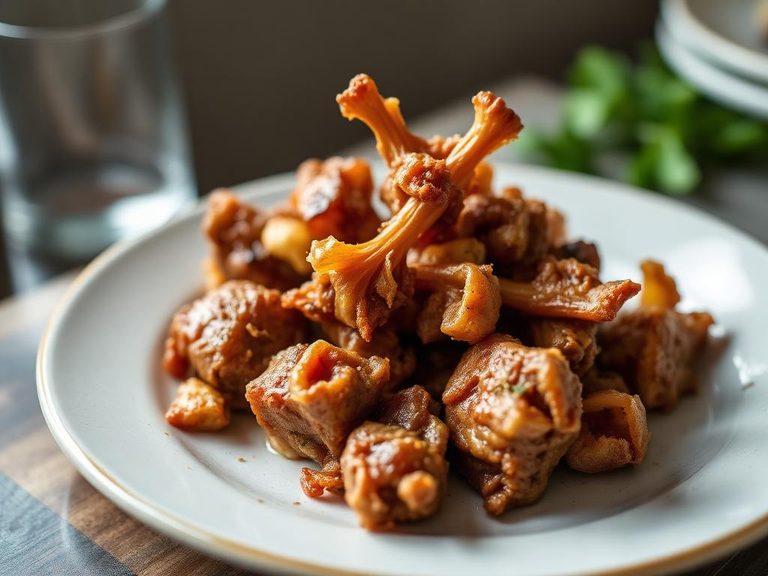
This is the crispy, rendered outer fat cap of Australian lamb, cooked until golden and often served as a prized delicacy. It offers an intensely rich, savory flavor with a texture that can range from melt-in-the-mouth soft to shatteringly crisp, depending on preparation. Nutritionally, it is a dense source of energy, composed almost entirely of fat with a notable absence of protein, carbohydrates, or fiber.
Calorie split: 13% protein · 0% carbs · 87% fat
↓ Full nutrition💚 Why it's loved
People cherish it for its unparalleled depth of flavor and luxurious, crispy texture that elevates simple meals. It's also a versatile ingredient, rendered down for cooking or crisped up as a flavorful garnish in cultures from the Mediterranean to the Middle East.
⚠️ Watch-outs & how to enjoy it better
Its extremely high fat and calorie density make it unsuitable for low-fat diets or those managing cholesterol. To enjoy it wisely, practice strict portion control, use it as a flavoring agent rather than a main component, and balance meals with fiber-rich vegetables or lean proteins.
Key benefits
- Provides a concentrated source of dietary fat for energy.
- Contains fat-soluble vitamins like Vitamin E and K.
- Enhances the flavor and mouthfeel of lean meat dishes.
- Can be rendered into lamb fat for high-heat cooking.
- A traditional component in many pastoral cuisines.
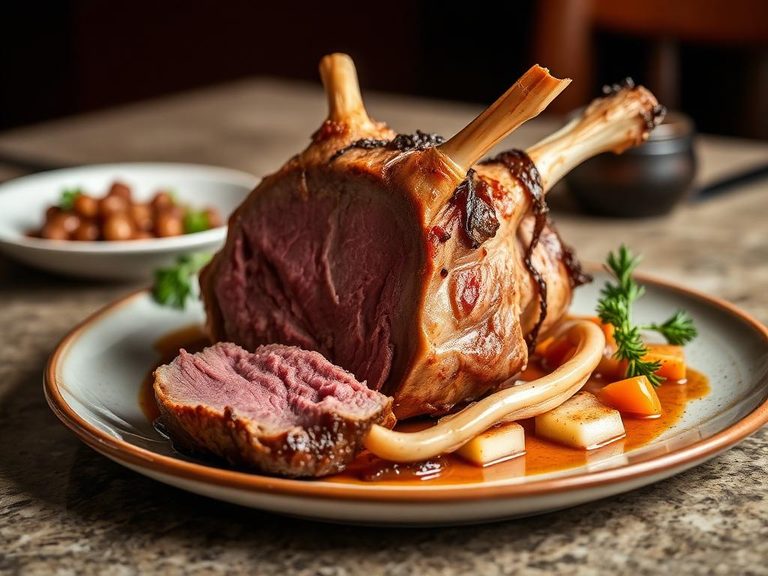
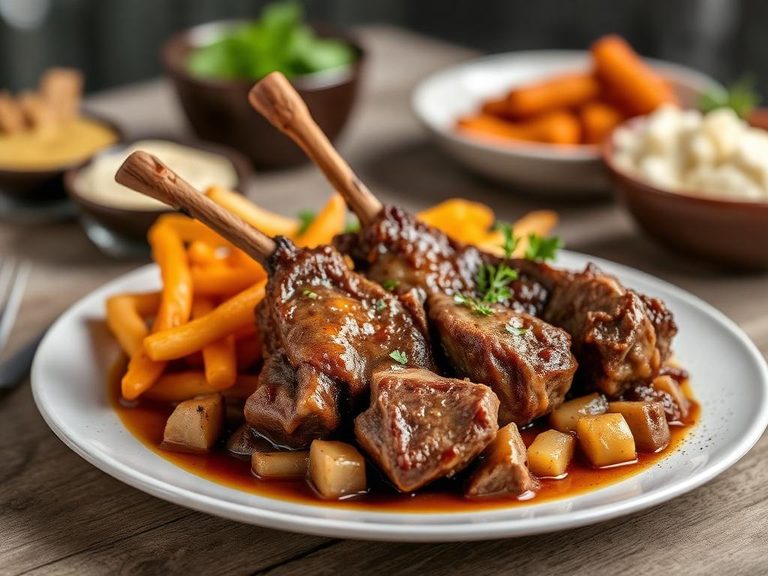
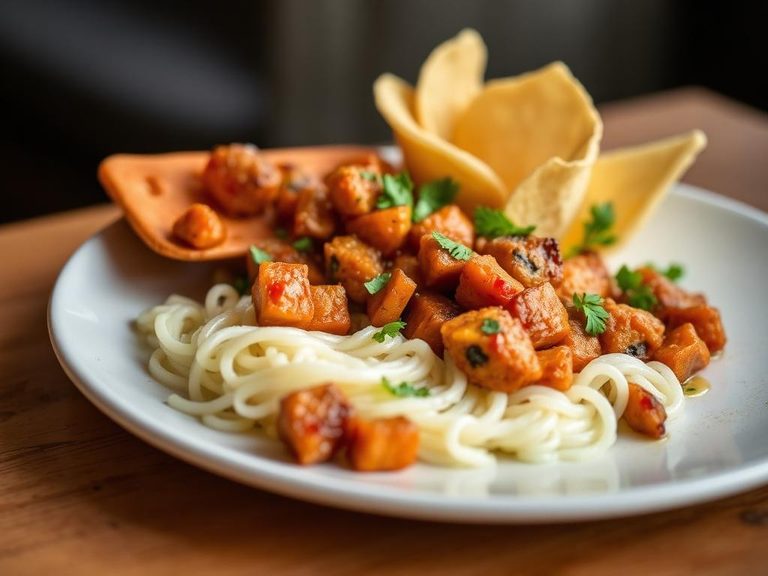
🍽️ Popular dishes
🌍 Where it's eaten
💡 Did you know?
The fat from Australian lamb, particularly from grass-fed animals, has a different fatty acid profile than grain-fed, often containing higher levels of beneficial omega-3s and conjugated linoleic acid (CLA).
Full nutrition (USDA data · scales with serving)
| Water | 27.1 g |
| Energy | 538 kcal |
| Energy | 2252 kj |
| Protein | 16.9 g |
| Total lipid (fat) | 52.3 g |
| Ash | 0.75 g |
| Carbohydrate, by difference | 0.00 g |
| Fiber, total dietary | 0.00 g |
| Total Sugars | 0.00 g |
| Calcium, Ca | 12.0 mg |
| Iron, Fe | 2.0 mg |
| Magnesium, Mg | 20.0 mg |
| Phosphorus, P | 148 mg |
| Potassium, K | 207 mg |
| Sodium, Na | 58.0 mg |
| Zinc, Zn | 2.1 mg |
| Copper, Cu | 0.07 mg |
| Manganese, Mn | 0.01 mg |
| Selenium, Se | 5.0 ug |
| Vitamin C, total ascorbic acid | 0.00 mg |
| Thiamin | 0.08 mg |
| Riboflavin | 0.23 mg |
| Niacin | 4.3 mg |
| Pantothenic acid | 0.52 mg |
| Vitamin B-6 | 0.34 mg |
| Carotene, beta | 0.00 ug |
| Carotene, alpha | 0.00 ug |
| Cryptoxanthin, beta | 0.00 ug |
| Lycopene | 0.00 ug |
| Lutein + zeaxanthin | 0.00 ug |
| Vitamin D (D2 + D3), International Units | 0.00 iu |
| Vitamin D (D2 + D3) | 0.00 ug |
| Vitamin D2 (ergocalciferol) | 0.00 ug |
| Vitamin D3 (cholecalciferol) | 0.00 ug |
| Alcohol, ethyl | 0.00 g |
| Caffeine | 0.00 mg |
| Theobromine | 0.00 mg |
Fat & fatty acid profile (per 100g)
| Fatty acids, total saturated | 26.8 g |
| SFA 4:0 | 0.00 g |
| SFA 6:0 | 0.00 g |
| SFA 8:0 | 0.00 g |
| SFA 10:0 | 0.09 g |
| SFA 12:0 | 0.12 g |
| SFA 14:0 | 1.8 g |
| SFA 15:0 | 0.37 g |
| SFA 16:0 | 11.5 g |
| SFA 17:0 | 0.87 g |
| SFA 18:0 | 11.9 g |
| SFA 20:0 | 0.10 g |
| SFA 22:0 | 0.02 g |
| SFA 24:0 | 0.00 g |
| Fatty acids, total monounsaturated | 20.3 g |
| MUFA 14:1 | 0.05 g |
| MUFA 15:1 | 0.00 g |
| MUFA 16:1 | 0.60 g |
| MUFA 17:1 | 0.00 g |
| MUFA 18:1 | 19.6 g |
| MUFA 18:1 c | 16.5 g |
| MUFA 20:1 | 0.04 g |
| MUFA 22:1 | 0.00 g |
| MUFA 22:1 c | 0.00 g |
| Fatty acids, total polyunsaturated | 3.1 g |
| PUFA 18:2 | 2.4 g |
| PUFA 18:2 n-6 c,c | 0.79 g |
| PUFA 18:2 CLAs | 0.72 g |
| PUFA 18:3 | 0.53 g |
| PUFA 18:3 n-3 c,c,c (ALA) | 0.53 g |
| PUFA 18:3 n-6 c,c,c | 0.00 g |
| PUFA 18:4 | 0.00 g |
| PUFA 20:2 n-6 c,c | 0.01 g |
| PUFA 20:3 | 0.00 g |
| PUFA 20:4 | 0.03 g |
| PUFA 20:5 n-3 (EPA) | 0.03 g |
| PUFA 22:5 n-3 (DPA) | 0.08 g |
| PUFA 22:6 n-3 (DHA) | 0.02 g |
| Fatty acids, total trans | 4.1 g |
| Fatty acids, total trans-monoenoic | 3.1 g |
| TFA 18:1 t | 3.1 g |
| TFA 18:2 t not further defined | 0.91 g |
| Fatty acids, total trans-polyenoic | 0.91 g |
| Cholesterol | 81.0 mg |
Amino acid profile (per 100g)
| Tryptophan | 0.17 g |
| Threonine | 0.69 g |
| Isoleucine | 0.70 g |
| Leucine | 1.2 g |
| Lysine | 1.3 g |
| Methionine | 0.41 g |
| Cystine | 0.17 g |
| Phenylalanine | 0.63 g |
| Tyrosine | 0.53 g |
| Valine | 0.76 g |
| Arginine | 1.0 g |
| Histidine | 0.44 g |
| Alanine | 0.96 g |
| Aspartic acid | 1.4 g |
| Glutamic acid | 2.3 g |
| Glycine | 0.89 g |
| Proline | 0.72 g |
| Serine | 0.60 g |
FAQ
Is this the same as tallow or lard?
No. Tallow is rendered beef fat, and lard is rendered pork fat. This is specifically the external fat from a lamb, which has a distinct, slightly gamey flavor.
How can I make it crispy without it being too greasy?
Score the fat in a crosshatch pattern, pat it completely dry, and roast at a high temperature (around 425°F/220°C) for the final 20-30 minutes. You can also pan-sear it separately until crisp.
Can I save the drippings from cooking it?
Absolutely. The rendered liquid fat is excellent for roasting potatoes, sautéing vegetables, or making gravies. Strain and store it in the refrigerator for up to a month.
Nutrient density (calculated · NRF9.3)
Nutrient Rich Foods index: beneficial nutrients (protein, fiber, vitamins, minerals) minus saturated fat, added sugar & sodium, per 100 kcal.
NRF9.3 index — Fulgoni, Keast & Drewnowski, 2009. Computed from USDA nutrients.
Weight-loss friendliness (composite index)
Energy density 5.38 kcal/g · 13% calories from protein · 0.0 g fiber · 0.0 g sugar per 100 g.
Composite of energy density (Rolls et al., 1999), protein & fiber satiety, minus sugar. A calculated heuristic — ranks satiety-per-calorie, not a clinical measure.
Dietary load (calculated from USDA values)
Potential renal acid load. Positive = acid-forming, negative = alkaline-forming.
Sodium-to-potassium ratio: 0.28 (lower is better — aim for ≤ 1)
Sodium:potassium per WHO potassium guidance. Computed from USDA nutrients.