

Game meat, deer, tenderloin, separable lean only, cooked, broiled
Whole food · Lamb, Veal, and Game Products

Photo: Wikipedia
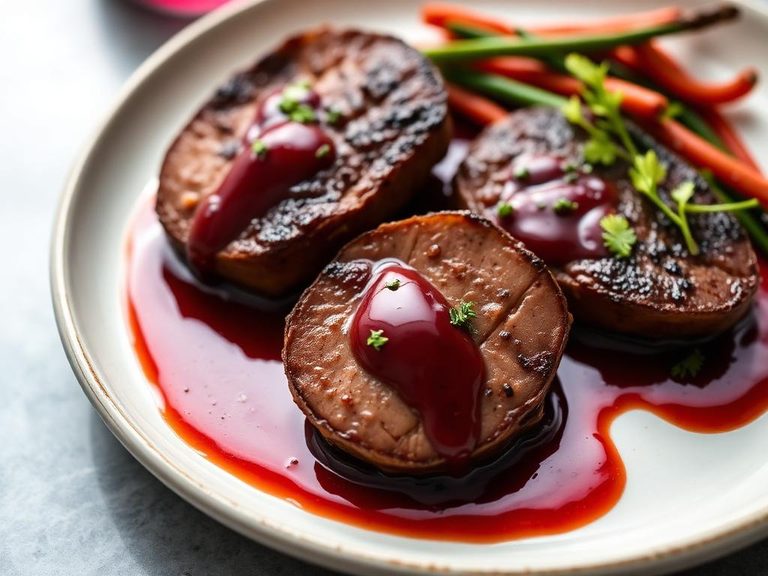
Deer tenderloin, broiled to perfection, is the most prized cut of venison, offering a remarkably tender, fine-grained texture and a rich, clean, subtly sweet flavor that's leaner than beef. Its deep, ruby-red color when raw transforms into a succulent, savory bite when cooked, with a nutritional profile that's a powerhouse of high-quality protein and virtually no fat or carbohydrates.
Calorie split: 85% protein · 0% carbs · 15% fat
↓ Full nutrition💚 Why it's loved
People cherish venison tenderloin for its luxurious, melt-in-the-mouth texture and a deep, complex flavor that's often described as a more refined, earthier version of beef. Its extreme leanness allows it to absorb marinades and seasonings beautifully, making it a versatile canvas for both simple preparations and elaborate culinary creations.
⚠️ Watch-outs & how to enjoy it better
The primary downside is its very low fat content, which means it can become dry and tough if overcooked, even by a minute. Those unaccustomed to game meat may find its distinctive, slightly mineral or 'wild' flavor strong; to counteract this, marinate in acidic or fat-based mixtures (like buttermilk or wine) before cooking, and use a meat thermometer to pull it at 130-135°F (54-57°C) for medium-rare.
Key benefits
- Exceptionally high in complete protein for muscle repair and satiety.
- Very low in fat and calories, making it ideal for lean protein goals.
- Rich in iron (heme iron) and B vitamins, especially B12 and niacin.
- Naturally free of carbohydrates, sugars, and fiber.
- Often sourced from wild, free-range animals, potentially higher in omega-3s.
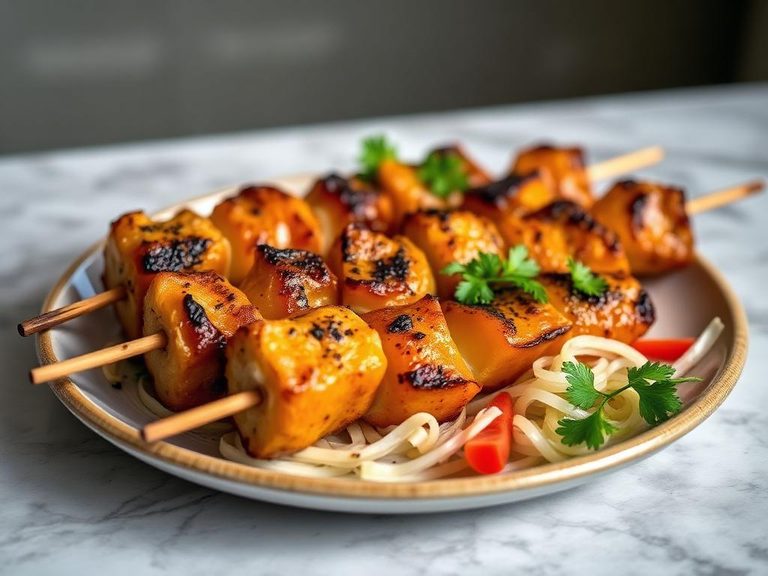
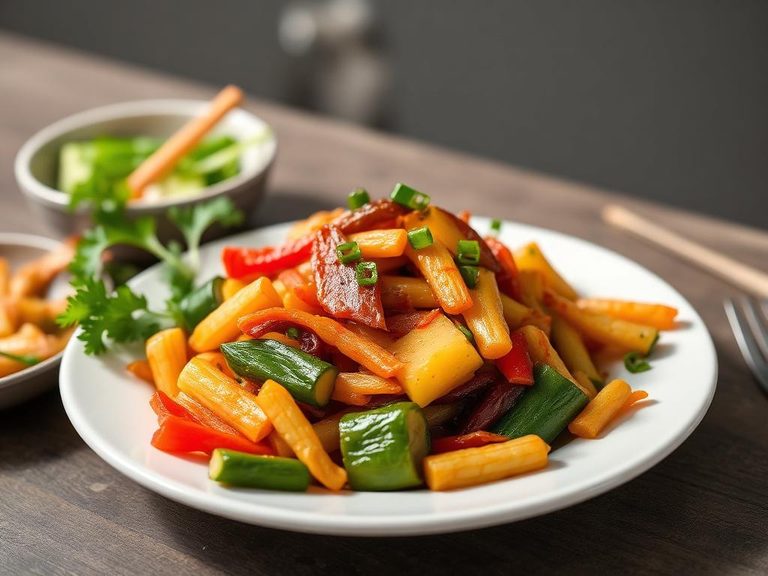
🍽️ Popular dishes
🌍 Where it's eaten
💡 Did you know?
Because deer are ruminants (like cows), their meat is technically classified as 'red meat' in culinary terms, despite its incredibly lean, almost poultry-like texture when cooked properly.
Full nutrition (USDA data · scales with serving)
| Water | 67.2 g |
| Energy | 149 kcal |
| Energy | 623 kj |
| Protein | 29.9 g |
| Total lipid (fat) | 2.4 g |
| Ash | 1.3 g |
| Carbohydrate, by difference | 0.00 g |
| Fiber, total dietary | 0.00 g |
| Total Sugars | 0.00 g |
| Calcium, Ca | 5.0 mg |
| Iron, Fe | 4.3 mg |
| Magnesium, Mg | 33.0 mg |
| Phosphorus, P | 299 mg |
| Potassium, K | 434 mg |
| Sodium, Na | 57.0 mg |
| Zinc, Zn | 4.0 mg |
| Copper, Cu | 0.25 mg |
| Manganese, Mn | 0.02 mg |
| Selenium, Se | 11.0 ug |
| Vitamin C, total ascorbic acid | 0.00 mg |
| Thiamin | 0.26 mg |
| Riboflavin | 0.56 mg |
| Niacin | 8.8 mg |
| Pantothenic acid | 0.86 mg |
| Vitamin B-6 | 0.61 mg |
| Folate, total | 9.0 ug |
| Folic acid | 0.00 ug |
| Folate, food | 9.0 ug |
| Folate, DFE | 9.0 ug |
| Vitamin B-12 | 3.6 ug |
| Vitamin A, RAE | 0.00 ug |
| Retinol | 0.00 ug |
| Carotene, beta | 0.00 ug |
| Carotene, alpha | 0.00 ug |
| Cryptoxanthin, beta | 0.00 ug |
| Vitamin A, IU | 0.00 iu |
| Lycopene | 0.00 ug |
| Lutein + zeaxanthin | 0.00 ug |
| Vitamin E (alpha-tocopherol) | 0.62 mg |
| Alcohol, ethyl | 0.00 g |
| Caffeine | 0.00 mg |
| Theobromine | 0.00 mg |
Fat & fatty acid profile (per 100g)
| Fatty acids, total saturated | 1.1 g |
| SFA 4:0 | 0.00 g |
| SFA 6:0 | 0.00 g |
| SFA 8:0 | 0.00 g |
| SFA 10:0 | 0.00 g |
| SFA 12:0 | 0.00 g |
| SFA 14:0 | 0.09 g |
| SFA 15:0 | 0.02 g |
| SFA 16:0 | 0.51 g |
| SFA 17:0 | 0.03 g |
| SFA 18:0 | 0.48 g |
| SFA 20:0 | 0.01 g |
| SFA 22:0 | 0.00 g |
| Fatty acids, total monounsaturated | 0.55 g |
| MUFA 14:1 | 0.02 g |
| MUFA 15:1 | 0.00 g |
| MUFA 16:1 | 0.08 g |
| MUFA 17:1 | 0.01 g |
| MUFA 18:1 | 0.44 g |
| MUFA 20:1 | 0.00 g |
| MUFA 22:1 | 0.00 g |
| Fatty acids, total polyunsaturated | 0.13 g |
| PUFA 18:2 | 0.07 g |
| PUFA 18:3 | 0.03 g |
| PUFA 18:3 n-6 c,c,c | 0.00 g |
| PUFA 18:4 | 0.00 g |
| PUFA 20:2 n-6 c,c | 0.00 g |
| PUFA 20:3 | 0.00 g |
| PUFA 20:4 | 0.02 g |
| PUFA 20:5 n-3 (EPA) | 0.00 g |
| PUFA 22:5 n-3 (DPA) | 0.00 g |
| PUFA 22:6 n-3 (DHA) | 0.00 g |
| Cholesterol | 88.0 mg |
Amino acid profile (per 100g)
| Tryptophan | 0.27 g |
| Threonine | 1.1 g |
| Isoleucine | 1.3 g |
| Leucine | 2.3 g |
| Lysine | 2.4 g |
| Methionine | 0.70 g |
| Cystine | 0.28 g |
| Phenylalanine | 1.1 g |
| Tyrosine | 0.94 g |
| Valine | 1.5 g |
| Arginine | 1.8 g |
| Histidine | 0.90 g |
| Alanine | 1.7 g |
| Aspartic acid | 2.6 g |
| Glutamic acid | 4.3 g |
| Glycine | 1.6 g |
| Proline | 1.3 g |
| Serine | 1.0 g |
| Hydroxyproline | 0.43 g |
FAQ
How is venison tenderloin different from beef tenderloin?
Venison tenderloin is significantly leaner (almost no intramuscular fat), has a deeper red color, and possesses a distinct, slightly sweet and earthy 'game' flavor. It's also generally smaller and more delicate than its beef counterpart.
What's the best way to cook it to keep it tender?
High-heat, quick-cooking methods like broiling, grilling, or pan-searing are ideal. The key is to not overcook it—aim for an internal temperature of 130-135°F (54-57°C) for medium-rare, then let it rest for 5-10 minutes before slicing against the grain.
Does it need to be marinated?
While not strictly necessary due to its natural tenderness, a short marinade (30 minutes to 2 hours) in an acidic component like wine, vinegar, or citrus can help mellow any strong game notes and add moisture. Avoid long marinades, as the acid can start to break down the delicate fibers.
Nutrient density (calculated · NRF9.3)
Nutrient Rich Foods index: beneficial nutrients (protein, fiber, vitamins, minerals) minus saturated fat, added sugar & sodium, per 100 kcal.
NRF9.3 index — Fulgoni, Keast & Drewnowski, 2009. Computed from USDA nutrients.
Weight-loss friendliness (composite index)
Energy density 1.49 kcal/g · 80% calories from protein · 0.0 g fiber · 0.0 g sugar per 100 g.
Composite of energy density (Rolls et al., 1999), protein & fiber satiety, minus sugar. A calculated heuristic — ranks satiety-per-calorie, not a clinical measure.
Dietary load (calculated from USDA values)
Potential renal acid load. Positive = acid-forming, negative = alkaline-forming.
Sodium-to-potassium ratio: 0.13 (lower is better — aim for ≤ 1)
Sodium:potassium per WHO potassium guidance. Computed from USDA nutrients.