

Flour, spelt, whole grain
Whole food · Cereal Grains and Pasta
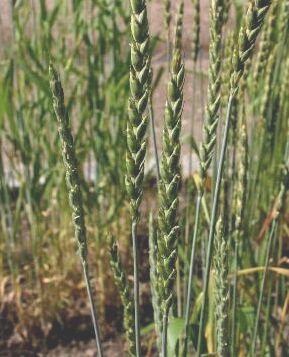
Photo: Wikipedia
Spelt whole grain flour is an ancient, nutty cousin of modern wheat, milled from the entire kernel for a speckled, earthy-tasting flour with a slightly chewy texture. It boasts a robust nutritional profile, notably offering a solid 14.5g of protein and over 9g of fiber per 100g, making it a powerhouse for sustained energy. Its flavor is subtly sweet and complex, adding depth to baked goods far beyond what standard all-purpose flour can achieve.
Calorie split: 16% protein · 78% carbs · 6% fat
↓ Full nutrition💚 Why it's loved
Bakers and health enthusiasts adore its rich, nutty flavor that elevates breads, pancakes, and pastries. Its versatility allows it to be swapped into many whole wheat recipes, offering a nutritional upgrade with a more interesting taste profile.
⚠️ Watch-outs & how to enjoy it better
As a wheat product, it contains gluten and is unsafe for those with celiac disease or wheat allergies. Its high fiber content can cause digestive discomfort if introduced too quickly; start with small portions and drink plenty of water. The dense flour can also lead to heavier baked goods if not balanced with enough liquid or leavening.
Key benefits
- High in dietary fiber (9.3g/100g) for digestive health.
- Excellent plant-based protein source (14.5g/100g).
- Contains more minerals like magnesium and niacin than refined wheat.
- Its complex carbs provide steady, long-lasting energy.
- Often better tolerated by some with mild wheat sensitivities.
🍽️ Popular dishes
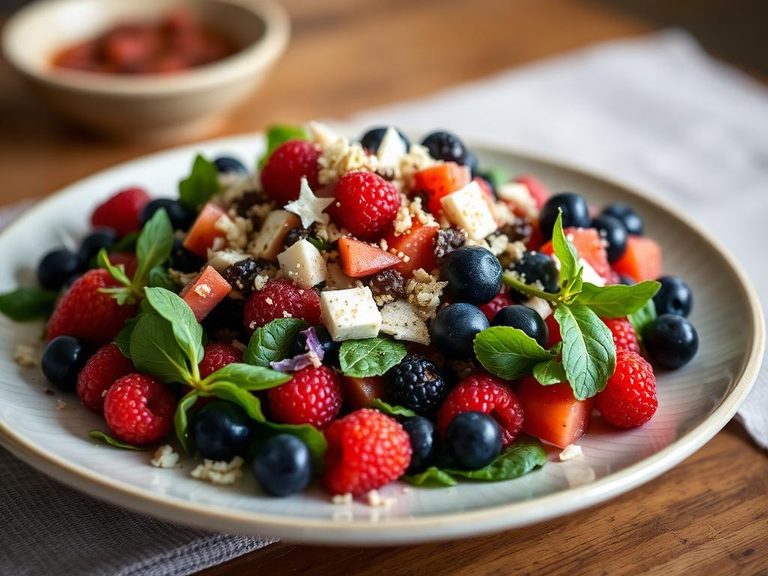
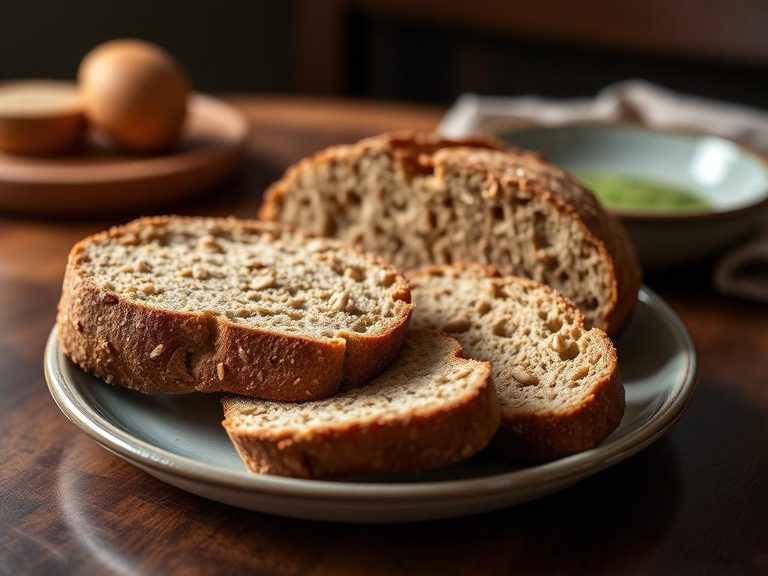

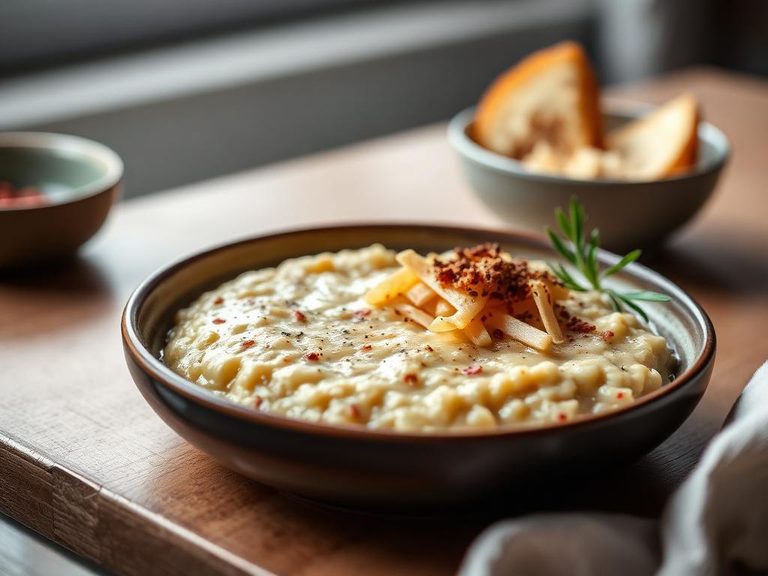


🌍 Where it's eaten
💡 Did you know?
Spelt was a staple grain in parts of Europe for centuries and was even found in the tombs of Egyptian pharaohs, proving its ancient pedigree.
Full nutrition (USDA data · scales with serving)
| Water | 10.7 g |
| Energy (Atwater General Factors) | 364 kcal |
| Energy (Atwater Specific Factors) | 341 kcal |
| Nitrogen | 2.3 g |
| Protein | 14.5 g |
| Total lipid (fat) | 2.5 g |
| Ash | 1.5 g |
| Carbohydrate, by difference | 70.7 g |
| Fiber, total dietary | 9.3 g |
| Calcium, Ca | 30.0 mg |
| Iron, Fe | 3.8 mg |
| Magnesium, Mg | 124 mg |
| Phosphorus, P | 362 mg |
| Potassium, K | 350 mg |
| Sodium, Na | 0.00 mg |
| Zinc, Zn | 3.6 mg |
| Copper, Cu | 0.53 mg |
| Manganese, Mn | 2.9 mg |
| Selenium, Se | 9.5 ug |
| Molybdenum, Mo | 91.9 ug |
| Thiamin | 0.30 mg |
| Riboflavin | 0.14 mg |
| Niacin | 5.5 mg |
| Vitamin B-6 | 0.24 mg |
| Biotin | 10.4 ug |
| Folate, total | 38.4 ug |
Fat & fatty acid profile (per 100g)
Estimated from Pasta, gluten-free, corn flour and quinoa flour, cooked, ANCIENT HARVEST — USDA does not publish this profile for Flour.
| Fatty acids, total saturated | 0.15 g |
| SFA 4:0 | 0.00 g |
| SFA 6:0 | 0.00 g |
| SFA 8:0 | 0.00 g |
| SFA 10:0 | 0.00 g |
| SFA 12:0 | 0.00 g |
| SFA 14:0 | 0.01 g |
| SFA 15:0 | 0.00 g |
| SFA 16:0 | 0.09 g |
| SFA 17:0 | 0.00 g |
| SFA 18:0 | 0.04 g |
| SFA 20:0 | 0.01 g |
| SFA 22:0 | 0.00 g |
| SFA 24:0 | 0.00 g |
| Fatty acids, total monounsaturated | 0.66 g |
| MUFA 14:1 | 0.00 g |
| MUFA 15:1 | 0.17 g |
| MUFA 16:1 | 0.00 g |
| MUFA 16:1 c | 0.00 g |
| MUFA 17:1 | 0.00 g |
| MUFA 18:1 | 0.48 g |
| MUFA 18:1 c | 0.47 g |
| MUFA 20:1 | 0.01 g |
| MUFA 22:1 | 0.00 g |
| MUFA 22:1 c | 0.00 g |
| MUFA 24:1 c | 0.00 g |
| Fatty acids, total polyunsaturated | 0.95 g |
| PUFA 18:2 | 0.91 g |
| PUFA 18:2 n-6 c,c | 0.91 g |
| PUFA 18:2 CLAs | 0.00 g |
| PUFA 18:3 | 0.03 g |
| PUFA 18:3 n-3 c,c,c (ALA) | 0.03 g |
| PUFA 18:3 n-6 c,c,c | 0.00 g |
| PUFA 18:3i | 0.00 g |
| PUFA 18:4 | 0.00 g |
| PUFA 20:2 n-6 c,c | 0.00 g |
| PUFA 20:3 | 0.00 g |
| PUFA 20:3 n-3 | 0.00 g |
| PUFA 20:3 n-6 | 0.00 g |
| PUFA 20:4 | 0.00 g |
| PUFA 20:5 n-3 (EPA) | 0.00 g |
| PUFA 22:4 | 0.00 g |
| PUFA 22:5 n-3 (DPA) | 0.00 g |
| PUFA 22:6 n-3 (DHA) | 0.00 g |
| Fatty acids, total trans | 0.01 g |
| Fatty acids, total trans-monoenoic | 0.00 g |
| TFA 16:1 t | 0.00 g |
| TFA 18:1 t | 0.00 g |
| TFA 22:1 t | 0.00 g |
| TFA 18:2 t not further defined | 0.00 g |
| Fatty acids, total trans-polyenoic | 0.00 g |
| Cholesterol | 0.00 mg |
Amino acid profile (per 100g)
Estimated from Pasta, gluten-free, corn flour and quinoa flour, cooked, ANCIENT HARVEST — USDA does not publish this profile for Flour.
| Tryptophan | 0.02 g |
| Threonine | 0.10 g |
| Isoleucine | 0.09 g |
| Leucine | 0.35 g |
| Lysine | 0.16 g |
| Methionine | 0.06 g |
| Cystine | 0.07 g |
| Phenylalanine | 0.15 g |
| Tyrosine | 0.12 g |
| Valine | 0.11 g |
| Arginine | 0.18 g |
| Histidine | 0.09 g |
| Alanine | 0.21 g |
| Aspartic acid | 0.19 g |
| Glutamic acid | 0.46 g |
| Glycine | 0.12 g |
| Proline | 0.29 g |
| Serine | 0.15 g |
| Hydroxyproline | 0.00 g |
FAQ
Is spelt flour gluten-free?
No, spelt contains gluten. It is not suitable for people with celiac disease or non-celiac gluten sensitivity, though some with mild wheat intolerance find it easier to digest.
Can I substitute spelt flour for all-purpose flour 1:1?
For whole grain spelt flour, a direct 1:1 swap can make baked goods denser. It's often best to start by replacing 25-50% of the all-purpose flour in a recipe and slightly increasing the liquid.
What's the difference between spelt and wheat?
Spelt is an ancient species of wheat with a tougher outer husk, a more fragile gluten structure, and a slightly sweeter, nuttier flavor. Nutritionally, it often contains more protein and fiber than common modern wheat.
Nutrient density (calculated · NRF9.3)
Nutrient Rich Foods index: beneficial nutrients (protein, fiber, vitamins, minerals) minus saturated fat, added sugar & sodium, per 100 kcal.
NRF9.3 index — Fulgoni, Keast & Drewnowski, 2009. Computed from USDA nutrients.
Weight-loss friendliness (composite index)
Energy density 3.64 kcal/g · 16% calories from protein · 9.3 g fiber · 0.0 g sugar per 100 g.
Composite of energy density (Rolls et al., 1999), protein & fiber satiety, minus sugar. A calculated heuristic — ranks satiety-per-calorie, not a clinical measure.
Dietary load (calculated from USDA values)
Potential renal acid load. Positive = acid-forming, negative = alkaline-forming.
Sodium-to-potassium ratio: 0.00 (lower is better — aim for ≤ 1)
Sodium:potassium per WHO potassium guidance. Computed from USDA nutrients.